Some links below are affiliate links. We earn a commission on purchases at no extra cost to you. Although our opinions are based on curated research, we haven't used these products. Article generated with AI.

Mistakes to Avoid When Making Low-Calorie Smoothies
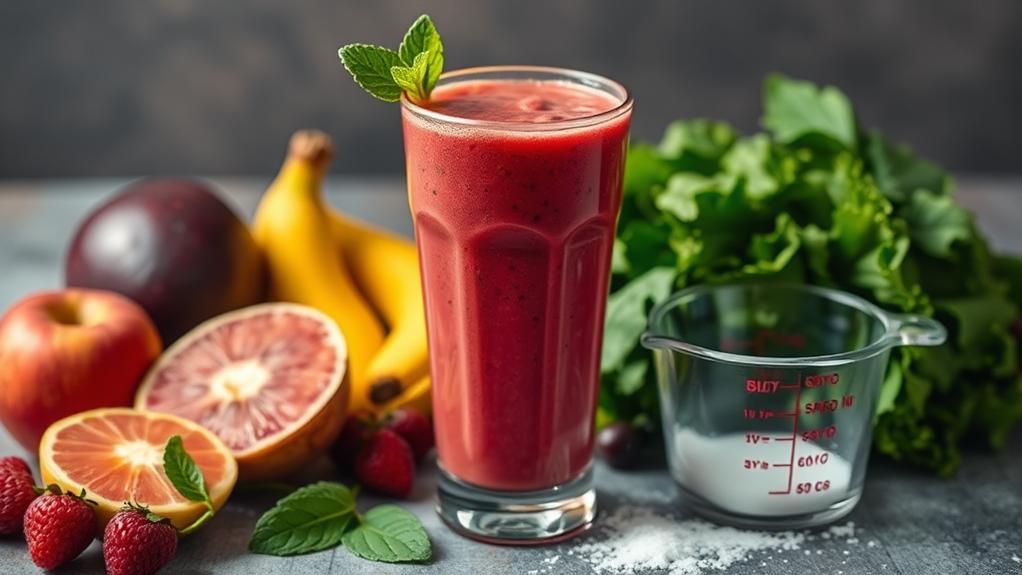
When making low-calorie smoothies, you'll want to avoid some common mistakes. Don't overload on fruit, as it can add extra sugar and calories. Instead, balance your smoothie with protein sources like Greek yogurt or protein powder to keep you feeling full. Skip the fruit juices and sweeteners, opting for water or unsweetened almond milk as a base. Watch your portion sizes and be mindful of high-calorie toppings. Choose low-fat dairy options or plant-based alternatives to cut calories. Remember to include vegetables for added nutrients and fiber. By being aware of these pitfalls, you'll create healthier, more satisfying smoothies. There's so much more to learn about perfecting your low-calorie smoothie game!
Table of Contents
hide
Key Takeaways
- Avoid overloading on fruits and sweeteners, which can turn smoothies into calorie bombs.
- Don't neglect protein sources and fiber-rich ingredients, which enhance satiety and nutritional value.
- Be mindful of portion sizes, as even healthy ingredients can lead to high calorie counts.
- Choose water, unsweetened almond milk, or coconut water as bases instead of high-calorie fruit juices or full-fat dairy.
- Limit toppings and be cautious with calorie-dense ingredients like nuts, dried fruits, and healthy fats.
Overloading on Fruit
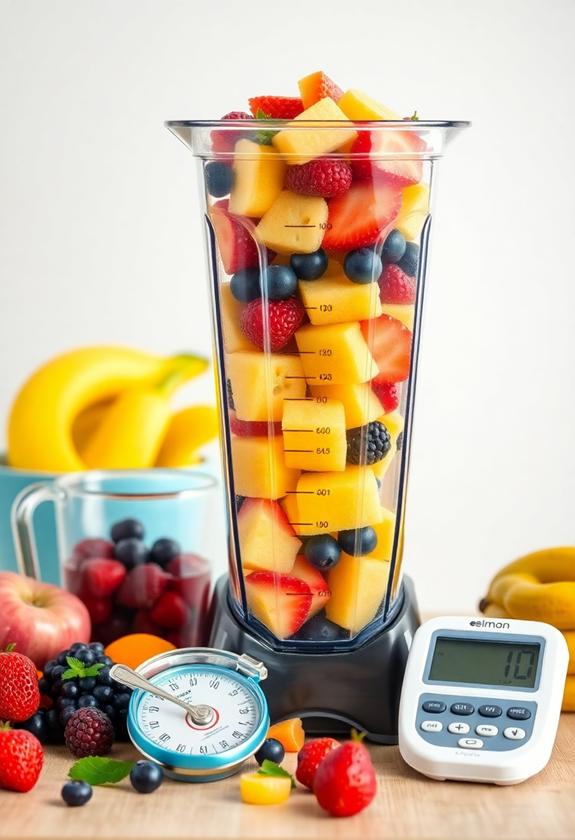
When whipping up a low-calorie smoothie, it's easy to go overboard with fruit. While fruits are packed with nutrients, they're also high in natural sugars and calories. You might think you're making a healthy choice, but too much fruit can quickly turn your smoothie into a calorie bomb. Low-calorie smoothies can be an excellent tool for weight loss when prepared correctly. By carefully selecting ingredients and portion sizes, you can create delicious and nutritious drinks that support your health goals. Instead, aim for a balanced approach. Try using just one or two servings of fruit, and mix in some leafy greens or vegetables to boost nutrition without the extra calories.
Neglecting Protein Sources
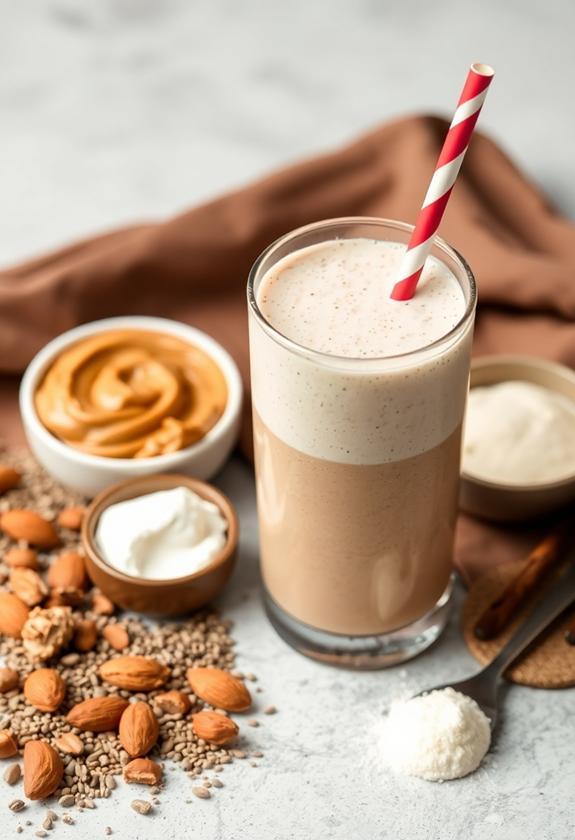
Another common mistake in crafting low-calorie smoothies is overlooking protein sources. You might think fruit alone is enough, but adding protein can make your smoothie more satisfying and nutritious. Meal replacement smoothies often require a higher protein content to guarantee they provide adequate nutrition and keep you feeling full for longer. Consider incorporating protein powder, which comes in various flavors and types to suit your taste. If you prefer plant sources, try adding a scoop of hemp seeds or chia seeds for a protein boost.
Maintaining protein balance is vital for your body's amino acids needs. Plus, protein helps improve your shake consistency, making it creamier and more filling. Don't forget about nutrient timing – a protein-rich smoothie after a workout can aid in muscle recovery. By including protein in your smoothies, you're not just creating a tasty drink, but also a well-rounded meal replacement that'll keep you energized throughout the day. Remember, a little protein goes a long way!
Using Fruit Juices
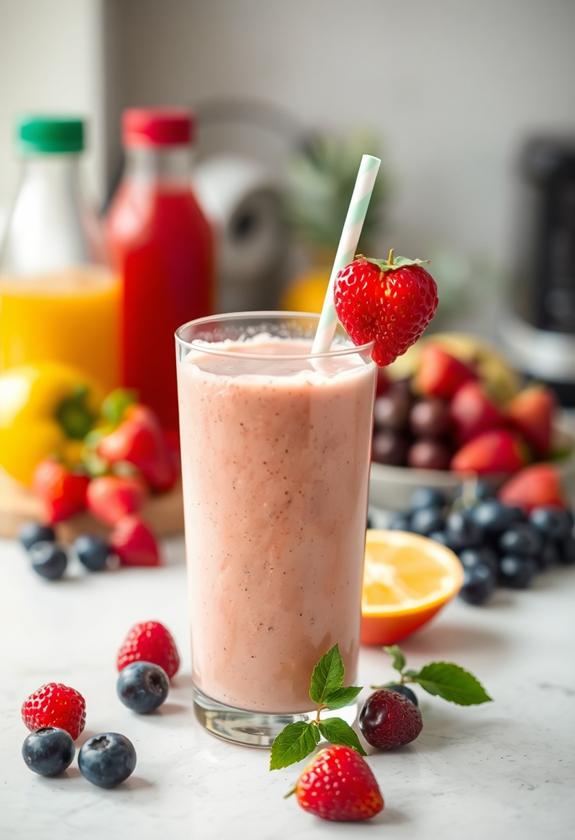
While protein is important, the liquid base of your smoothie also plays a key role. You might be tempted to use fruit juices, thinking they're healthy, but this can be a mistake. Many store-bought fruit juice types are packed with added sugars and calories, which can quickly derail your low-calorie goals. Even 100% fruit juices are often concentrated sources of natural sugars without the fiber of whole fruits. Choosing satiety-boosting ingredients can help keep you feeling full longer while maintaining a low-calorie profile.
Instead, opt for water, unsweetened almond milk, or coconut water as your base. If you're craving fruity flavors, try adding whole fruits instead. You can also experiment with different juice extraction methods at home, like cold-pressing or blending whole fruits, to retain more nutrients and fiber. Remember, your smoothie should be a balanced mix of nutrients, not a sugar bomb. With these tips, you'll create delicious, truly healthy smoothies that support your wellness journey.
Adding Sweeteners
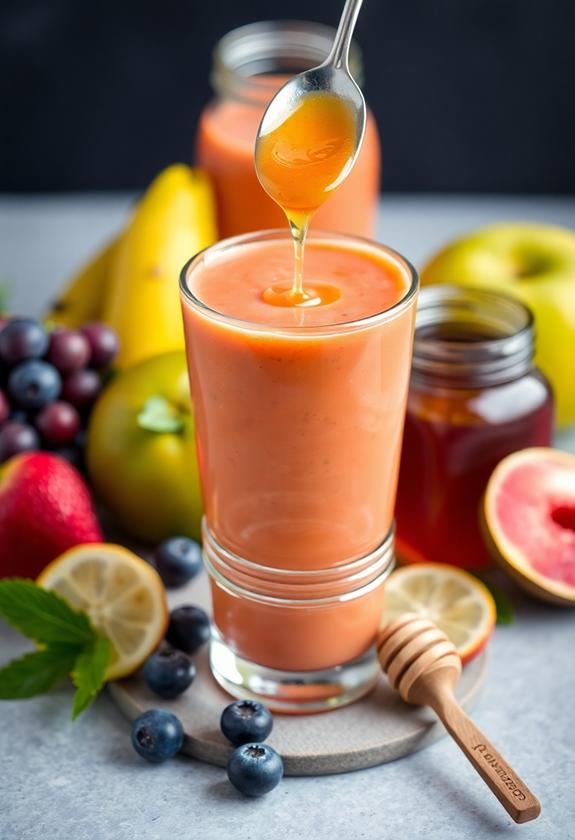
The temptation to sweeten your smoothie can derail your low-calorie efforts. While you might crave a touch of sweetness, it's important to be mindful of what you're adding. Natural sweeteners like honey or maple syrup may seem healthier, but they still pack calories. Artificial sweeteners, on the other hand, can be calorie-free but might leave an aftertaste. When preparing healthy meal replacements, it's vital to focus on nutrient-dense ingredients that provide both flavor and nutritional benefits without excess calories.
Instead of reaching for sweeteners, try these alternatives to improve your smoothie's flavor:
- Use ripe, naturally sweet fruits
- Add a dash of cinnamon or vanilla extract
- Incorporate a small amount of unsweetened cocoa powder
- Experiment with herbs like mint or basil
Ignoring Portion Sizes
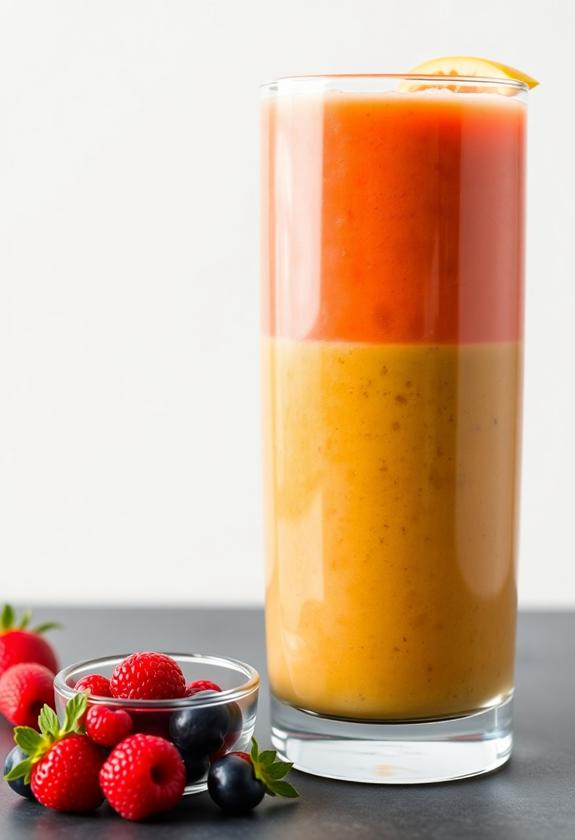
One common mistake when making low-calorie smoothies is ignoring portion sizes. You might think that because you're using healthy ingredients, you can drink as much as you want. But that's not the case! Even nutritious smoothies can pack a lot of calories if you're not careful with serving sizes. Creating satisfying low-calorie smoothies requires attention to detail and a good understanding of ingredient proportions. By following proper recipes and guidelines, you can guarantee your smoothies are both delicious and aligned with your health goals.
To keep your smoothie truly low-calorie, it's important to practice portion control. Start by measuring your ingredients and sticking to reasonable serving sizes. A good rule of thumb is to aim for a 12-16 ounce smoothie. This way, you'll get all the benefits without overdoing it on calories. Remember, it's easy to gulp down a large smoothie quickly, but your body might not register that you're full right away. By being mindful of portion sizes, you'll enjoy your delicious, nutrient-packed smoothie while still maintaining your health goals.
Forgetting Fiber-Rich Ingredients
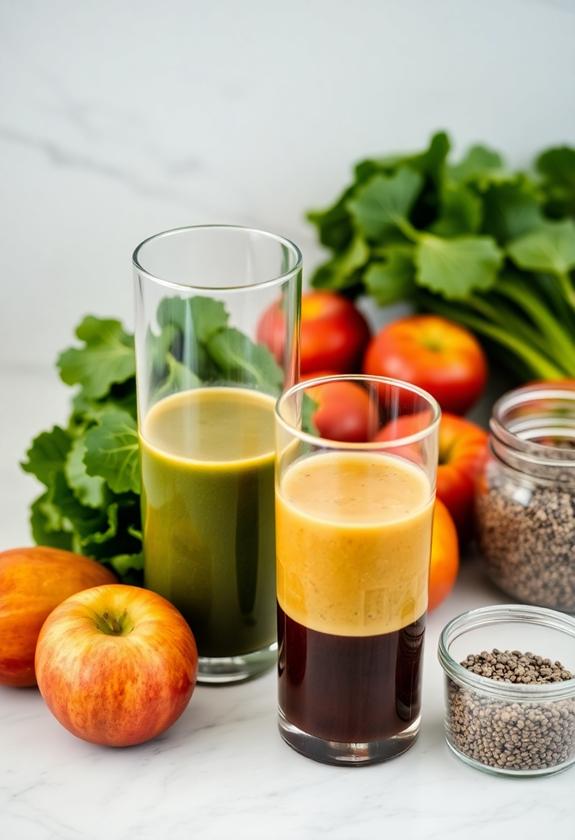
Another key aspect of creating effective low-calorie smoothies is incorporating fiber-rich ingredients. Don't forget to add these nutritious elements, as they're essential for both fiber benefits and digestive health. Nutrient-rich vegan smoothies can be an excellent way to boost your fiber intake while keeping calories low. When you include fiber in your smoothies, you'll feel fuller for longer and support your body's natural processes. Plus, it's an easy way to boost your daily fiber intake!
Here are some great fiber-rich ingredients to take into account adding to your smoothies:
- Chia seeds
- Ground flaxseed
- Spinach or kale
- Berries (especially raspberries)
Relying on Pre-Made Mixes
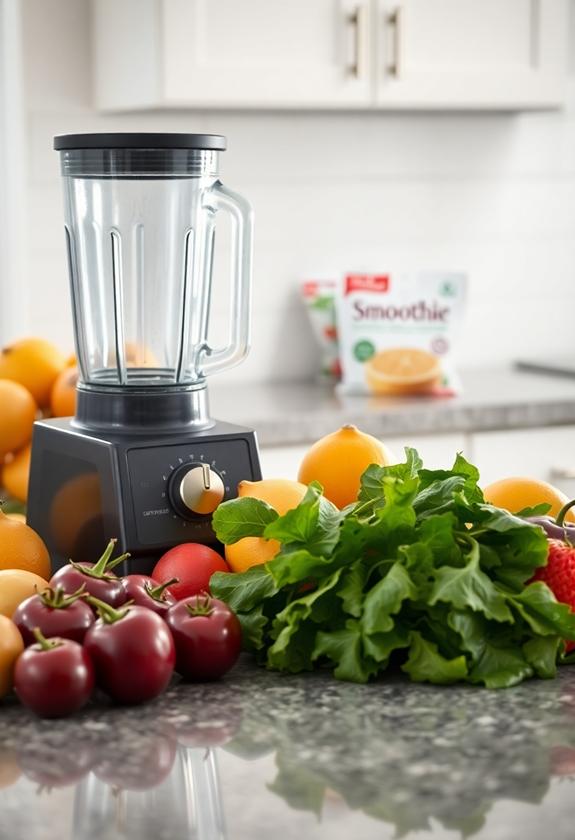
While pre-made smoothie mixes might seem convenient, they're often packed with hidden sugars and artificial ingredients that can sabotage your low-calorie goals. Instead of relying on these mixes, try creating your own smoothies from scratch. This way, you'll have full control over the ingredient quality and nutritional balance of your drink. Balanced macro smoothies offer a perfect combination of nutrients and flavors, making them an excellent alternative to pre-made mixes.
Start with a base of fresh or frozen fruits and vegetables, then add protein sources like Greek yogurt or plant-based protein powder. Don't forget to include healthy fats, such as chia seeds or avocado, which will help keep you feeling full. By making your smoothies at home, you'll know exactly what's going into your glass, and you can adjust the flavors and textures to suit your preferences. Remember, homemade smoothies are not only healthier but also more satisfying and rewarding to create.
Skipping Vegetables
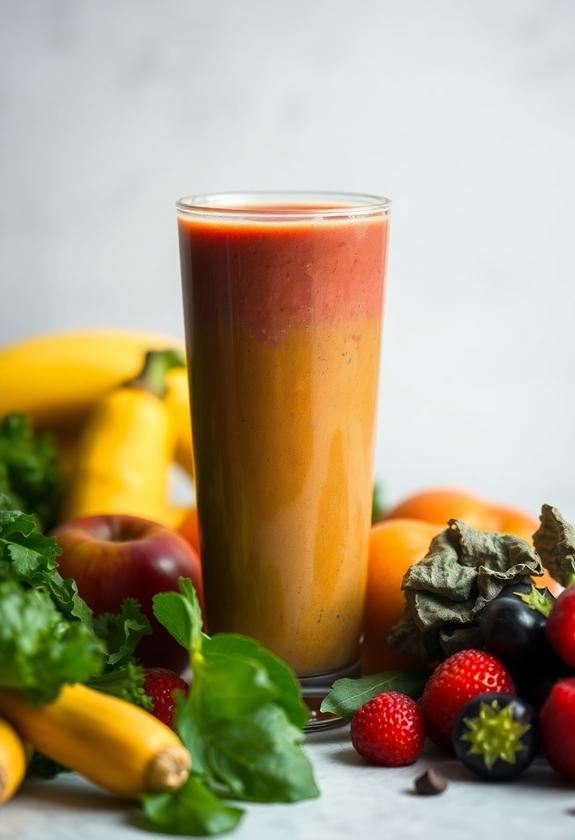
Neglecting to include vegetables in your smoothies is a common pitfall that can hinder your low-calorie goals. By skipping veggies, you're missing out on essential nutrients and fiber that can help keep you full and satisfied. Leafy greens, in particular, are a fantastic addition to smoothies, offering a nutrient balance without adding many calories. Incorporating vegetables into your smoothies is vital for macro balance and ensuring you're getting a well-rounded blend of nutrients.
Don't worry if you're not sure where to start! Here are some easy-to-blend vegetables that'll boost your smoothie game:
- Spinach
- Kale
- Cucumber
- Zucchini
Adding these veggies will not only make your smoothies more nutritious but also help you reach your health goals. Remember, you don't need to add a lot – even a small handful can make a big difference. Start experimenting with different combinations, and you'll soon find your perfect low-calorie, veggie-packed smoothie recipe!
Using Full-Fat Dairy
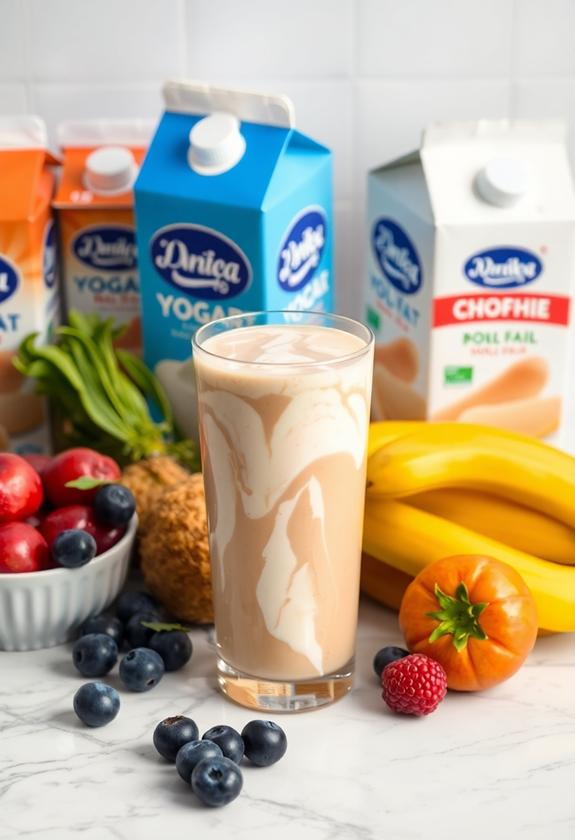
Full-fat dairy products can sabotage your low-calorie smoothie efforts in a heartbeat. When you're trying to keep your smoothie light and nutritious, it's important to be mindful of the dairy you're using. Full-fat milk, yogurt, and cream can add unnecessary calories and fat to your drink, potentially undoing all your hard work. While healthy fats are important in vegan meal replacements, they should be carefully balanced in low-calorie smoothies.
Instead, opt for low-fat or fat-free dairy alternatives. You'll still get that creamy texture and calcium boost without the extra calories. If you're looking to cut dairy altogether, there are plenty of delicious dairy substitutes available. Almond milk, coconut milk, and soy milk are great options that can add flavor and nutrients to your smoothie. Don't be afraid to experiment with different plant-based milks to find your favorite. Remember, making small changes like this can have a big impact on your smoothie's calorie count and your overall health goals.
Adding Too Many Toppings
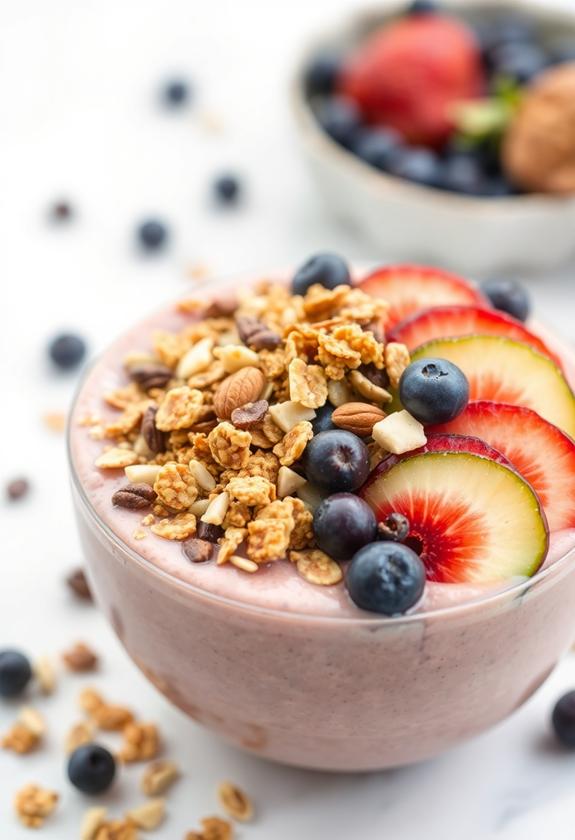
Smoothie enthusiasts' downfall often comes from an overabundance of toppings. While it's tempting to add a variety of tasty extras to your drink, this can quickly turn your low-calorie smoothie into a high-calorie treat. To maintain nutritional balance and keep your smoothie figure-friendly, it's important to be mindful of your topping choices. When making low-calorie smoothie recipes, it's essential to prioritize ingredients that pack a nutritional punch without adding excessive calories.
Here are some tips to help you enjoy toppings without derailing your health goals:
- Stick to one or two toppings per smoothie
- Choose nutrient-dense options like chia seeds or nuts
- Use measuring tools to control portion sizes
- Opt for fresh fruit instead of dried or candied varieties
Overlooking Calorie-Dense Ingredients
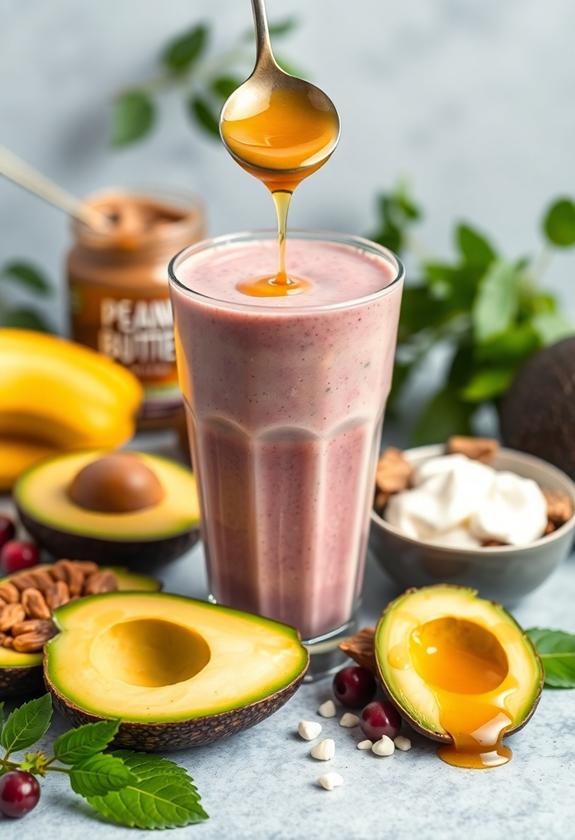
When you're whipping up a low-calorie smoothie, it's easy to overlook some sneaky high-calorie culprits. You might be surprised to learn that ingredients like nuts, nut butters, and dried fruits can quickly add up the calories. Even healthy additions like avocado or coconut oil, while nutritious, can significantly increase the calorie count. It's crucial to recognize that these ingredients are often used to boost calorie content in meal replacement smoothies, but they can derail your efforts when aiming for a low-calorie option.
Don't worry, though! There are plenty of low calorie alternatives and ingredient substitutions you can use. Try swapping full-fat yogurt for Greek yogurt or skyr, and use fresh berries instead of dried ones. If you love the creaminess of nut butters, consider using powdered peanut butter or a small amount of seeds instead. Remember, it's all about balance and making smart choices. With a little creativity, you can create delicious, satisfying smoothies that align with your health goals!
Blending for Too Long
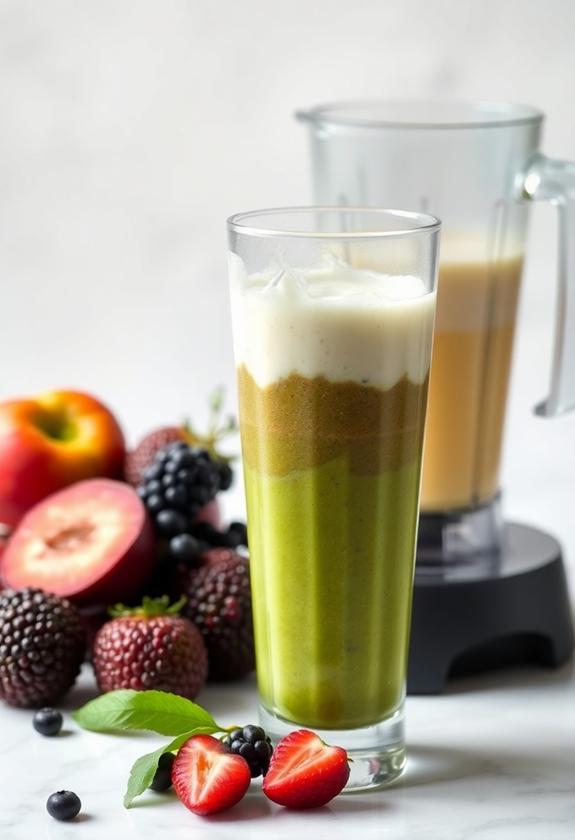
Another common pitfall in making low-calorie smoothies is blending for too long. You might think that extra blending time will make your smoothie smoother, but it can actually affect the taste and texture. Overblending can lead to:
- A warmer smoothie, which might not be as refreshing
- Breakdown of fiber, reducing the smoothie's nutritional value
- A foamy consistency that's less enjoyable to drink
- Oxidation of nutrients, decreasing their health benefits
When balancing smoothie macros, it's essential to take into account blending time as part of your overall preparation strategy. Excessive blending can disrupt the careful balance of proteins, carbohydrates, and fats you've planned for your smoothie.
To achieve the perfect smoothie consistency, pay attention to your blender settings and don't overdo it. Start with a lower speed and gradually increase it, blending just until the ingredients are well combined. This way, you'll preserve the smoothie's cool temperature, maintain its nutritional value, and enjoy a more satisfying texture. Remember, a little care in blending goes a long way in creating a delicious, low-calorie treat!
Frequently Asked Questions
Can I Use Frozen Fruits Instead of Fresh Ones in My Smoothies?
You can definitely use frozen fruits in your smoothies, and it's a great choice. Frozen fruits offer several benefits: they're convenient, last longer, and are often cheaper than fresh ones. Plus, they'll give your smoothie a wonderfully thick, frosty texture that's perfect for hot days. You won't need to add ice, which can water down your drink. Don't worry about losing nutrients either – frozen fruits are usually picked at peak ripeness and retain their goodness. Enjoy experimenting with different frozen fruit combinations!
How Long Can I Store a Homemade Smoothie in the Refrigerator?
You'll want to enjoy your homemade smoothie as soon as possible, but if you need to store it, don't worry! Your smoothie's shelf life is about 1-2 days in the refrigerator. For the best taste and quality, here are some refrigeration tips: use an airtight container, fill it to the top to minimize air exposure, and give it a good shake before drinking. Remember, separation is normal – just stir it up, and you're good to go!
Are There Any Low-Calorie Alternatives to Traditional Milk in Smoothies?
You've got plenty of tasty, low-calorie options for your smoothies! Try almond milk, which is creamy and packed with nutrients. Coconut milk offers a tropical twist, while oat milk has a subtle, comforting flavor. Soy milk's a great protein-rich choice, and rice milk is light and refreshing. Each alternative brings its own unique taste and nutritional benefits to your smoothie. Don't be afraid to experiment – you might discover a new favorite that's both delicious and waistline-friendly!
What's the Best Type of Blender for Making Smoothies at Home?
You'll love having a powerful blender for your smoothie adventures! Look for one with at least 500 watts of power, which will easily crush ice and frozen fruits. Don't forget about blending techniques – pulse tough ingredients first, then blend on high for a smooth finish. A good blender with variable speeds will be your best friend in the kitchen. Remember, investing in a quality blender now will make your smoothie-making journey so much more enjoyable and effortless!
Can I Use Water Instead of Milk or Juice in My Smoothies?
As they say, "Variety is the spice of life," and that's true for smoothies too! You can absolutely use water instead of milk or juice in your smoothies. Water's a great option, offering hydration benefits and a lighter texture. It'll make your smoothie less creamy but still delicious. You'll taste the fruits and veggies more clearly, which is fantastic! Don't be afraid to experiment – you might discover a new favorite blend. Remember, smoothie-making is all about finding what works best for you!