Some links below are affiliate links. We earn a commission on purchases at no extra cost to you. Although our opinions are based on curated research, we haven't used these products. Article generated with AI.

How to Avoid Common Nutrient Deficiencies in Vegan Smoothies
To avoid common nutrient deficiencies in your vegan smoothies, focus on incorporating a variety of plant-based ingredients. Start with a protein-rich base like silken tofu or plant-based yogurt, then add leafy greens for iron and calcium. Boost your B12 intake with fortified plant milk or nutritional yeast. Don't forget omega-3s from flaxseeds or chia seeds, and sprinkle in some pumpkin seeds for zinc. For vitamin D, consider fortified ingredients or supplements. Improve nutrient absorption by pairing iron-rich foods with vitamin C sources. By thoughtfully combining these elements, you'll create delicious, nutritionally balanced smoothies that support your vegan lifestyle. There's so much more to investigate in crafting the perfect vegan smoothie!
Table of Contents
hide
Key Takeaways
- Incorporate plant-based protein sources like pea, hemp, or rice protein powders, and whole foods like chia seeds and nuts.
- Add iron-rich ingredients like spinach and pumpkin seeds, pairing them with vitamin C sources for enhanced absorption.
- Use fortified plant-based milk and nutritional yeast to boost vitamin B12 intake in smoothies.
- Include omega-3 sources such as flaxseed, chia seeds, and hemp hearts to address fatty acid deficiencies.
- Enhance calcium content with leafy greens, fortified plant milk, and calcium-rich seeds like chia.
Understanding Vegan Nutrient Deficiencies
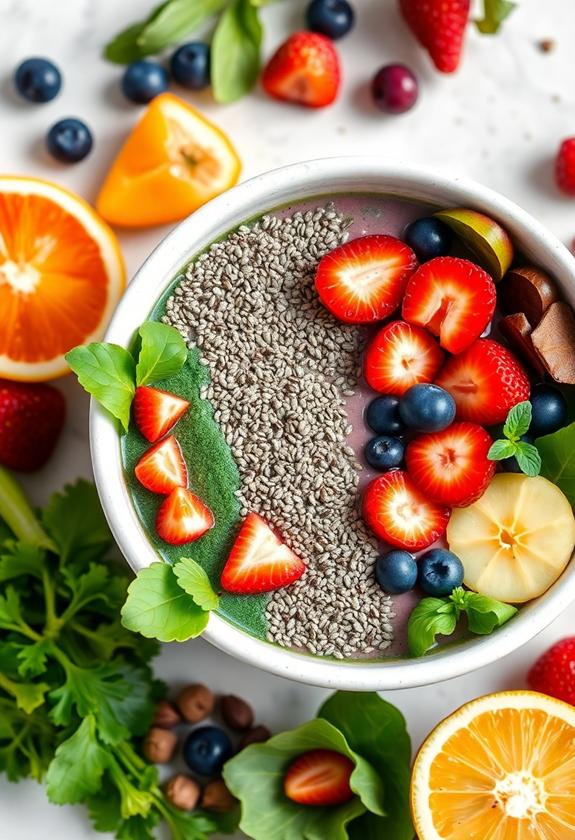
When adopting a vegan lifestyle, it's crucial to understand the potential nutrient deficiencies you might face. Your body needs a variety of nutrients, and some are harder to find in plant-based diets. Don't worry, though! With the right knowledge, you can easily maintain a healthy dietary balance. Vegan protein sources can be easily incorporated into smoothies to boost their nutritional value and help prevent deficiencies.
Common vegan nutrient deficiencies include vitamin B12, iron, and omega-3 fatty acids. It's important to learn about deficiency symptoms and their health impacts. Proper meal planning and smart food combinations can help you get the nutrients you need. Consider exploring supplementation options and paying attention to nutrient timing and macro ratios.
When it comes to smoothie recipes, you've got a fantastic opportunity to pack in those crucial nutrients! By understanding which nutrient sources work best in smoothies, you'll be well on your way to creating delicious, balanced vegan drinks that nourish your body and soul.
Protein Power in Plant-Based Smoothies
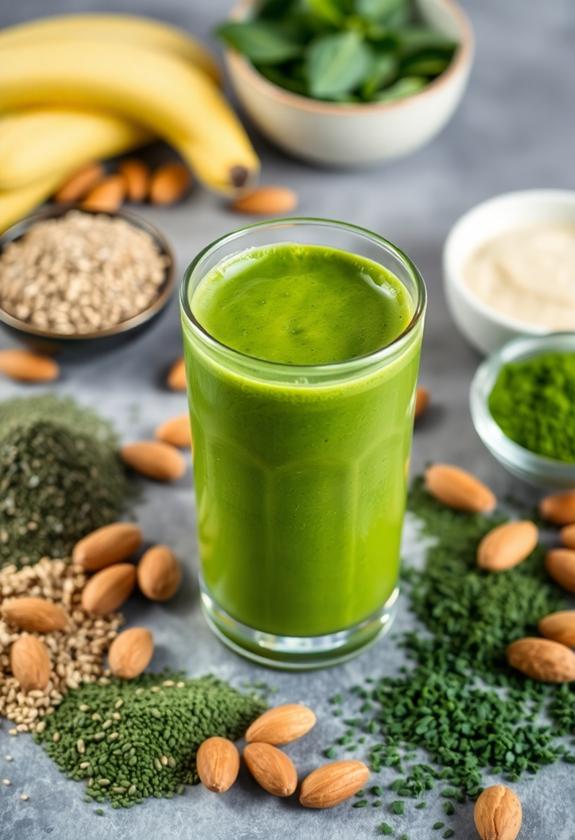
Protein is a key nutrient often overlooked in vegan diets, but it's essential for muscle health, energy, and overall wellbeing. Don't worry, though! You can easily boost your smoothie's protein content with plant-based sources. Delicious plant-based proteins can be incorporated into your smoothies to guarantee you meet your nutritional needs. Try adding a scoop of pea, hemp, or rice protein powder to your blend. These options not only pack a protein punch but also contribute to creamy smoothie textures you'll love.
For whole food protein sources, consider tossing in some chia seeds, flax seeds, or a handful of nuts. These ingredients will give your smoothie a satisfying thickness while providing essential amino acids. You can even experiment with silken tofu or plant-based yogurt for a protein-rich base. Remember, every little bit counts, so don't be afraid to mix and match these protein powerhouses in your next vegan smoothie creation!
Boosting Iron Absorption Naturally
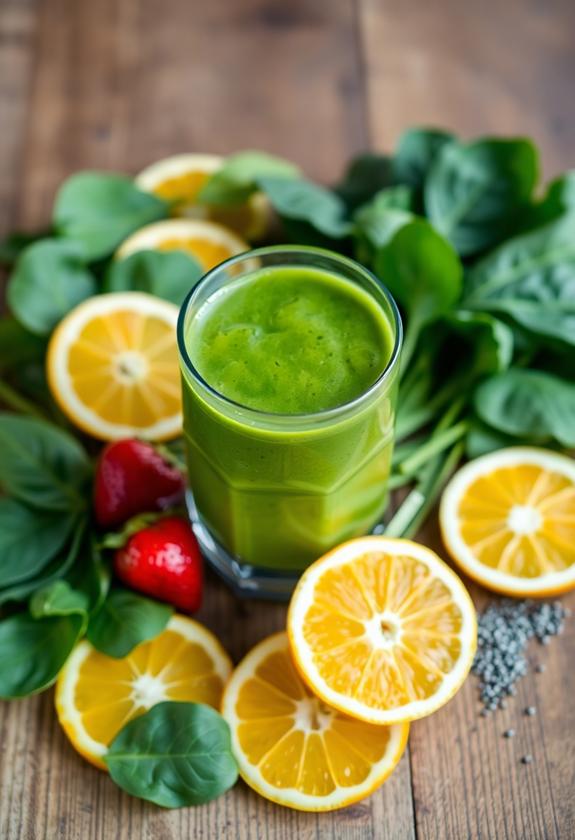
Beyond protein, iron is an essential nutrient that vegans need to pay attention to in their smoothies. You can boost iron absorption naturally by incorporating various spinach varieties and seed varieties like pumpkin or sesame seeds. Pairing these iron-rich ingredients with citrus fruits, which are high in vitamin C, can significantly improve iron absorption. Don't forget about food pairing and nutrient timing – consuming iron-rich foods separately from calcium-rich foods can enhance absorption. When crafting a vegan smoothie, it's vital to focus on nutrient balance and include a variety of plant-based ingredients to guarantee peak nutrition.
Consider adding fermented foods like sauerkraut or kimchi to your smoothies, as they can increase iron bioavailability. While cooking methods don't apply directly to smoothies, lightly steaming leafy greens before blending can make iron more accessible. If you're concerned about your iron levels, consult with a healthcare professional about herbal supplements that may support iron absorption.
Calcium-Rich Vegan Smoothie Ingredients
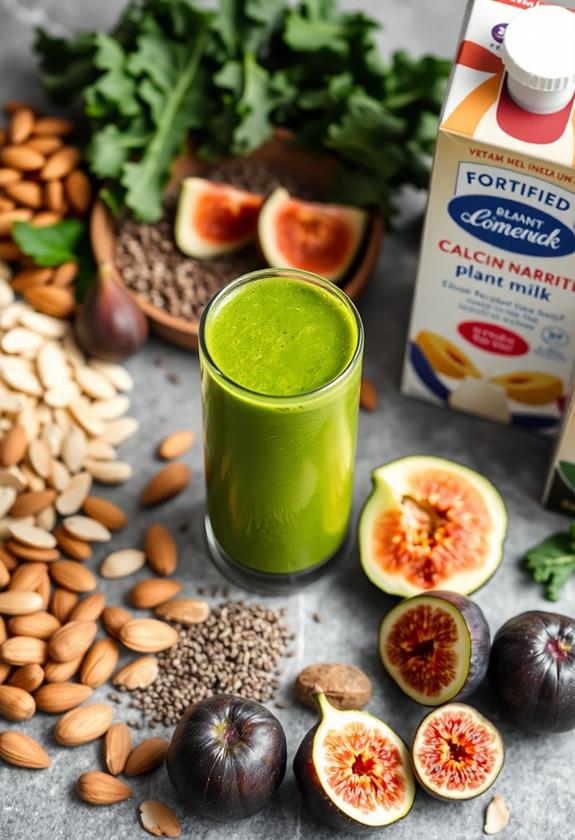
Considering calcium's significance for bone health, vegan smoothie enthusiasts should focus on plant-based sources of this essential mineral. You'll be happy to know that there are plenty of calcium-rich ingredients perfect for your smoothie recipes. Leafy greens like kale and spinach are excellent options, packed with nutrients and easy to blend. Don't forget about fortified plant-based beverages, such as nut milks, which can increase your calcium intake significantly. For added texture and nutrition, try incorporating chia seeds, which are surprisingly high in calcium. If you're feeling adventurous, blend in some silken tofu for a creamy boost. Healthy fats are also vital in vegan smoothies, helping with nutrient absorption and providing sustained energy. Sesame tahini and almond butter are delicious additions that not only improve flavor but also contribute to your calcium needs and healthy fat intake. With these diverse plant-based options, you can create delicious, calcium-rich smoothies that support your health and well-being.
Vitamin B12 Fortification Strategies
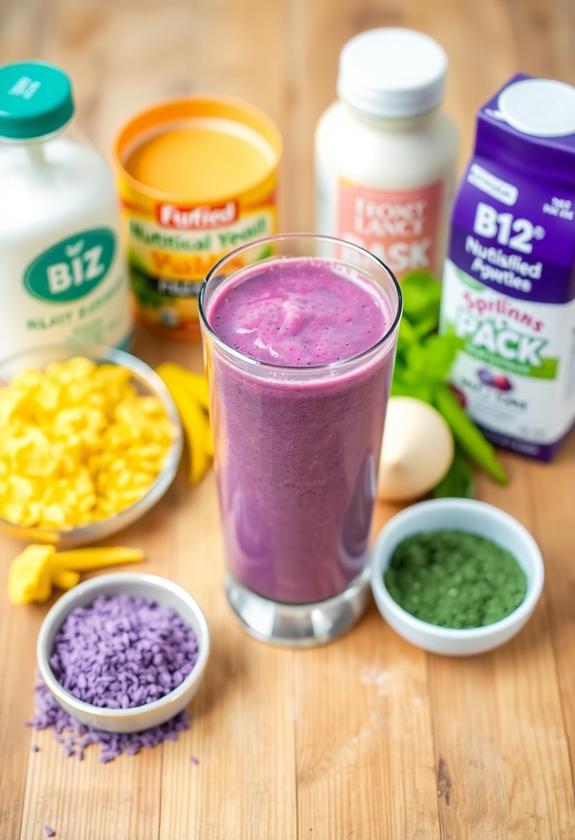
Turning our attention to vitamin B12, an important nutrient often lacking in vegan diets, it's crucial to develop effective fortification strategies for your smoothies. You'll want to focus on incorporating B12 supplements, which come in various forms like powders or liquids that can easily blend into your drink. Nutritional yeast is another excellent option, offering a cheesy flavor while boosting B12 content. When creating vegan meal replacements, it's important to take into account the overall nutritional balance of your smoothies to guarantee they provide adequate sustenance. Don't forget about fortified beverages, such as plant-based milks, which can serve as a great base for your smoothies. Dairy alternatives like soy or almond milk are often enriched with B12, making them perfect choices. By combining these ingredients, you're not only creating a delicious treat but also making sure you're meeting your B12 needs. Remember, a little effort goes a long way in maintaining your health!
Omega-3 Sources for Smoothies
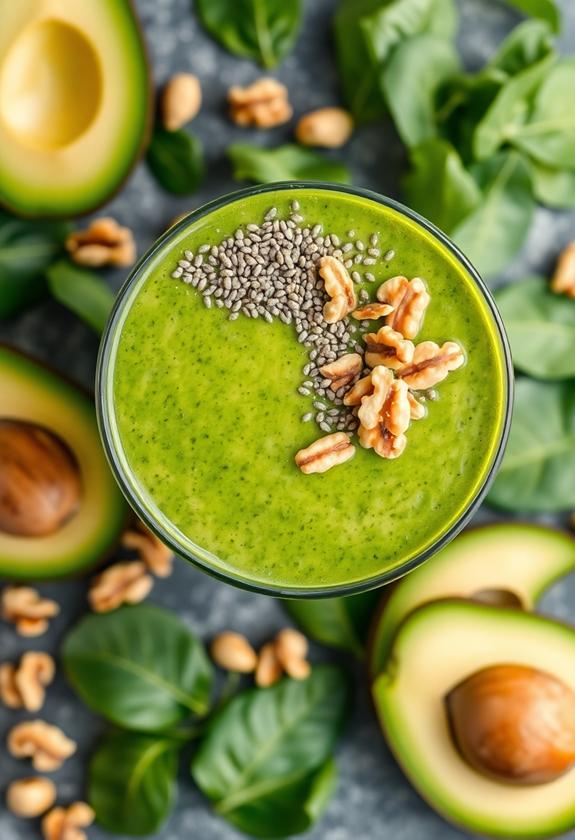
In terms of omega-3 sources for vegan smoothies, you've got several nutrient-dense options to choose from. These plant-based powerhouses can help you maintain a balanced diet and keep your body running smoothly. You'll love how easy it is to add these ingredients to your daily blend! Boost your smoothies with omega-3 supplements for an extra nutritional punch. This can be especially beneficial for those following a vegan diet.
- Flaxseed oil or meal: Packed with alpha-linolenic acid (ALA)
- Chia seeds: Rich in fiber and omega-3s
- Hemp hearts: Offer a perfect balance of omega-3 and omega-6
- Walnut milk: A creamy, nutty alternative to dairy
Don't forget about other options like algae powder, spirulina, pumpkin seeds, and seaweed snacks. You can even find fortified beverages to boost your omega-3 intake. With these delicious ingredients, you'll be well on your way to creating nutritious, omega-3-rich smoothies that'll keep you feeling great!
Zinc-Packed Smoothie Add-Ins
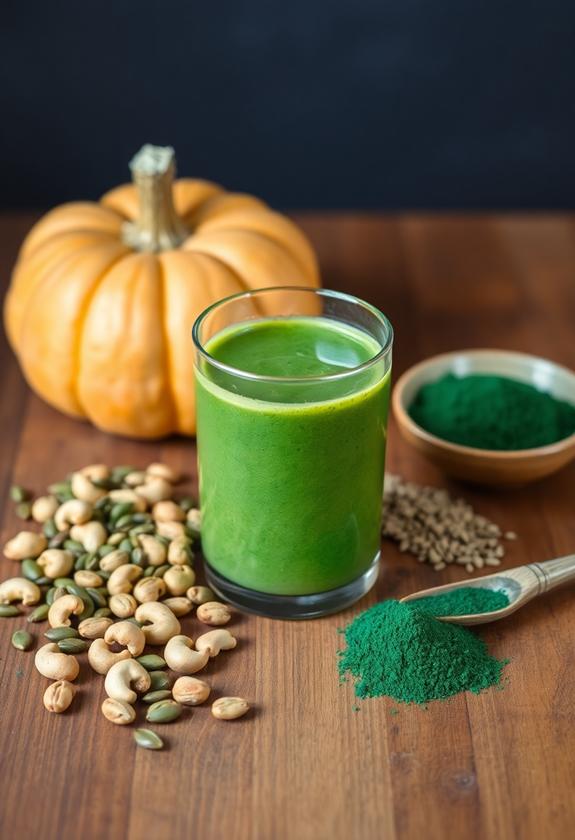
While omega-3s are important, zinc is another key nutrient for vegans to focus on. You'll want to incorporate zinc-rich ingredients into your smoothie recipes to support your immune system and overall health. When selecting ingredients, consider protein powder options that can complement your zinc sources and boost overall nutrition. Fortunately, there are plenty of delicious zinc sources you can add to your blends. Pumpkin seeds are a fantastic option, packed with zinc and adding a delightful crunch. You can also toss in some cashews or almonds for a creamy texture and zinc boost. Don't forget about chickpeas – they're not just for hummus! Blend them into your smoothies for a protein and zinc punch. If you're feeling adventurous, try adding a tablespoon of wheat germ or spirulina powder. These powerhouse ingredients will enhance your smoothies and help you meet your zinc needs effortlessly.
Vitamin D in Vegan Diets
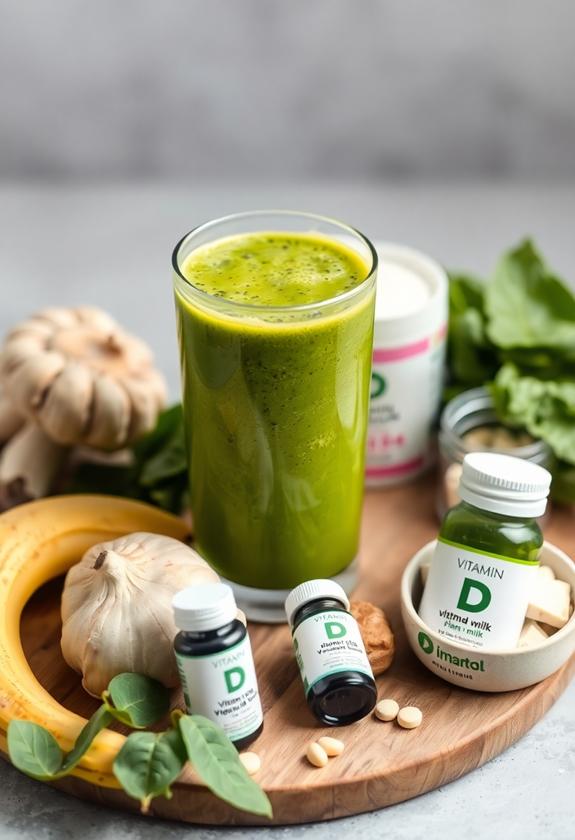
Vitamin D presents a unique challenge for vegans, as it's primarily found in animal-based foods and sunlight exposure. But don't worry! You can still meet your needs with some clever strategies. Sunlight exposure remains your best friend, as your skin synthesizes vitamin D when exposed to UVB radiation. However, seasonal variations and lifestyle factors can impact this natural process. While adaptogens can boost your smoothies for overall wellness, they don't specifically address vitamin D deficiency, so it's important to focus on other sources.
To guarantee you're getting enough vitamin D, consider these options:
- Spend 15-20 minutes in the sun daily, when possible
- Include fortified foods like plant-based milk and cereals in your diet
- Consider vegan supplements, especially during winter months
- investigate lesser-known dietary sources like mushrooms exposed to UV light
Iodine Considerations for Smoothie Recipes
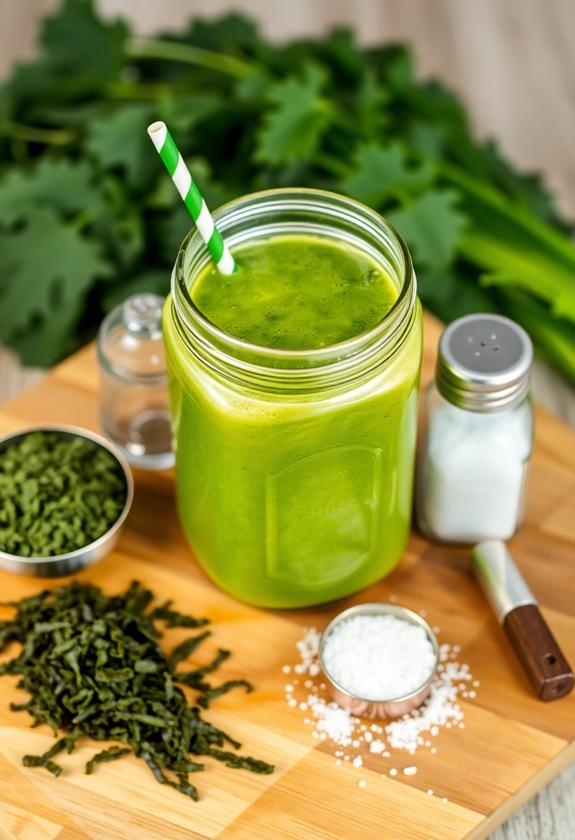
Let's turn our attention to iodine, an often-overlooked nutrient in vegan diets. You'll be happy to know that incorporating iodine into your smoothies isn't difficult! Sea vegetables are excellent iodine sources, and they're easy to add to your blends. Try sprinkling some dulse flakes or crumbled nori sheets into your next smoothie for a boost of this essential mineral. For those looking to boost protein naturally, sea vegetables can also contribute a small amount of plant-based protein to your smoothies.
If you're not a fan of sea vegetables, don't worry! You can still get your iodine fix by using iodized salt in your recipes or adding a drop of liquid iodine supplement to your smoothie. Remember, a little goes a long way with iodine, so start small and gradually increase as needed. By being mindful of your iodine intake, you're taking a great step towards a well-rounded, nutrient-rich vegan diet. Your body will thank you!
Balancing Essential Amino Acids
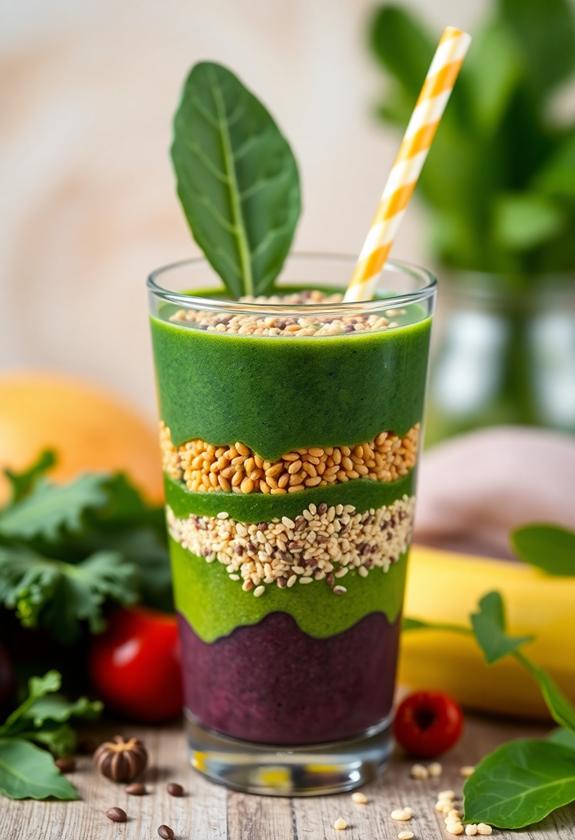
Many vegan smoothie enthusiasts overlook the importance of balancing essential amino acids in their blends. When you're crafting your plant-based smoothies, it's vital to take into account the amino acid profiles of your ingredients. By combining different plant proteins, you can create complete proteins that provide all the essential amino acids your body needs. Don't worry, it's easier than you might think! Nourishing vegan smoothies can be an excellent source of balanced nutrition when properly designed. These meal replacement options can help you maintain a healthy lifestyle while meeting your nutritional needs. Here are four simple ways to balance amino acids in your smoothie recipes:
- Mix legumes with grains (e.g., pea protein and quinoa)
- Combine nuts and seeds (e.g., almonds and chia seeds)
- Add leafy greens to your fruit smoothies
- Use a variety of high-quality plant protein powders
Incorporating Vitamin K2 Sources
While balancing amino acids is key, another often-overlooked nutrient in vegan smoothies is vitamin K2. This essential vitamin plays a vital role in bone and heart health, but it's not always easy to find in plant-based diets. Don't worry, though! You can incorporate K2-rich ingredients into your smoothies to boost your intake. Greens powders can also be an excellent way to add more nutrients, including vitamin K, to your smoothies. Fermented foods are excellent sources of vitamin K2, so try adding a splash of vegan kefir or kombucha to your blend. You can also experiment with natto, a fermented soybean product that's packed with K2. If you're not a fan of fermented flavors, consider using a high-quality K2 supplement in powder form. By being mindful of this important nutrient, you'll guarantee your vegan smoothies are not only delicious but also nutritionally complete. Your body will thank you for the extra care!
Addressing Vitamin A Deficiency
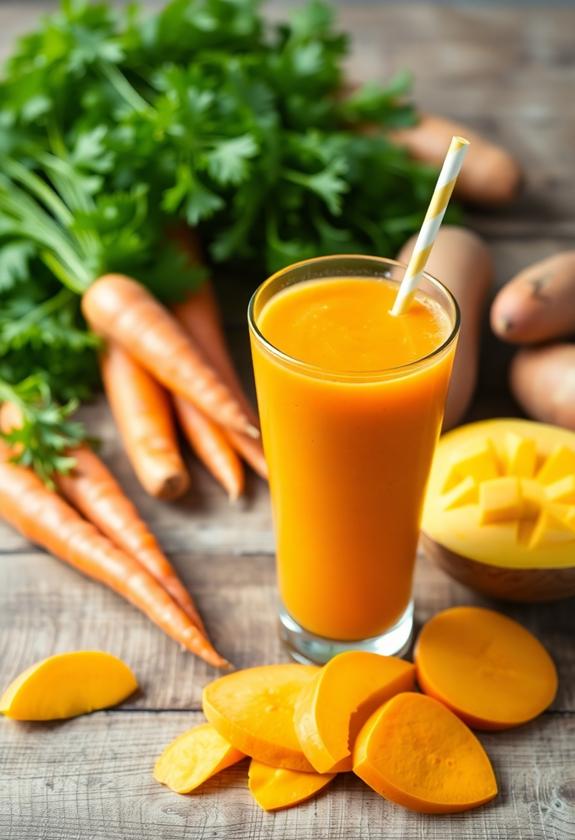
Vitamin A deficiency can sneak up on vegan smoothie enthusiasts, but it's easy to combat with the right ingredients. You'll be happy to know that there are plenty of plant-based sources rich in this essential nutrient. Carrot juice and sweet potato are fantastic options to add to your smoothies, packed with beta-carotene that your body converts to vitamin A. While these options are great for fighting inflammation, it's important to keep in mind that smoothies can soothe various health issues naturally.
To guarantee you're getting enough vitamin A in your vegan smoothies, try these simple tips:
- Add a quarter cup of carrot juice for a vibrant boost
- Blend in some cooked, cooled sweet potato for creaminess
- Include leafy greens like spinach or kale for extra nutrients
- Toss in a handful of dried apricots for natural sweetness
Magnesium-Rich Smoothie Components
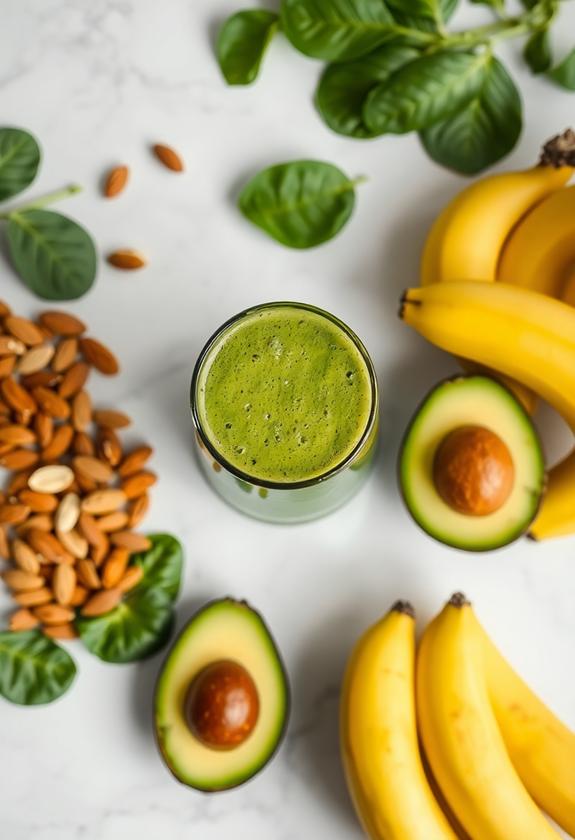
How can you guarantee your vegan smoothies are brimming with magnesium? It's easier than you might think! Start by incorporating magnesium-rich ingredients into your favorite smoothie recipes. Dark leafy greens like spinach and kale are excellent magnesium sources, and they blend seamlessly into most smoothies. Don't forget about nuts and seeds, too! Almonds, pumpkin seeds, and chia seeds are all fantastic options that'll boost your magnesium intake. These ingredients not only provide magnesium but also contribute to creating protein-packed smoothies that can serve as satisfying meal replacements.
For a delicious nutrient balance, try combining these magnesium powerhouses with other tasty ingredients. Bananas, berries, and plant-based milk create wonderful flavor combinations while complementing the magnesium-rich components. Remember, variety is key! By rotating different magnesium sources in your smoothies, you'll guarantee you're getting a wide range of nutrients. With these simple additions, you'll be well on your way to creating magnesium-packed vegan smoothies that'll keep you feeling energized and healthy.
Optimizing Nutrient Absorption Techniques
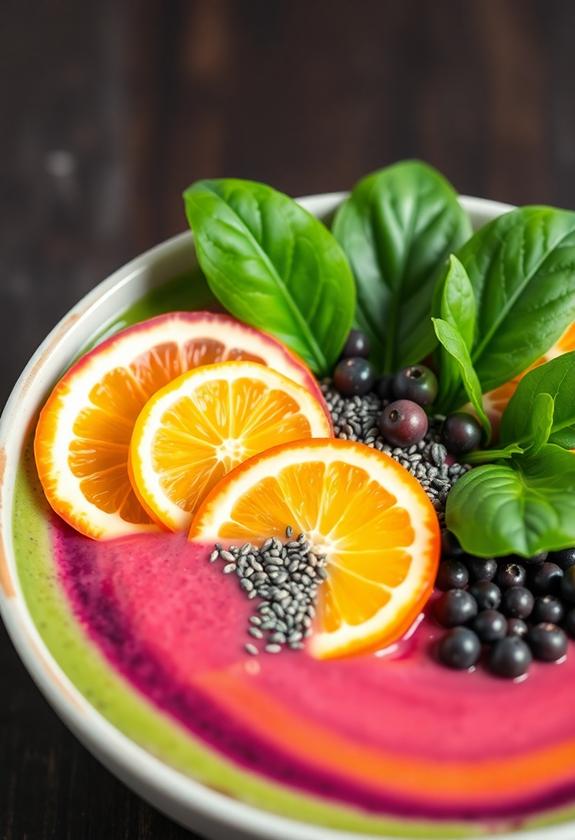
Now that we've covered magnesium-rich ingredients, let's focus on maximizing their benefits in your smoothies. Optimizing nutrient absorption is key to getting the most out of your vegan smoothies. By understanding nutrient synergy and supporting digestive health, you'll improve your body's ability to use these essential nutrients. Protein-rich smoothies are particularly effective for meal replacement, as they provide essential amino acids and promote satiety. This can help guarantee you're meeting your nutritional needs while following a vegan diet.
Four techniques to boost nutrient absorption:
- Pair iron-rich foods with vitamin C sources
- Add a pinch of black pepper to turmeric-containing smoothies
- Include healthy fats to absorb fat-soluble vitamins
- Use soaked or sprouted nuts and seeds for better mineral absorption
Frequently Asked Questions
Can Vegan Smoothies Replace Meals Entirely?
Like a gust of invigorating freshness, vegan smoothies can be a fantastic addition to your diet, but they shouldn't replace all your meals. While they're nutritious, relying solely on smoothies might not give you the full nutritional balance your body craves. It's best to mix things up! Enjoy smoothies as part of your meal frequency, but don't forget to include whole foods too. Your body will thank you for the variety, and you'll feel more satisfied throughout the day.
How Long Can I Store Homemade Vegan Smoothies?
You'll be happy to know that you can store your homemade vegan smoothies for a short while! For best results, keep them in an airtight container in the fridge for up to 24 hours. Remember, smoothie storage is all about ingredient preservation. Some ingredients, like bananas, might brown a bit, but don't worry – they're still safe to drink. If you're planning to store your smoothie, try adding a splash of lemon juice to help keep it fresh and vibrant!
Are There Any Potential Side Effects of Consuming Too Many Smoothies?
You might think smoothies are always healthy, but wait! There's a twist. While they're packed with goodness, too many can lead to unexpected issues. Smoothie moderation is key. You could experience blood sugar spikes, digestive discomfort, or even weight gain from excess calories. Don't worry, though! By focusing on nutrient balance and not relying solely on smoothies, you'll reap their benefits without the downsides. Remember, variety is the spice of life, and that applies to your diet too!
What's the Best Blender for Making Nutrient-Dense Vegan Smoothies?
When choosing a blender for nutrient-dense vegan smoothies, you'll want to look for powerful features that guarantee smooth consistency. A high-speed motor, sharp blades, and durable construction are key. You'll love how effortlessly it blends tough ingredients like leafy greens and frozen fruits. Consider models with pre-programmed settings for added convenience. Remember, investing in a quality blender will make your smoothie-making experience so much more enjoyable and help you create delicious, nutrient-packed drinks every time!
Can Children Safely Consume Vegan Smoothies as Part of Their Diet?
Yes, children can safely enjoy vegan smoothies as part of a balanced diet! You'll want to guarantee nutritional balance by including a variety of fruits, veggies, and plant-based proteins. It's best to introduce smoothies gradually, starting around 12-18 months old. As they grow, you can increase the variety and portion sizes. Remember, smoothies shouldn't replace whole foods entirely. Always consult your pediatrician for age recommendations and specific nutritional needs, especially if your child has any allergies or health concerns.