Some links below are affiliate links. We earn a commission on purchases at no extra cost to you. Although our opinions are based on curated research, we haven't used these products. Article generated with AI.

How to Add Protein Without Protein Powder
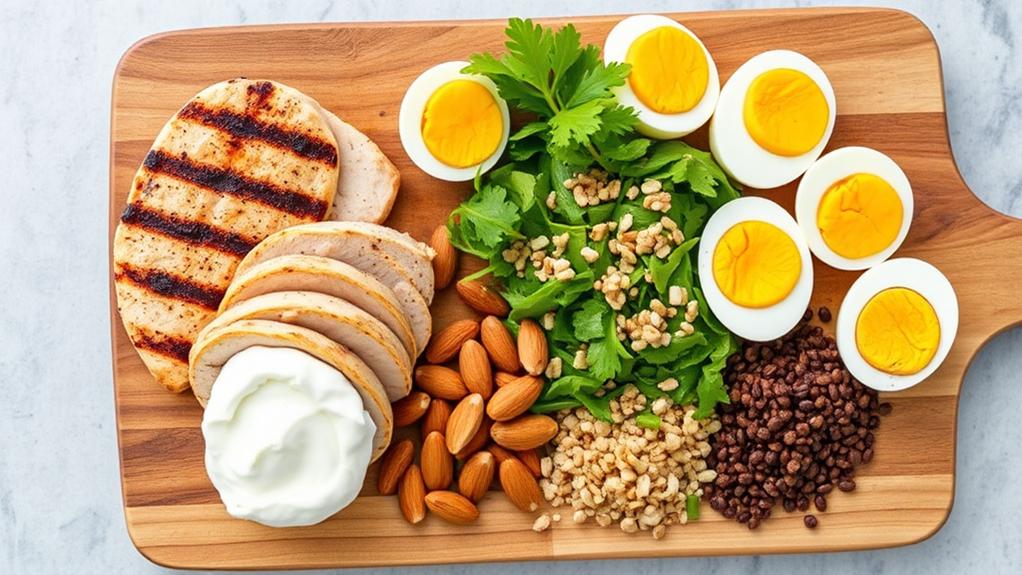
You don't need protein powder to boost your protein intake! There are plenty of delicious, natural options available. Try adding lean meats like chicken or fish to your meals, or opt for plant-based sources like quinoa, lentils, and chickpeas. Greek yogurt and cottage cheese are great dairy choices, while tofu and tempeh offer excellent alternatives. For snacks, reach for nuts, seeds, or hummus with veggies. You can even add beans to your smoothies for an extra protein kick. By incorporating these foods into your diet, you'll easily increase your protein intake while enjoying a variety of tasty meals. The world of protein-rich foods is vast and exciting to investigate!
Table of Contents
hide
Key Takeaways
- Incorporate lean meats and fish like chicken breast, turkey, and salmon into meals for high-quality protein.
- Add legumes such as lentils, chickpeas, and black beans to dishes for plant-based protein.
- Include dairy products like Greek yogurt and cottage cheese in your diet for protein-rich snacks and meals.
- Use quinoa as a versatile, protein-packed grain in salads, sides, and main dishes.
- Snack on nuts, seeds, and nut butters for quick protein boosts throughout the day.
High-Protein Plant-Based Foods
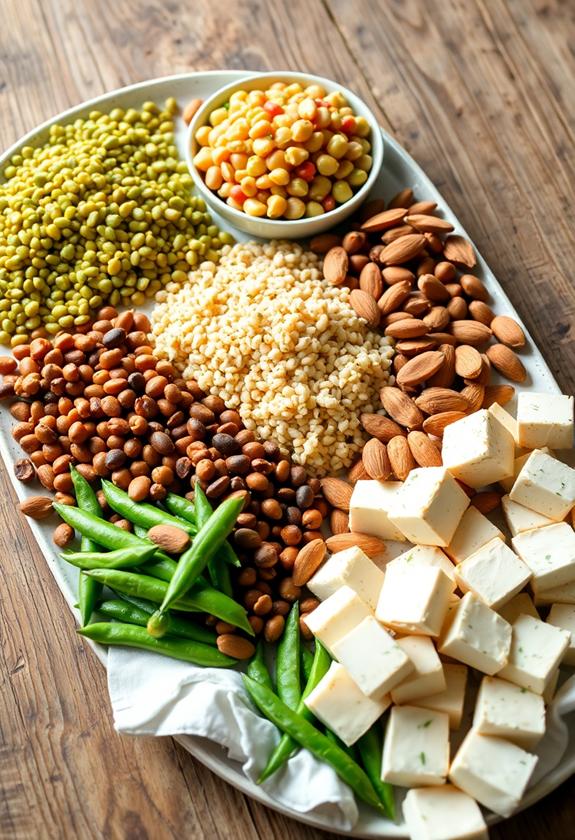
While many people associate protein with animal products, numerous plant-based foods are rich in this essential nutrient. You'll be amazed at how easy it is to boost your protein intake with delicious vegetarian options. Try a hearty quinoa salad packed with colorful veggies, or whip up a savory tempeh stir fry for dinner. For those looking to replace meals entirely, protein-packed smoothies can be an excellent option, providing a quick and nutritious alternative. Craving something warm and comforting? A spicy chickpea curry or a steaming bowl of lentil soup will hit the spot. For a quick protein boost, sprinkle hemp seeds on your morning oatmeal or blend them into smoothies. Don't forget about edamame – these tasty green soybeans make a perfect protein-rich snack or addition to your favorite bowl. With these plant-based options, you'll never feel like you're missing out on protein. Your body and taste buds will thank you!
Lean Meats and Fish Options
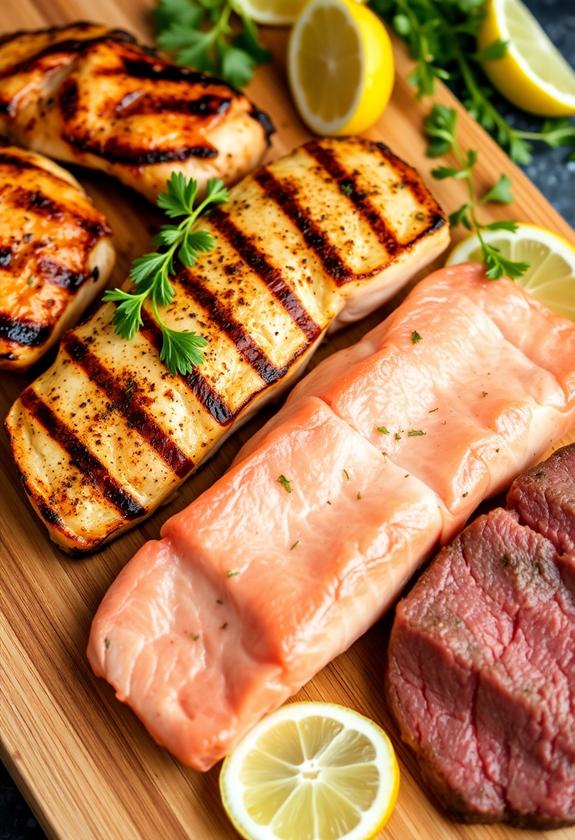
In terms of lean meats and fish, you're spoiled for choice. Chicken breast, turkey, and lean cuts of beef are excellent protein sources that'll keep you feeling full and energized. Don't forget about pork tenderloin, which is surprisingly lean and versatile. Regarding seafood varieties, options like salmon, tuna, and cod are not only protein-packed but also rich in heart-healthy omega-3 fatty acids. These protein-rich options are perfect for creating meal replacement smoothies that can help you meet your nutritional needs without relying on protein powder.
To make the most of these protein sources, try different grilling techniques. A simple marinade can add flavor without extra calories, and grilling helps retain nutrients while giving your food a delicious smoky taste. Remember, portion control is key – aim for a palm-sized serving of lean meat or fish with each meal. By incorporating these options into your diet, you'll easily boost your protein intake without relying on powders.
Dairy and Egg Alternatives
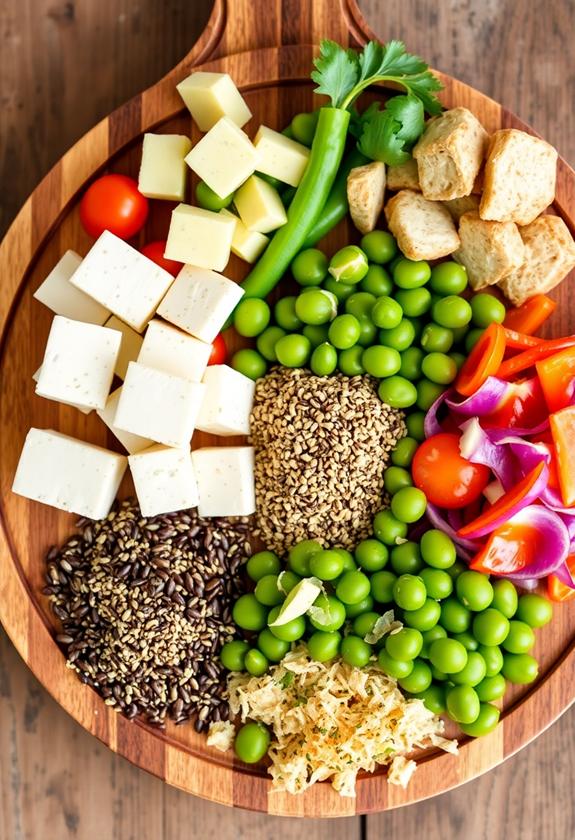
Moving beyond animal proteins, let's investigate dairy and egg alternatives that can boost your protein intake. Cottage cheese is a fantastic option, packed with protein and easy to incorporate into meals. You'll love its versatility – try it in salads, as a dip, or even in pancakes! Greek yogurt is another protein powerhouse that's creamy and delicious. It's perfect for breakfast, smoothies, or as a substitute for sour cream in recipes. For those looking to add more plant-based options, consider incorporating vegan protein sources into your smoothies for a nutritious boost.
For those avoiding dairy, don't worry! There are plenty of plant-based alternatives. Tofu and tempeh are excellent sources of protein that can be seasoned to your liking. Nutritional yeast is a tasty, cheese-like option that's great sprinkled on popcorn or pasta. And don't forget about legumes like lentils and chickpeas – they're protein-rich and incredibly filling.
Protein-Rich Snacks and Spreads
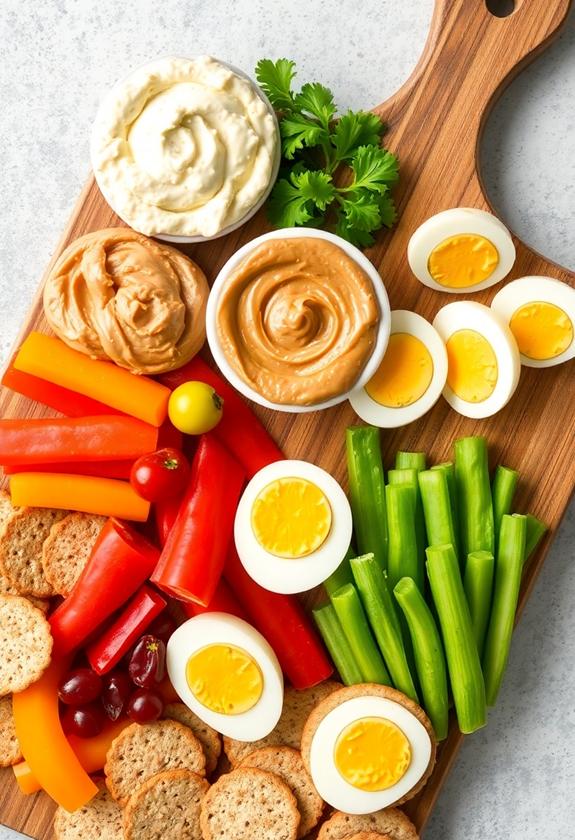
Snack time offers a perfect opportunity to boost your protein intake without resorting to powder. You'll love these delicious and nutritious options that are easy to prepare and enjoy on-the-go. Protein-packed smoothies can also serve as an excellent post-workout snack to aid muscle recovery. Nut butter alternatives, like sunflower seed or pumpkin seed butter, are packed with protein and healthy fats. Spread them on whole-grain crackers or apple slices for a satisfying snack. Don't forget about protein bars, which come in a variety of flavors and can be homemade or store-bought.
Here are some more protein-rich snacks and spreads to try:
- Greek yogurt with berries and a drizzle of honey
- Hard-boiled eggs with a sprinkle of salt and pepper
- Hummus with carrot sticks or cucumber slices
- Edamame pods, lightly salted and steamed
These options will keep you feeling full and energized throughout the day, while providing the protein your body needs.
Incorporating Legumes and Grains
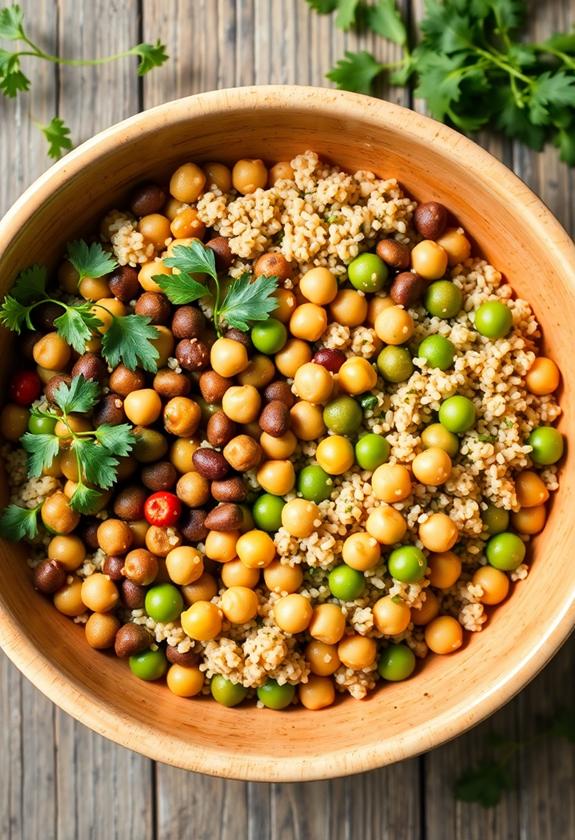
Beyond snacks, legumes and grains offer excellent sources of plant-based protein that you can easily incorporate into your meals. Investigate various legume varieties like lentils, chickpeas, and black beans, which are not only protein-packed but also rich in fiber. You can add these to salads, soups, or stews for a hearty boost. Don't forget about grain combinations, too! Quinoa, for example, is a complete protein that pairs wonderfully with vegetables or as a base for grain bowls. Try mixing brown rice with beans for a classic, protein-rich combo. When creating smoothies, consider adding cooked and cooled legumes or grains to balance your macros and increase protein content without relying on powder supplements. You'll love how versatile these options are, and your body will thank you for the nourishing benefits. Remember, small changes in your diet can make a big difference in your overall health and well-being. Welcome these wholesome additions and enjoy the delicious results!
Frequently Asked Questions
Can I Meet My Protein Needs Without Supplements if I'm an Athlete?
You're a champion in the making, and your body's a well-oiled machine! Absolutely, you can meet your protein needs without supplements. Welcome plant-based sources like beans, lentils, and quinoa. Pack your day with high-protein snacks, such as Greek yogurt or hard-boiled eggs. Meal prep becomes your secret weapon, allowing you to create protein-rich recipes in advance. Don't forget to mix it up with lean meats, fish, and tofu. With a little planning, you'll fuel your athletic pursuits naturally and deliciously!
How Does Protein Timing Affect Muscle Growth and Recovery?
You'll be excited to know that protein timing can really boost your muscle growth and recovery! When you eat protein, you kickstart protein synthesis, which helps build and repair muscles. There's a "recovery window" right after your workout when your body's extra hungry for nutrients. Try to have some protein within 30 minutes of exercising. But don't worry too much – spreading your protein intake throughout the day is also great for keeping your muscles happy and strong!
Are There Any Risks Associated With Consuming Too Much Protein?
You might be wondering if there are risks to eating too much protein. While it's generally safe, consuming excessive amounts can lead to protein toxicity, which may affect your renal health. Don't worry, though! It's rare for most people to reach this point. Your body's amazing at processing protein, but it's always good to be mindful. If you have any concerns, it's best to chat with your doctor. They'll help you find the right balance for your unique needs.
How Does Age Impact Protein Requirements for Optimal Health?
As you age, your protein needs change due to age-related changes in your body. You'll need more protein to maintain muscle mass and support muscle synthesis. After 50, your body doesn't use protein as efficiently, so you'll want to increase your intake. Aim for about 1-1.2 grams of protein per kilogram of body weight daily. Don't worry, though! With a balanced diet and some attention to your protein intake, you can easily meet these needs and keep your body strong and healthy.
What's the Best Protein-To-Carb Ratio for Weight Loss and Muscle Maintenance?
Like a delicate balance on a seesaw, finding the right protein-to-carb ratio is key for your weight loss and muscle goals. You'll want to aim for about 30% protein and 40% carbs in your diet. Focus on lean protein sources like chicken, fish, and legumes. Don't forget about meal timing! Spread your protein intake throughout the day, especially after workouts. Remember, everyone's needs are different, so listen to your body and adjust as needed. You've got this!