Some links below are affiliate links. We earn a commission on purchases at no extra cost to you. Although our opinions are based on curated research, we haven't used these products. Article generated with AI.

How to Balance Macros in Smoothies
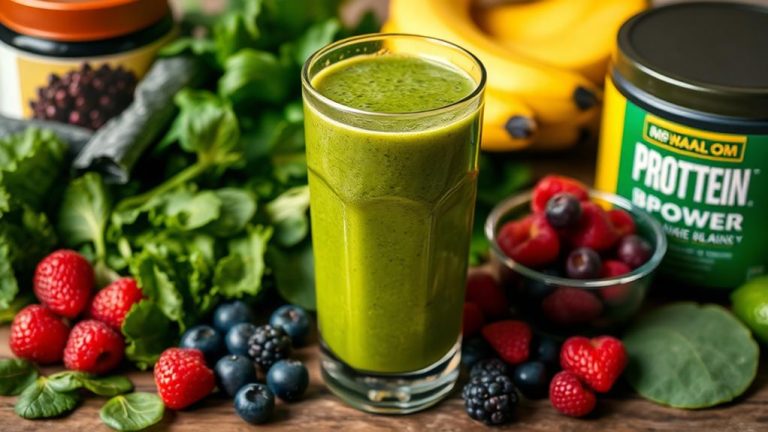
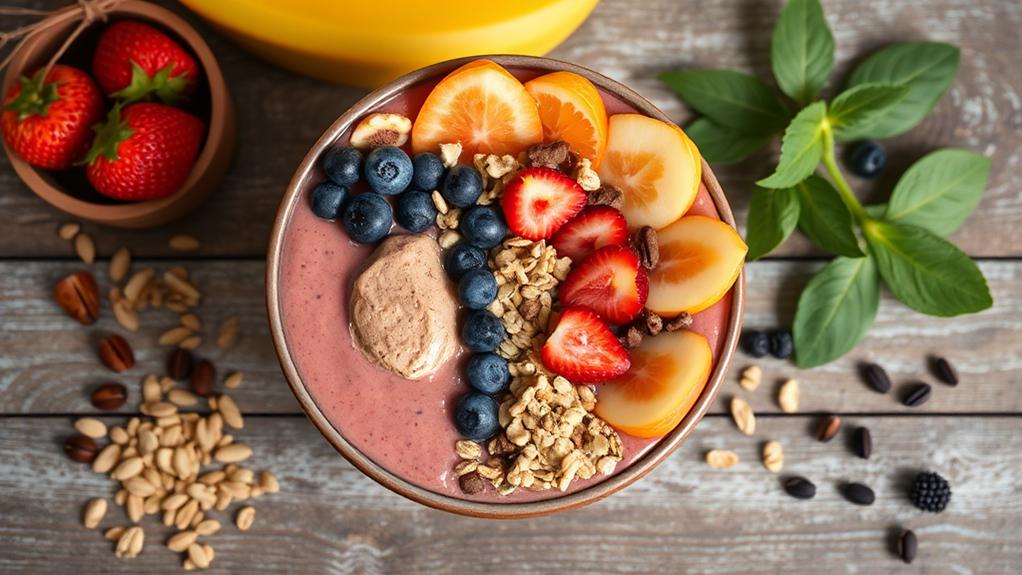
Balancing macros in your smoothies is a delightful way to guarantee they're both tasty and nutritious. Start with a base of fruits like bananas or berries for carbohydrates, providing quick energy and natural sweetness. Add Greek yogurt or a scoop of protein powder for muscle repair and satiety. For healthy fats, toss in some avocado or a spoonful of nut butter to keep you feeling full longer. Don't forget to include greens like spinach for added vitamins and minerals. Balancing these macros will help you stay energized and satisfied throughout the day. You're just beginning on the path to perfect smoothies!
Table of Contents
hide
Key Takeaways
- Incorporate a mix of fruits, vegetables, and oats for balanced carbohydrates.
- Add protein sources like Greek yogurt, protein powder, or nut butters.
- Use healthy fats such as avocado, chia seeds, or flaxseed oil.
- Monitor portion sizes to avoid excess calorie and carbohydrate intake.
- Adjust macro ratios based on individual dietary needs and fitness goals.
Understanding Macros
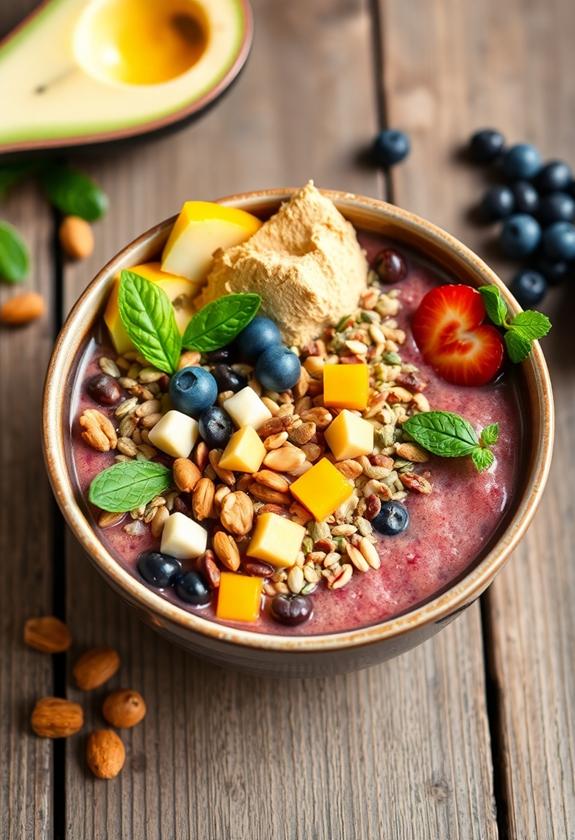
In the domain of creating balanced smoothies, understanding macros is vital. You'll need to know about the three main macronutrient types: carbohydrates, proteins, and fats. Each one plays a significant role in your smoothie's nutritional value and consistency. Understanding these macronutrient basics is essential for achieving ideal health and energy levels through your smoothie creations. Carbs provide quick energy and can come from fruits like bananas. Proteins, found in ingredients like Greek yogurt or protein powder, help with muscle repair and keep you full. Fats, sourced from avocados or nuts, offer long-lasting energy and creamy texture. Balancing these macronutrient types guarantees your smoothie isn't just tasty, but also nourishing. Blend thoughtfully, and you'll enjoy a drink that's both delicious and perfectly balanced, supporting your health goals every sip of the way.
Importance of Balanced Macros
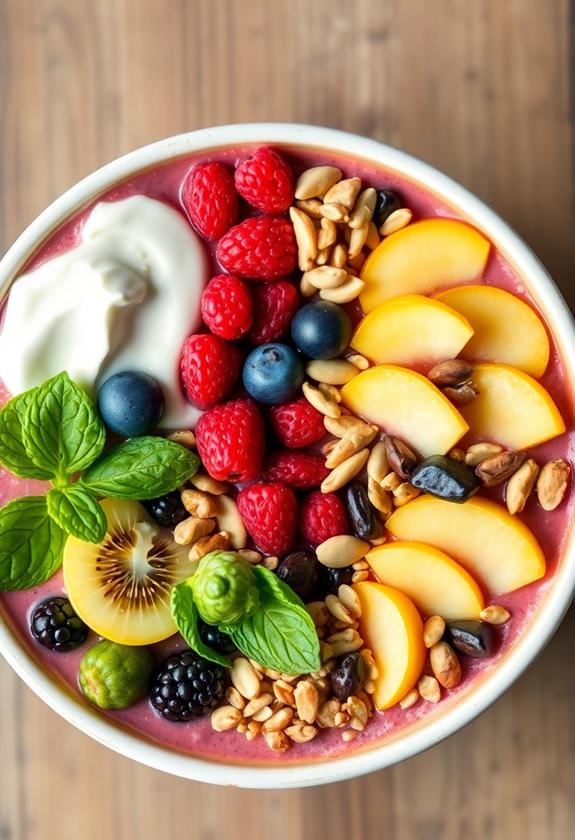
Achieving balanced macros in your smoothies is essential for ideal health and nutrition. By ensuring a mix of carbs, proteins, and fats, you can support your body's needs throughout the day. Balanced macros help with nutrient timing, providing energy when you need it most, and aiding in muscle repair after a workout. It's not just about throwing ingredients into a blender; thoughtful meal prep can make all the difference. When you plan your smoothies, you're setting yourself up for success, making sure each sip is packed with the right nutrients. Calculating perfect macros for your smoothie can help you achieve your fitness goals more effectively. This thoughtful approach not only boosts your energy but also keeps you feeling full and satisfied longer. So, take a moment to balance those macros and enjoy the benefits!
Protein-Rich Ingredients
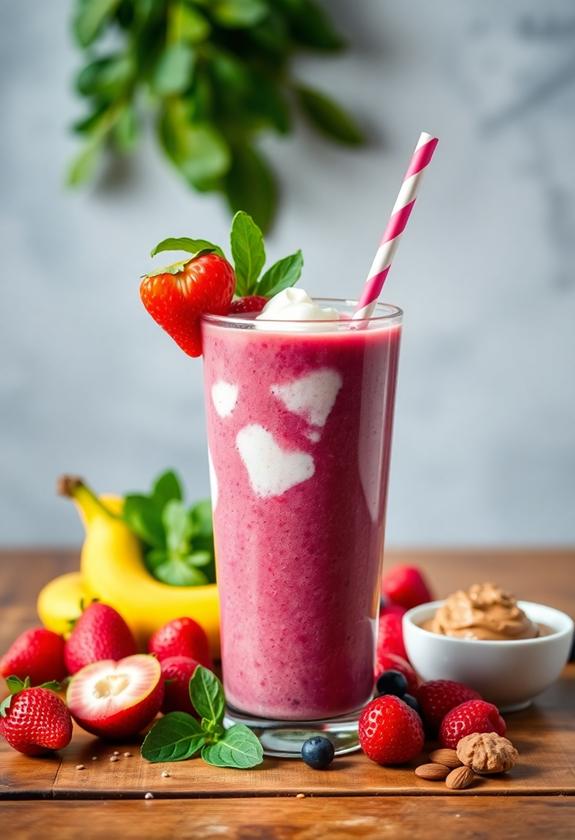
Boost your smoothie's nutritional value by incorporating protein-rich ingredients. You can investigate various protein sources to give your smoothie a protein boost. When selecting a protein powder, consider factors like taste, texture, and nutritional content. Choosing the perfect powder can greatly improve your smoothie experience. Try plant proteins like chia seeds, hemp seeds, or even legumes like chickpeas. Dairy options, such as Greek yogurt or cottage cheese, pack a protein punch. For convenience, protein powders are perfect, coming in flavors like vanilla or chocolate. Nut butters, like almond or peanut butter, add both flavor and protein. Don't forget about protein-rich fruits like avocado or guava. Seed toppings, such as flaxseeds, are also excellent. Yogurt choices vary, so pick high-protein versions for an extra kick. These additions not only improve taste but also guarantee you're getting the protein you need.
Healthy Fat Sources
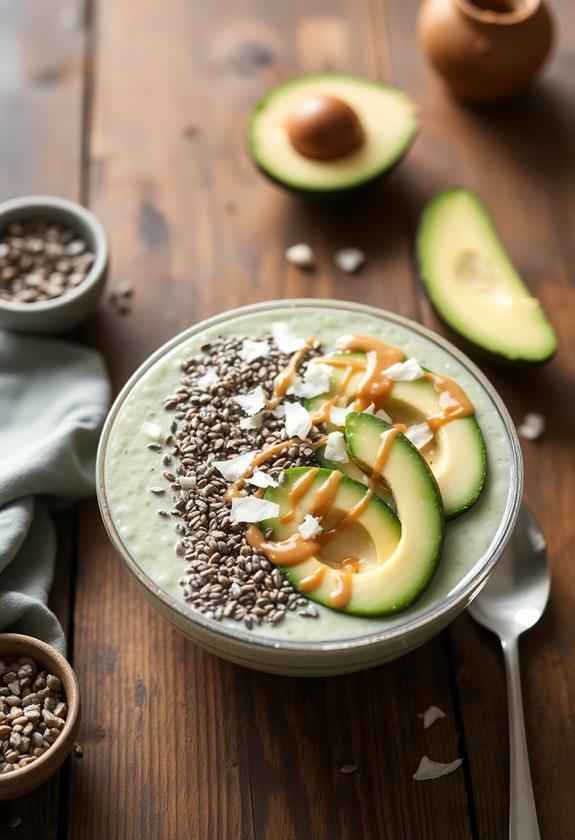
Healthy fat sources can improve your smoothie to a new level of deliciousness while promoting satiety and overall wellness. Adding healthy fats helps you stay full longer and supports heart health. Vegan meal replacements can benefit greatly from the inclusion of healthy fats, providing essential nutrients and improving overall nutritional balance. Here are some fantastic options to keep in mind:
- Avocado benefits: Creamy and rich in healthy fats, avocados add a smooth texture and keep you satisfied.
- Nut butter and nut milks: Almond butter, peanut butter, and nut milks like almond or cashew add protein and healthy fats.
- Seeds and oils: Chia seeds, flaxseed oil, hemp hearts, and pumpkin seeds pack in omega-3s and fiber. You can also try a splash of olive oil or coconut oil for a unique twist.
Don't forget Greek yogurt for creaminess and extra protein!
Carbohydrate Options
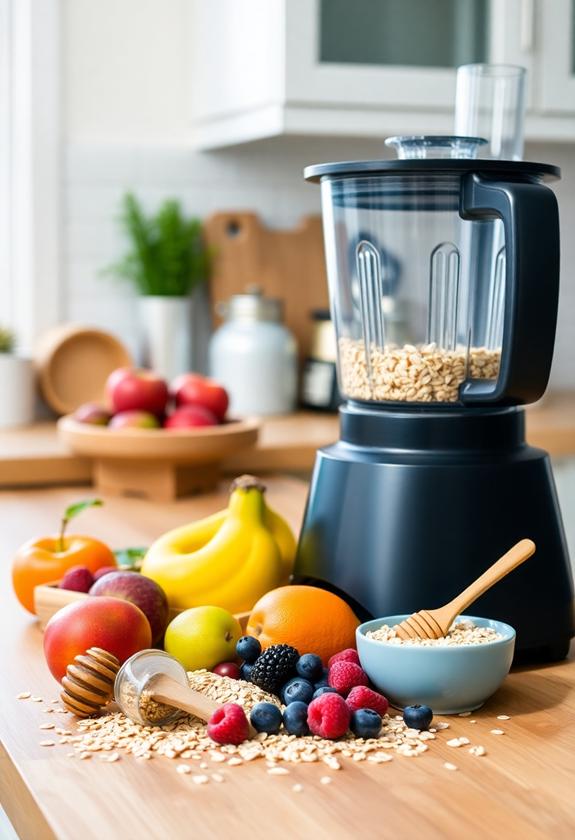
When crafting the perfect smoothie, choosing the right carbohydrate options is essential for energy and overall balance. Start with delicious fruit choices like bananas, berries, or mangoes for natural sweetness and fiber sources. Consider adding sweetener options such as honey or maple syrup, but use them sparingly. Grain additions like oats can boost texture variations and keep you full longer. Don't forget vegetable blends; spinach or kale can add nutrients without overpowering flavor improvements. Pay attention to portion sizes to avoid excess carbs. Using seasonal ingredients guarantees freshness and peak flavor. For inspiration, investigate balanced macro recipes that combine various carbohydrate sources effectively. Experiment with different combinations to find your perfect balance of taste and nutrition. Finally, think about nutrient timing; having a smoothie with the right carbs can fuel your day or help you recover after exercise.
Ideal Protein Ratios
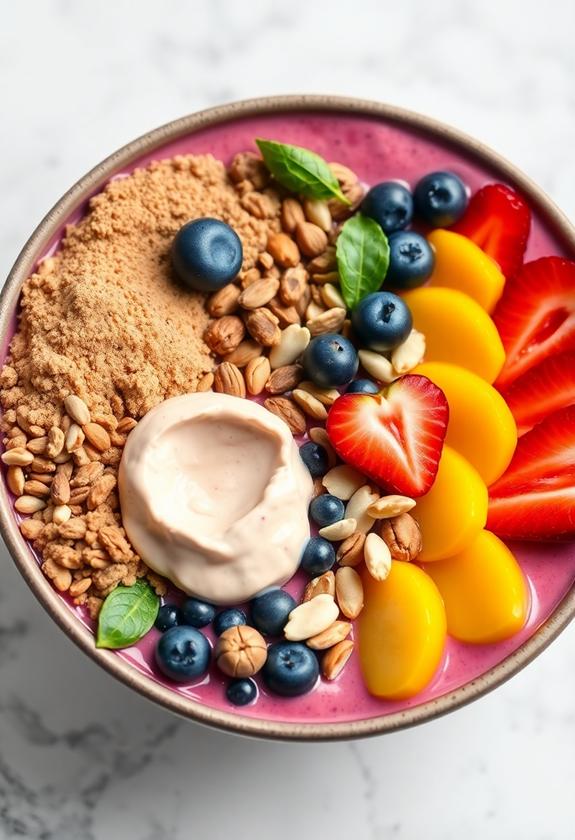
Finding the ideal protein ratios for your smoothie can make a significant difference in achieving your nutritional goals. You want to guarantee that your smoothie supports muscle growth, keeps you full, and fits into your macro cycling plan. Meal replacement smoothies are an excellent way to incorporate protein into your diet, especially when you're on the go or looking for a quick, nutritious option. Here are three quick tips for perfecting your protein timing and ratios:
- Aim for 15-25 grams of protein: This range is ideal for most people and helps with muscle recovery and satiety.
- Balance with carbs and fats: Ensure your smoothie isn't just protein; include healthy carbs and fats for a well-rounded meal.
- Consider your protein source: Whey, plant-based, or even Greek yogurt can be great options, depending on your dietary preferences and needs.
Balancing Fats
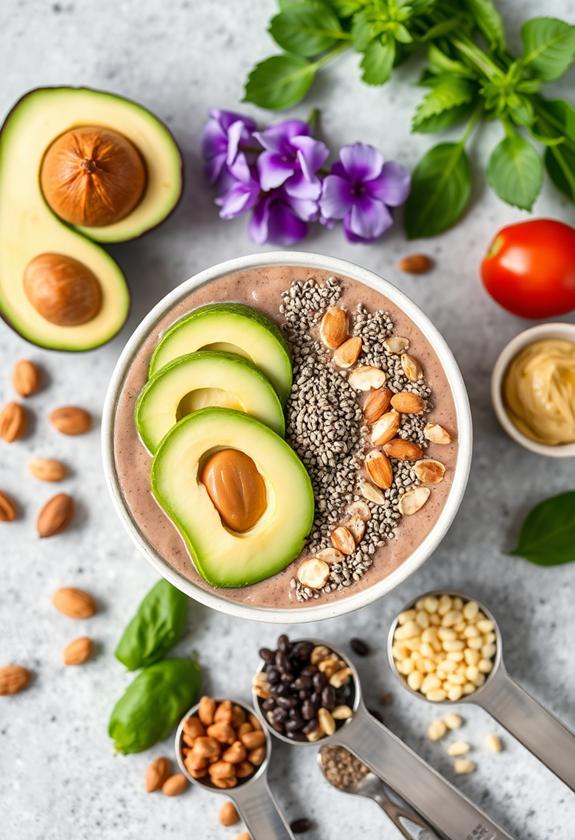
Balancing fats in your smoothie is essential for creating a nutritious and satisfying drink. Fats add nutrient density and improve flavor balance, making each sip richer. To perfect your smoothie texture, consider ingredient combinations like avocado, nuts, or seeds. These not only blend well but also cater to various dietary preferences. Adding plant-based proteins to your smoothie can further augment its nutritional profile and help you feel fuller for longer. Some excellent options include hemp seeds, chia seeds, and pea protein powder.
Portion control is key; a tablespoon of nut butter or a quarter of an avocado can make a big difference without overwhelming your drink. Experiment with different flavor profiles to find what suits your taste buds best. Blending techniques matter too; start slow and gradually increase speed to guarantee everything mixes smoothly. With thoughtful choices, you can create a delicious and balanced smoothie every time.
Adjusting Carbs
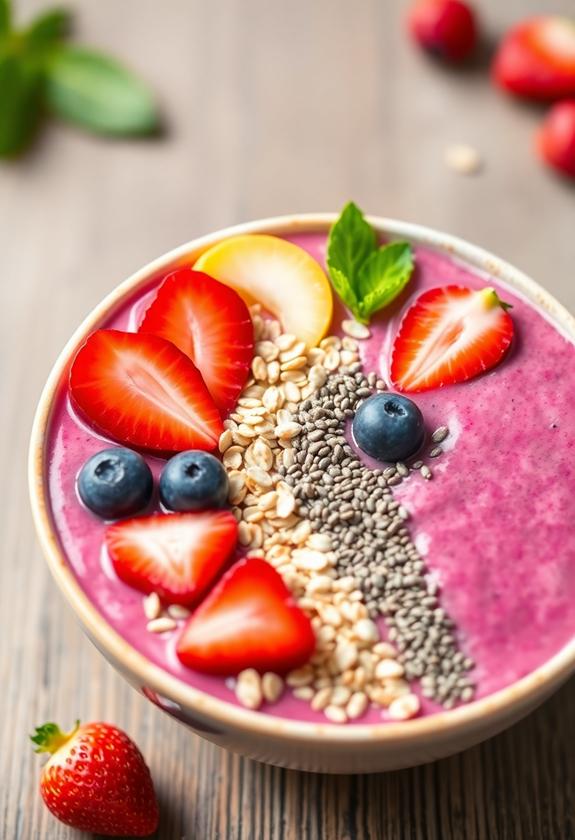
Adjusting carbs in your smoothie is essential for maintaining balanced energy levels and meeting your dietary goals. You've got plenty of options to tweak those carbs to fit your needs perfectly. For a low-calorie option that keeps you full, consider incorporating ingredients like Greek yogurt or chia seeds.
- Carb Sources: Choose high-quality carbs like fruits, oats, or sweet potatoes. These provide sustained energy and essential nutrients.
- Carb Timing: Think about when you'll drink your smoothie. Pre-workout? Post-workout? Adjust carb ratios accordingly.
- Carb Combinations: Mix different carb sources for better nutrition. Pair fruits with leafy greens to balance sugars and fibers.
Consider carb loading for energy-intensive days or carb cycling to vary intake based on activity levels. Don't forget, carb alternatives like cauliflower or zucchini can be great low-carb options. Balancing carbs is key to a satisfying smoothie!
High-Protein Smoothie Recipes
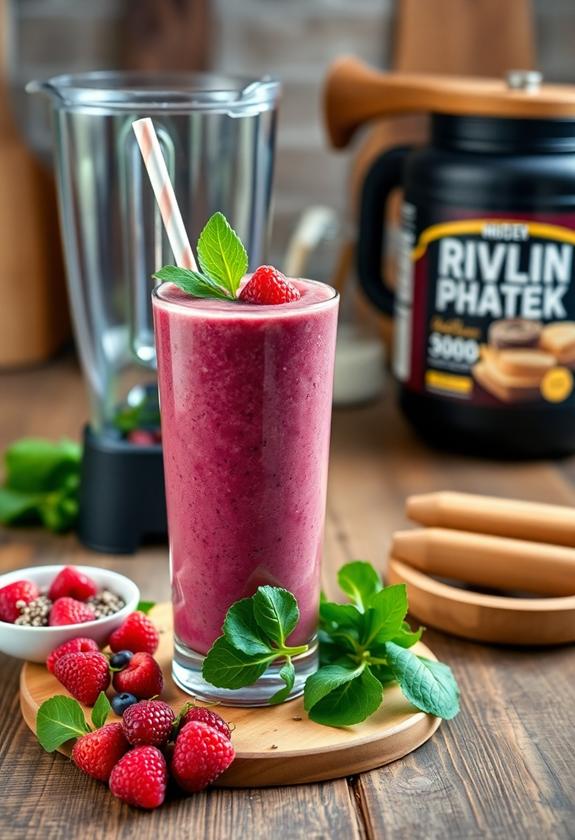
When you're adjusting carbs in your smoothies, it's also a great opportunity to think about improving the protein content. Adding protein powder to your smoothie bases can make them perfect for post workout recovery or as a meal replacement. Revitalize your muscles with protein-packed smoothies that aid in muscle recovery and growth. These nutrient-dense drinks are an excellent way to support your fitness goals. Use blending techniques to mix in seasonal ingredients like berries or pumpkin for flavor improvements. For nutrient timing, enjoy your smoothie bowls in the morning or after a workout. Experiment with ingredient substitutions, such as Greek yogurt instead of milk, to increase protein. Choose high-quality protein powder to guarantee you're getting the best nutrients. By balancing your ingredients thoughtfully, you create delicious, high-protein smoothies that support your health goals and satisfy your taste buds.
Low-Carb Smoothie Recipes
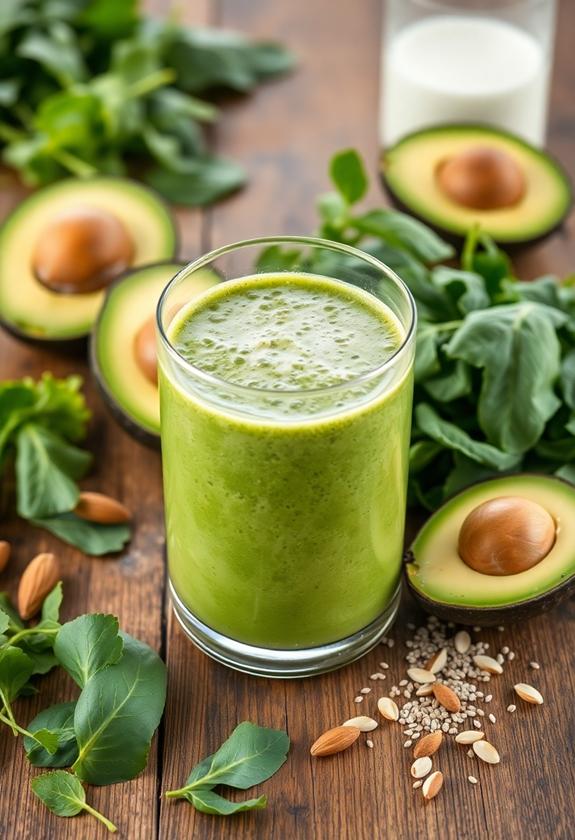
Low-carb smoothies are a fantastic way to enjoy a delicious, nutrient-packed drink without spiking your blood sugar. By focusing on nutrient timing and smart ingredient substitutions, you can craft perfect smoothies. When deciding between high-protein or high-carb smoothies, consider your fitness goals and dietary needs. Here are three tips to get you started:
- Flavor Combinations: Mix seasonal fruits like berries with leafy greens for a naturally sweet yet low-carb blend.
- Texture Improvement: Add chia seeds or avocado for a creamy texture that keeps you full longer.
- Superfood Additions: Boost your smoothie with superfoods like spirulina or collagen for extra nutrition.
Consider your dietary preferences and portion control when prepping smoothies. Different blender types can affect texture, so choose one that suits your needs. Enjoy experimenting and finding your perfect low-carb blend!
High-Fat Smoothie Recipes
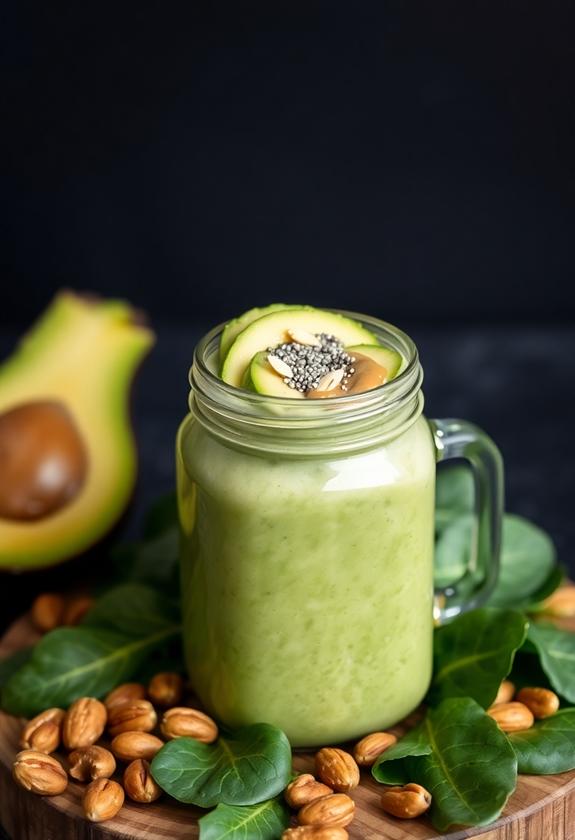
High-fat smoothie recipes are perfect for those looking to increase their healthy fat intake while enjoying a delicious beverage. You can start with avocado, which offers amazing benefits for your heart and skin. Add a spoonful of nut butter for rich flavor and protein. Coconut cream adds a creamy texture and more healthy fats. Sprinkle in some chia seeds and flaxseed to boost nutrition. For an energy kick, try MCT oil. Greek yogurt provides protein and a tangy taste, while almond milk keeps it dairy-free. To make it even more filling, you can add protein powders. If you prefer to boost protein naturally, consider adding cottage cheese or silken tofu for a creamy texture and extra protein without supplements. Don't forget a bit of dark chocolate for a touch of indulgence. Enjoy your tasty, nutrient-packed smoothie!
Common Mistakes
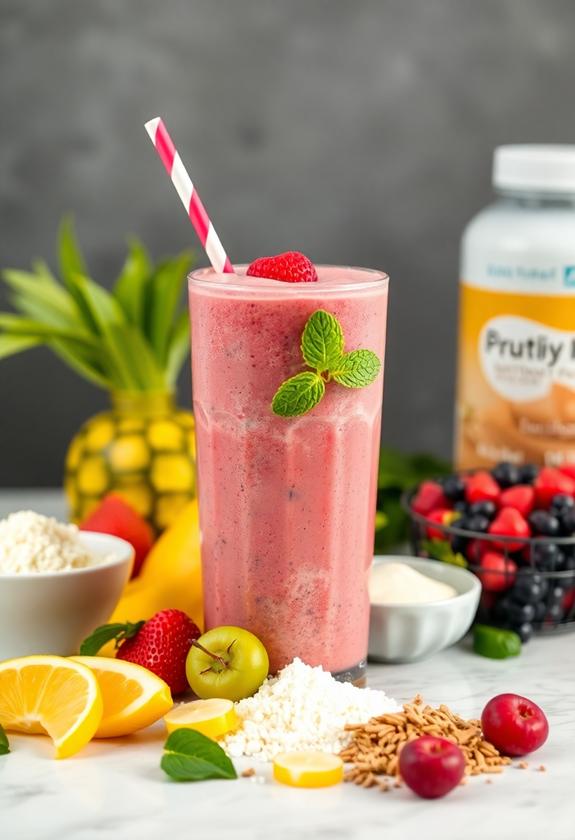
While high-fat smoothies can be delicious and nutritious, it's easy to make common mistakes that might hinder your health goals. Avoid these pitfalls:
- Overloading ingredients: Adding too many items can result in a calorie bomb. Stick to a balanced mix.
- Neglecting fiber: Fiber keeps you full, so don't skip it. Include fruits, vegetables, and seeds for a fiber boost.
- Ignoring portion sizes: Even healthy fats can add up. Measure your ingredients to avoid excess calories.
Balancing smoothie macros requires careful consideration of ingredient combinations and nutritional content. Being mindful of these factors can help you create a more balanced and satisfying smoothie.
Other errors include choosing low-quality ingredients, skipping diversity by using the same fruits, relying on powders for nutrients, underestimating calories, misunderstanding nutrients' roles, avoiding greens, and blending too long which can reduce texture appeal. Stay mindful to enjoy a healthy, balanced smoothie!
Customizing for Goals
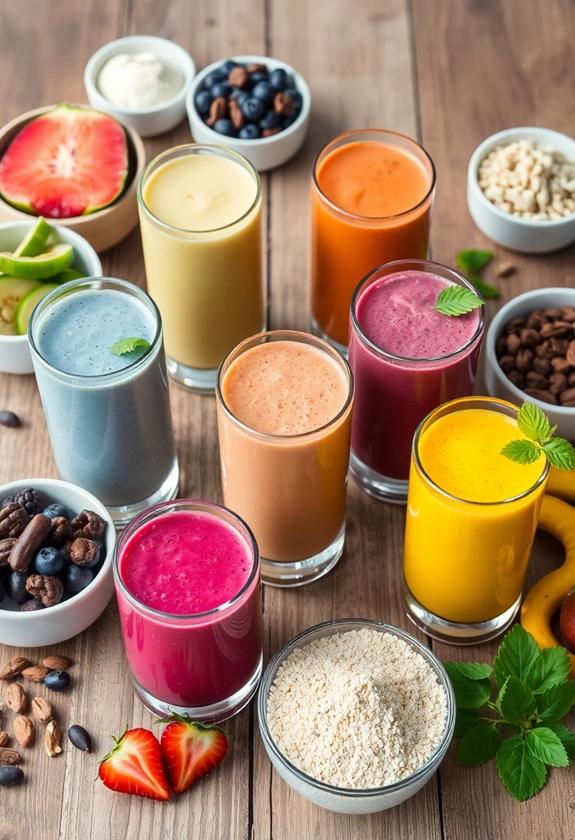
When customizing smoothies for your goals, how do you guarantee you're making the right choices? Start by focusing on smoothie flavor and ingredient combinations that suit your taste buds and nutritional needs. Think about nutrient timing, especially if you're using smoothies as meal replacements. Pay attention to smoothie textures and portion control to avoid excess calories. Consider incorporating smoothie-boosting supplements to improve the nutritional profile of your drinks and support your specific health objectives. If you have dietary restrictions, choose ingredients that align with your needs. Consider flavor balance by blending seasonal fruits and superfood additions for an extra nutrient boost. Making these thoughtful choices helps you achieve your goals while enjoying tasty, satisfying smoothies. Remember, it's all about finding what works best for you and your lifestyle, keeping your health and happiness in mind.
Tips and Tricks
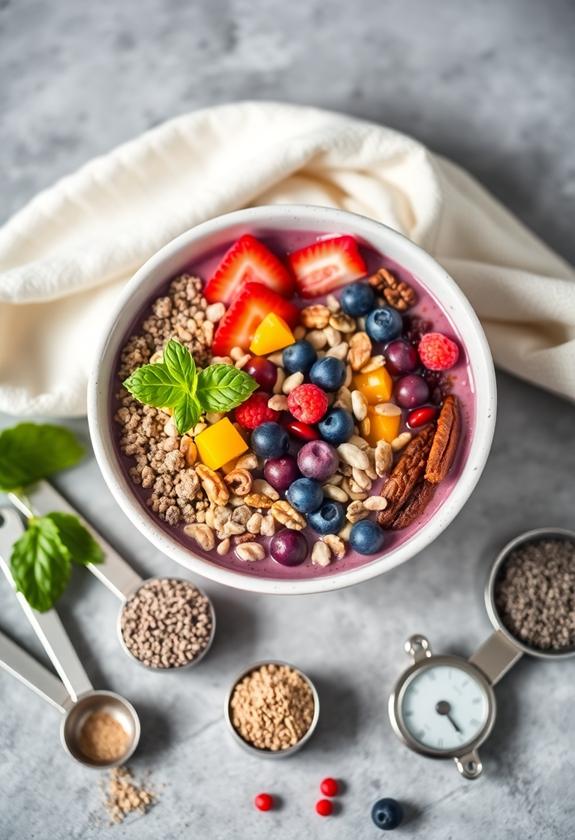
Creating the perfect smoothie requires a blend of creativity and strategy. To get the best smoothie textures and flavor combinations while balancing macros, try these tips:
- Use a Variety of Ingredients: Mixing fruits, veggies, and protein sources can create a well-rounded smoothie. Think spinach, berries, and Greek yogurt for a balanced blend. These protein-packed smoothies can serve as excellent meal replacements, providing a convenient and nutritious option for busy lifestyles.
- Add Healthy Fats: Avocado, nut butters, or chia seeds can improve texture and provide essential fats, making your smoothie more satisfying and creamy.
- Monitor Sweeteners: Natural sweeteners like honey or maple syrup are great, but use them sparingly to keep sugar levels in check. Let the natural sweetness of fruits shine.
Frequently Asked Questions
Can I Use Smoothie Powders to Balance Macros Effectively?
Absolutely, you can use smoothie powders to balance macros effectively! There are various smoothie powder types available, each offering different nutrient densities. For example, protein powders help increase your protein intake, while green powders add essential vitamins and minerals. By mixing and matching these powders, you can create a nutrient-rich smoothie that meets your dietary needs. This approach makes it easy and fun to maintain a balanced diet!
Are There Macro-Friendly Sweeteners for Smoothies?
You're looking for macro-friendly sweeteners for your smoothies, right? Natural sweeteners like stevia and monk fruit can improve flavor without adding many calories. These sugar alternatives offer nutritional benefits, fitting well with various taste preferences. They're great for keeping the calorie count low while still making your smoothies delicious. Try experimenting with these options to find the perfect balance for your unique taste and nutritional goals!
How Do I Track Macros in Homemade Smoothies?
To track macros in homemade smoothies, start by listing all your ingredients. Use a food scale for portion control, and look up the macro content online or use a macro tracking app. For balanced smoothie recipes, choose a mix of protein, carbs, and healthy fats. Experiment with ingredient substitutions to fit your needs, like using Greek yogurt for protein or avocado for healthy fat. Enjoy creating delicious, nutritious smoothies!
Can I Balance Macros in Pre-Made Smoothie Mixes?
You know what they say, "Variety is the spice of life!" Yes, you can balance macros in pre-made smoothie mixes. Start by checking the nutritional labels for macro breakdowns. Mix and match flavor combinations to suit your taste. If needed, adjust with ingredient substitutions to meet your dietary preferences. Don't forget to watch portion sizes! A little tweak here and there guarantees your smoothie aligns with your nutritional goals.
What Kitchen Tools Help Balance Smoothie Macros?
To balance your smoothie macros, you'll need some handy kitchen tools. Measuring cups are essential for accurately portioning your ingredients, guaranteeing you get the right mix of proteins, fats, and carbs. Different blender types can also make a difference; a high-speed blender guarantees a smooth blend, making it easier to mix various macro-rich ingredients. With these tools, you can create balanced, nutritious smoothies every time!