Some links below are affiliate links. We earn a commission on purchases at no extra cost to you. Although our opinions are based on curated research, we haven't used these products. Article generated with AI.

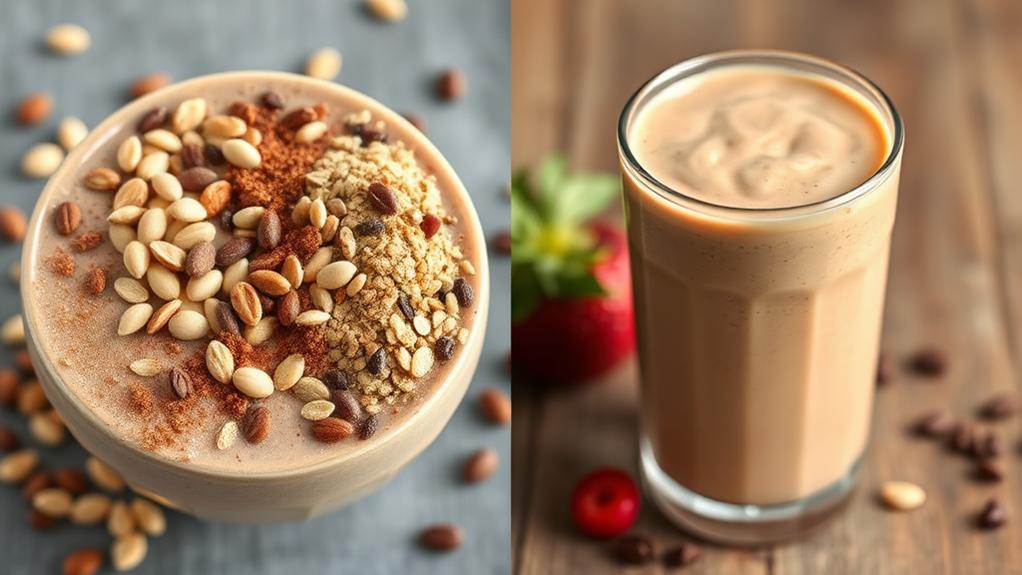
Common Mistakes When Balancing Macros in Smoothies
When balancing macros in smoothies, you might be making some common mistakes without realizing it. Overloading on fruit can lead to excess sugar, while neglecting protein sources may leave you feeling hungry soon after. Don't forget about healthy fats, which are vital for nutrient absorption and satiety. Skimping on leafy greens and fiber-rich ingredients can rob your smoothie of essential nutrients and digestive benefits. Watch out for excessive liquid calories from juices or sweetened milk alternatives, and be mindful of portion sizes, especially with calorie-dense add-ins. By avoiding these pitfalls, you'll be on your way to creating perfectly balanced, nutritious smoothies that support your health goals.
Table of Contents
hide
Key Takeaways
- Overloading on fruit and sugary add-ins can disrupt macronutrient balance and lead to blood sugar spikes.
- Neglecting healthy fats may result in missing essential vitamins and reduced nutrient absorption.
- Skimping on protein sources can lead to inadequate satiety and ineffective meal replacement.
- Overlooking fiber content and micronutrients can compromise overall nutritional balance and health benefits.
- Misjudging portion sizes and liquid calories can lead to excessive calorie intake and unbalanced macronutrient ratios.
Overloading on Fruit
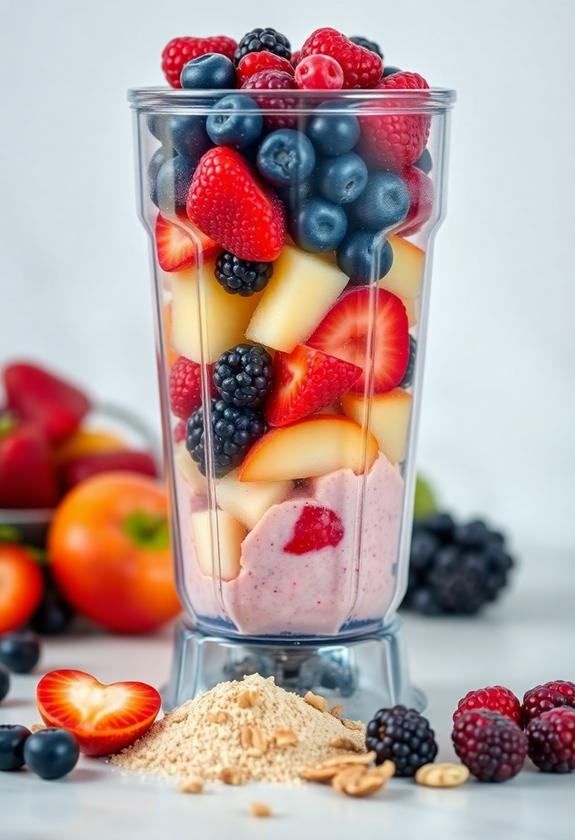
A common mistake in preparing smoothies is overloading on fruit. While fruits are packed with vitamins and nutrients, they're also high in natural sugars. When you add too much fruit to your smoothie, you're increasing its sugar content without realizing it. This can throw off your macronutrient balance and lead to blood sugar spikes. Macro balance is vital for creating nutritionally sound smoothies that support your health and fitness goals. Achieving the right balance of carbohydrates, proteins, and fats guarantees your smoothie provides sustained energy and satiety.
To avoid this, try to include a variety of ingredients in your smoothies. Mix fruits with vegetables like spinach or kale, which are low in sugar but high in nutrients. You can also add protein sources like Greek yogurt or protein powder to balance out the carbs from fruit. Don't forget healthy fats, too! A tablespoon of nut butter or some chia seeds can help create a more balanced smoothie. Remember, moderation is key regarding fruit variety in your smoothies.
Neglecting Protein Sources
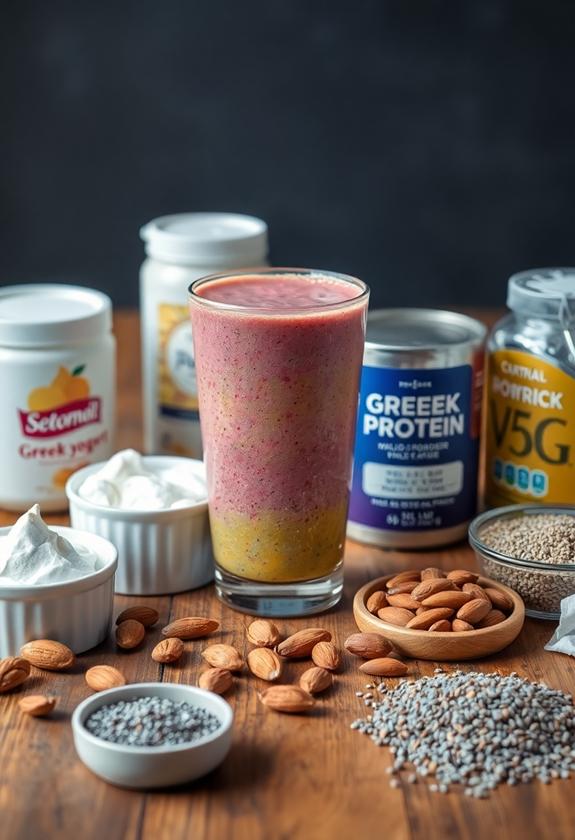
Many smoothie enthusiasts unknowingly neglect protein sources in their blends. This oversight can leave you feeling hungry soon after drinking your smoothie, as protein is essential for keeping you full and satisfied. Meal replacement smoothies require adequate protein to effectively substitute for a full meal and provide sustained energy. Don't worry, though! It's easy to boost your smoothie's protein quality with a few simple additions.
Consider adding Greek yogurt, cottage cheese, or a scoop of your favorite protein powder to your next blend. These options not only increase protein content but also improve the overall nutritional value of your smoothie. Remember, protein timing is important too. Try to include protein in your morning smoothie to kickstart your day and support muscle recovery after workouts. By paying attention to protein sources, you'll create more balanced, satisfying smoothies that'll keep you energized and nourished throughout the day.
Ignoring Healthy Fats
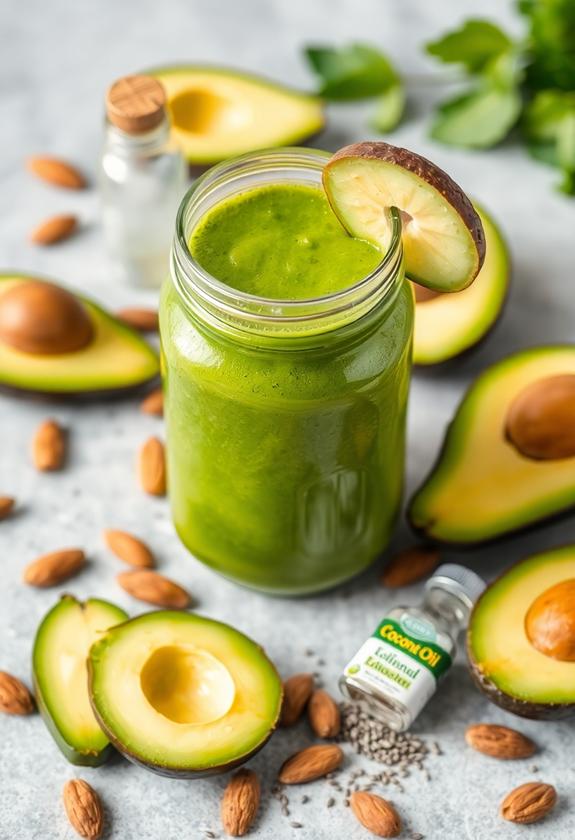
Why do so many smoothie makers overlook the importance of healthy fats? It's easy to focus on fruits and veggies, but fats are essential for a well-balanced smoothie. They're not just about flavor balance; they play a key role in nutrient absorption too. Vegan meal replacements often benefit from the inclusion of healthy fats to guarantee a complete nutritional profile.
You might be missing out on essential vitamins if you're skipping those healthy fats. Try adding a spoonful of nut butter, some avocado, or a dash of coconut oil to your next blend. These ingredients will give your smoothie a creamy texture and help your body absorb fat-soluble vitamins. Plus, they'll keep you feeling full and satisfied for longer.
Don't be afraid of fats – they're your friends! By including them in your smoothies, you're taking a big step towards better nutrition and overall health. Your taste buds will thank you too!
Overlooking Fiber Content
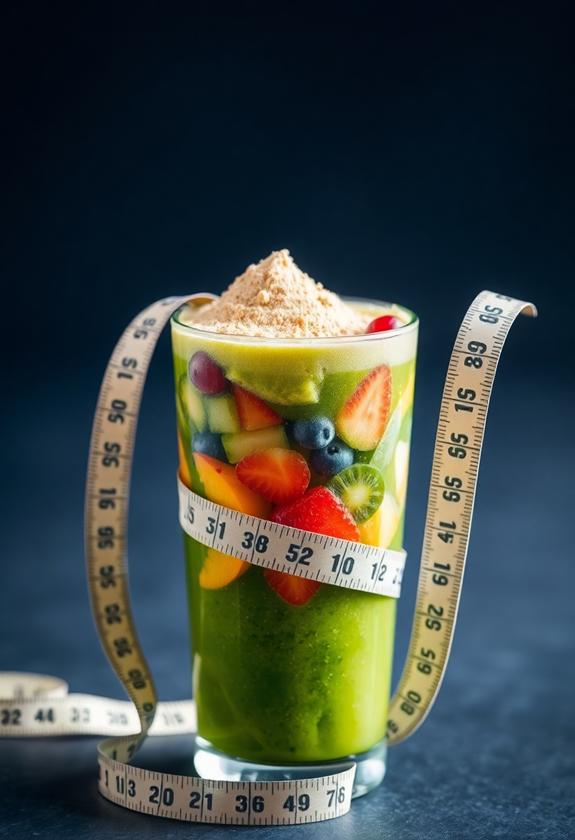
Too often, smoothie enthusiasts overlook the essential role of fiber in their blends. Fiber's benefits go beyond just keeping you regular; it's vital for balanced digestion and overall health. When crafting your smoothies, remember to include a variety of fiber sources. Different fiber types offer unique advantages, so mix it up! Balanced macro smoothies can provide a perfect combination of nutrients and fiber for ideal health. Incorporating fiber-rich ingredients guarantees your smoothie is both delicious and nutritious.
Here are some fiber-rich ingredients to reflect on:
- Chia seeds
- Flaxseeds
- Spinach or kale
- Berries
- Oats
Fiber timing matters too. Adding fiber to your morning smoothie can help you feel full longer. Don't worry if you're not a fan of traditional fiber sources; there are plenty of fiber alternatives to investigate. Experiment with fiber recipes to find what works best for you. By paying attention to fiber content, you'll create more balanced, nutritious smoothies that'll keep your body happy and healthy.
Excessive Liquid Calories
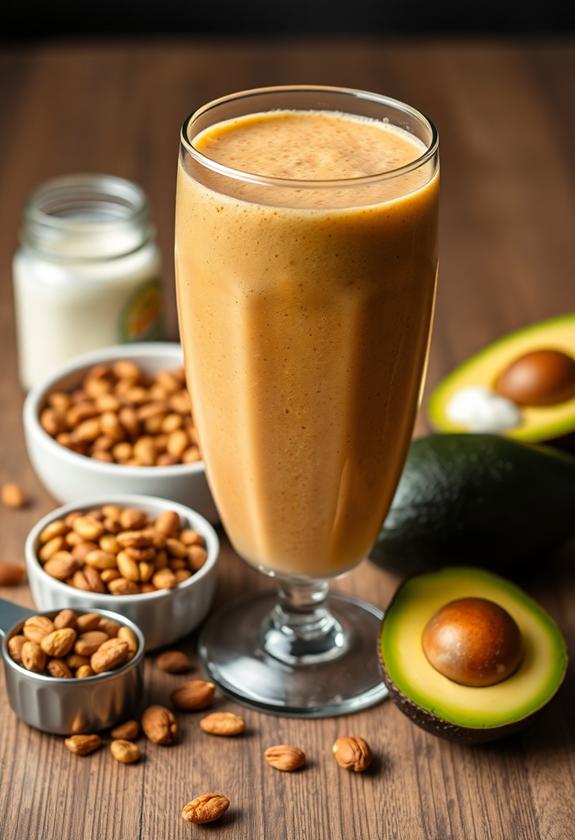
Smoothies can quickly become calorie bombs if you're not careful with your liquid choices. Many liquid calorie sources, like fruit juices, sweetened plant milks, or flavored yogurts, can add up fast without you realizing it. To keep your smoothie balanced and nutritious, it's important to be mindful of these hidden calories. Creating delicious low-calorie smoothies can be achieved by carefully selecting your ingredients and focusing on nutrient-dense options that won't break your calorie budget.
Don't worry, though! There are plenty of liquid balance strategies you can use to keep your smoothie in check. Try using unsweetened almond milk or coconut water as your base, which are lower in calories but still add great flavor. You can also use water or ice to thin out your smoothie without adding extra calories. Remember, it's all about finding the right balance for you. With a little practice and awareness, you'll be making perfectly balanced smoothies in no time!
Misusing Protein Powders
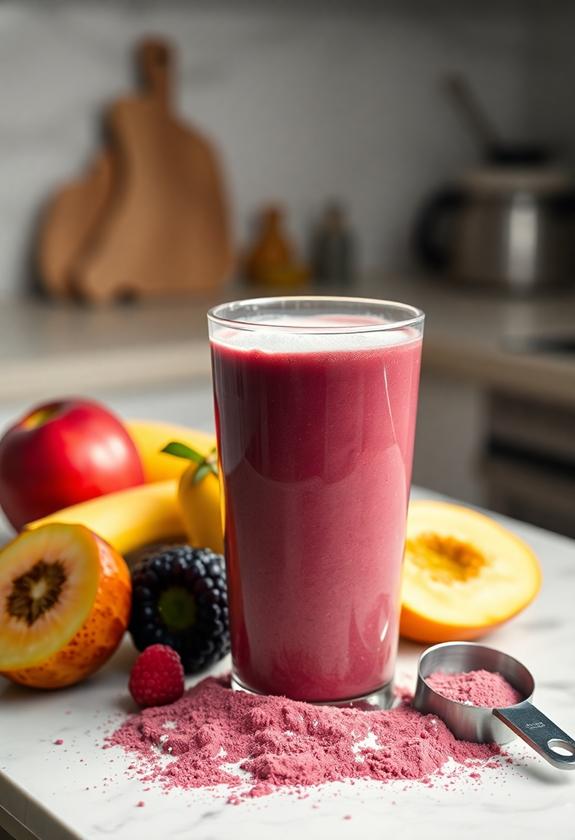
Protein powders can be a double-edged sword in smoothie making. While they're great for boosting your protein intake, you might be misusing them without realizing it. It's important to understand the different protein powder types and protein timing to get the most out of your smoothies. Choosing the perfect protein powder for your smoothie can be challenging, but it's vital for achieving your nutritional goals and enhancing the flavor of your drink.
Here are some common mistakes to avoid:
- Using too much protein powder
- Choosing the wrong type for your needs
- Ignoring other macronutrients
- Not considering the powder's flavor
- Forgetting about whole food protein sources
Skimping on Leafy Greens
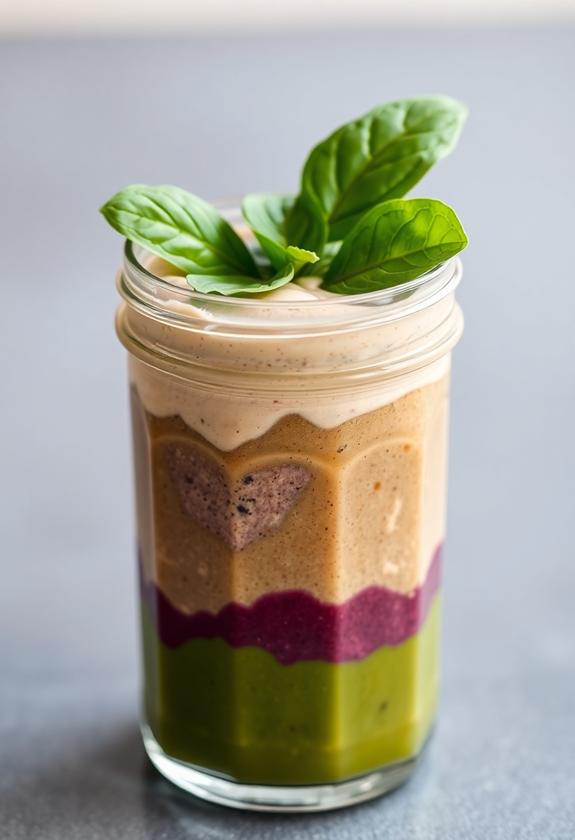
Despite their nutritional powerhouse status, leafy greens often get overlooked in smoothie recipes. You might be tempted to skip them, but don't! Leafy greens benefits are too good to pass up. They're packed with vitamins, minerals, and fiber that'll boost your health and keep you feeling great. Plus, they add a beautiful color to your drink. Adaptogens for wellness can also be incorporated into your smoothies to further improve their nutritional value and support overall health.
You might worry about smoothie texture, but there's no need to fret. Start with a small handful and gradually increase the amount as you get used to it. Spinach is a great beginner's choice, as it blends easily and has a mild taste. Kale and Swiss chard are fantastic options too. Remember, adding leafy greens is an easy way to sneak in extra nutrients without compromising taste. Your body will thank you for this simple, healthy addition to your smoothie routine!
Relying on Sugary Add-ins
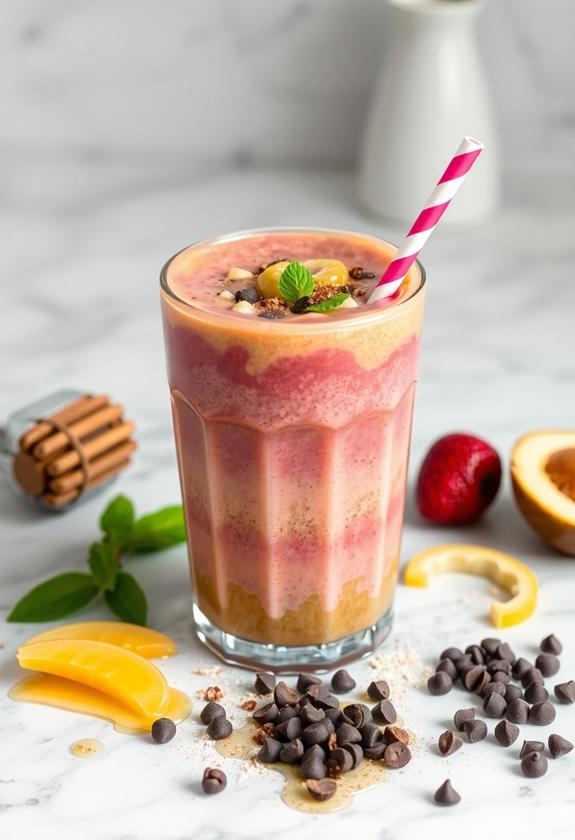
While leafy greens boost your smoothie's nutritional value, it's easy to undo their benefits by relying too heavily on sugary add-ins. These sugary ingredients can quickly decrease the nutrient density of your smoothie, turning it into a calorie-dense drink. Many people make the mistake of overzealous sweetening when trying to mask the taste of vegetables, but this can lead to an unbalanced macro profile. Instead of reaching for sweeteners, try to welcome the natural sweetness of fruits. You'll be surprised how delicious your smoothie can be without extra sugar!
Here are some common sugary add-ins to watch out for:
- Honey
- Agave nectar
- Flavored yogurts
- Fruit juices
- Sweetened protein powders
Portion Size Miscalculations
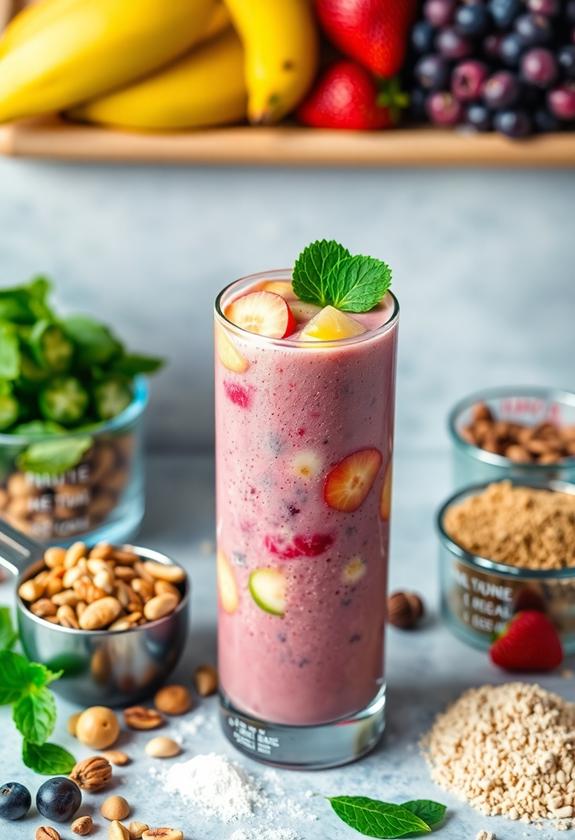
One common pitfall when making smoothies is misjudging portion sizes. You might find yourself adding too much of certain ingredients, throwing off your carefully planned macros. It's easy to get carried away, especially with calorie-dense items like nut butters or sweeteners. When aiming to boost protein intake naturally, it's essential to maintain balance with other macronutrients. To improve your portion control, try using measuring cups or a food scale for accurate serving sizes.
Forgetting About Micronutrients
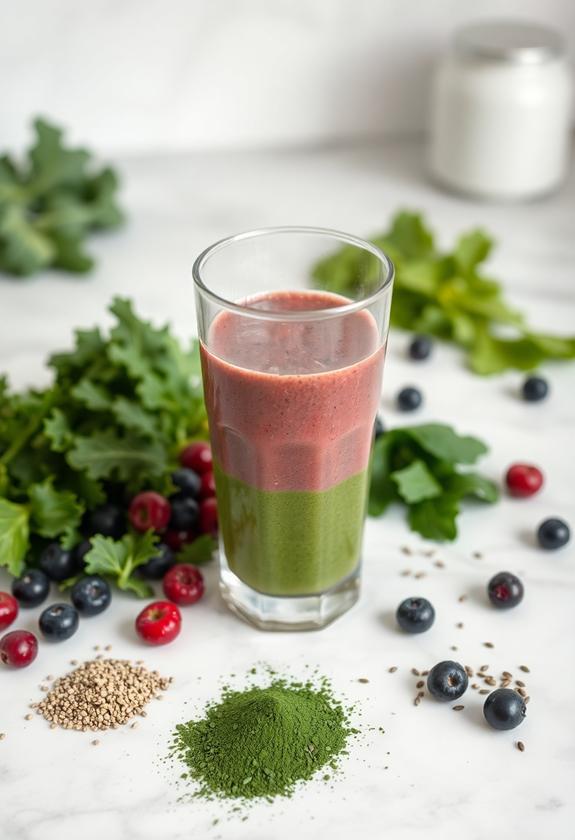
Tunnel vision on macronutrients can lead you to overlook the importance of micronutrients in your smoothies. While protein, carbs, and fats are vital, don't forget about the vitamins and minerals that keep your body running smoothly. Micronutrient sources are abundant in fruits, vegetables, and superfoods, which can easily be blended into your drink. Vegan smoothie enthusiasts should be particularly mindful of potential nutrient deficiencies and aim to include a variety of plant-based ingredients. Remember, vitamin absorption is often improved when paired with healthy fats, so include ingredients like avocado or nut butter.
To guarantee you're getting a good mix of micronutrients, consider adding these to your smoothies:
- Leafy greens (spinach, kale)
- Berries (blueberries, strawberries)
- Seeds (chia, flax)
- Citrus fruits (oranges, lemons)
- Nuts (almonds, walnuts)
Frequently Asked Questions
How Long Can I Store a Smoothie Without Losing Nutritional Value?
You've whipped up a smoothie that's so good, it could power a rocket ship! Now, let's talk about smoothie storage and nutritional degradation. You'll want to drink your smoothie within 24 hours for the best taste and nutritional value. If you can't enjoy it right away, store it in an airtight container in the fridge. Remember, some nutrients start to break down over time, so the sooner you drink it, the better. Don't worry though, it'll still be delicious and nutritious!
Can I Use Frozen Vegetables Instead of Fresh Ones in Smoothies?
You can use frozen vegetables in your smoothies, and they've got some great benefits. They're often more affordable and convenient than fresh ones, plus they're usually frozen at peak ripeness, locking in nutrients. You'll notice a difference in texture, though – frozen veggies can make your smoothie thicker and frostier. This can be perfect for hot days! Just remember, you might need to add a bit more liquid to blend smoothly. Give it a try and see how you like it!
Are There Any Ingredients That Shouldn't Be Combined in Smoothies?
You'd think throwing random ingredients into a blender would create a magical elixir, but hold your horses! While smoothies are versatile, some combos might leave your taste buds confused. Don't worry, though – you've got this! In terms of fruit pairings, stick to complementary flavors. Berries and bananas are besties, while citrus fruits play well with tropical ones. For protein sources, avoid mixing dairy with acidic fruits, as it can curdle. Remember, experimenting is fun, but balance is key!
How Can I Make My Smoothies More Filling Without Adding Extra Calories?
You can make your smoothies more filling without extra calories by adding protein sources and fiber boosters. Try incorporating a scoop of protein powder, Greek yogurt, or silken tofu for protein. For fiber, toss in some chia seeds, ground flaxseed, or spinach. These ingredients will keep you satisfied longer without significantly increasing calories. Don't forget to include a variety of fruits and veggies, too! Experiment with different combinations to find your perfect, filling smoothie that'll keep you energized throughout the day.
What's the Best Blender Type for Making Nutrient-Dense, Well-Balanced Smoothies?
You'll love using a high-powered blender for your nutrient-dense smoothies! Look for features like multiple speed settings and strong blades to handle tough ingredients. Don't forget about blending techniques – start with liquids at the bottom, then add softer items, and finish with frozen fruits or ice. This layering helps create a smooth, well-balanced texture. Remember, pulse blending can be great for chunky smoothies, while longer blends give you that silky consistency. Happy blending, you've got this!