Some links below are affiliate links. We earn a commission on purchases at no extra cost to you. Although our opinions are based on curated research, we haven't used these products. Article generated with AI.

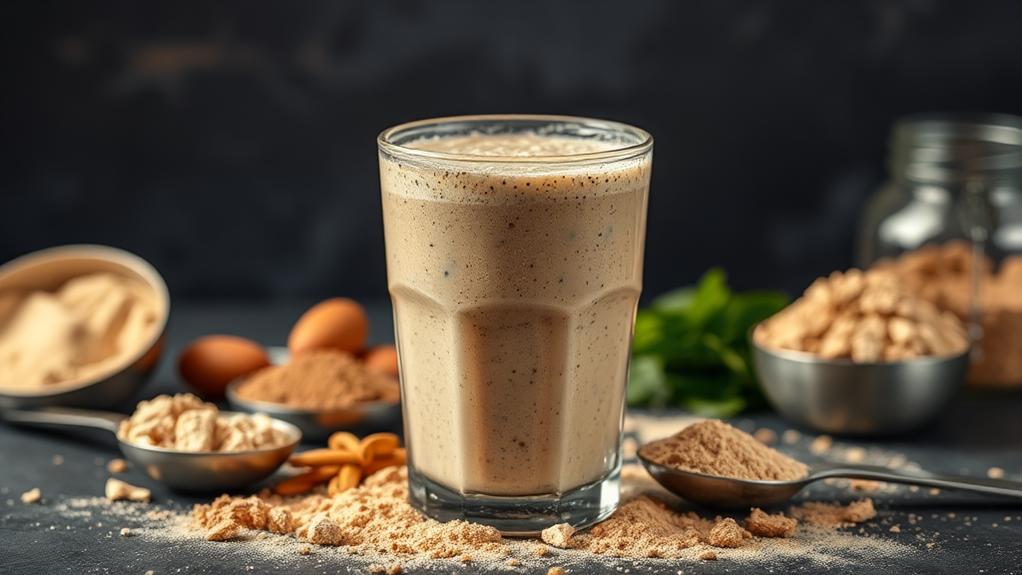
Why Too Much Protein Can Ruin Your Smoothie
Adding too much protein to your smoothie can mess up its taste, making it chalky and overpowering. You'll also notice the texture gets gritty or too thick, which isn't very pleasant. Your digestion might suffer, causing bloating and discomfort, and the extra calories could throw off your weight goals. Plus, it can lead to nutrient imbalances, lacking the fiber and vitamins your body needs. Combining a variety of ingredients with a balance of protein, fiber, and other nutrients makes for a more delicious and healthy smoothie. Stick around, and you'll discover how to perfect your smoothie game!
Table of Contents
hide
Key Takeaways
- Excess protein disrupts flavor profiles, leading to a chalky or overly intense taste.
- Too much protein creates a gritty or thick texture, making smoothies unpleasant to drink.
- High protein content can cause digestive problems like bloating, gas, and constipation.
- Excess protein increases caloric density, potentially hindering weight maintenance or loss efforts.
- Overloading on protein can strain kidney function, requiring them to filter more waste.
Taste Alterations
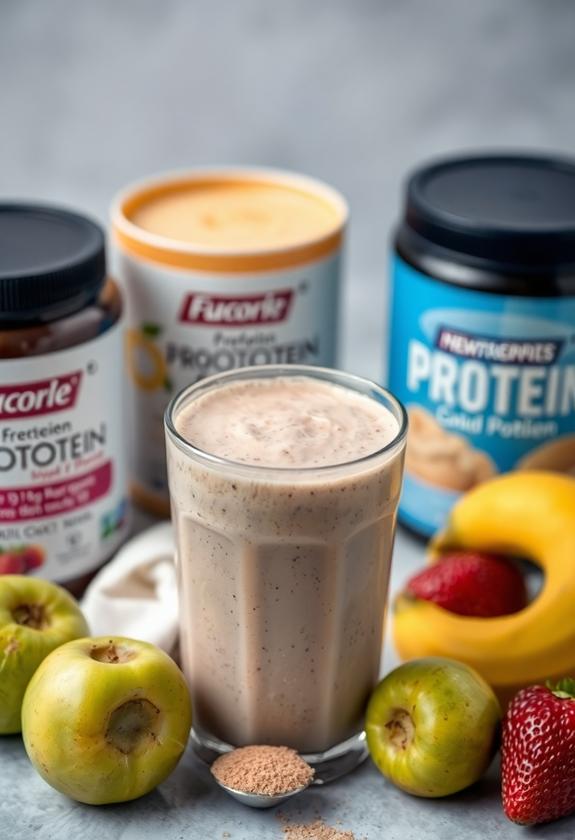
In the domain of crafting the perfect smoothie, adding too much protein can dramatically alter its taste. You want to enjoy a delightful blend, but excess protein can throw off the flavor profiles you love. The dangers of overloading protein in your smoothie can lead to unintended consequences for your taste buds. Instead of a smooth and fruity treat, you might end up with a chalky or overly intense taste. Ingredient harmony is essential; each element should complement the others. When protein overpowers, it disrupts this balance, making your smoothie less enjoyable. By paying attention to how much protein you add, you can maintain the delicious flavors that make smoothies so appealing. Remember, a little protein goes a long way, ensuring you get both the nutrients you need and the taste you crave.
Texture Issues
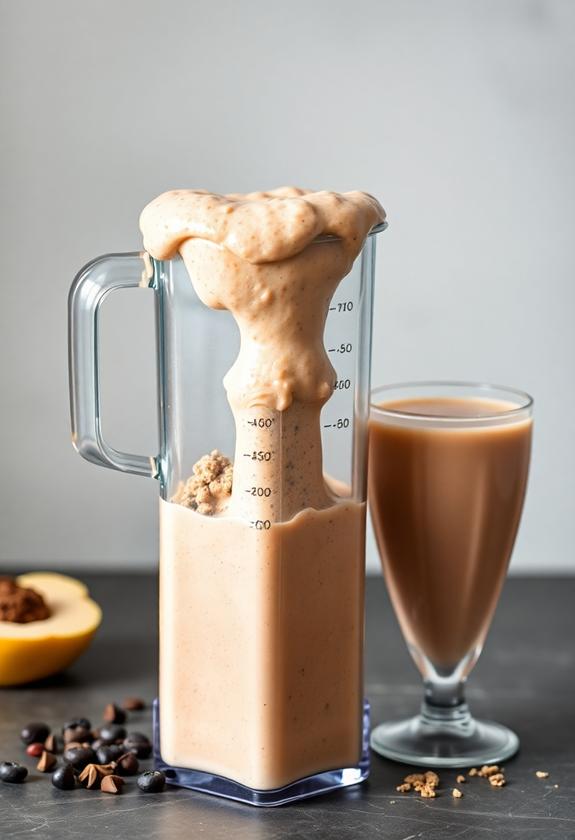
Beyond taste, too much protein can wreak havoc on your smoothie's texture. Imagine looking forward to a creamy, delightful drink, but instead, you get a gritty, thick mess. When you add too many protein sources, it can throw off your smoothie consistency, making it tough to enjoy. It's vital to avoid common mistakes when preparing your protein smoothies to guarantee ideal taste and texture. Balancing ingredients is key to achieving the perfect smoothie.
Whey protein, for instance, might make your smoothie slimy, while plant-based proteins can leave it chalky. It's all about finding the right balance. Start with small amounts and gradually increase until you find the perfect blend.
Digestive Problems
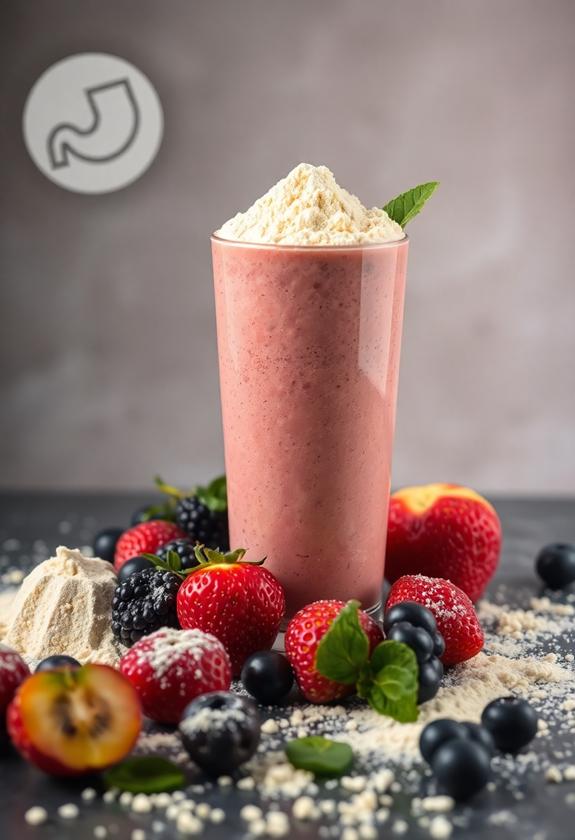
While texture issues can be off-putting, the impact of too much protein on your digestive system is even more concerning. Overloading your smoothie with various protein sources can slow down digestion, leading to discomfort. Your body needs time to break down all that protein, which can cause:
- Bloating: Your stomach may feel swollen and tight.
- Gas: Extra protein can ferment in your gut, leading to embarrassing moments.
- Constipation: Too much protein and not enough fiber can make it hard to go.
Protein and fiber work together to support weight loss, but balance is essential. Excessive protein without adequate fiber can disrupt this beneficial partnership, potentially hindering your weight loss efforts.
Balancing your smoothie's ingredients is key. When you use the right amount of protein, your digestion speed stays normal, and you avoid these unpleasant issues. Remember, it's about finding harmony between taste, nutrition, and comfort.
Caloric Overload
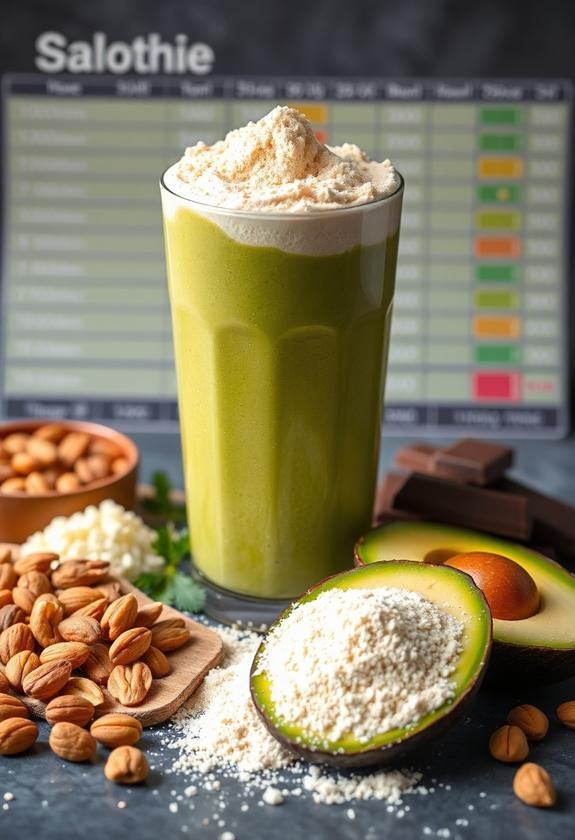
Packing your smoothie with too much protein can lead to a caloric overload, undermining your health goals. When you add extra protein, you increase the caloric density of your smoothie. This means you're consuming more calories than you might think, which can derail your efforts to maintain or lose weight. Balancing macronutrients in your smoothie is vital for achieving ideal weight loss results. A well-balanced smoothie should include a mix of protein, carbohydrates, and healthy fats to keep you satiated and energized. Portion control becomes essential here. Instead of eyeballing your protein powder, measure it carefully to avoid unnecessary calories. Remember, every scoop adds up! Balancing your smoothie with a mix of fruits, vegetables, and a moderate amount of protein can help you stay on track. By being mindful of portion sizes, you'll create a nutritious, satisfying smoothie that supports your health ambitions without the extra calorie burden.
Nutrient Imbalance
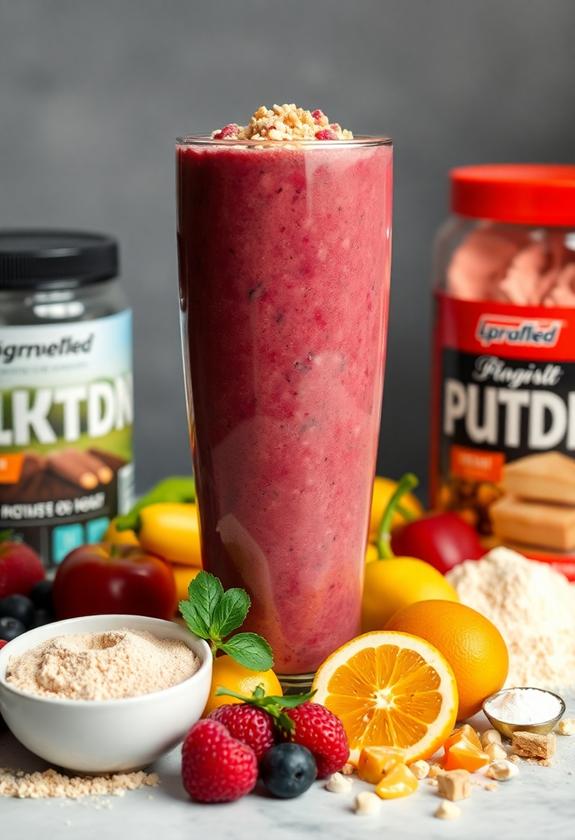
Adding too much protein to your smoothie can lead to a nutrient imbalance, which might negatively impact your overall health. When you focus too much on protein, you miss out on the benefits of nutrient synergy and dietary diversity. Your body thrives when it gets a variety of nutrients, working together to keep you healthy. Boost satiety by combining protein with fiber-rich ingredients for a more balanced and satisfying smoothie. This approach guarantees you're not overloading on protein at the expense of other essential nutrients. Imagine your smoothie filled with:
- Vibrant fruits and vegetables: They provide essential vitamins and minerals.
- Healthy fats: Like avocados or nuts, which support brain function.
- Fiber-rich ingredients: Such as oats or chia seeds, aiding digestion.
Kidney Strain
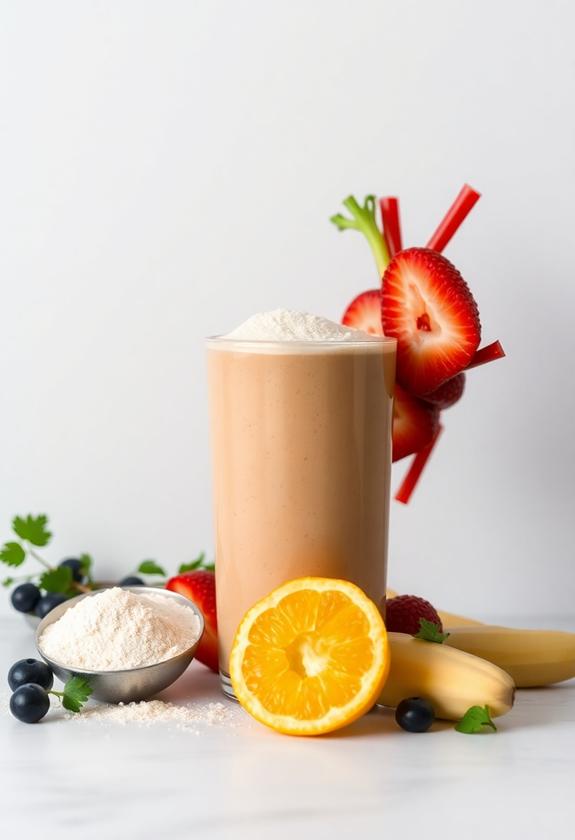
Consuming excessive protein in your smoothies can put undue strain on your kidneys. When you overload your body with protein sources like whey or plant-based powders, your kidneys have to work extra hard to filter out the waste. This can lead to a decline in kidney health over time. Common smoothie mistakes often include adding too much protein powder, which can overwhelm your system and potentially lead to digestive issues. Your kidneys are essential for removing toxins and balancing fluids, so stressing them with too much protein isn't a good idea. It's important to find a balance, ensuring you get enough protein without going overboard. Opt for a variety of protein sources and keep an eye on the overall amount you consume. This way, you support your kidney health and enjoy your smoothies without worry.
Blood Sugar Spikes
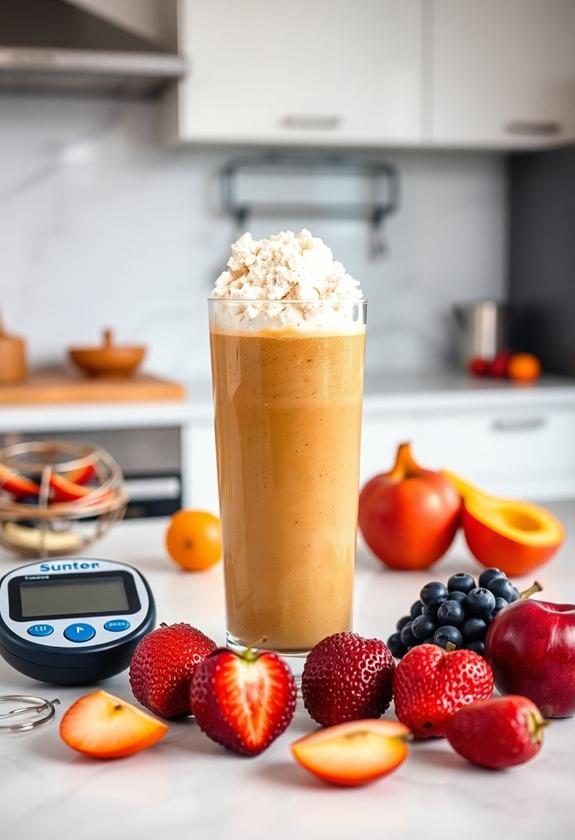
When you're aiming for a nutritious smoothie, it's easy to overlook the impact of excess protein on your blood sugar levels. Adding too much protein can lead to blood sugar fluctuations, which might catch you off guard. Your body responds to these spikes with an insulin response, trying to balance everything out. This can leave you feeling tired and jittery, not the energy boost you were hoping for. While protein is essential, common smoothie mistakes often involve overloading on this nutrient, which can negatively impact your smoothie's overall nutritional balance.
Picture this:
- A smoothie packed with protein powder: It looks healthy but may cause unexpected blood sugar highs.
- Your pancreas working overtime: It releases insulin to tame those spikes.
- A sudden energy crash: You feel drained instead of revitalized.
Balancing your ingredients carefully helps maintain steady energy and keeps those blood sugar levels in check.
Decreased Fiber Intake
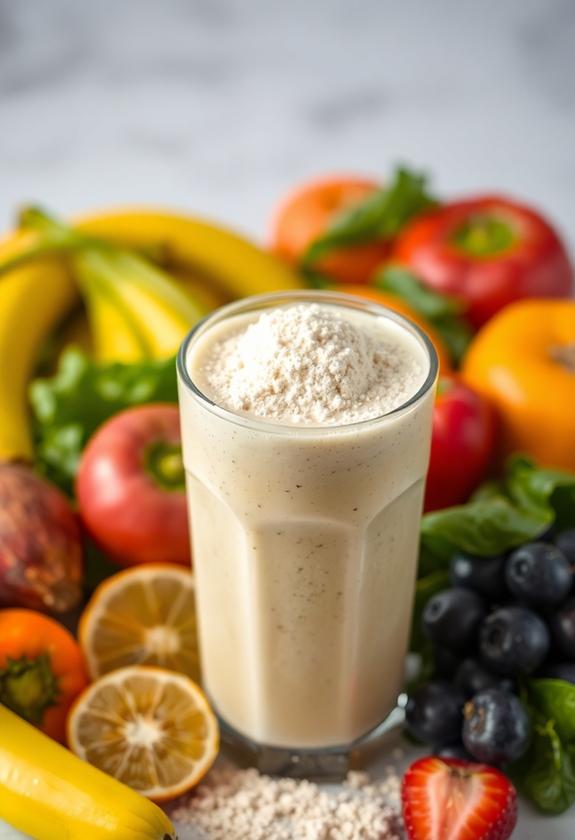
Surprisingly, loading up your smoothie with too much protein often means there's less room for fiber-rich ingredients. When you focus on protein, you might skip essential fiber sources like fruits, veggies, and seeds. Fiber is vital for keeping your digestive system happy and your hunger in check. Boost digestion with fiber in high-protein smoothies by maintaining a balance between protein and fiber-rich ingredients. This balance is key to optimizing the nutritional benefits of your smoothie. Smoothie recipes that balance protein and fiber can help you feel full longer and support your overall health. Try adding spinach, chia seeds, or berries to your smoothies. These ingredients not only provide fiber but also pack in vitamins and antioxidants. So, next time you make a smoothie, think about mixing up your ingredients to include both protein and fiber, creating a delicious and nutritious blend for your body.
Cost Considerations
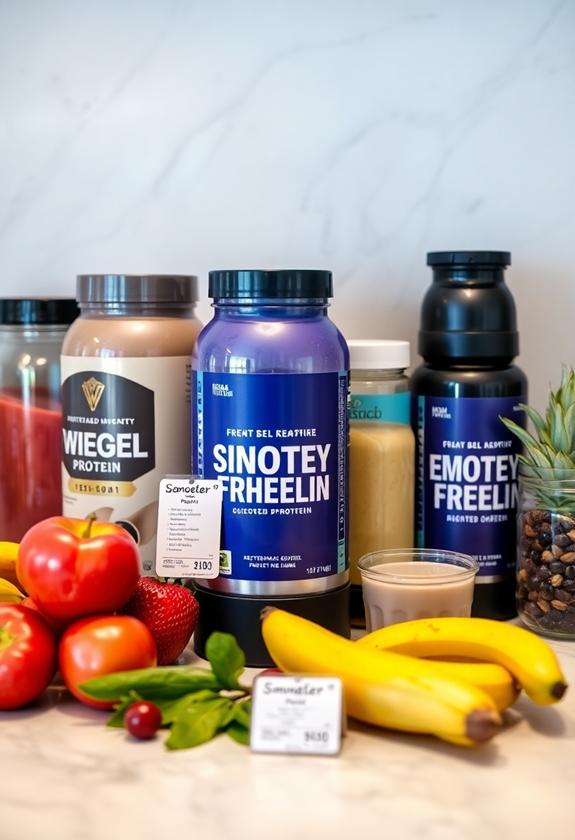
A well-balanced smoothie can be a nutritious addition to your diet, but high-protein ingredients often come with a hefty price tag. It's easy to overspend if you're not careful. Nuts and nut butters are popular protein sources for smoothies, but they can be expensive if overused. To help manage costs, consider doing some price comparisons for your smoothie ingredients.
- Protein powders: These can vary widely in price, so shop around for deals or sales.
- Greek yogurt: Often cheaper in bulk, making it a cost-effective option.
- Nut butters: Choose store brands for more budget friendly options.
Better Protein Alternatives
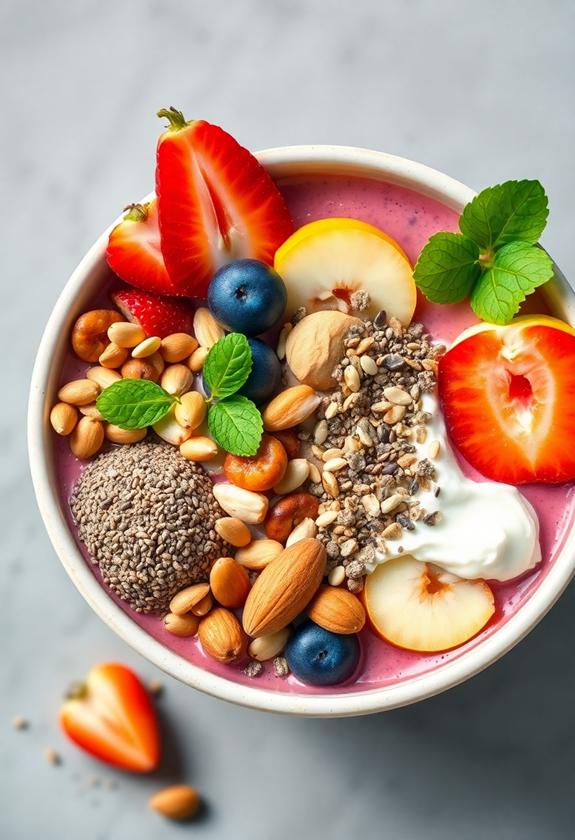
While managing costs is important, it's also worth exploring better protein alternatives that can enhance your smoothie without breaking the bank. Instead of relying solely on expensive protein powders, consider plant-based options like chia seeds, hemp seeds, or even almond butter. These ingredients not only add protein but also bring in healthy fats and fiber, making your smoothie more nutritious. Vegan protein sources like pumpkin seeds and spirulina can also be excellent additions to your smoothie, offering a diverse nutrient profile.
Greek yogurt is another excellent choice, offering a creamy texture and a good protein boost. If you're looking for protein powders, opt for plant-based varieties like pea protein or brown rice protein. They're often easier on your stomach and environmentally friendly. By exploring these alternatives, you'll create a balanced, tasty smoothie that supports your health without overwhelming your wallet.
Frequently Asked Questions
Can Too Much Protein Affect My Smoothie's Vitamin and Mineral Content?
Yes, too much protein in your smoothie can affect nutrient absorption. When you overload on protein, it can throw off your body's protein balance, making it harder to absorb essential vitamins and minerals. You want your smoothie to be nutritious and balanced, right? So, keep an eye on protein levels to guarantee you're getting the full benefits of all those wonderful nutrients. It's all about balance for the best health!
How Does Excessive Protein Impact Smoothie Consistency Over Time?
Imagine, by coincidence, that your smoothie becomes thicker and more like paste after adding too much protein powder. Excessive protein, especially certain types like whey or casein, can dramatically change your smoothie texture over time. Your once silky drink can turn into a dense, almost unblendable mixture. It's important to find the right balance, so your smoothie stays smooth and enjoyable. Experiment with different protein types and amounts to keep it just right.
What Are the Signs of Consuming Too Much Protein in Smoothies?
You might notice bloating or discomfort if you've consumed too much protein in your smoothies. Your body can struggle with protein digestion, making you feel heavy or sluggish. Another sign is an unusual taste or texture, disrupting the smoothie balance. It's important to listen to your body and adjust the protein amount to guarantee you're feeling great and enjoying a delicious, nutritious smoothie every time.
Can High-Protein Smoothies Interfere With Medication Efficacy?
Yes, high-protein smoothies can interfere with medication efficacy. When you consume too much protein, it can affect protein absorption and how your body processes medications. Some medications rely on specific pathways that can be blocked or slowed by excess protein. It's really important to balance your diet and consult your doctor to guarantee your high-protein habits don't cause unwanted medication interactions. You'll feel better and stay healthier this way!
Are There Any Long-Term Effects of Regularly Consuming High-Protein Smoothies?
Regularly consuming high-protein smoothies can impact your protein metabolism and digestive health. Too much protein can strain your kidneys over time, potentially leading to issues. Your body might also struggle to absorb all that protein, causing digestive problems like bloating or discomfort. It's important to balance your intake, ensuring you get enough nutrients without overloading your system. Always listen to your body and adjust as needed. Keep it balanced and enjoy your smoothies!