Some links below are affiliate links. We earn a commission on purchases at no extra cost to you. Although our opinions are based on curated research, we haven't used these products. Article generated with AI.

How to Correct Texture Issues in High-Protein Smoothies
To fix texture issues in your high-protein smoothies, start by choosing a protein powder that blends well. Use the right liquid-to-solid ratio, typically 1:1, and adjust as needed. Blend your ingredients in stages, starting with liquids and soft items before adding frozen components. Incorporate healthy fats like avocado or nut butter for creaminess. Pre-soak dry ingredients to improve smoothness, and layer your blender strategically for ideal mixing. Control temperature by using chilled or frozen fruits, and consider investing in a high-speed blender for best results. With these tips, you'll be on your way to silky-smooth, delicious protein smoothies. Keep exploring to uncover even more texture-perfecting secrets.
Table of Contents
hide
Key Takeaways
- Choose protein powders designed for blending to minimize texture issues and blend for longer durations.
- Maintain a proper liquid-to-solid ratio, starting with 1:1 and adjusting as needed for optimal consistency.
- Layer ingredients strategically, starting with liquids and ending with frozen items for smoother blending.
- Incorporate healthy fats like nut butter or avocado to create a creamy texture and improve flavor.
- Pre-soak dry ingredients to enhance hydration, reduce grittiness, and achieve a smoother, creamier blend.
Choosing the Right Protein Powder
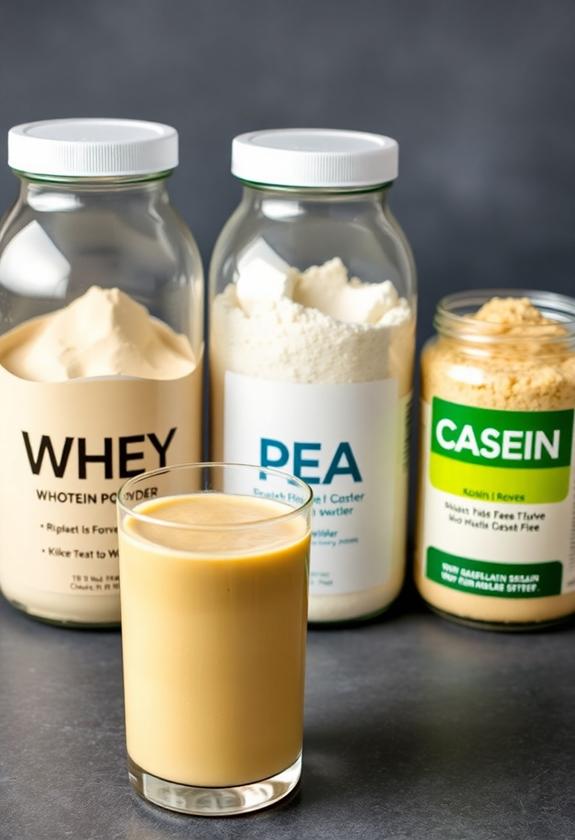
In terms of choosing the right protein powder for your smoothies, texture matters. You'll want to examine plant-based options and various protein sources to find the perfect match for your taste buds and dietary needs. Reflect on your texture preferences and how different powders blend with other ingredients. Some powders are smoother, while others might add a bit of graininess. When selecting a protein powder, evaluate its blending properties and how well it incorporates into your smoothie base. This can greatly affect the overall texture and enjoyment of your drink.
Don't forget to investigate different flavor profiles and how they'll complement your favorite smoothie combinations. If you have any allergies or dietary restrictions, be sure to check the labels carefully. Remember, the right protein powder can offer amazing nutritional benefits and taste improvements. It's all about finding the balance between blendability factors and your desired texture. With a little experimentation, you'll discover the perfect protein powder to create delicious, satisfying smoothies that you'll love drinking every day.
Proper Liquid-to-Solid Ratio
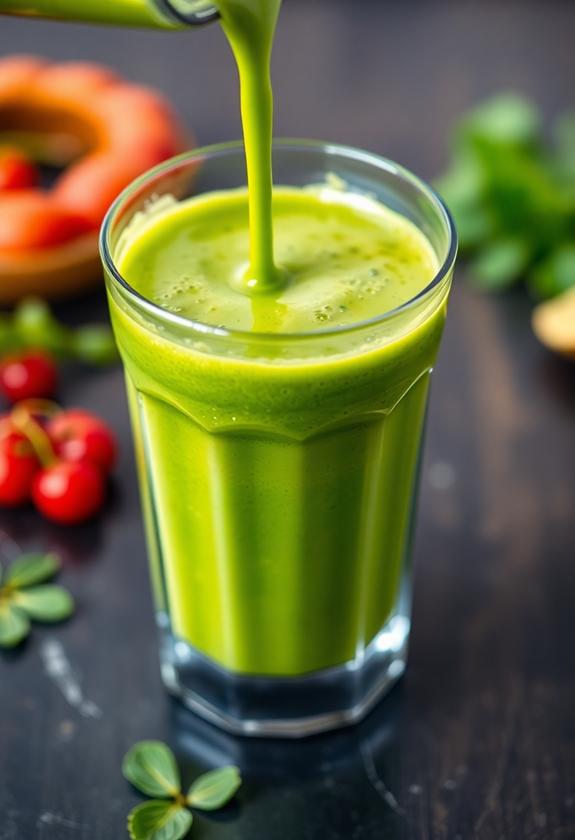
Balance is key in relation to achieving the perfect smoothie texture. In terms of liquid-to-solid ratio, you'll want to find the sweet spot that creates a creamy, drinkable consistency. Start with a 1:1 ratio of liquid to solid ingredients, then adjust as needed. Remember, different liquid types and solid choices can affect your smoothie's texture. Adding high-fiber ingredients can also impact texture, so consider incorporating them gradually to maintain the desired consistency.
Here are three tips to help you nail the proper ratio:
- Begin with less liquid, as you can always add more
- Consider the water content of your fruits and vegetables
- Adjust based on your preferred thickness
Blending Techniques for Smooth Results
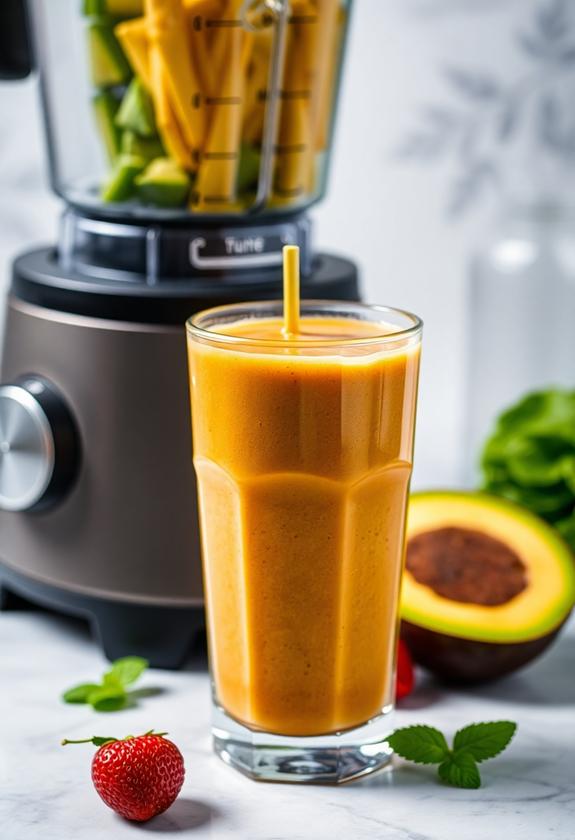
Mastering blending techniques is essential for achieving smooth, lump-free smoothies. Start by adding your liquids first, followed by soft ingredients, then frozen items. This order helps create a vortex that pulls everything down towards the blades. For ideal nutrient density, pulse your greens and protein powder briefly before adding other ingredients. This breaks them down more effectively, ensuring better absorption of nutrients. Protein powder dos include choosing high-quality, easily dissolvable options to prevent grittiness and clumping in your smoothies.
When blending, start on low speed and gradually increase to high. This method prevents air pockets from forming and promotes even mixing. For flavor improvement and extra smoothness, blend for 45-60 seconds. Don't be afraid to stop and scrape down the sides of your blender if needed. Remember, patience is key! With practice, you'll perfect your technique and enjoy silky-smooth, delicious smoothies every time.
Incorporating Frozen Ingredients Effectively
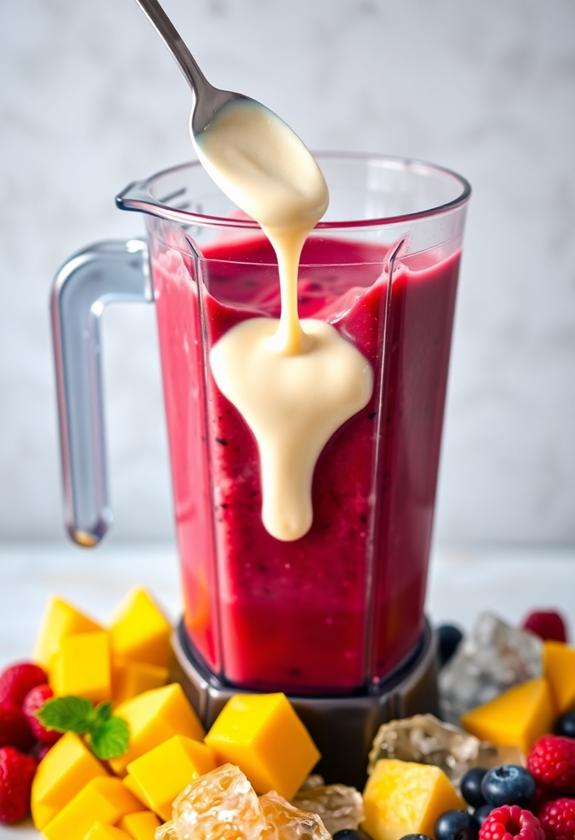
In terms of incorporating frozen ingredients effectively, timing is essential. You'll want to add your frozen fruits towards the end of the blending process to maintain their icy texture and coolness. This technique is especially useful when creating smoothie bowls, as it helps achieve that thick, spoonable consistency you're looking for. High-protein smoothies are excellent for muscle building, and using frozen ingredients can improve their effectiveness by providing a more satisfying texture and temperature.
To make the most of your frozen ingredients:
- Start with liquid and softer ingredients at the bottom of the blender
- Add your protein powder and any dry ingredients next
- Top it off with frozen fruits just before blending
Adding Healthy Fats
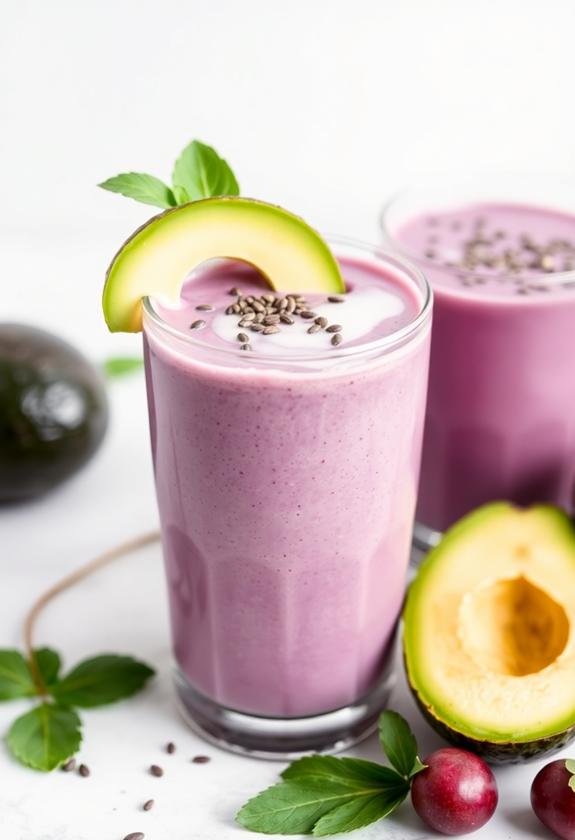
While frozen ingredients contribute to texture, adding healthy fats can improve your smoothie's consistency and nutritional value. You'll love how a spoonful of nut butter or a quarter of an avocado can transform your drink into a creamy delight. These fats not only elevate flavor enhancement but also aid in nutrient absorption, helping your body make the most of those protein-packed ingredients. Top nut butters can provide an excellent source of healthy fats and protein for your smoothies, making them more satisfying and nutritious.
Don't be afraid to experiment with different options. Coconut oil, chia seeds, or even a splash of full-fat yogurt can work wonders. Remember, these fats will help keep you feeling full and satisfied longer. As you blend, you'll notice how the fats bind everything together, creating a smooth, velvety texture that's simply irresistible. Your taste buds and your body will thank you for this delicious, nutritious addition to your smoothie routine.
Using Thickening Agents
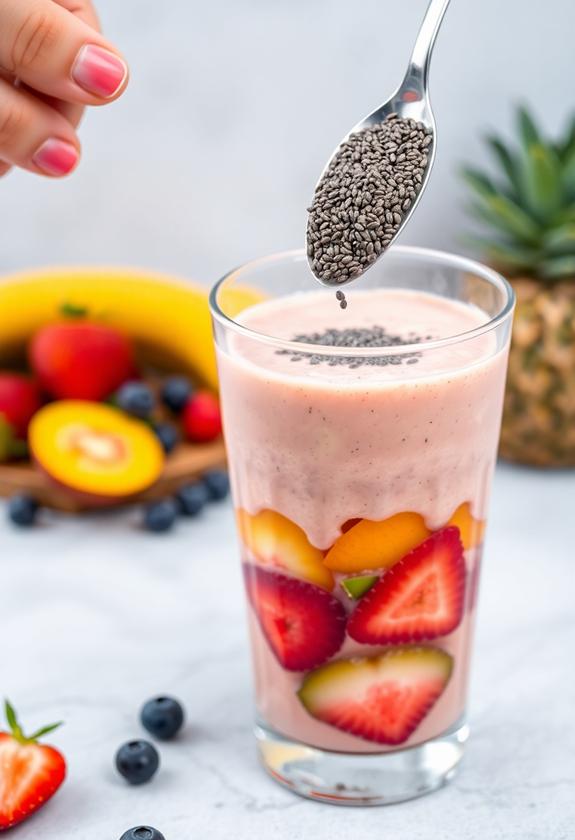
For smoothies that need a boost in thickness, thickening agents can be your secret weapon. These ingredients work wonders in creating a creamy, satisfying texture without altering the flavor. You'll love how they transform your smoothie into a luxurious treat! Adding thickeners can also help boost digestion by increasing the fiber content of your smoothie.
Here are three popular thickening agents to try:
- Chia seeds: They absorb liquid and expand, creating a gel-like consistency.
- Flaxseed meal: It adds both thickness and a nutty flavor.
- Psyllium husk: This fiber-rich option thickens smoothies quickly.
Don't forget about gelatin alternatives like agar-agar or pectin if you're looking for plant-based options. For a super-smooth result, a tiny pinch of xanthan gum goes a long way. Remember, start with small amounts and adjust to your liking. You'll be amazed at how these simple additions can enhance your smoothie game!
Balancing Sweet and Tart Flavors
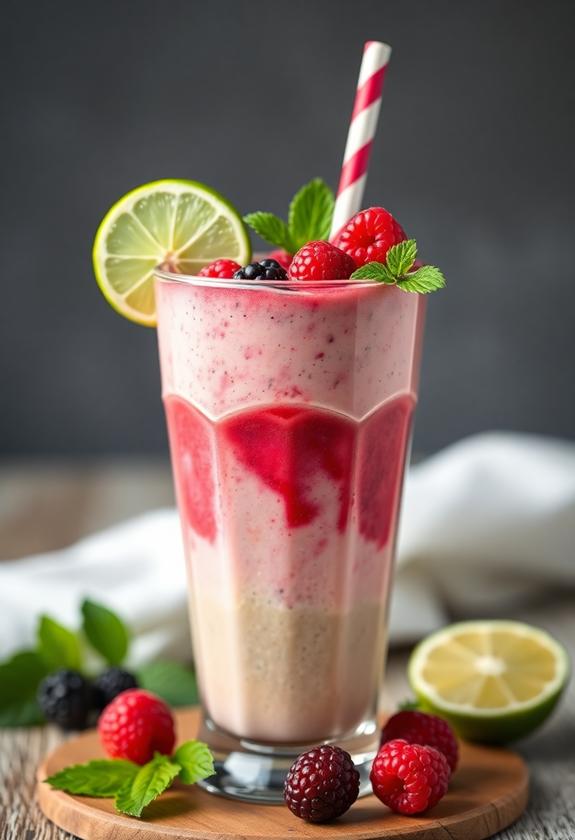
Finding the perfect balance between sweet and tart flavors can make or break your smoothie. Don't worry if your first attempt isn't quite right – you've got plenty of options to achieve that ideal taste! For sweeteners, try natural choices like honey, maple syrup, or ripe bananas. These not only add sweetness but also contribute to a smoother texture. To balance tartness, you can use citrus fruits like lemons or limes, or add a splash of unsweetened cranberry juice. Vegan smoothie recipes often incorporate plant-based protein sources to boost nutritional value while maintaining a delicious flavor profile. Remember, it's all about your personal preference. Start with small amounts and adjust as you go. You'll soon discover the perfect combination that makes your taste buds dance! If you're using protein powder, keep in mind that it might affect the overall flavor, so you may need to tweak your sweeteners and tart elements accordingly.
Pre-Soaking Dry Ingredients
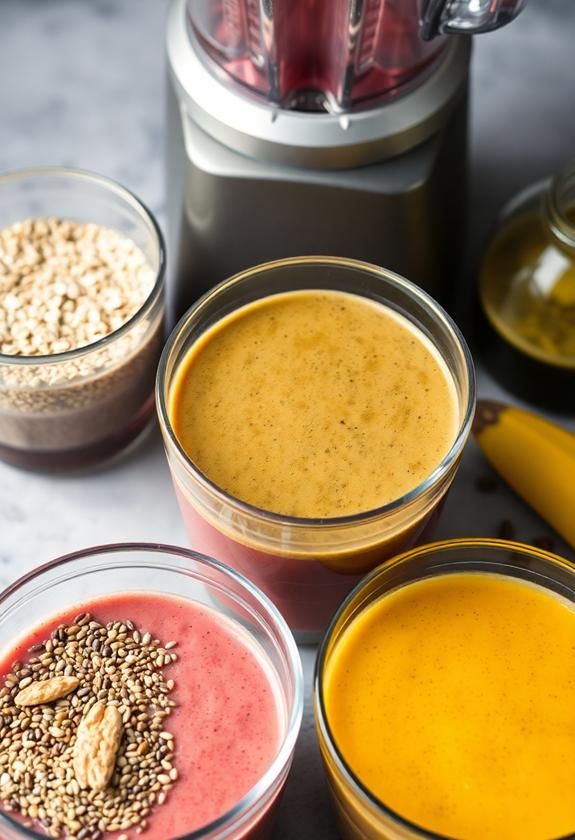
To achieve the perfect smoothie texture, pre-soaking dry ingredients can make a world of difference. This simple step can greatly improve ingredient hydration and boost nutrient absorption, resulting in a smoother, creamier blend. You'll love how this method transforms your smoothies! Pre-soaking is especially beneficial when making protein-packed smoothies to guarantee a silky consistency without grittiness.
Here are three key benefits of pre-soaking:
- Softens tough ingredients like nuts and seeds
- Reduces blending time, preventing overheating
- Amplifies the overall flavor profile of your smoothie
When you're ready to pre-soak, simply place your dry ingredients in a bowl of water for a few hours or overnight. This extra care will pay off in the form of a velvety-smooth drink that's packed with easily digestible nutrients. Don't worry if you forget to pre-soak; you can still make a great smoothie, but taking this extra step will lift your blend to new heights of deliciousness.
Layering Ingredients for Optimal Blending
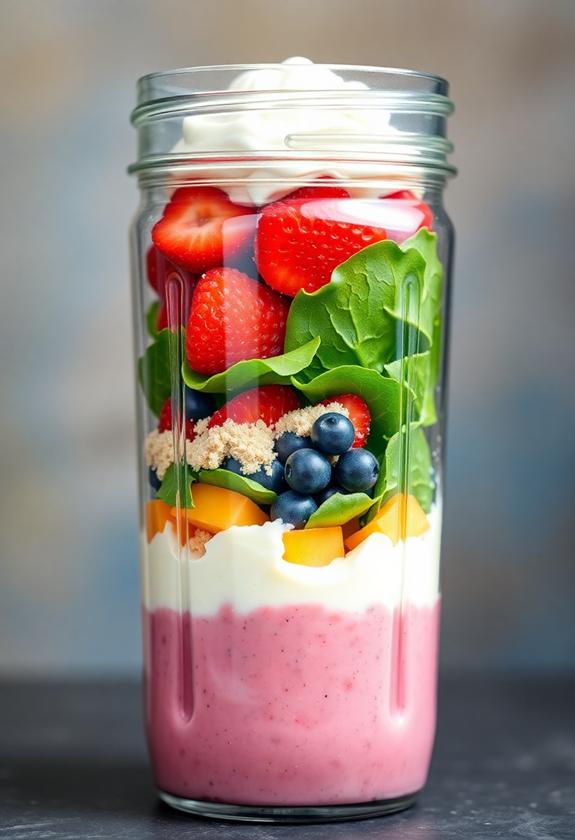
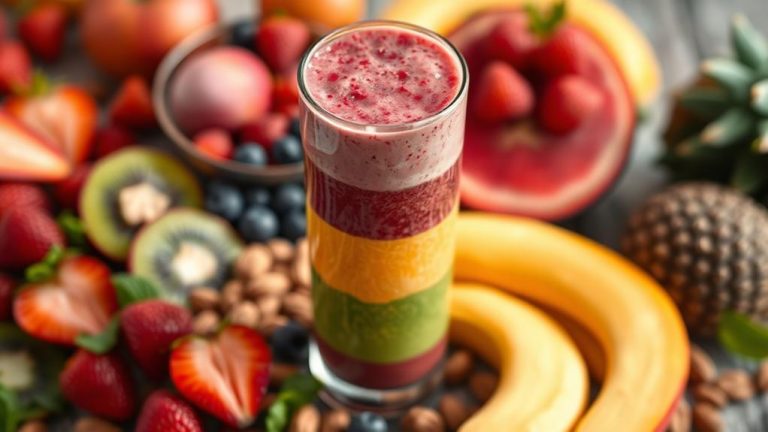
The art of layering ingredients in your blender can make or break your smoothie's texture. Start by layering liquids at the bottom, which helps create a vortex for better blending. Next, add your softer fruits and veggies, like bananas or spinach. These will blend easily and create a smooth base. For ideal texture, layer powders, such as protein or superfood blends, in the middle. This prevents them from sticking to the bottom or top of your blender. Protein powders can significantly boost the nutritional value of your smoothies while adding thickness and creaminess. Follow with harder fruits and veggies, then add your greens. Top it off with seeds, nuts, and spices for added nutrition and flavor. This layering technique not only guarantees a perfect blend of textures but also creates a beautiful array of colors. Remember, patience is key – take your time layering, and you'll be rewarded with a perfectly smooth, delicious smoothie.
Dealing With Icy Textures
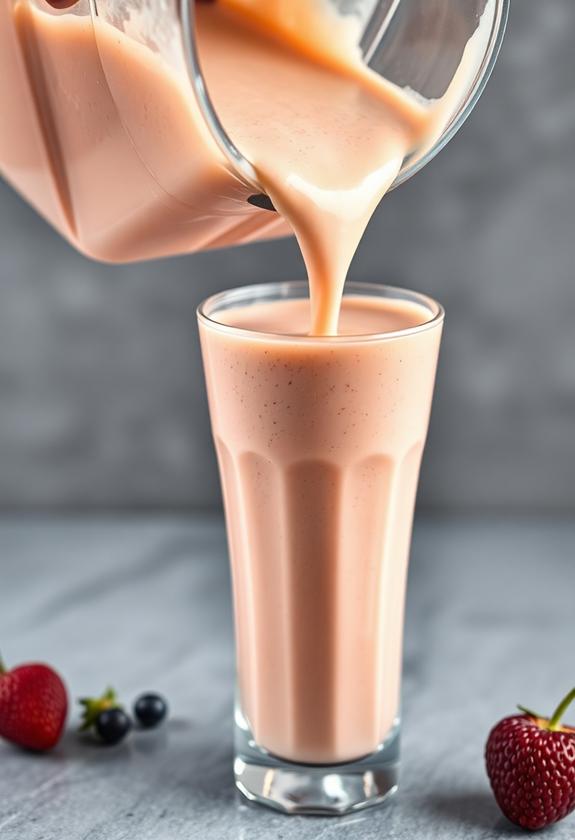
While proper layering can improve your smoothie's texture, you might still encounter icy patches. Common smoothie mistakes often lead to texture issues, but there are simple solutions. Don't worry! There are simple ways to improve your smoothie's texture and prevent ice crystal formation. Here are three effective methods to try:
- Let frozen ingredients thaw slightly before blending
- Use crushed ice instead of whole cubes
- Add a splash of liquid to help break down ice chunks
Eliminating Graininess and Chalkiness
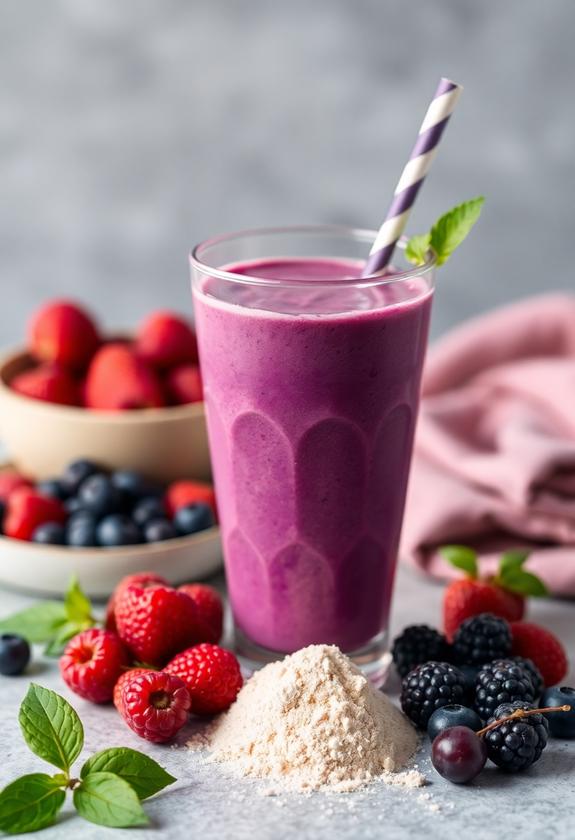
Ever wondered why your smoothie sometimes feels like drinking sand? That grainy texture can be a real mood killer, but don't worry! We've got some tricks up our sleeve for texture improvement and flavor augmentation. First, try blending your smoothie for a bit longer. This helps break down those pesky protein powders that often cause chalkiness. When selecting a protein powder for smoothies, consider options specifically designed for blending to minimize texture issues. If you're using nut butters, opt for the creamy versions instead of chunky ones. They'll mix in more smoothly. Another tip: add a ripe banana or some Greek yogurt. These ingredients not only make your smoothie creamier but also help mask any gritty textures. Finally, consider investing in a high-powered blender. It'll pulverize ingredients more thoroughly, giving you that silky-smooth texture you're craving. With these simple tweaks, you'll be sipping on velvety smoothies in no time!
Temperature Control for Creaminess
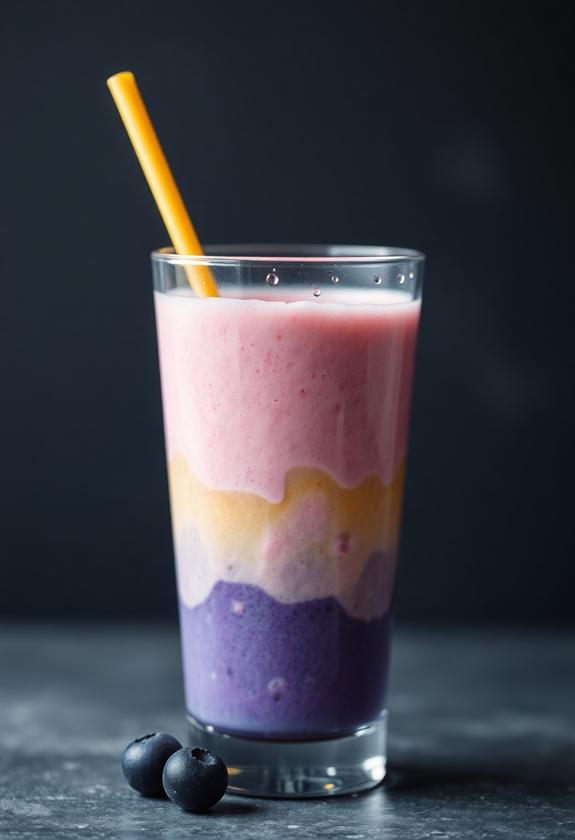
Creaminess in smoothies often boils down to temperature control. The temperature impact on your smoothie's texture can make or break the perfect blend. To achieve that velvety consistency you're aiming for, pay attention to both the blending and serving temperature. You'll be amazed at how much difference it can make! Boosting flavor in your protein powder smoothies is essential, but achieving the right texture is just as crucial for a satisfying drink.
Three key tips to master temperature control for creamy smoothies:
- Chill your fruits and veggies before blending
- Use frozen ingredients for instant thickness
- Serve your smoothie immediately after blending
Equipment Considerations
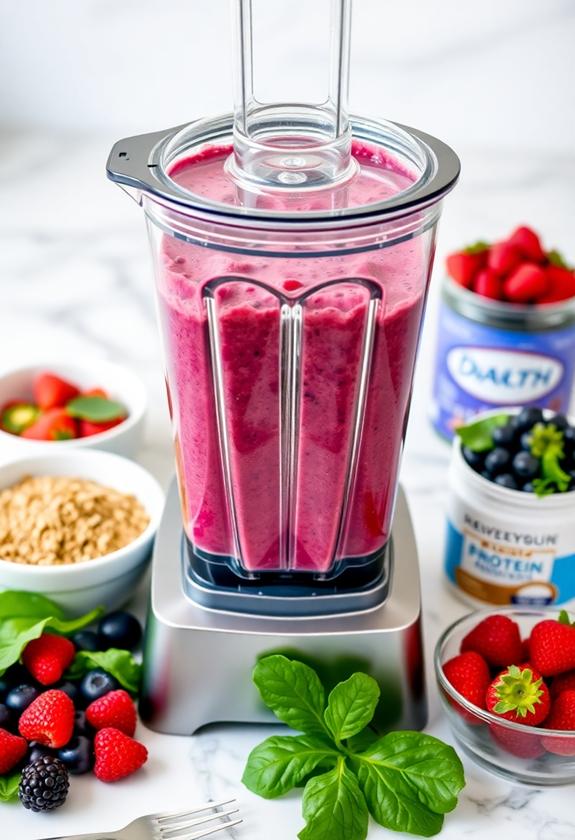
The right equipment can make or break your smoothie-making experience. Regarding blender types, you'll want to choose one with enough power to crush ice and blend tough ingredients smoothly. A high-speed blender is your best friend for creating creamy, lump-free smoothies. Don't forget about container materials, too! Glass containers are great for maintaining temperature, while plastic ones are lighter and more portable. Elevate your protein smoothies by choosing the right equipment to guarantee ideal texture and consistency for muscle growth.
No matter which type you choose, make certain it has a tight-fitting lid to prevent spills. A tamper tool can be a lifesaver for pushing ingredients down towards the blades. If you're new to smoothie-making, don't worry! Start with what you have and upgrade as you go. Remember, practice makes perfect, and you'll soon be whipping up delicious, silky smooth drinks with ease.
Frequently Asked Questions
Can I Use Expired Protein Powder in My Smoothies?
Have you ever wondered if that old protein powder in your pantry is still good to use? Well, it's best to err on the side of caution. While expired protein powder likely won't make you sick, it's not ideal for your smoothies. The protein content can degrade over time, making it less effective. Plus, it might not taste as good. For your health and enjoyment, it's better to use fresh protein powder within its expiration date. You deserve the best for your body!
How Long Can I Store a Prepared Protein Smoothie?
You'll want to enjoy your protein smoothie as soon as possible for the best taste and freshness. If you can't drink it right away, don't worry! You can store it in the fridge for up to 24 hours. Just make sure to keep it in an airtight container to maintain its quality. When you're ready to drink it, give it a good shake or stir, as some separation is normal. Remember, the sooner you drink it, the better it'll taste!
Are There Alternatives to Traditional Protein Powders for Smoothies?
You've got plenty of options beyond traditional protein powders for your smoothies. Why not try plant-based proteins like pea or hemp? They're great alternatives that pack a nutritional punch. You can also add a spoonful of nut butter or seed powders for a protein boost. Don't forget about yogurt substitutes like silken tofu or coconut yogurt – they'll give your smoothie a creamy texture while upping the protein content. Experiment with these options, and you'll find your perfect protein-packed smoothie in no time!
Can I Make Protein Smoothies Without a Blender?
You'll be amazed at how easily you can whip up protein smoothies without a blender! While it might seem impossible, there are plenty of options. Try using shaker bottles or mason jars for simple smoothie recipes. Just add your liquid, protein sources like Greek yogurt or cottage cheese, and soft fruits. Give it a vigorous shake, and voilà! You can also use pre-made protein shakes as a base and stir in mashed banana or nut butter for extra nutrition and flavor.
How Can I Reduce the Foam on Top of My Protein Smoothie?
You can reduce the foam on your protein smoothie with a few simple tricks! Try blending at a lower speed, which creates less air bubbles. Add ingredients gradually, and don't overfill your blender. Let your smoothie sit for a minute after blending to let foam settle. You can also gently tap the container on the counter to break up bubbles. If you're using ice, blend it last to minimize foam. With these techniques, you'll enjoy a smoother, less foamy drink!