Some links below are affiliate links. We earn a commission on purchases at no extra cost to you. Although our opinions are based on curated research, we haven't used these products. Article generated with AI.

How Much Protein Powder Should You Add to Your Smoothies?
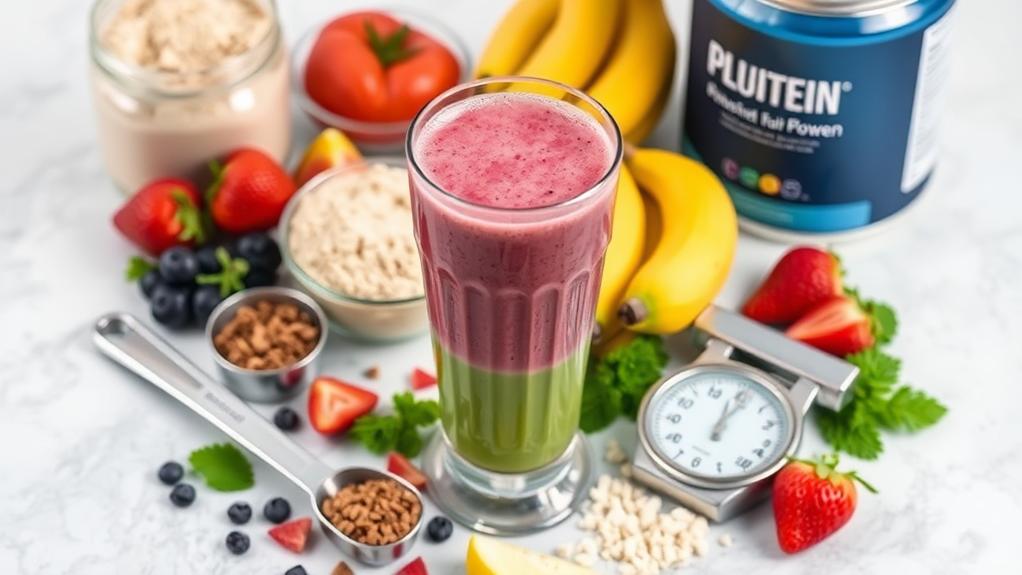
When adding protein powder to your smoothies, it's important to evaluate your individual needs and goals. Most protein powders recommend 1-2 scoops, which typically provides 20-40 grams of protein. For a meal replacement, you might use a full serving, while half a serving could work for a snack. Your activity level, age, and dietary restrictions can all influence how much protein you need. Remember, it's possible to overdo it, so start with smaller amounts and adjust as needed. Balancing protein with other nutrients like carbs and healthy fats will help create a well-rounded smoothie. There's more to investigate about optimizing your protein intake!
Table of Contents
hide
Key Takeaways
- Most protein powders recommend 1-2 scoops (20-40 grams of protein) per serving.
- A full serving is ideal for meal replacements, while half a serving may suffice for snacks.
- Consider your daily protein requirements, which are about 0.8 grams per kilogram of body weight for most adults.
- Adjust the amount based on your activity level, muscle-building goals, and overall health conditions.
- Balance protein powder with other macronutrients in your smoothie for optimal taste and nutritional value.
Understanding Protein Powder Types
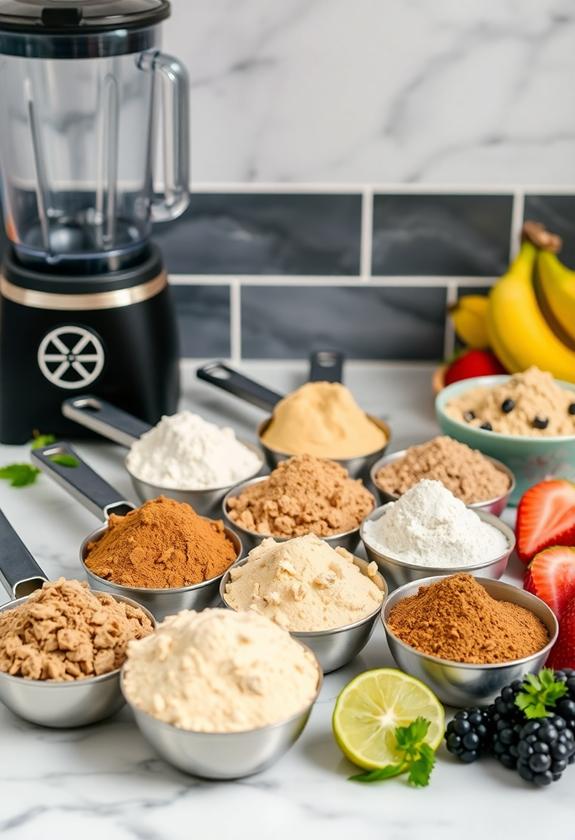
Protein powders come in various forms, each with unique properties and benefits. You'll find whey protein, a popular choice derived from milk, which is quickly absorbed by your body and packed with essential amino acids. It's great for muscle recovery after workouts. For those seeking delicious smoothie recipes, protein powders can be an excellent addition to improve both flavor and nutritional value. If you're looking for plant-based options, there are plenty to choose from too! Pea, rice, and hemp proteins are excellent choices for vegans or those with dairy sensitivities. These plant-based powders often blend multiple sources to create a complete protein profile. Don't worry if you're new to protein powders – there's a perfect fit for everyone! Each type has its own flavor and texture, so you might need to experiment a bit to find your favorite. Remember, the best protein powder is the one that makes you feel great and supports your health goals.
Daily Protein Requirements
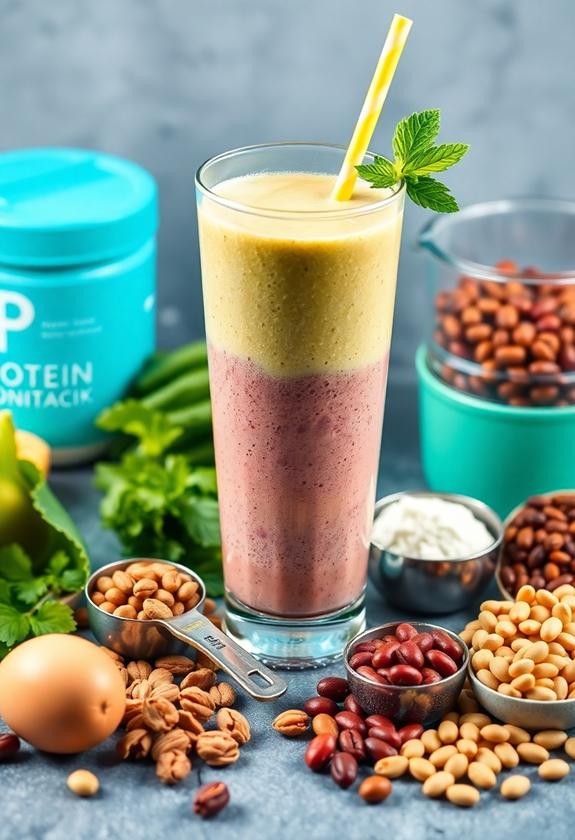
Stepping into the domain of daily protein requirements, it's essential to understand how much your body actually needs. The amount varies based on factors like age, gender, and activity level. For most adults, a general guideline is to consume about 0.8 grams of protein per kilogram of body weight daily. However, if you're very active or trying to build muscle, you might need more. Protein and fiber work synergistically to support weight loss efforts, making them a powerful combination for those looking to shed pounds.
Don't worry if this sounds complicated! It's easier than you think to meet your protein needs. You can get protein from various sources, including meat, fish, eggs, dairy, beans, and nuts. Remember, protein powder is just one of many protein sources. Your daily intake should come from a mix of whole foods and supplements. By focusing on a balanced diet and adding protein powder to your smoothies when needed, you'll be well on your way to meeting your protein goals.
Factors Affecting Protein Needs
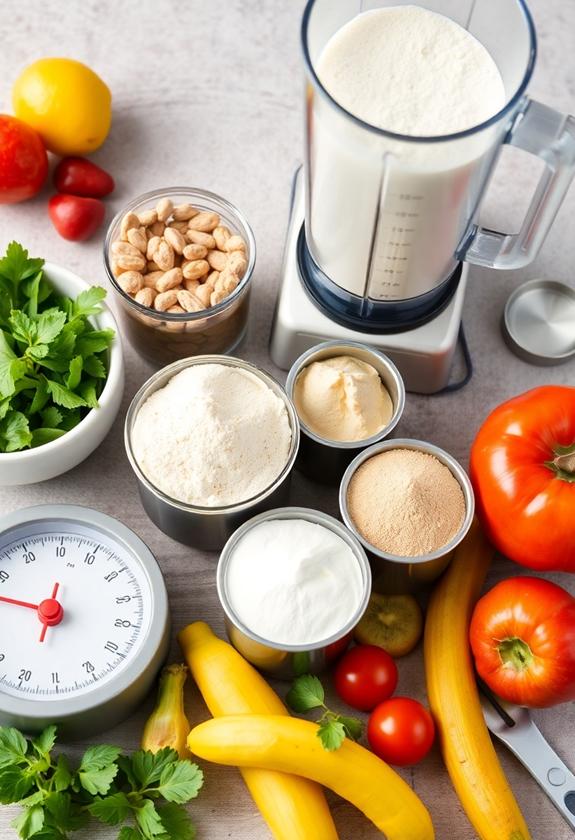
While the baseline protein requirement serves as a starting point, several factors can influence your individual protein needs. Your activity level plays a significant role; if you're an athlete or exercise regularly, you'll need more protein to support muscle recovery and growth. Speaking of muscle, if you're aiming to build strength or increase muscle mass, your protein intake should be higher. Protein timing is also important for peak muscle-building results, especially when incorporating protein powder into smoothies. Age factors in too, as older adults often require more protein to maintain muscle mass and bone health. Don't forget about dietary restrictions; if you're vegetarian or vegan, you might need to be more mindful of your protein sources. Certain health conditions can also affect your protein needs. Remember, it's not just about quantity but quality too. Vary your protein sources to guarantee you're getting all the essential amino acids your body craves.
Recommended Serving Sizes
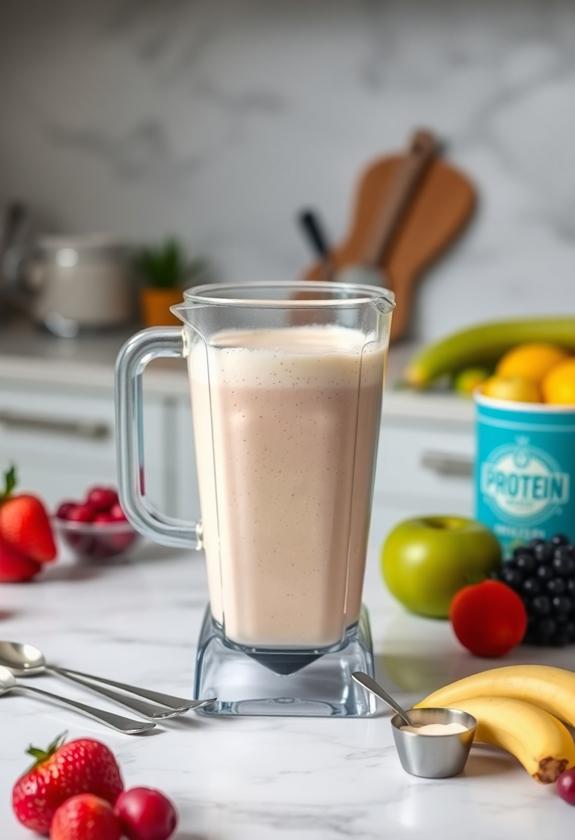
In terms of adding protein powder to your smoothies, you'll want to follow the recommended serving sizes on the product label. Most protein powder blends suggest using one to two scoops, which typically equals 20 to 40 grams of protein. When creating perfect protein smoothies, it's crucial to strike the right balance between protein content and other ingredients. This amount is perfect for creating a balanced, nutrient-rich smoothie that'll keep you feeling full and energized.
Calculating Your Personal Intake
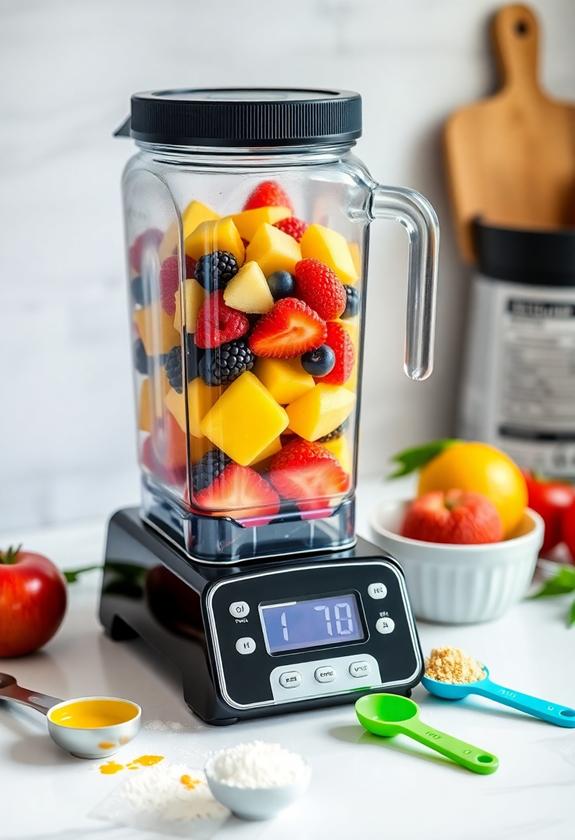
Protein-intake calculations should be tailored to your individual needs and goals. To determine your personal protein requirements, take into account factors like your weight, activity level, and fitness objectives. A general rule of thumb is to consume 0.8 to 1 gram of protein per pound of body weight daily. For example, if you weigh 150 pounds, you'd aim for 120-150 grams of protein. When balancing protein and calories in smoothies for weight loss, it's important to regard both macronutrient content and overall calorie intake to support your goals effectively.
When adding protein powder to your smoothie recipes, think about your daily protein absorption. If you're having a smoothie as a meal replacement, you might want to include a full serving of protein powder. For a snack, half a serving could suffice. Remember, your body can only process so much protein at once, so spreading your intake throughout the day is ideal. Don't worry if it takes some trial and error to find your perfect balance – you've got this!
Timing of Protein Consumption
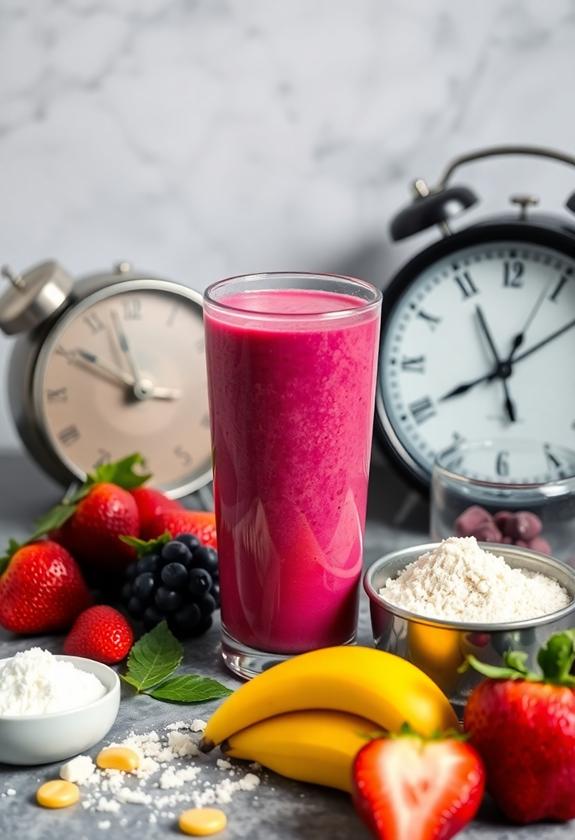
Consider the timing of your protein consumption to maximize its benefits. When you add protein powder to your smoothies, it's not just about how much you use, but also when you drink them. Pre-workout timing is vital, as a protein-rich smoothie about an hour before exercise can give you the energy you need. Post-workout timing is just as significant, with a protein shake within 30 minutes helping muscle recovery. Optimal post-workout timing is essential for maximizing the benefits of your protein intake and supporting muscle recovery and growth.
Don't forget about meal timing throughout the day. You can enjoy protein smoothies as part of your breakfast or as a midday snack to keep you feeling full and energized. By spacing out your protein intake, you'll support your body's needs consistently. Remember, everyone's body is different, so pay attention to how you feel and adjust your timing accordingly. You're doing great by focusing on your nutrition!
Potential Risks of Overconsumption
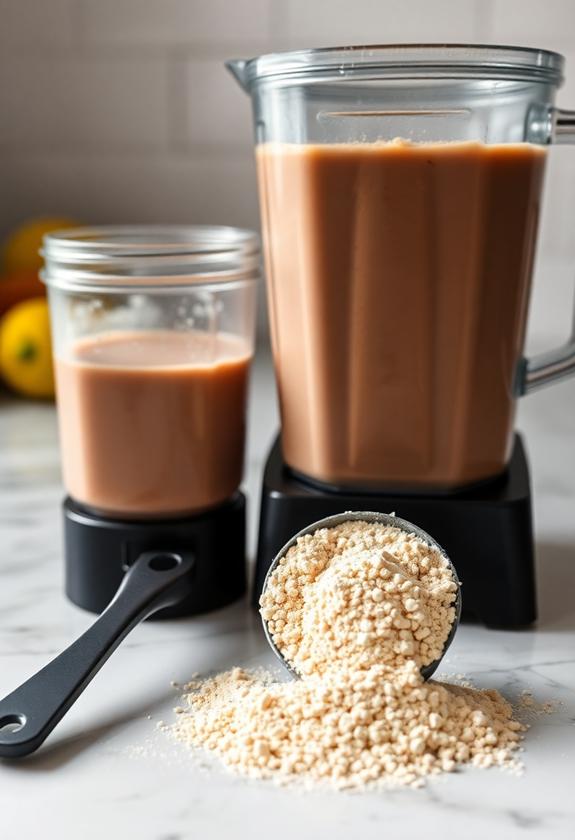
While protein powder can be beneficial, overconsumption may lead to potential risks. It's important to be aware of protein powder side effects and the consequences of excessive intake. Your body can only process so much protein at once, and taking too much might cause discomfort or health issues. Overloading protein in your smoothie can actually ruin its taste and texture, making it less enjoyable to consume. Here are some potential risks to keep in mind:
- Digestive problems, like bloating or gas
- Increased strain on your kidneys
- Possible weight gain from extra calories
Balancing Macronutrients in Smoothies
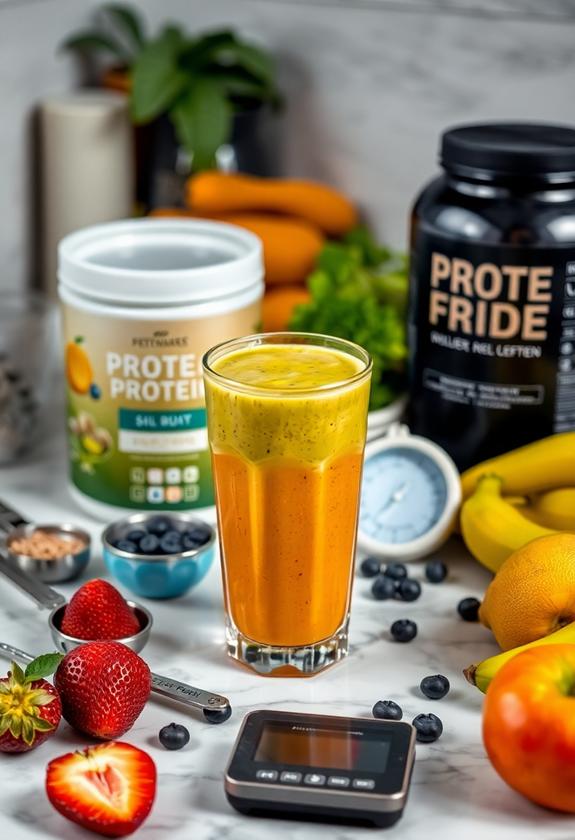
Creating a well-balanced smoothie goes beyond just adding protein powder. You'll want to take into account the other macronutrients too: carbohydrates and fats. Aim for a mix that suits your nutritional needs and goals. For example, you might add fruits for carbs, nut butter for healthy fats, and Greek yogurt for extra protein. When mastering nutrient balance in your smoothies, it's crucial to watch out for potential imbalances that could affect your overall nutrition.
Don't forget about smoothie consistency and flavor improvement! A balanced blend of macronutrients can enhance the texture and taste of your drink. Experiment with different ingredients to find your perfect combination. You might discover that a handful of spinach or a splash of coconut milk takes your smoothie to the next level.
Alternatives to Protein Powder
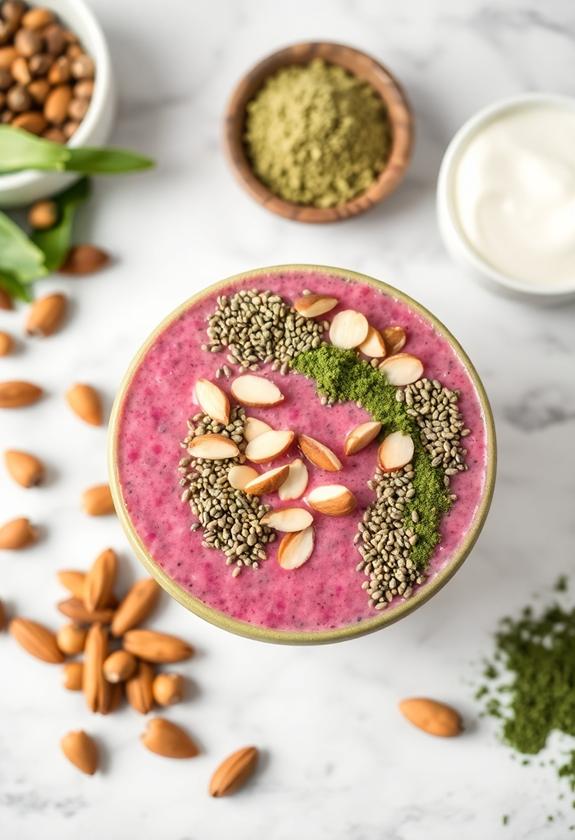
Enthusiastic to improve your smoothie's protein content without relying on powder? You're in luck! There are plenty of nutrient-rich foods that can amp up your protein intake naturally. Let's examine some delicious whole food sources that'll not only improve your smoothie's flavor but also provide amazing health benefits. Nuts and nut butters are excellent options for adding protein and healthy fats to your smoothies, offering a creamy texture and rich flavor profile.
Consider adding these plant-based options and dairy alternatives to your next blend:
- Greek yogurt or silken tofu for a creamy texture
- Nut butters like almond or peanut for healthy fats
- Hemp seeds or chia seeds for omega-3s and fiber
These smoothie boosters offer complete amino acid profiles, making them excellent protein sources. You'll love how these whole food options can transform your drink into a nutritional powerhouse. Don't be afraid to experiment with different combinations to find your perfect protein-packed smoothie!
Frequently Asked Questions
Can Protein Powder Be Used as a Meal Replacement?
Yes, you can use protein powder as a meal replacement, and it offers some great benefits! There are various protein powder types to choose from, like whey, casein, or plant-based options. When you're in a hurry or need a quick nutritional boost, protein shakes can be a convenient substitute for a full meal. They'll help keep you feeling full and provide essential nutrients. However, it's important to keep in mind that whole foods should still make up most of your diet for ideal health.
Does Protein Powder Expire, and How Should It Be Stored?
Yes, protein powder does expire, but don't worry! You can extend its shelf life by storing it properly. Keep your powder cool, dry, and away from sunlight. Most powders last 1-2 years unopened, but once you've opened it, try to use it within 6-12 months. Always check the expiration date and trust your senses – if it smells off or looks clumpy, it's time to part ways. Remember, proper storage is key to keeping your protein powder fresh and effective!
Can Children or Teenagers Safely Consume Protein Powder in Smoothies?
You'll be happy to know that children and teenagers can safely enjoy protein powder in smoothies, but there are some important things to keep in mind. First, consider their age and protein needs. Growing bodies do require more protein, but it's best to focus on whole food protein sources first. If you're adding powder, start with small amounts and choose a high-quality, age-appropriate option. Always consult with a pediatrician to guarantee it's right for your child's unique needs.
Are There Any Interactions Between Protein Powder and Medications?
You should always be cautious when mixing protein powder with medications. Some protein powders can affect how your body absorbs certain medicines, potentially impacting their effectiveness. It's vital to talk to your doctor or pharmacist about any possible interactions. They'll help you understand if you need to adjust your protein intake or medication schedule. Remember, your health comes first, and it's okay to ask questions! Your healthcare team is there to support you and guarantee you're making the best choices for your well-being.
How Does Protein Powder Affect the Taste and Texture of Smoothies?
Buckle up, smoothie lovers! You're in for a taste-texture adventure with protein powder. When you add it to your smoothies, you'll notice some exciting changes. It's like a flavor improvement magic wand, often adding a delicious boost to your drink. You'll also feel the texture thickening, making your smoothie creamier and more satisfying. Don't worry if it takes a bit of experimenting to find your perfect blend. You've got this, and your taste buds will thank you!