Some links below are affiliate links. We earn a commission on purchases at no extra cost to you. Although our opinions are based on curated research, we haven't used these products. Article generated with AI.

How to Balance Protein and Calories in Smoothies for Weight Loss
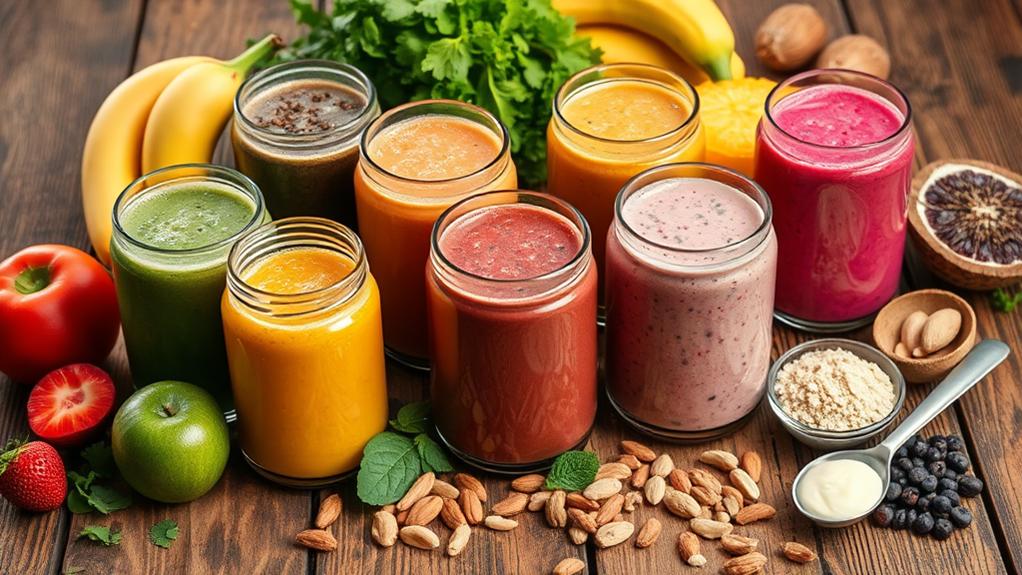
Balancing protein and calories in smoothies for weight loss is simpler than you might think! Start by choosing high-quality protein sources like Greek yogurt, whey protein, or nut butter to keep you full and boost your metabolism. Add low-calorie, fiber-rich ingredients such as spinach, berries, or oats to improve satiety and nutrition without piling on the calories. Watching portion sizes is key, so measure ingredients to keep calories in check. Aim for a mix of 40% carbs, 30% protein, and 30% fat for balanced macros. Morning or post-workout smoothies can be particularly beneficial, providing you with sustained energy throughout the day. Interested in delicious recipes and more tips?
Table of Contents
hide
Key Takeaways
- Use high-quality protein sources like Greek yogurt, protein powder, or nut butters to increase protein content without excessive calories.
- Incorporate low-calorie, nutrient-dense ingredients like spinach, berries, and low-fat dairy for added vitamins and fiber.
- Monitor portion sizes with measuring tools to ensure accurate calorie and protein tracking.
- Balance macronutrients with a ratio of 40% carbs, 30% protein, and 30% fat to optimize satiety and energy.
- Avoid high-calorie ingredients and sugary fruit juices, opting for water or unsweetened almond milk instead.
Understanding Protein Needs
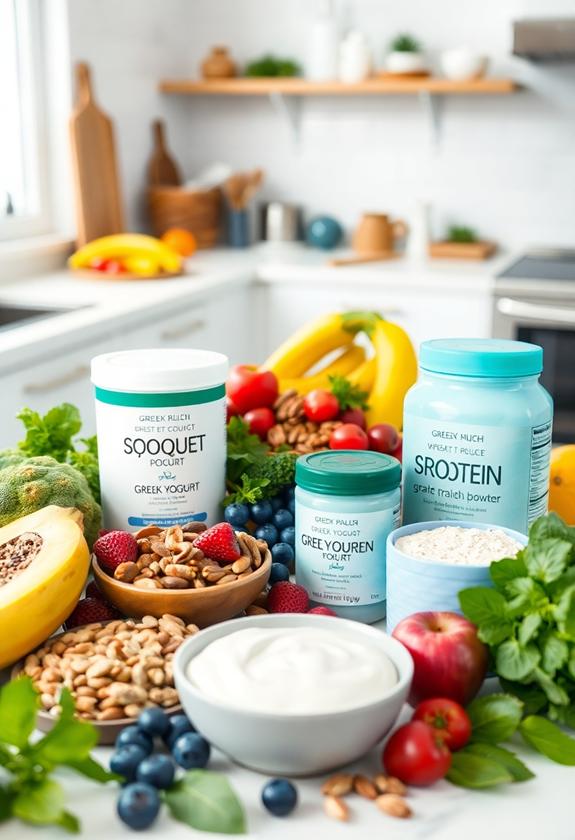
In terms of understanding protein needs for weight loss, it's crucial to recognize that protein isn't just for muscle building; it also plays a key role in satiety and metabolism. Protein and fiber work together synergistically to promote weight loss by increasing feelings of fullness and reducing overall calorie intake. You need to pay attention to protein quality and timing. Choose high-quality protein sources like lean meats, beans, and dairy. Timing your protein intake can help with muscle recovery and protein synthesis. For best protein absorption, spread out your daily intake through different meals. There are various protein types, like whey and casein, that can affect how your body uses them. By understanding these aspects, you can better manage your weight loss journey. Remember, a balanced approach with the right protein sources will support your goals.
Calculating Caloric Intake
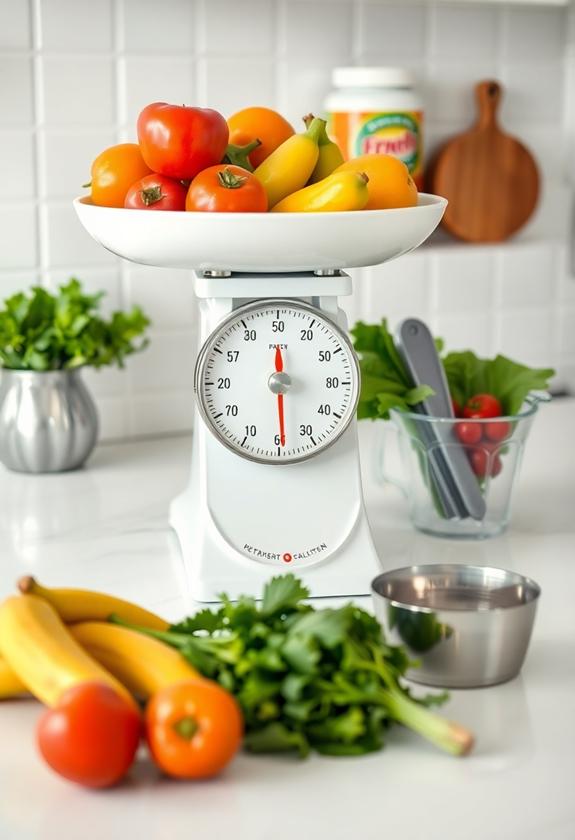
In terms of calculating caloric intake, accuracy is key to achieving your weight loss goals. Start by determining your daily caloric needs, then create a caloric deficit to lose weight effectively. Use apps or journals to track everything you eat, including your smoothies. This way, you can see where your calories come from and make adjustments as needed. When creating low-calorie high-protein smoothies, be mindful of portion sizes and ingredient choices to maintain a balanced nutritional profile while keeping calories in check.
Tracking progress is essential. Regularly record your weight and measurements to see how well you're doing. It's also helpful to note how you feel—energy levels and mood can be indicators of whether you're on the right path. Remember, consistency is your friend. By accurately calculating your caloric intake and monitoring your progress, you'll be well on your way to success.
Choosing Protein Sources
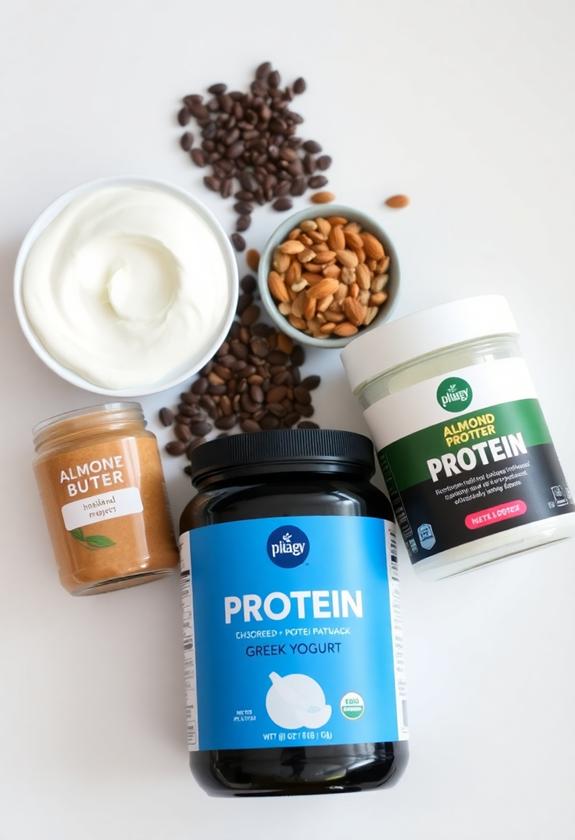
In the domain of crafting the perfect smoothie for weight loss, the choice of protein sources plays a pivotal role. You've got many options, each bringing unique benefits. Plant based proteins like hemp seeds and seed blends are excellent choices, offering fiber and essential nutrients. Protein-packed legumes can also be a great addition to your smoothies, providing a boost of plant-based protein and essential nutrients. Whey options are fantastic for quick absorption, while nut butters provide healthy fats and protein. Dairy alternatives, such as Greek yogurt, give you a creamy texture with a protein punch. Protein powders, including collagen peptides, are convenient and versatile. Don't forget egg whites for a low-calorie, high-protein boost. With so many choices, you can mix and match to find the perfect balance for your weight loss goals, making each smoothie both delicious and nutritious.
Low-Calorie Ingredients
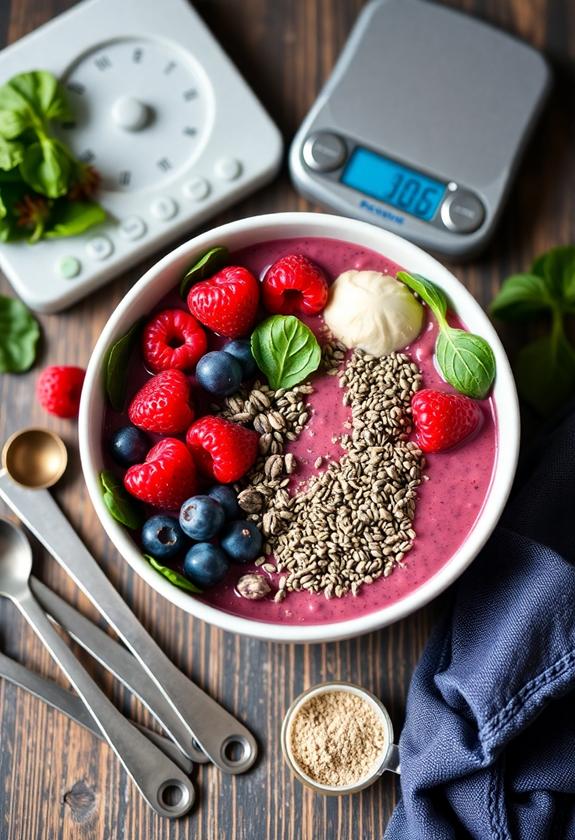
When crafting a smoothie for weight loss, incorporating low-calorie ingredients is essential to keep your drink both satisfying and effective. Start with spinach, which offers numerous benefits like vitamins and fiber without adding many calories. Consider fruit alternatives like berries, which are lower in sugar. Low fat dairy, such as skim milk or yogurt, keeps calories down while adding creaminess. A small amount of nut butter can provide healthy fats and flavor. Protein powder options can boost protein content without adding too many calories, helping to keep you fuller for longer. Protein is vital for muscle maintenance and repair, especially during weight loss. For vegetable options, cucumbers and zucchini blend well and keep calories low. Choose natural sweeteners like stevia or monk fruit to avoid extra sugar. Finally, add fiber sources like chia seeds to keep you full longer.
Portion Control Tips
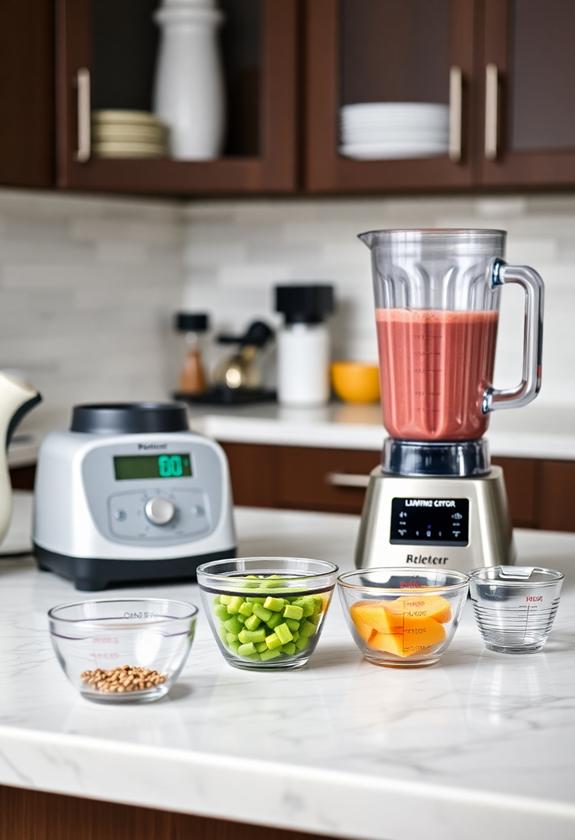
Balancing low-calorie ingredients in your smoothie is a great start, but portion control is just as important for effective weight loss. Begin with mindful eating—pay attention to your body's hunger signals and avoid overfilling your glass. Low-calorie high-protein smoothies can be an excellent addition to your weight loss journey, offering a nutritious and satisfying option. Experiment with various protein sources and low-calorie fruits to find the perfect balance for your taste buds and goals. Knowing proper serving sizes and practicing portion awareness can help you stay on track. Use serving tools like measuring cups and spoons for accurate ingredient measurement. Visual aids, like a dedicated smoothie cup, can also guide you in keeping smoothie servings consistent. Calorie counting becomes easier when you control portions, helping you stick to your weight loss goals. With these tips, you'll enjoy delicious smoothies while maintaining a balanced diet. Remember, every small step counts toward your success!
Balancing Macronutrients
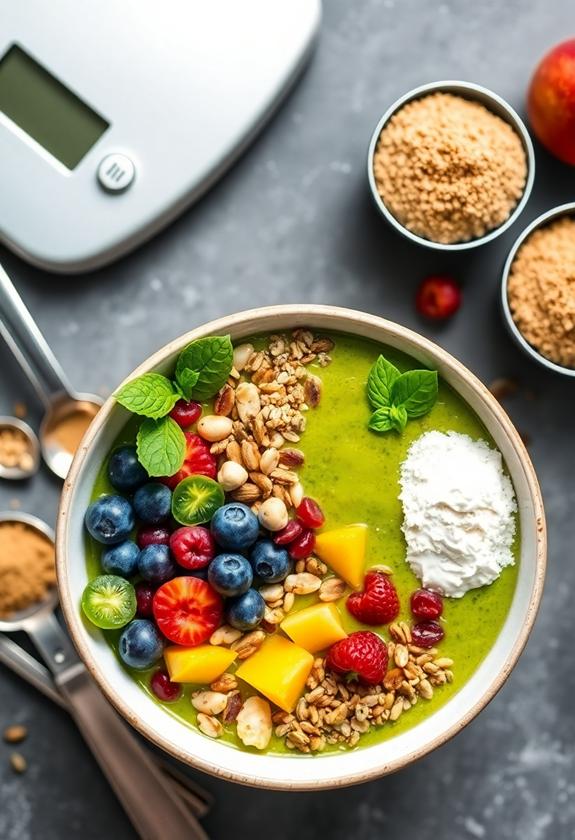
Achieving harmony in your diet often hinges on the delicate balance of macronutrients in your meals, and smoothies are no exception. To craft a nutritious smoothie, focus on protein quality, macronutrient ratios, and nutrient density. Think about your dietary preferences and how different ingredients affect smoothie textures and flavor combinations. Adding top fiber sources to your smoothies can improve their nutritional value and promote satiety. This is especially beneficial when aiming for weight loss while maintaining adequate protein intake.
Here's a simple guide:
- Protein Quality: Opt for high-quality sources like Greek yogurt, protein powder, or nuts.
- Macronutrient Ratios: Balance carbohydrates, proteins, and fats. A typical ratio might be 40% carbs, 30% protein, and 30% fat.
- Ingredient Substitutions: Swap high-calorie items with nutrient-dense alternatives, like spinach for kale or almond milk for regular milk.
Timing Your Smoothies
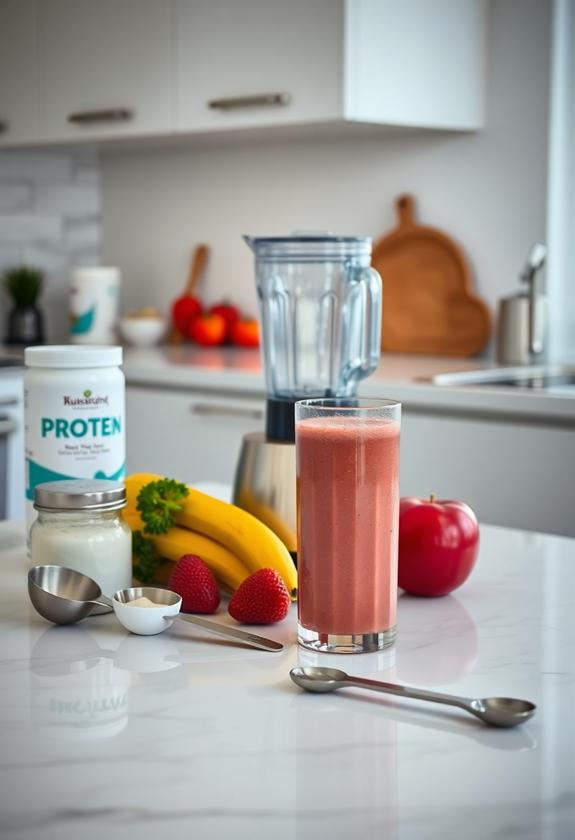
Knowing when to consume your smoothies can significantly impact your weight loss journey. Start your day with a morning smoothie to kickstart your metabolism and provide lasting energy. Pre workout smoothies fuel your exercise, enhancing performance, while post workout recovery smoothies help repair muscles and boost recovery. Optimal timing for post-workout smoothies is essential to maximize nutrient absorption and muscle recovery. If you're replacing meals, timing is key—opt for a smoothie at lunch to stay full and focused. Evening smoothie rituals can curb late-night cravings without overloading your system. For those mid-afternoon hunger pangs, snack timing strategies involve a balanced smoothie to keep you satisfied until dinner. By thoughtfully timing your smoothies, you maximize their benefits and support your weight loss goals effectively.
Sample Smoothie Recipes
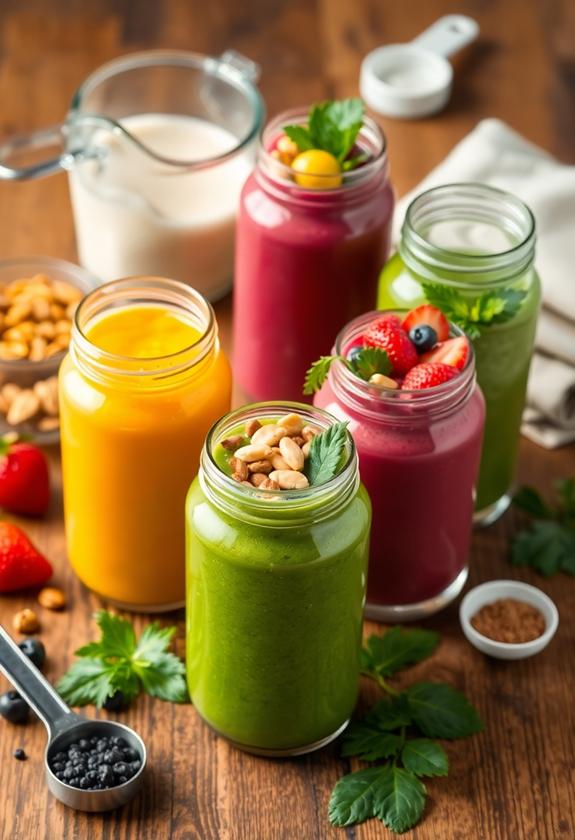
Crafting the perfect smoothie not only involves timing but also the right combination of ingredients. Elevating your smoothies with the right protein sources can significantly boost muscle growth and recovery. Here are three delicious recipes to get you started:
- Tropical Smoothie: Blend pineapple, mango, coconut water, and a scoop of protein powder for a refreshing meal replacement.
- Green Smoothie: Combine spinach, kale, avocado, and almond milk with a spoonful of nut butter, perfect for post-workout recovery.
- Berry Explosion: Mix blueberries, strawberries, Greek yogurt, and a dash of honey for a nutrient-packed smoothie bowl.
For a chocolate protein boost, try adding cocoa powder to any of these recipes. These smoothies offer a balanced mix of protein and calories, helping you stay full and energized throughout the day. Enjoy experimenting with your favorite flavors!
Common Mistakes to Avoid
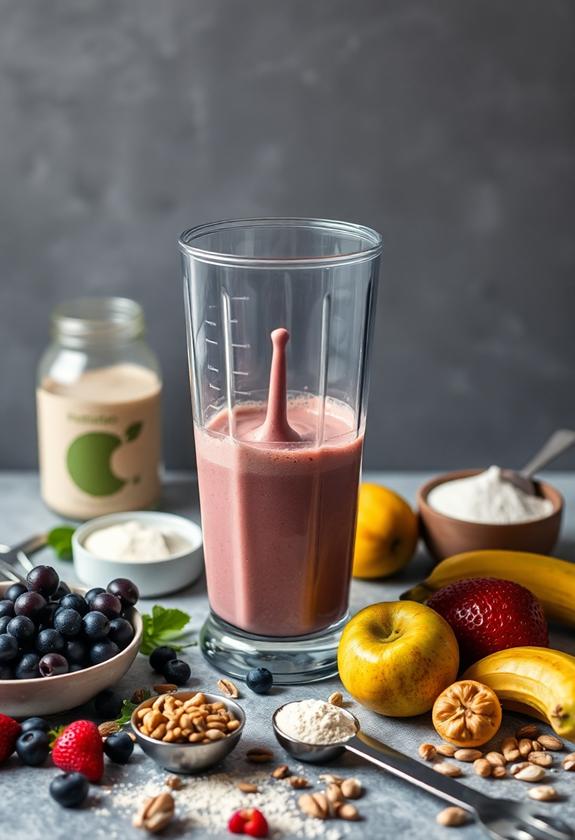
When aiming to lose weight with smoothies, it's easy to make mistakes that can derail your progress. One common error is not paying attention to ingredient substitutions. Replacing high-calorie items with lower-calorie options can make a big difference. For instance, swap out sugary fruit juices for water or unsweetened almond milk. Protein addition mistakes can also impact your weight loss goals, such as using the wrong type or amount of protein powder.
Another pitfall is poor blending techniques. Over-blending can destroy the fiber in fruits and vegetables, reducing their nutritional benefits. Blend just enough to achieve a smooth texture.
Also, avoid adding too many high-calorie ingredients like nut butters or avocados, which can quickly add up. Balance your smoothie by including a good mix of protein, fiber, and healthy fats, ensuring it's both nutritious and satisfying.
Frequently Asked Questions
Can I Use Protein Powders in Smoothies While on Medication?
It's important to look before you leap when mixing protein powders with medication. Protein powder safety can vary, and some ingredients might interact with your meds. It's a good idea to talk to your doctor or pharmacist about any potential medication interactions. They can give you personalized advice and make sure your smoothies are both tasty and safe. Don't worry, you're doing great by checking first!
How Does the Fiber Content in Smoothies Affect Weight Loss?
Fiber content in smoothies can greatly support your weight loss journey. Including fiber sources like chia seeds, flaxseeds, and leafy greens in your smoothie recipes offers numerous fiber benefits. Fiber helps you feel full longer, aiding digestion support and curbing overeating. By keeping your digestive system healthy, you'll better manage your weight. Remember, a high-fiber smoothie isn't just tasty; it's a powerful tool for achieving your weight loss goals.
Are There Any Specific Smoothie Ingredients to Avoid Before a Workout?
Before a workout, avoid heavy, high-fat ingredients in your smoothies, like avocado or full-fat yogurt. These can slow digestion, making you feel sluggish. Instead, focus on smoothie timing to guarantee you've got the right workout energy. Go for light, easily digestible options like bananas, berries, and a bit of protein powder. This way, you'll have the energy to power through your workout without feeling weighed down.
Can I Replace a Meal With a Smoothie Every Day?
Yes, you can replace a meal with a smoothie every day! Just make certain it's balanced with enough protein, healthy fats, and fiber to keep you full and meet your daily nutrition needs. Add ingredients like spinach, berries, Greek yogurt, and nuts. Don't forget to mix up your recipes to keep things interesting and guarantee you're getting a variety of nutrients. Enjoy your smoothie journey and feel great!
How Do Different Types of Milk Impact the Calorie Count in Smoothies?
Imagine your smoothie as a blank canvas; the milk you choose can paint quite a different picture. Nut milk options, like almond and cashew, typically have fewer calories compared to cow's milk. For instance, unsweetened almond milk has around 30-40 calories per cup, while whole cow's milk can pack 150 calories. This calorie comparison can help you make a more mindful choice, balancing taste and nutrition in your smoothie.