Some links below are affiliate links. We earn a commission on purchases at no extra cost to you. Although our opinions are based on curated research, we haven't used these products. Article generated with AI.

How to Avoid Overloading on Protein in Your Smoothies
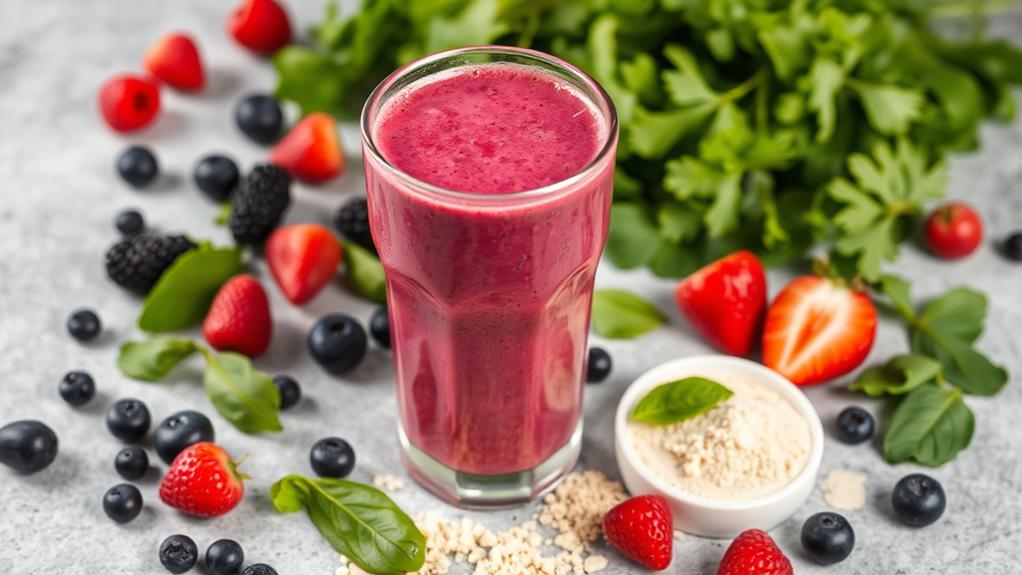
To avoid protein overload in your smoothies, start by understanding your body's needs. Choose protein sources wisely, mixing both plant-based and whole food options. Measure your portions carefully, and track your intake to stay within recommended limits. Balance your smoothie with other nutrients like fiber and healthy fats. Don't forget to take into account the timing of your protein-rich drinks, especially around workouts. Most importantly, listen to your body's signals. If you feel uncomfortably full or bloated, you might need to adjust your protein content. By following these tips, you'll be well on your way to creating perfectly balanced, nutritious smoothies.
Table of Contents
hide
Key Takeaways
- Understand your individual protein needs based on age, gender, and activity level.
- Choose a variety of protein sources, including plant-based options, to maintain balance.
- Measure and track portions accurately using tools like measuring cups or food scales.
- Balance protein with other macronutrients and incorporate whole food proteins for better nutrition.
- Listen to your body's signals and adjust protein content based on fullness and energy levels.
Understand Your Protein Needs
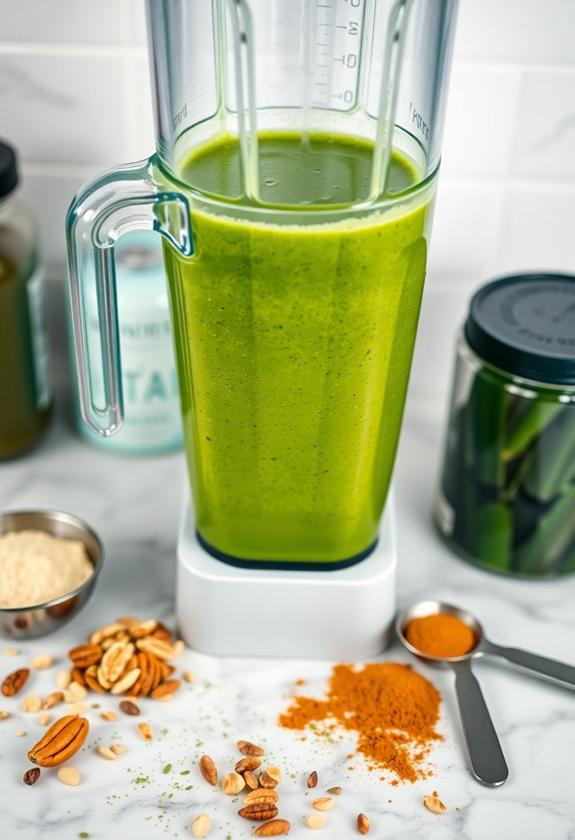
To understand your protein needs, it's vital to acknowledge that requirements vary based on factors like age, gender, activity level, and overall health. Generally, adults need about 0.8 grams of protein per kilogram of body weight daily. However, if you're an athlete or highly active, you might need more. Overloading protein in your smoothie can actually be detrimental to your health and potentially ruin the taste and texture of your drink.
It's important to keep in mind that your body can only absorb a certain amount of protein at once, so spreading your intake throughout the day is key. Don't forget about dietary diversity, too! While protein is significant, it's just one piece of the nutritional puzzle. Your smoothies should include a balance of nutrients, not just protein. By understanding your specific needs and considering protein absorption, you'll be better equipped to create smoothies that nourish your body without overloading on protein.
Choose Protein Sources Wisely
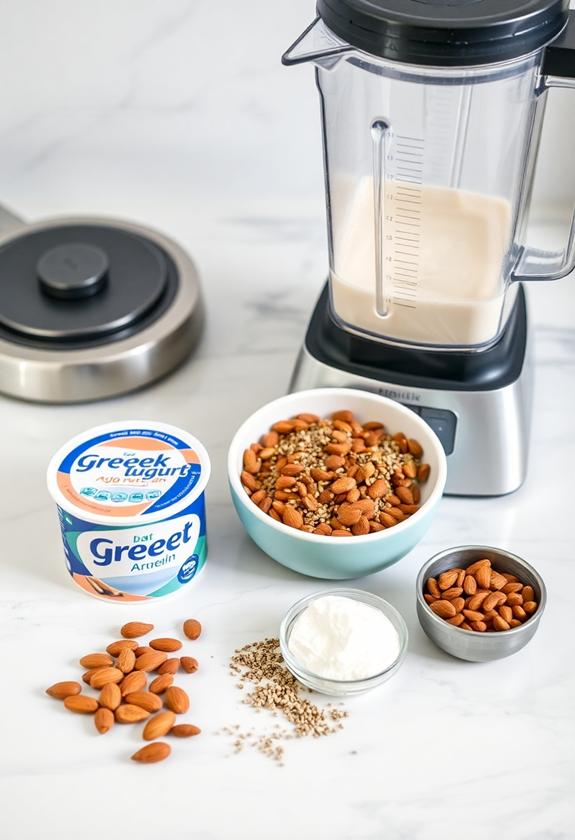
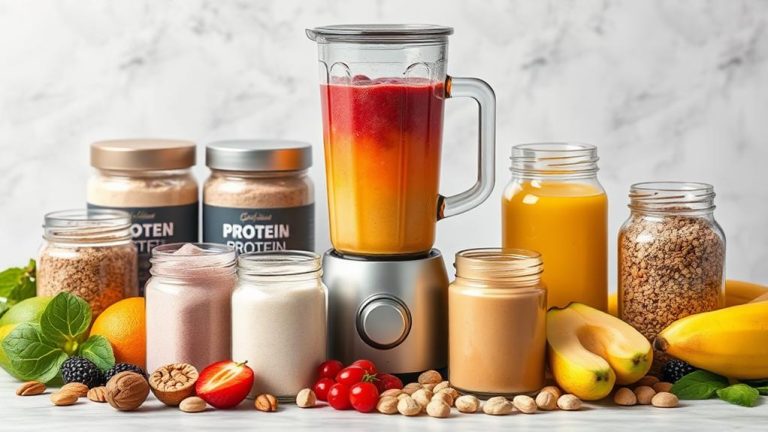
When choosing protein sources for your smoothies, it's crucial to select wisely. Consider incorporating plant-based options like nuts, seeds, or legumes, which offer a natural protein boost without overwhelming your drink. Creating balanced smoothies involves carefully selecting ingredients to avoid protein overload while maintaining nutritional value. If you're using protein powders, opt for high-quality, minimally processed varieties that align with your dietary needs and preferences.
Measure and Track Portions
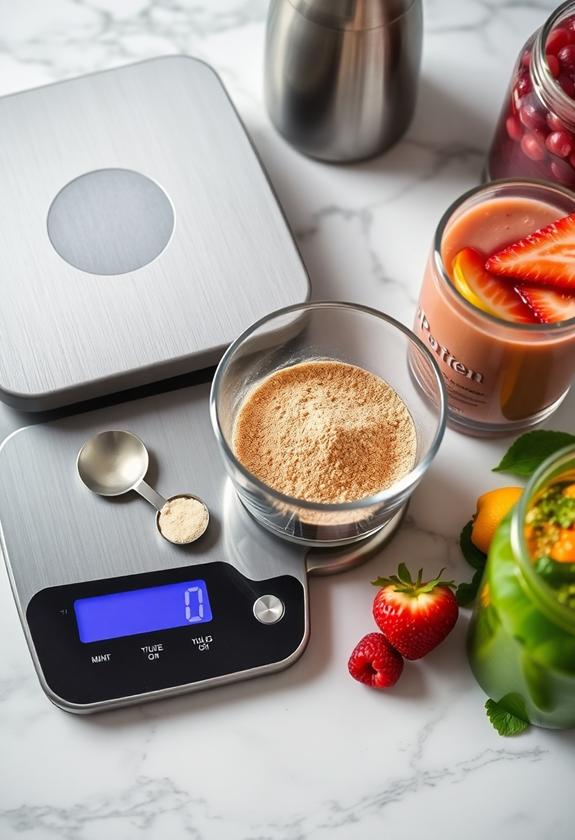
Equipped with knowledge about protein sources, you're ready to tackle portion control. Measuring and tracking your smoothie ingredients is key to maintaining a balanced protein intake. Start by familiarizing yourself with serving sizes for different protein sources, and use measuring cups or a food scale to guarantee accuracy. Don't forget to take into account the protein content of other ingredients, like fruits and vegetables, to get a complete picture of your smoothie's nutrient density. Understanding essential smoothie tips can help you create perfectly balanced protein-packed beverages without overloading on any single nutrient.
To make portion control easier and more enjoyable, try these tips:
- Create a collection of go-to smoothie recipes with pre-measured ingredients
- Use a smoothie tracking app to monitor your protein intake over time
- Experiment with different ingredient ratios to find your perfect balance
Balance Macronutrients in Smoothies
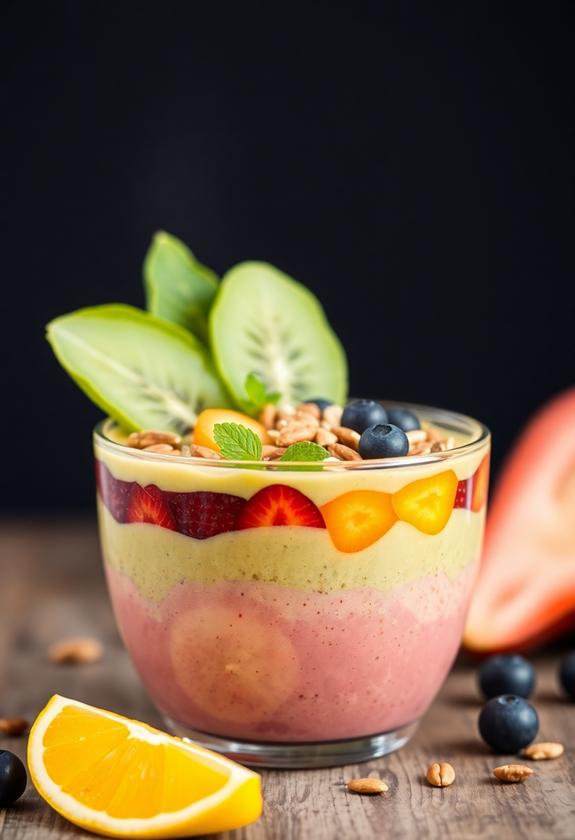
Balancing macronutrients in your smoothies is just as important as controlling protein portions. While protein is essential, don't forget about other crucial nutrients. Boost satiety by combining protein with fiber-rich ingredients in your smoothies. This combination can help you feel fuller for longer and maintain stable blood sugar levels. Add fiber sources like leafy greens, berries, or chia seeds to support digestive health and keep you feeling full. Don't shy away from healthy fats, either. A tablespoon of nut butter or a quarter of an avocado can provide creamy texture and heart-healthy benefits.
Incorporate Whole Food Proteins
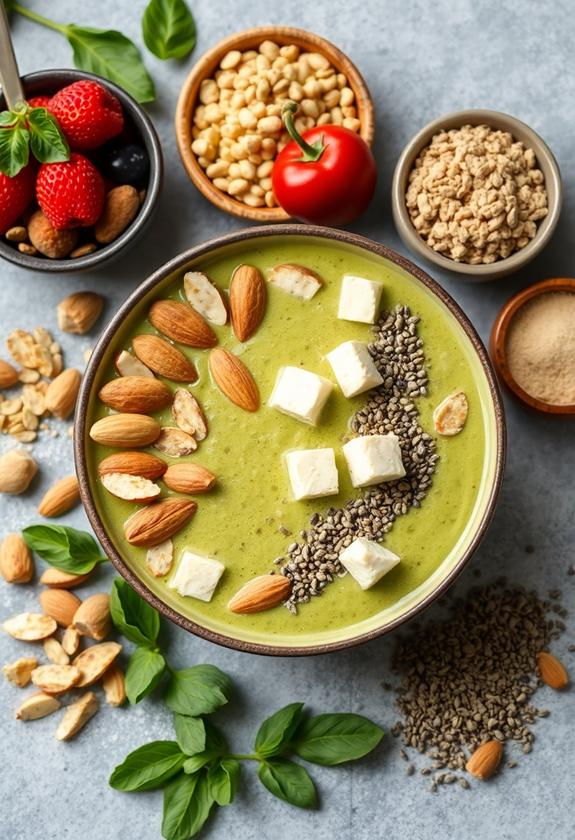
Incorporating whole food proteins into your smoothies offers several advantages over relying solely on protein powders. You'll enjoy greater nutrient diversity, improved flavor balance, and improved texture in your smoothie recipes. Whole food proteins like Greek yogurt, nut butters, and seeds can be easily combined with other ingredients to create delicious and satisfying blends that cater to various dietary preferences. These high-protein smoothie ingredients can help keep you full until lunch, providing sustained energy throughout the morning.
Here are some benefits of using whole food proteins in your smoothies:
- They provide a more natural and complete nutrient profile
- They're often easier for your body to digest efficiently
- They add depth and complexity to your smoothie's flavor
Timing Matters
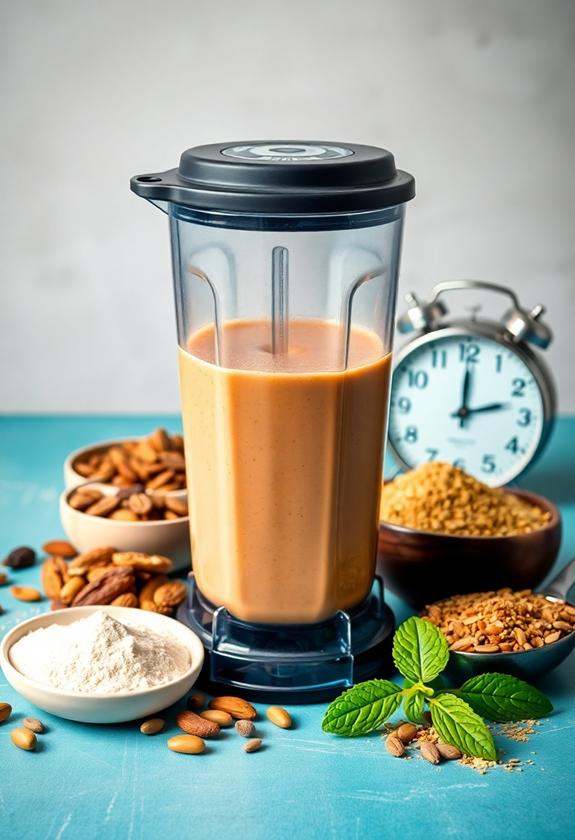
Timing plays an important role in avoiding protein overload in your smoothies. In terms of meal timing and nutrient absorption, you'll want to take into account when you're drinking your protein-packed smoothie. Protein timing is vital for maximizing muscle growth and recovery. If you've already had a protein-rich meal, it's best to wait a few hours before enjoying your smoothie. This gives your body time to process and absorb the nutrients from your previous meal.
On the other hand, if you're using your smoothie as a meal replacement or post-workout fuel, you can include more protein. Your body will be ready to absorb and use those nutrients effectively. Remember, it's not just about how much protein you consume, but also when you consume it. By paying attention to timing, you'll guarantee your body gets the most out of your delicious smoothies without overdoing it on protein.
Listen to Your Body
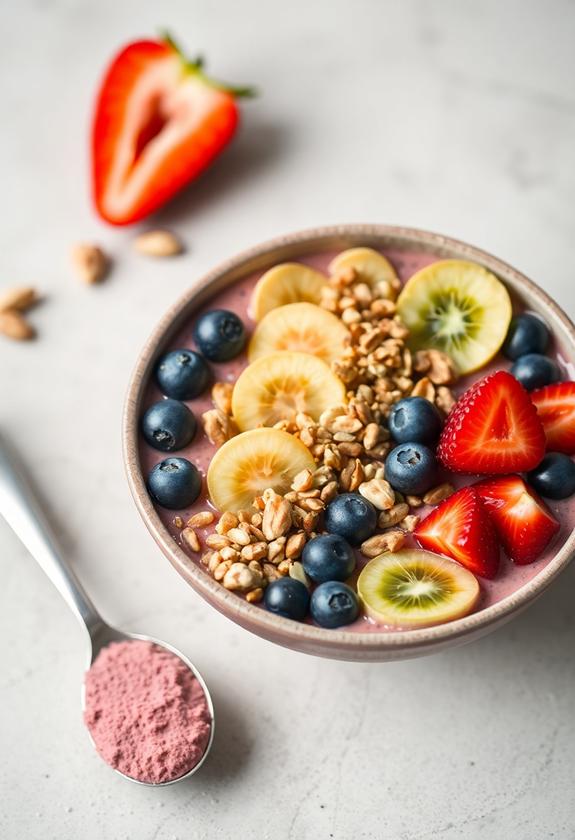
While timing is key, it's just as crucial to pay attention to your body's signals regarding protein intake in smoothies. Your body knows best in terms of protein digestion and hunger cues. Trust your instincts and listen closely to how you feel after drinking your smoothies. If you're experiencing discomfort or feeling overly full, it might be a sign to reduce the protein content. Protein and fiber work together to support weight loss, but it's important not to overdo it with protein in your smoothies.
Here are some tips to help you tune in to your body:
- Pay attention to how long you feel satisfied after your smoothie
- Notice any changes in energy levels or digestion
- Adjust your protein intake based on how you feel
Frequently Asked Questions
Can Protein Smoothies Replace Meals Entirely?
While protein smoothies can be a great meal replacement option, it's not ideal to rely on them entirely. You'll want to guarantee you're getting a variety of nutrients from different protein sources and whole foods. Smoothies can be a convenient and nutritious substitute for some meals, but it's important to balance them with regular, solid meals. Remember, your body needs a diverse range of nutrients that smoothies alone might not provide. Always consult with a nutritionist if you're considering significant dietary changes.
How Long Can I Store Protein Smoothies in the Refrigerator?
You'll want to enjoy your protein smoothies at their freshest! For the best taste and safety, it's best to consume them within 24 to 48 hours of making them. When you store your smoothies, make sure to keep them in an airtight container in the refrigerator. Remember, separation is normal, so give your smoothie a good shake before drinking. If you notice any odd smells or changes in color, it's better to toss it out. Your health comes first!
Are There Any Side Effects of Drinking Protein Smoothies Daily?
While protein smoothies can be great for muscle recovery and energy levels, drinking them daily might have some side effects you'll want to watch out for. If you're not careful, you could experience protein excess, which can lead to digestive issues and strain on your kidneys. It's important to maintain a good nutrient balance in your diet. Don't worry, though! You can still enjoy your smoothies, just be mindful of your overall protein intake and listen to your body.
Can Children Safely Consume Protein-Rich Smoothies?
Did you know that children need about 0.5 grams of protein per pound of body weight daily? That's interesting! You can safely include protein-rich smoothies in your child's diet. Choose diverse protein sources like Greek yogurt, nut butter, or plant-based powders. Mix these with fruits and veggies for balanced smoothie ingredients. Remember, children's nutrition needs vary, so use appropriate portions. Experiment with different blending methods to create tasty, nutritious mixes. Always aim for dietary balance, and your little ones will love these healthy treats!
Do Protein Smoothies Affect Medication Absorption or Effectiveness?
You're right to be curious about how protein smoothies might affect your medications. It's important to know that some protein sources can indeed impact how your body absorbs certain medicines. The absorption rates of both proteins and medications can vary, so it's best to chat with your doctor or pharmacist. They'll help you understand if there's any need to adjust your smoothie routine or medication timing. Don't worry, though – with a little guidance, you can enjoy your smoothies safely!