Some links below are affiliate links. We earn a commission on purchases at no extra cost to you. Although our opinions are based on curated research, we haven't used these products. Article generated with AI.

How to Create Low-Calorie High-Protein Smoothies for Weight Management
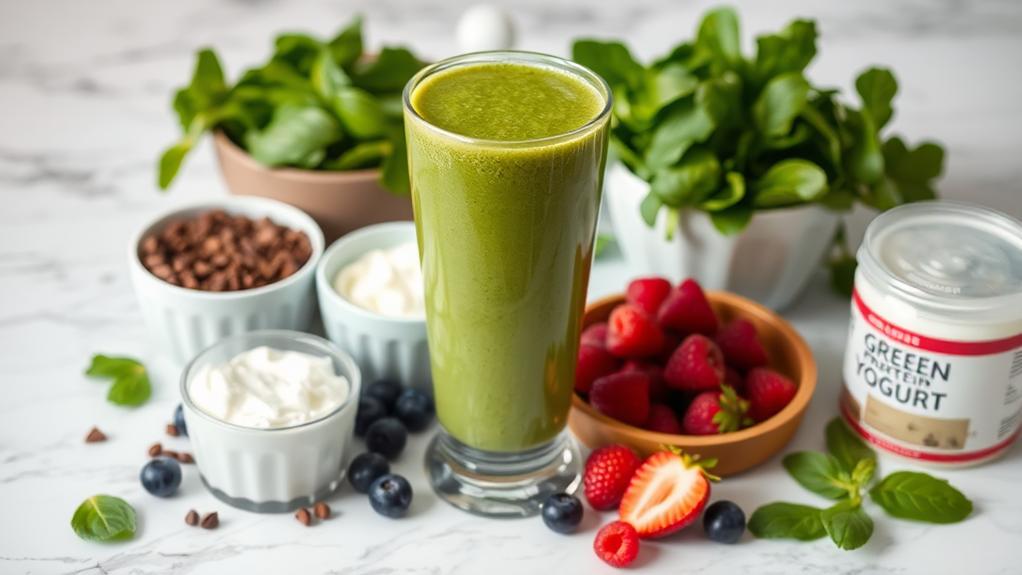
To create low-calorie, high-protein smoothies for weight management, start with a protein-rich base like Greek yogurt or silken tofu. Add unsweetened almond milk or coconut water for a low-calorie liquid base. Boost nutrients with spinach or kale, which won't alter the taste. Include a scoop of protein powder, such as pea or whey, for extra protein. Frozen berries add flavor and fiber without excess sugar. Improve taste with cinnamon or fresh mint. Aim for a balance of 40% protein, 30% carbs, and 30% healthy fats. Remember to control portions and adjust timing to fit your lifestyle. As you investigate these tips, you'll discover endless delicious combinations to support your goals.
Table of Contents
hide
Key Takeaways
- Choose low-calorie protein sources like silken tofu, pea protein powder, or whey protein for smoothie bases.
- Incorporate nutrient-dense, low-calorie ingredients such as spinach, berries, and unsweetened almond milk.
- Balance macronutrients with a 40% protein, 30% carbs, and 30% healthy fats ratio for optimal weight management.
- Add flavor boosters like cinnamon, ginger, or fresh herbs to enhance taste without adding calories.
- Practice portion control and strategic meal timing to integrate smoothies effectively into your weight management plan.
Choosing Protein Sources
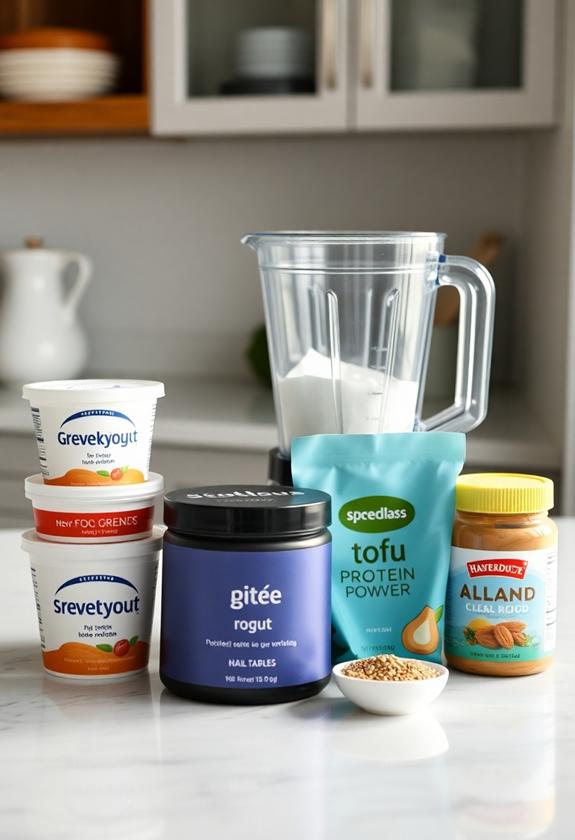
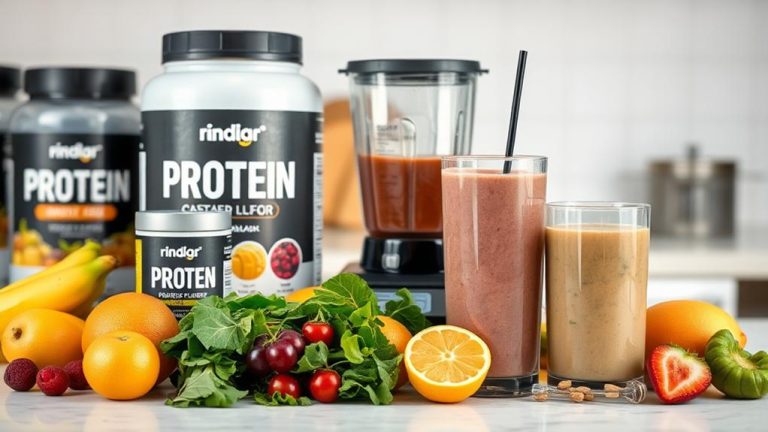
Protein is the cornerstone of a low-calorie, high-protein smoothie. When choosing your protein sources, you've got plenty of options to suit your taste and dietary needs. For plant-based proteins, consider adding silken tofu, which blends smoothly and adds a creamy texture. Pea protein powder is another excellent choice, offering a complete amino acid profile. If you're not vegetarian, whey protein is a fantastic option, as it's easily absorbed by your body and mixes well in smoothies. Protein powder options can vary in taste, texture, and nutritional content, so it's worth experimenting to find your favorite. Some protein powders are specifically formulated for smoothies, offering better mixability and flavor profiles.
Don't forget about natural protein sources like Greek yogurt or cottage cheese. These add a tangy flavor and thick consistency to your smoothie. Remember, the key is to find a protein source you enjoy and that aligns with your goals. Experiment with different combinations to discover your perfect protein mix!
Low-Calorie Base Options
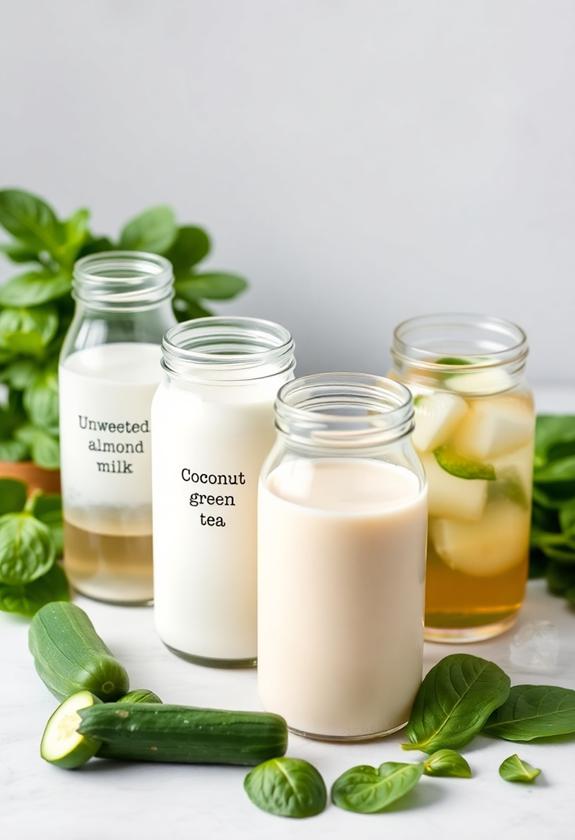
Selecting the right base for your smoothie is essential in keeping calories low while maintaining a satisfying texture. You've got plenty of delicious options to choose from! Unsweetened almond milk is a fantastic low-calorie choice, while coconut water adds a tropical twist with minimal calories. For a nutrient boost, try blending in some fresh spinach leaves – you won't even taste them! Greek yogurt and silken tofu can add creaminess and extra protein without too many calories. These protein-rich ingredients are perfect for creating satisfying smoothies that keep you full longer. Don't forget to sprinkle in some chia seeds for added nutrition and thickness. If you're craving fruit, opt for berry blends, which are lower in sugar than other fruits. Finally, a scoop of your favorite protein powder can transform your smoothie into a complete meal replacement. With these options, you'll create tasty, filling smoothies that support your weight management goals.
Nutrient-Dense Add-Ins
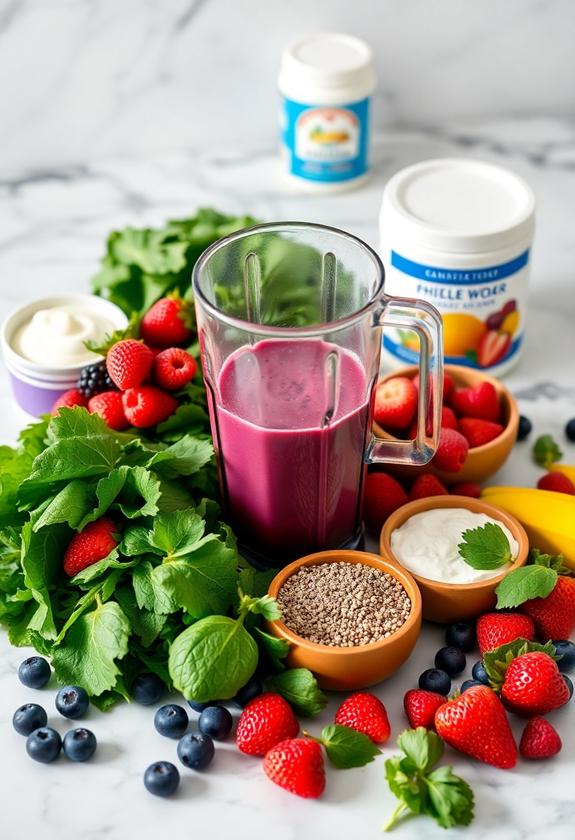
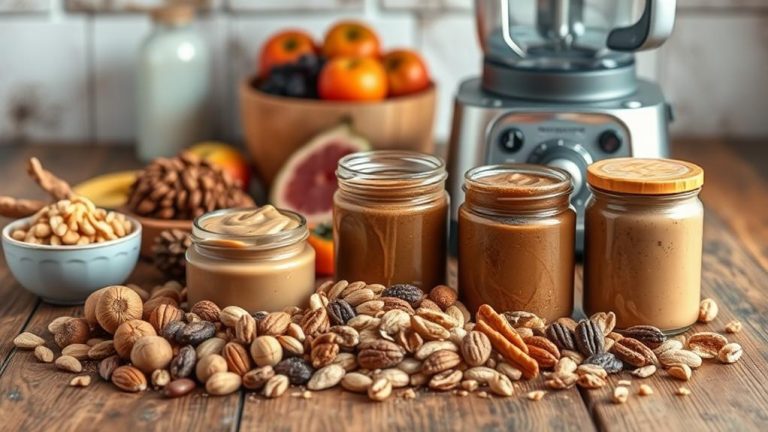
Now that you've got your low-calorie base, it's time to boost your smoothie's nutritional value with powerful add-ins. Superfood powders like spirulina or maca can pack a nutrient punch without adding many calories. For healthy fats and extra protein, try a small spoonful of nut butter or a sprinkle of seed toppings. Frozen fruits are fantastic for flavor and fiber, while dairy alternatives like unsweetened almond milk keep things creamy and light. Don't forget about vegetable blends – spinach or kale can be surprisingly tasty in smoothies! Adding fiber-rich ingredients can help keep you feeling full and satisfied while supporting digestive health. For an extra health kick, consider herbal extracts like ginger or turmeric. Spice additions such as cinnamon or nutmeg can improve flavor without the calories. Remember, a little goes a long way with these nutrient-dense add-ins, so start small and adjust to your taste preferences.
Flavor Boosters
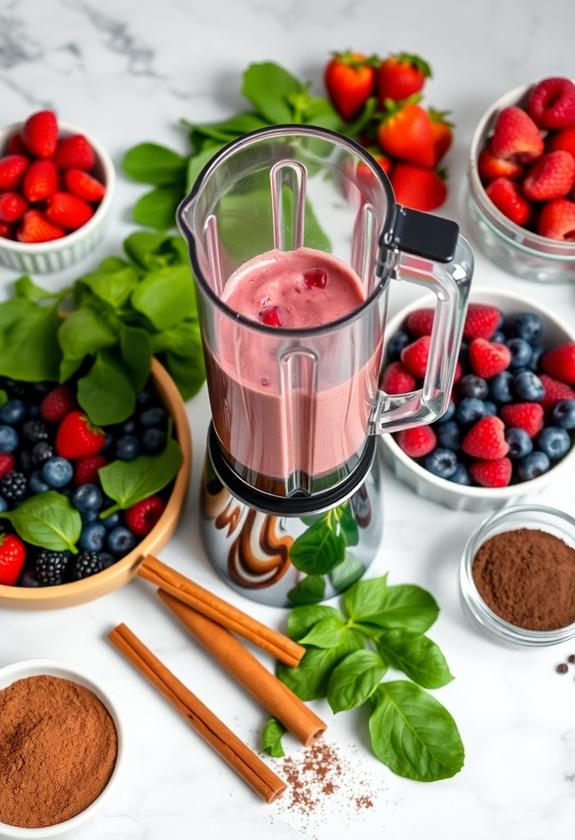
With your nutritious base and add-ins in place, it's time to improve your smoothie's taste profile. Don't worry if you're not a culinary expert – there are plenty of easy ways to boost flavor without adding calories. Boost flavor in your protein powder smoothies by experimenting with different ingredients and combinations. This can make your healthy drink more enjoyable and satisfying. Try herb infusions like fresh mint or basil for a refreshing twist. These can transform your smoothie into a garden-fresh delight. Spice additions are another fantastic option. A dash of cinnamon can add warmth and sweetness, while a pinch of ginger brings a zesty kick. You'll love how these simple ingredients can raise your smoothie's taste.
Balancing Macronutrients
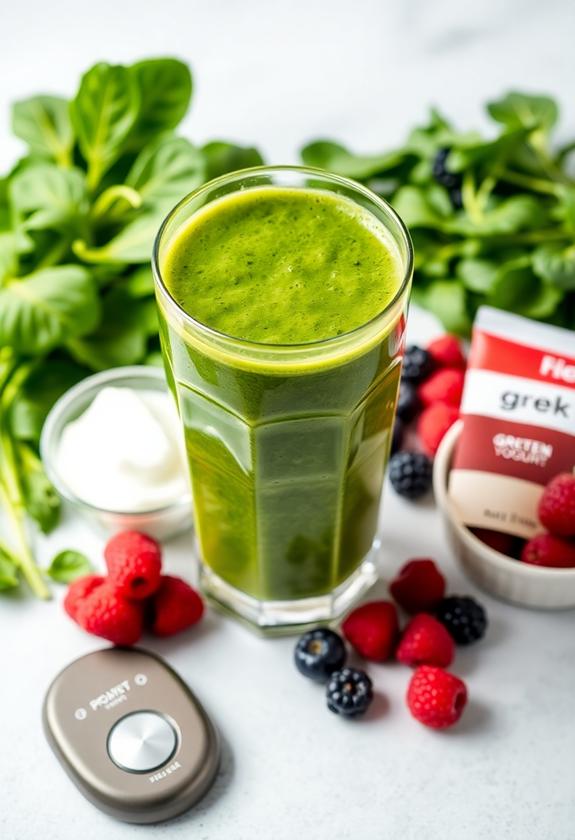
The key to a well-rounded smoothie lies in balancing macronutrients. When crafting your low-calorie, high-protein smoothie, it's important to take into account the right macronutrient ratios. Aim for a blend that's about 40% protein, 30% carbs, and 30% healthy fats. This balance will keep you feeling full and energized throughout the day. Mastering protein and calories in smoothies is essential for effective weight loss, as it helps control hunger and supports muscle maintenance.
Focus on protein quality by choosing complete protein sources like Greek yogurt, whey protein, or plant-based alternatives like pea protein. For carbs, opt for fiber-rich fruits and vegetables that'll provide essential nutrients without spiking your blood sugar. Don't forget to include healthy fats from sources like avocado, chia seeds, or a small amount of nut butter. These fats will help your body absorb fat-soluble vitamins and keep you satisfied. Remember, balancing your macronutrients is vital for creating a nutritious, weight-management-friendly smoothie that'll support your health goals.
Blending Techniques
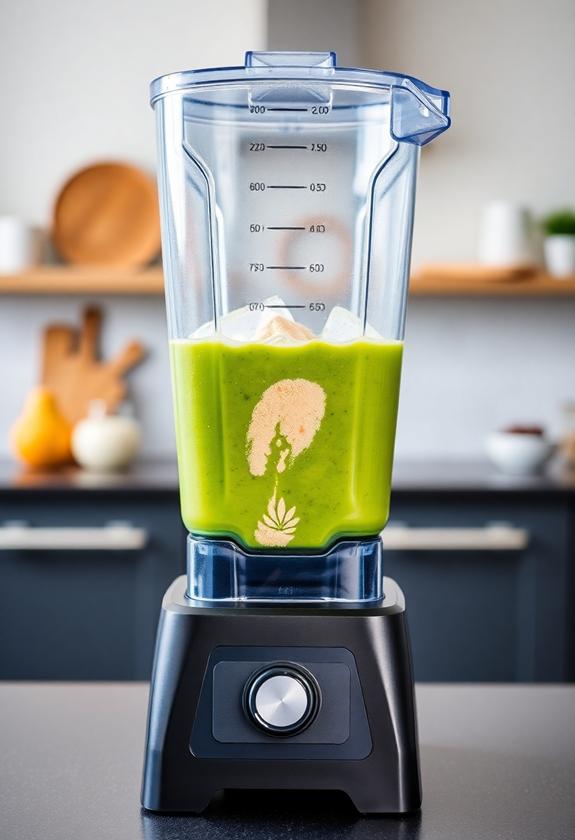
Once you've chosen your ingredients and balanced your macronutrients, it's time to focus on blending techniques. Your blending speed and method can significantly impact your smoothie's consistency and overall enjoyment. Start by adding liquids first, followed by soft ingredients, then frozen items. This order helps create a vortex that pulls everything down towards the blades, guaranteeing a smoother blend. When incorporating protein powder into your smoothie, add it after the liquid but before frozen ingredients to guarantee proper mixing and prevent clumping.
For a creamy texture, begin with a low blending speed and gradually increase it. This technique prevents air pockets from forming and helps break down tougher ingredients. If you're aiming for a thicker consistency, use less liquid and more frozen items. For a thinner smoothie, add more liquid or reduce ice. Don't be afraid to pause and scrape down the sides of your blender if needed. Remember, practice makes perfect, so keep experimenting until you find your ideal blending technique!
Meal Timing and Portion Control
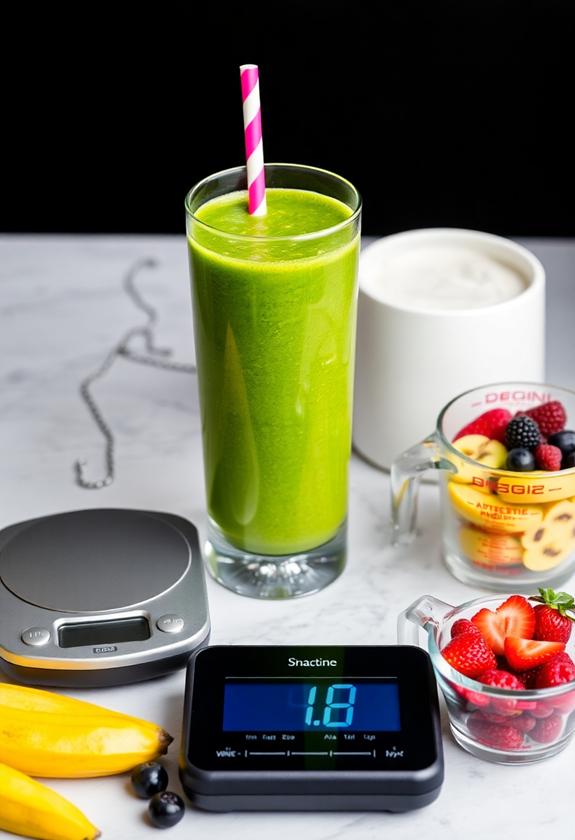
Knowing when and how much to consume your low-calorie, high-protein smoothies can make or break your nutritional goals. Pay attention to your body's hunger cues and adjust your meal frequency accordingly. You might find that having a smoothie as a mid-morning snack or post-workout refresher works best for you. Optimal timing for post-workout smoothies is essential to maximize recovery and muscle growth. Remember, portion control is key! Start with smaller servings and gradually increase if needed.
For weight management, it's vital to spread your smoothie intake throughout the day. This helps maintain steady energy levels and keeps you feeling satisfied. Don't hesitate to experiment with different timings to find what suits your lifestyle best. By being mindful of when and how much you're drinking, you'll maximize the benefits of your nutritious smoothies. Trust your body, stay consistent, and you'll be on your way to achieving your health goals!
Frequently Asked Questions
Can Smoothies Replace All Meals for Effective Weight Loss?
While smoothies can be a great addition to your diet, it's not recommended to replace all your meals with them. You'd miss out on important nutrients and the satisfaction of chewing solid food. Instead, try incorporating a smoothie meal once a day as part of a balanced diet. Remember, nutrient balance is key for effective weight loss. You'll want to include a variety of whole foods to guarantee you're getting all the vitamins, minerals, and fiber your body needs. Stay positive and focus on overall health!
How Long Can I Store a Protein Smoothie in the Refrigerator?
You'll want to enjoy your protein smoothie within 24 hours for the best taste and nutrition. It's best to store it in an airtight container in the refrigerator, which helps maintain smoothie freshness and protein stability. Remember, separation is normal, so give it a good shake before drinking. If you're meal prepping, you can make smoothies for 2-3 days ahead, but don't push it beyond that. Your health and enjoyment are important, so always trust your senses!
Are There Any Potential Side Effects of Consuming Protein Smoothies Regularly?
"An apple a day keeps the doctor away," but what about protein smoothies? While they're generally safe, you might experience some side effects if you're not careful. Overconsumption of protein can lead to digestive issues or weight gain. It's all about smoothie balance! Be mindful of your protein sources and overall intake. You might feel bloated or gassy at first, but your body should adjust. Remember, moderation is key. Enjoy your smoothies, but listen to your body and consult a doctor if you're concerned.
Can Children and Teenagers Safely Consume High-Protein Smoothies for Weight Management?
You'll want to be careful with high-protein smoothies for kids and teens. While they can be safe, it's important to evaluate age-appropriate protein sources and amounts. Growing bodies have different needs, so it's best to consult a pediatrician or nutritionist. They can help you create balanced smoothies that support healthy growth. Remember, weight management for young people should focus on overall nutrition and activity, not just protein intake. Always prioritize your child's well-being and don't hesitate to seek professional guidance.
How Do I Calculate the Exact Calorie Content of My Homemade Smoothies?
You'd think calculating smoothie calories would be as easy as pie, but it's actually a bit trickier! Don't worry, though, you've got this. Start by weighing or measuring each smoothie ingredient carefully. Then, look up the calorie content for each item and jot it down. Add all those numbers together, and voila! You've got your smoothie's total calories. Remember, it's not just about the numbers, it's about nourishing your body with delicious, healthy ingredients. You're doing great!