Some links below are affiliate links. We earn a commission on purchases at no extra cost to you. Although our opinions are based on curated research, we haven't used these products. Article generated with AI.

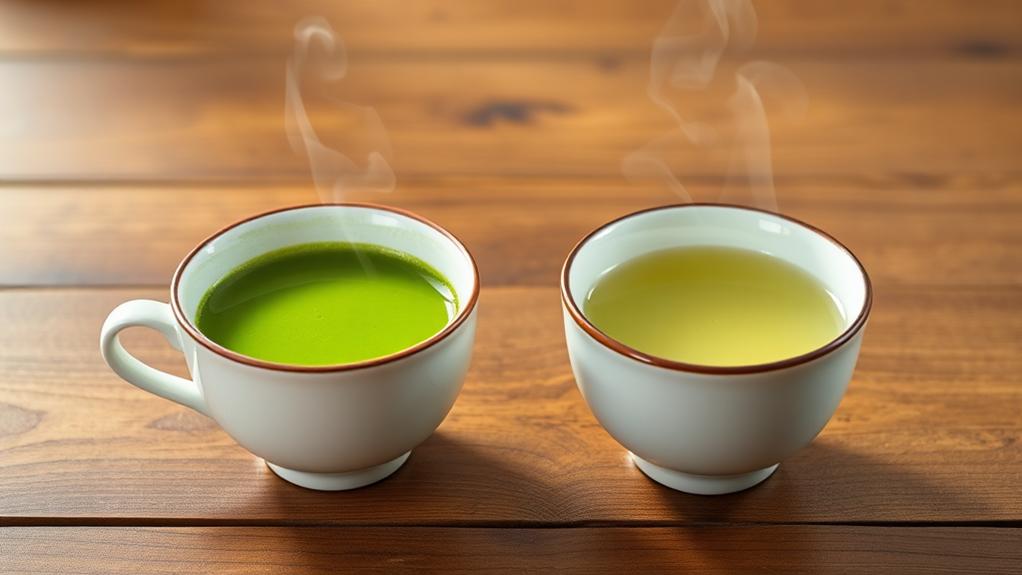
Matcha vs. Regular Green Tea: Which Is Better for Inflammation?
In terms of fighting inflammation, both matcha and regular green tea are excellent choices, but matcha may have a slight edge. You'll find that matcha's unique preparation method, which involves consuming the whole tea leaf, provides a more concentrated dose of antioxidants and anti-inflammatory compounds. These powerful substances help soothe your body and support a healthy immune response. While regular green tea still offers significant benefits, matcha's higher potency makes it particularly effective in reducing inflammatory markers in your blood. Don't worry, though – whichever tea you choose, you're taking a positive step towards better health. There's so much more to discover about these amazing teas and their benefits.
Table of Contents
hide
Key Takeaways
- Both matcha and green tea have powerful anti-inflammatory properties that can help soothe the body.
- Matcha contains higher concentrations of beneficial compounds, potentially offering stronger anti-inflammatory effects.
- Compounds in both teas may reduce inflammatory markers in the blood, supporting overall health.
- Matcha's whole-leaf consumption leads to better absorption of anti-inflammatory antioxidants.
- While matcha may have a slight edge, regular green tea remains an excellent choice for managing inflammation.
Understanding Matcha and Green Tea
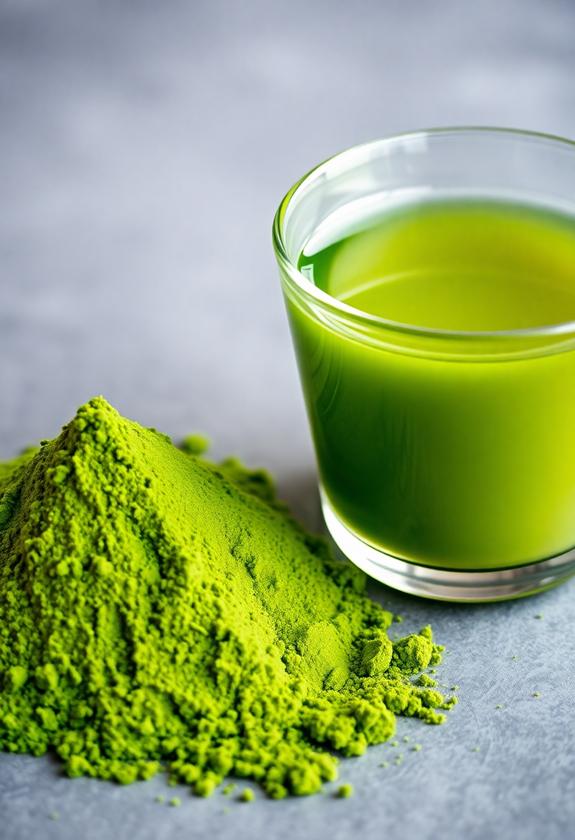
Often, people confuse matcha and regular green tea, but they're quite different. While both come from the same plant, their processing and preparation methods set them apart. Matcha origins trace back to ancient Japanese tea ceremonies, where it was revered for its unique properties. It's made from shade-grown tea leaves, ground into a fine powder that you whisk into hot water. Both matcha and regular green tea can be used to boost your health when added to smoothies, providing anti-inflammatory benefits.
Regular green tea, on the other hand, involves steeping whole or broken leaves in hot water. The brewing techniques for each are distinct, with matcha requiring a special bamboo whisk to create a frothy, vibrant green drink. You'll find that matcha has a richer, more complex flavor compared to regular green tea. Its preparation method allows you to consume the entire leaf, potentially offering more health benefits.
Preparation and Consumption Methods
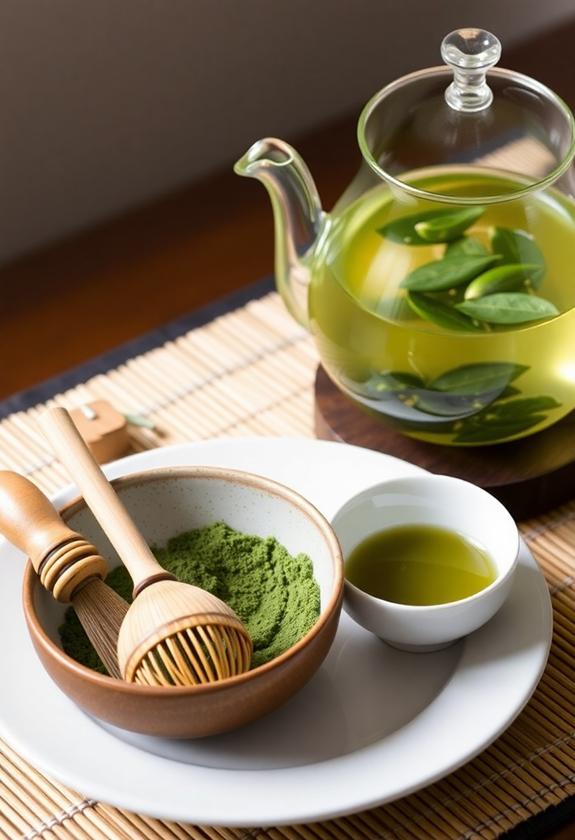
In terms of preparing and consuming matcha and regular green tea, you'll notice stark differences. Matcha requires a special bamboo whisk and bowl, while regular green tea uses simple brewing techniques. You'll whisk matcha powder with hot water to create a frothy, vibrant drink, whereas green tea leaves are steeped in hot water and then strained. Serving suggestions vary too, with matcha often enjoyed on its own or in lattes, while green tea is typically served plain or with a touch of honey. Both teas can be incorporated into green tea smoothies for a refreshing and health-boosting beverage option.
Here are three reasons to welcome these unique preparation methods:
- Connect with ancient traditions
- Savor the mindful, meditative process
- investigate new flavors and textures
Both teas offer a comforting ritual, allowing you to slow down and enjoy a moment of calm. Whether you choose matcha or green tea, you're nurturing your body and soul with each sip.
Nutritional Profiles Compared
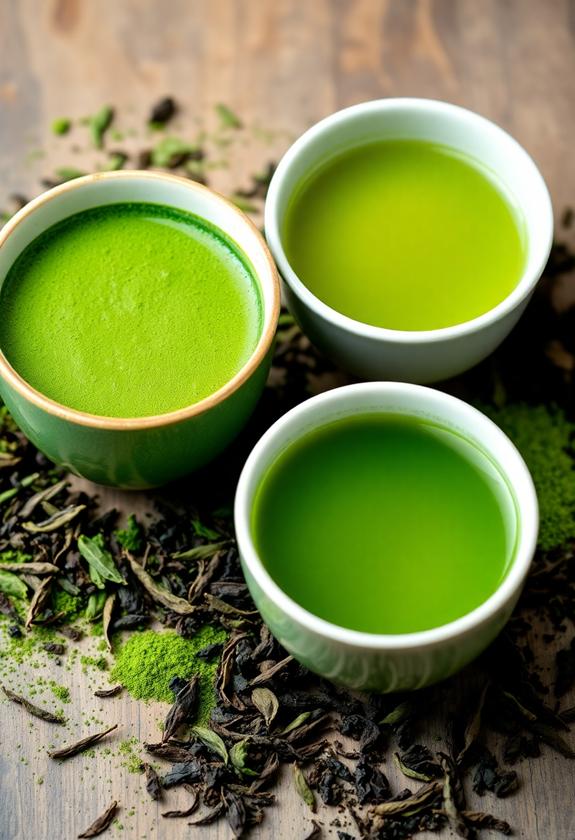
When comparing the nutritional profiles of matcha and regular green tea, you'll find significant differences. Matcha contains higher levels of antioxidants, vitamins, and minerals due to its unique processing method. You're consuming the whole tea leaf, which means you're getting more nutrients in each cup. The caffeine levels in matcha are also higher, giving you a longer-lasting energy boost without the jitters. Both types of green tea offer anti-inflammatory effects, but the concentration of beneficial compounds in matcha may provide improved benefits. Proper brewing techniques can maximize these effects for both varieties.
Regular green tea, while still nutritious, has a milder flavor and lower nutrient content. It's a great option if you're sensitive to caffeine or prefer a lighter taste. The flavor differences between the two are noticeable, with matcha having a richer, more complex taste. Both teas offer health benefits, but matcha packs a stronger nutritional punch. Whichever you choose, you're making a great choice for your well-being!
Antioxidant Content and Potency
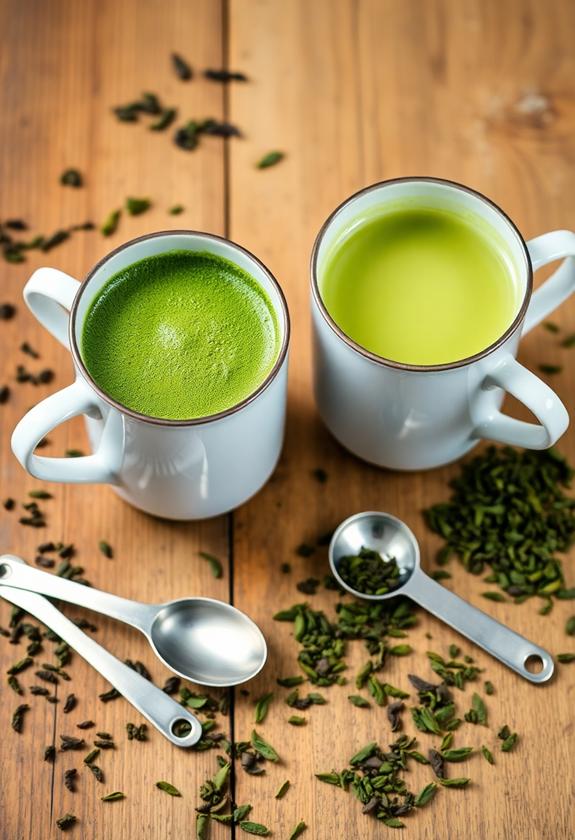
The antioxidant content and potency of matcha and regular green tea differ significantly. Matcha takes the lead in this area, providing a more concentrated dose of antioxidants. When you drink matcha, you're consuming the whole tea leaf, which means you're getting more of those powerful compounds. This leads to better antioxidant absorption and higher catechin bioavailability in your body. Anti-inflammatory smoothies can be improved by incorporating matcha or green tea, boosting their health benefits even further.
Here's why matcha's antioxidant power is so exciting:
- It helps protect your cells from damage
- It supports your body's natural defense systems
- It may slow down the aging process
Regular green tea still offers great benefits, but matcha gives you an extra boost. By choosing matcha, you're giving your body a wonderful gift of protection and support. Remember, every sip counts towards your health and well-being!
Effects on Inflammatory Markers
Both matcha and regular green tea's ability to influence inflammatory markers has garnered significant attention in recent health research. You'll be pleased to know that these teas possess powerful anti-inflammatory properties, which can help soothe your body and support a healthy immune response. When you sip on matcha or green tea, you're giving your body a boost in fighting inflammation. Like omega-3 fatty acids, these teas can play an essential role in reducing inflammation throughout your body. Studies have shown that the compounds in these teas can reduce inflammatory markers in your blood, potentially lowering your risk of chronic diseases. While both types of tea offer benefits, matcha may have a slight edge due to its higher concentration of beneficial compounds. However, don't worry if you prefer regular green tea – it's still an excellent choice for managing inflammation. By incorporating either tea into your daily routine, you're taking a positive step towards better health.
Choosing the Right Option
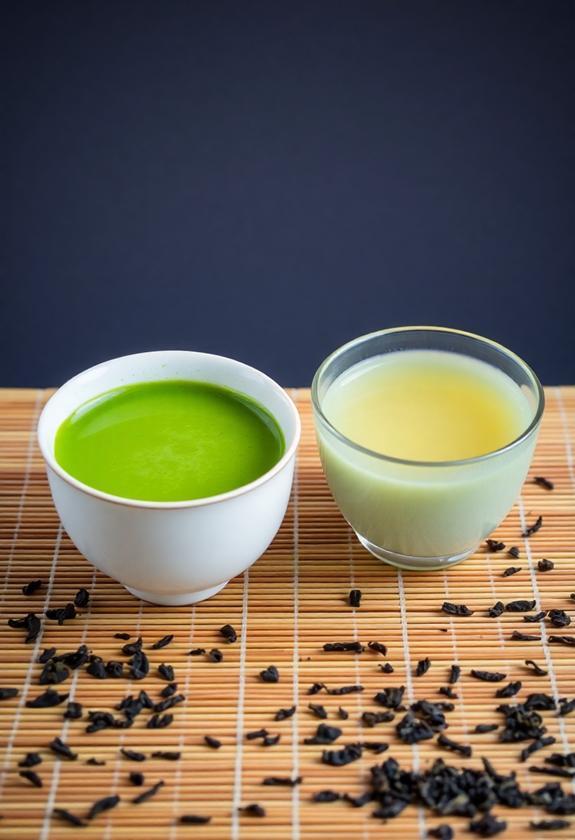
Now that you're aware of the benefits of both matcha and regular green tea, you might be wondering which one to choose. Both options offer impressive health benefits, but your decision may depend on personal preferences and lifestyle factors. While both teas can help reduce inflammation, it's essential to highlight that processed foods may counteract these benefits. Consider your taste preferences, as matcha has a richer, more intense flavor compared to regular green tea's milder profile. Think about your daily routine and how each tea might fit into it. Remember, there's no wrong choice regarding improving your health!
- You're taking a positive step towards better health
- You're exploring new flavors and expanding your palate
- You're joining a community of tea enthusiasts who care about wellness
Whichever you choose, you're making a great choice for your overall well-being. Welcome this journey to better health with open arms!
Frequently Asked Questions
Can Matcha or Green Tea Interfere With Medications?
Yes, matcha and green tea can interact with certain medications. While they offer many health benefits, you should be careful if you're taking any prescription drugs. These teas might affect how your body absorbs or processes some medications. It's always best to chat with your doctor about potential green tea interactions. They'll help you understand if it's safe to enjoy your favorite tea while taking your meds. Your health and safety come first!
Are There Any Side Effects of Consuming Too Much Matcha?
While matcha offers many benefits, it's important to be mindful of your dosage. If you consume too much, you might experience side effects like trouble sleeping, headaches, or an upset stomach. You'll want to listen to your body and find the right balance. Remember, everyone's different, so what works for your friend might not work for you. Enjoy your matcha in moderation, and you'll be able to reap its wonderful benefits without any unwanted effects.
How Does Caffeine Content Differ Between Matcha and Regular Green Tea?
Picture yourself sipping a warm, invigorating cup of green goodness. You'll find that matcha packs a bigger caffeine punch than regular green tea. It's like comparing a gentle breeze to a refreshing gust! Matcha typically contains 3-4 times more caffeine, and your body absorbs it differently. The caffeine in matcha is released slowly, giving you a steady energy boost without the jitters. Both offer amazing health benefits, but matcha's higher caffeine content might give you that extra pep in your step!
Can Pregnant Women Safely Consume Matcha or Green Tea?
If you're pregnant, you'll want to be careful with matcha and green tea. While they're generally safe in small amounts, it's best to limit your intake. The caffeine and potential risk of reduced folate absorption are concerns. Don't worry, though! There are plenty of delicious, pregnancy-safe tea alternatives you can enjoy. Herbal teas like chamomile, peppermint, or ginger can be comforting choices. Always check with your doctor to make sure your tea choices are safe for you and your baby.
Does the Origin of Tea Leaves Affect Their Anti-Inflammatory Properties?
You'll be excited to learn that the origin of tea leaves can indeed affect their anti-inflammatory properties! Tea cultivation methods, including soil quality, climate, and altitude, play a big role in the tea's final composition. Leaf processing techniques, like steaming or pan-firing, can also impact the tea's beneficial compounds. So, when you're choosing your tea, keep in mind that its birthplace and journey to your cup can make a difference in how it might help reduce inflammation in your body.