Some links below are affiliate links. We earn a commission on purchases at no extra cost to you. Although our opinions are based on curated research, we haven't used these products. Article generated with AI.

How Omega-3 Fatty Acids Fight Inflammation in the Body
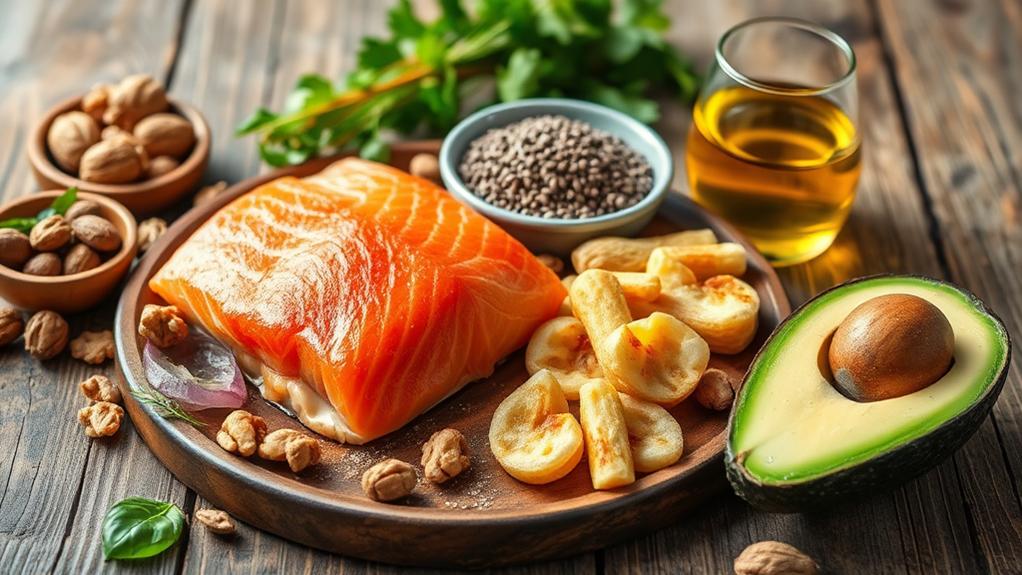
Omega-3 fatty acids are your body's secret weapon against inflammation. These essential fats, found in foods like fatty fish, walnuts, and flaxseeds, work by calming overactive inflammatory responses in your cells. They help reduce harmful substances that cause swelling and pain, especially in your joints and blood vessels. Omega-3s also protect your brain from inflammation, supporting better cognitive function and mood. By including omega-3-rich foods in your diet or taking supplements, you're giving your body powerful tools to fight chronic inflammation. This can lead to improved heart health, joint mobility, and overall well-being. There's so much more to discover about these incredible fatty acids!
Table of Contents
hide
Key Takeaways
- Omega-3s influence cellular processes, regulating inflammation and supporting the production of specialized molecules that resolve inflammatory responses.
- They reduce cardiovascular inflammation by lowering inflammatory markers in the blood and decreasing plaque buildup in arteries.
- Omega-3 fatty acids decrease the production of inflammatory substances causing joint pain and swelling, improving mobility and flexibility.
- These essential fats combat neuroinflammation, protecting cognitive function, memory, and focus while potentially reducing overall body inflammation.
- Omega-3s enhance the function of blood vessel walls, promoting better circulation and reducing the risk of inflammation-related heart disease.
Understanding Omega-3 Fatty Acids
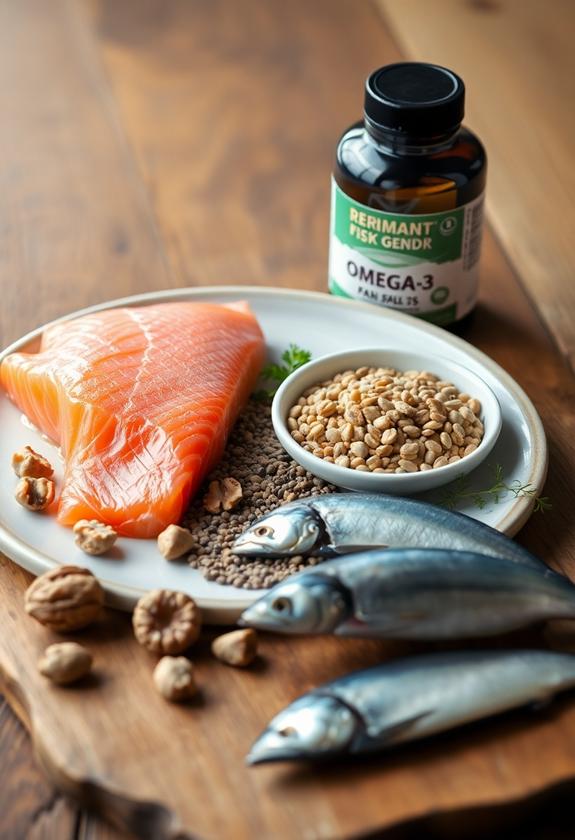
Omega-3 fatty acids are essential fats that your body can't produce on its own. You'll need to get them from your diet or supplements. These incredible nutrients play a vital role in your overall health, offering a wide range of benefits. From supporting heart health to boosting brain function, omega-3s are truly remarkable. Anti-inflammatory ingredients like omega-3 fatty acids can help reduce inflammation throughout the body, promoting better overall health and well-being.
When you consume omega-3s, your body goes through a process called omega-3 metabolism. This is how your system breaks down and uses these healthy fats. It's fascinating to think about how these tiny molecules can have such a big impact on your well-being! By incorporating omega-3-rich foods like fatty fish, walnuts, and flaxseeds into your meals, you're giving your body the tools it needs to thrive. Remember, every small step you take towards better nutrition is a win for your health!
Types of Omega-3s

Now that you understand the basics of omega-3 fatty acids, let's investigate the different types you'll encounter. There are three main types of omega-3s you'll hear about most often: ALA, EPA, and DHA. Each plays a unique role in your body's health and well-being. While omega-3s are known for their anti-inflammatory properties, it's crucial to recognize that processed foods can contribute to inflammation in the body.
- ALA (Alpha-linolenic acid): Found in plant sources like flaxseeds and walnuts
- EPA (Eicosapentaenoic acid): Primarily from fatty fish, with powerful anti-inflammatory benefits
- DHA (Docosahexaenoic acid): Essential for brain health, often sourced from algae or fish oil
EPA benefits include reducing inflammation and supporting heart health. You'll find DHA sources in fatty fish like salmon, as well as in algae-based supplements. Your body can convert ALA into EPA and DHA, but it's not very efficient. That's why it's essential to include a variety of omega-3 sources in your diet.
Sources of Omega-3s

Where can you find these essential fatty acids in your diet? You'll be happy to know that omega-3s are available in both plant and animal sources. For plant sources, search no further than your local grocery store's produce section. Flaxseeds, chia seeds, and walnuts are excellent options that you can easily add to your meals. Don't forget about leafy greens like spinach and kale, which also contain omega-3s. These anti-inflammatory superfoods can be particularly beneficial for athletes and those with active lifestyles. Regarding animal sources, fatty fish are your best bet. Salmon, mackerel, sardines, and tuna are all rich in omega-3s. If you're not a fan of fish, you can still get your omega-3s from eggs, especially those from chickens fed a diet high in omega-3s. With so many delicious options available, you're sure to find ways to incorporate these inflammation-fighting fatty acids into your diet.
Inflammation and Its Effects

While omega-3s offer numerous health benefits, understanding inflammation is key to grasping their importance. Your body's natural response to injury or infection, inflammation isn't always bad. However, chronic inflammation can lead to serious health issues. The causes of inflammation are varied, including stress, poor diet, and lack of exercise. Just as ginger reduces inflammation, omega-3 fatty acids play a vital role in fighting chronic inflammation. When left unchecked, it can wreak havoc on your body.
Chronic inflammation can affect you in several ways:
- It may increase your risk of heart disease
- Your joints might become stiff and painful
- You could experience digestive problems and fatigue
Don't worry, though! By learning about inflammation, you're taking the first step towards better health. With the right knowledge and tools, like omega-3s, you can help your body fight inflammation and feel your best.
Omega-3s and Cellular Processes

Several cellular processes are influenced by omega-3 fatty acids, making them essential for your body's overall function. When you consume omega-3s, they're incorporated into your cell membranes, changing how cells interact and communicate. This impacts omega-3 metabolism, which plays a vital role in regulating inflammation. These fatty acids also affect cellular signaling, the way your cells send and receive messages. They can calm overactive inflammatory responses, helping your body maintain balance. While omega-3s are powerful on their own, they can be even more effective when combined with other anti-inflammatory ingredients in smoothies, providing a delicious way to boost your body's defenses against inflammation.
You'll be happy to know that omega-3s don't just stop at reducing inflammation. They're involved in producing specialized molecules that actively resolve inflammation, promoting healing. By supporting these cellular processes, omega-3s help protect your body from chronic diseases. Remember, every cell in your body can benefit from these powerful fatty acids, so including them in your diet is a smart choice for your health.
Reducing Cardiovascular Inflammation

Your heart and blood vessels can benefit greatly from omega-3 fatty acids. These essential fats play a vital role in reducing cardiovascular inflammation, which is key to maintaining your overall cardiovascular health. By incorporating omega-3s into your diet, you're taking a proactive step towards protecting your heart and arteries. Simple dietary swaps can help you increase your omega-3 intake and fight inflammation quickly. These changes can be easy to implement and have a significant impact on your health.
Here's how omega-3s can help reduce cardiovascular inflammation:
- Lowering inflammatory markers in your blood
- Decreasing the buildup of plaque in your arteries
- Improving the function of your blood vessel walls
When you consume omega-3s regularly, you're giving your body powerful tools to fight inflammation. This can lead to improved heart health, better circulation, and a reduced risk of heart disease. It's never too late to start caring for your cardiovascular system, and omega-3s are an excellent addition to your heart-healthy lifestyle.
Omega-3s and Joint Health

Many people experience joint pain and stiffness, especially as they age. If you're struggling with achy joints, you're not alone. The good news is that omega-3 fatty acids can help! These amazing nutrients offer numerous omega-3 benefits, including reducing inflammation in your joints. By incorporating omega-3s into your diet, you can improve your joint mobility and enjoy a more active lifestyle. Delicious smoothies can be an excellent way to boost your omega-3 intake while supporting your joint health naturally.
Omega-3s work by decreasing the production of inflammatory substances in your body. This helps to ease pain and swelling in your joints, making movement easier and more comfortable. You'll likely notice improved flexibility and less stiffness, particularly in the morning. Whether you're dealing with arthritis or simply want to maintain healthy joints, omega-3s can be a valuable addition to your daily routine. Remember, small changes can lead to big improvements in your overall joint health!
Brain Health and Inflammation

The brain's health is closely linked to inflammation levels in the body. When you consume omega-3 fatty acids, you're giving your brain a powerful ally against neuroinflammation. These essential fats help protect your cognitive function and may even improve your memory and focus. Transforming your diet to include more omega-3-rich foods can be a natural way to combat inflammation throughout your body, including your brain. It's amazing how something so simple can have such a profound impact on your brain health!
Here's how omega-3s can benefit your brain:
- They reduce inflammation in brain tissue
- They support the growth of new brain cells
- They help maintain the flexibility of brain cell membranes
Recommended Daily Intake

Experts recommend specific daily intakes of omega-3 fatty acids to reap their anti-inflammatory benefits. You'll want to aim for about 250-500 mg of combined EPA and DHA per day for general health, but this can increase to 1,000-4,000 mg daily if you're dealing with inflammation-related conditions. Anti-inflammatory smoothies are an excellent way to incorporate these essential fatty acids into your diet. To reach your daily dosage, focus on ideal sources like fatty fish (salmon, mackerel, sardines), walnuts, and flaxseeds. If you're not a fan of fish, don't worry! You can easily incorporate omega-3 supplements into your routine.
Frequently Asked Questions
Can Omega-3 Supplements Interact With Medications?
Yes, omega-3 supplements can interact with certain medications, so it's important to be careful. You should always talk to your doctor before starting any new supplement, especially if you're taking other drugs. They'll help you understand potential drug interactions and guide you on proper dosage guidelines. It's exciting that you're looking into ways to improve your health, but safety comes first! Remember, your doctor is there to support you and guarantee you're getting the most benefit from your supplements and medications.
How Long Does It Take to See Benefits From Omega-3 Supplementation?
Just like planting a garden, you'll need a little patience to see the fruits of your omega-3 supplementation. It typically takes 2-3 months to notice significant benefits. Your body's omega-3 absorption depends on factors like dosage and timing. For best results, take your supplement with a meal containing healthy fats. Remember, consistency is key! Don't get discouraged if you don't see immediate changes. Your body's working hard behind the scenes, and you'll soon reap the rewards of your dedication.
Are There Any Side Effects of Consuming Too Much Omega-3?
You might experience some side effects if you consume too much omega-3, but don't worry! While it's great to get omega-3 from sources like fish, flaxseeds, and walnuts, it's important to stick to the ideal dosage. Too much can lead to digestive issues, like nausea or diarrhea. You might also notice a fishy aftertaste or breath. In rare cases, excessive intake can affect blood clotting. Remember, moderation is key, and it's always best to talk to your doctor about the right amount for you.
Can Omega-3s Help With Weight Loss or Management?
Ever wondered if omega-3s could be your secret weapon for weight management? Good news! These healthy fats can indeed help you on your journey. They're known to boost metabolism, reduce appetite, and support muscle growth. You'll find omega-3 sources in fatty fish, walnuts, and flaxseeds. By incorporating these into your diet, you're not just managing weight, you're nourishing your body. Remember, it's about balance and consistency. You've got this, and omega-3s are here to support you!
Is It Possible to Have an Omega-3 Deficiency?
Yes, you can definitely have an omega-3 deficiency! It's more common than you might think. If you're not getting enough omega-3s from sources like fatty fish, walnuts, or flaxseeds, you might notice some symptoms. These can include dry skin, brittle nails, and even mood changes. Don't worry, though! It's easy to boost your intake. Try adding some delicious salmon to your meals, or sprinkle chia seeds on your morning yogurt. Your body will thank you!