Some links below are affiliate links. We earn a commission on purchases at no extra cost to you. Although our opinions are based on curated research, we haven't used these products. Article generated with AI.

How to Adjust High-Calorie Smoothies for Different Activity Levels
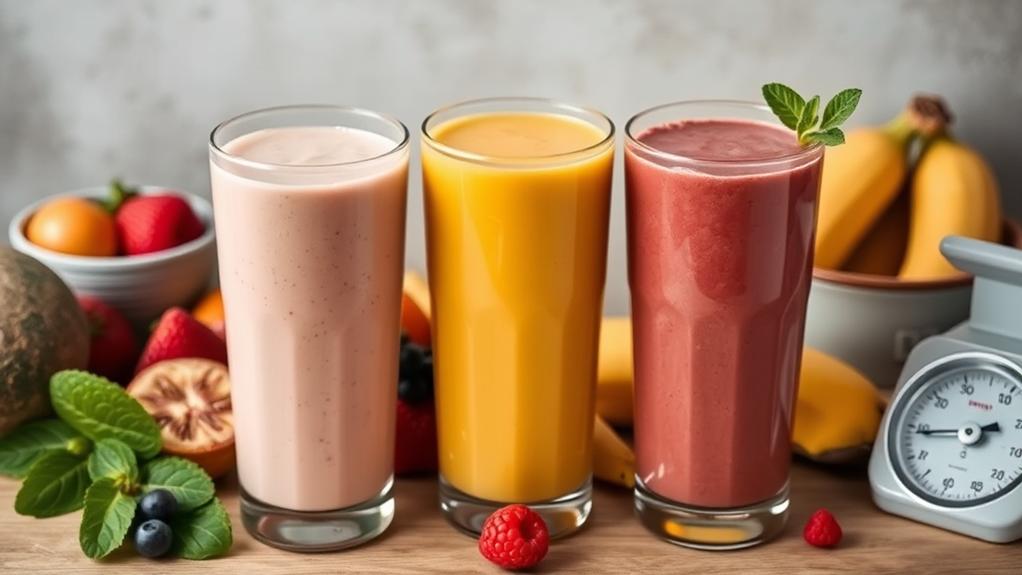
You can easily adjust high-calorie smoothies to suit different activity levels by making smart ingredient swaps and controlling portion sizes. If you're less active, try using Greek yogurt instead of full-fat yogurt, and replace milk with water to cut calories. Adding leafy greens can bulk up your smoothie without adding many calories. For more active days, include energy-boosting superfoods like chia seeds and bananas. Don't forget to measure your ingredients and use smaller glasses to help with portion control. By balancing your macronutrients and choosing nutrient-dense, low-calorie additions, you'll create smoothies that perfectly match your fitness goals and activity level. The key to success lies in understanding your smoothie's calorie sources and making informed choices.
Table of Contents
hide
Key Takeaways
- Reduce fruit portions and add more leafy greens for lower-calorie smoothies suited to less active individuals.
- Substitute high-calorie bases like whole milk with water or unsweetened almond milk for lower activity levels.
- Increase protein content with Greek yogurt or protein powder for muscle recovery in highly active individuals.
- Add energy-boosting ingredients like chia seeds and bananas for pre-workout smoothies for active lifestyles.
- Adjust portion sizes and use smaller containers to control calorie intake based on daily activity levels.
Understanding Smoothie Calorie Sources
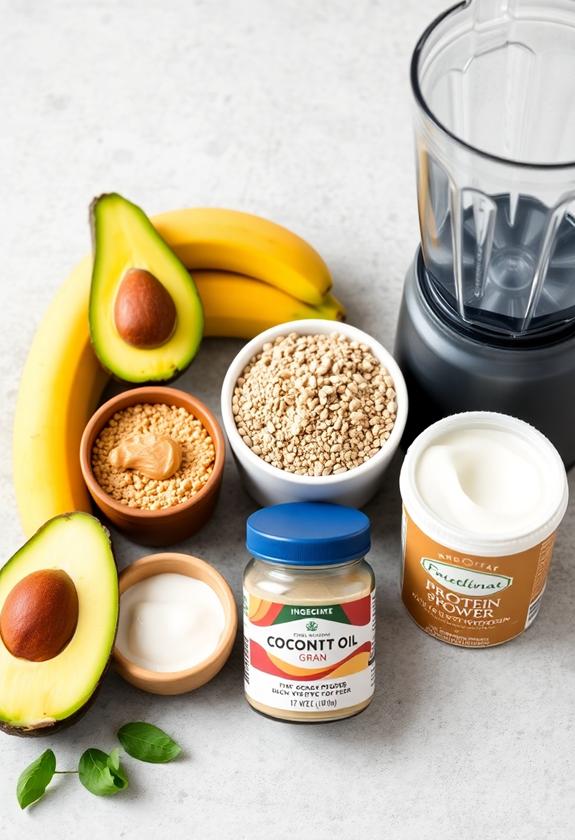
While smoothies are often touted as healthy meal replacements, they can easily become calorie bombs if you're not careful. To adjust your smoothies for different activity levels, it's essential to understand where the calories come from. Let's delve into the smoothie foundations and examine their calorie density. High-calorie smoothie recipes can be particularly beneficial for those looking to gain weight or increase their caloric intake.
Your typical smoothie base usually consists of fruits, which are naturally sweet and packed with nutrients. However, they can also be high in sugar and calories. Adding dairy or plant-based milk contributes protein and creaminess but ups the calorie count. Don't forget about those delicious add-ins like nut butters, seeds, and honey – they're nutrient-dense but calorie-rich too. By recognizing these calorie sources, you'll be better equipped to make smart choices and create balanced smoothies that suit your energy needs. Remember, it's all about finding the right mix for you!
Tailoring Ingredients for Activity Levels
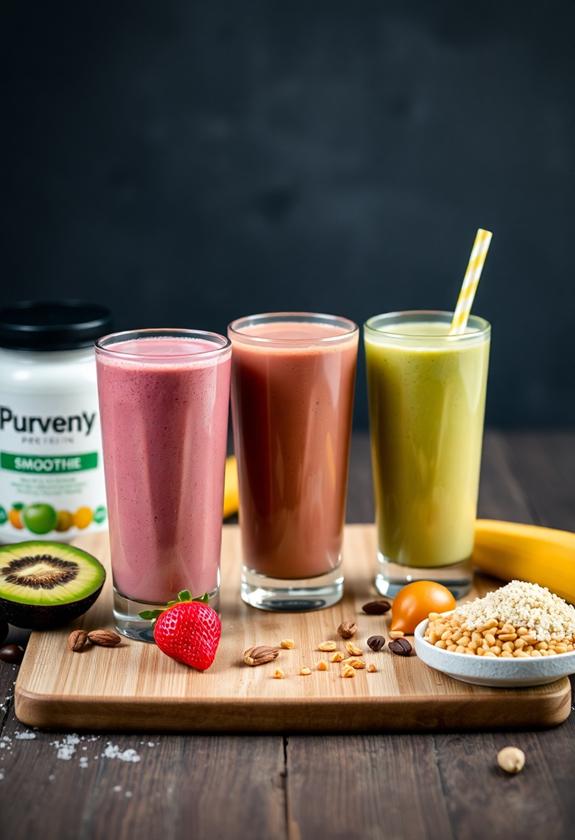
To dial in your smoothie's calorie content, you'll need to tailor ingredients based on your activity level. For those with lower activity levels, focus on smoothie ingredient substitutions that reduce calories without sacrificing flavor. Try swapping full-fat yogurt for Greek yogurt, or using water instead of milk. You can also add more leafy greens to bulk up your smoothie without adding many calories. Protein-packed smoothies can be adjusted to suit various lifestyles and dietary needs, ensuring you get the right balance of nutrients for your activity level.
If you're highly active, you'll want to incorporate energy boosting superfoods to fuel your workouts. Add chia seeds, flax seeds, or hemp hearts for healthy fats and protein. Toss in some spinach or kale for extra nutrients. Don't shy away from fruits like bananas or mangoes, which provide natural sugars for quick energy. Remember, it's all about balance and finding what works best for your body and lifestyle. You've got this!
Portion Control Techniques
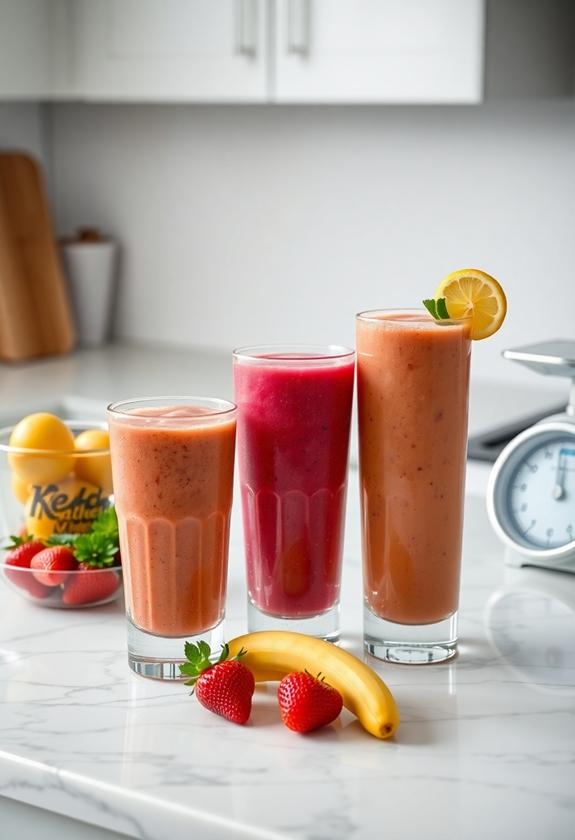
With portion control, you can enjoy high-calorie smoothies without overindulging. It's all about finding the right balance for your activity level and nutritional needs. Start by using smaller serving sizes and adjusting your blending methods to create a thicker consistency, which can help you feel fuller with less. High-calorie smoothies can be beneficial in certain situations, such as for athletes or those looking to gain weight, but it's important to adjust portions based on your specific needs and activity level.
Here are four easy portion control techniques you can try:
- Use smaller glasses or containers
- Measure ingredients carefully
- Make single-servings instead of large batches
- Add ice to increase volume without calories
Nutrient-Dense Low-Calorie Additions
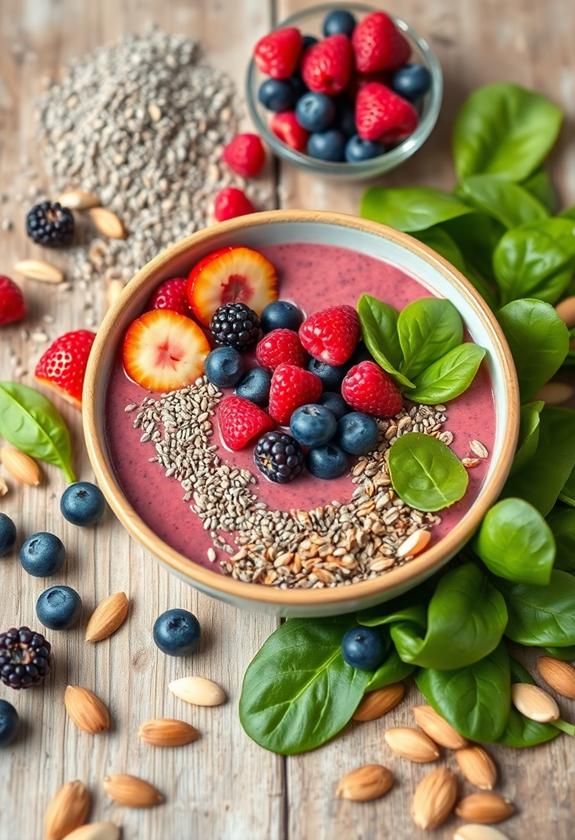
Adding nutrient-dense, low-calorie ingredients to your smoothies can help you maintain portion control while increasing nutritional value. You'll love the variety of superfood options available, like chia seeds and spirulina, which pack a nutritional punch without adding many calories. Vegan smoothies can be an excellent way to guarantee you're getting essential nutrients while avoiding common deficiencies associated with plant-based diets. For flavor boosters, try cinnamon or vanilla extract – they're delicious and practically calorie-free! Protein boosters like Greek yogurt or plant-based protein powder can keep you feeling full longer. Don't forget fiber sources such as spinach or kale, which are incredibly nutritious. Antioxidant ingredients like berries are perfect low-calorie fruits to add. If you're looking for vegan alternatives, try unsweetened almond milk as a liquid base. Remember, these additions aren't just about cutting calories; they're about nourishing your body with the best possible ingredients. You're doing great by making these smart choices!
Balancing Macronutrients for Fitness Goals
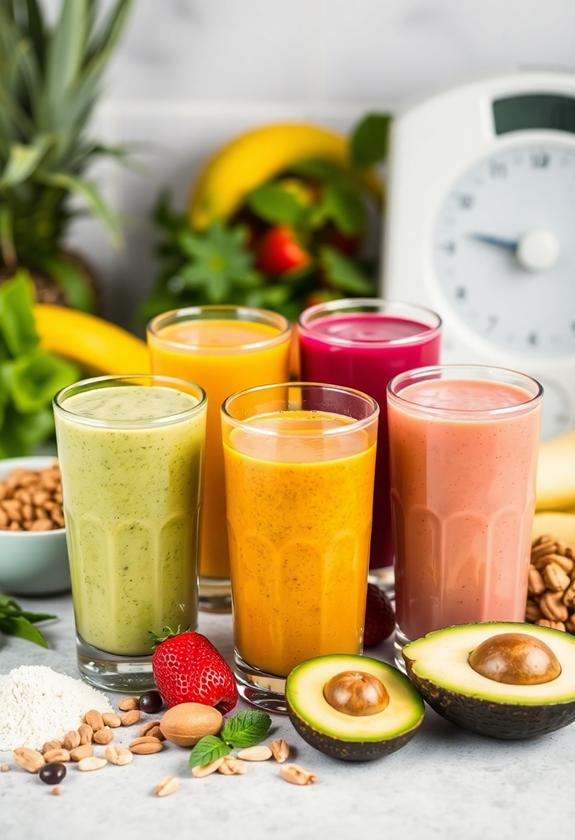
Balancing macronutrients in your smoothies can make or break your fitness goals. When you're aiming to build muscle, boost your protein sources by adding Greek yogurt, protein powder, or nut butter. For endurance activities, focus on carbohydrate timing, incorporating fruits or oats before workouts. If weight loss is your goal, prioritize fiber-rich ingredients and lean proteins to keep you feeling full. Macro balance is essential for creating smoothies that align with your specific fitness objectives and activity levels. Adjusting the proportions of proteins, carbs, and fats in your smoothie can help you achieve ideal results.
To enhance your smoothies for different fitness goals, consider these tips:
- Use a protein-to-carb ratio of 1:2 for muscle building
- Add healthy fats like avocado or chia seeds for sustained energy
- Include leafy greens for micronutrients without excess calories
- Adjust portion sizes based on your activity level and calorie needs
Frequently Asked Questions
Can Smoothies Replace Meals for Weight Loss or Muscle Gain?
Did you know that 54% of Americans have tried a meal replacement shake? Smoothies can indeed replace meals for weight loss or muscle gain, but it's essential to focus on nutrient balance. You'll want to guarantee your smoothie includes protein, healthy fats, and complex carbs. For weight loss, opt for lower-calorie ingredients, while muscle gain requires more protein and calories. Remember, everyone's needs are different, so it's best to consult a nutritionist to create a plan that's perfect for you!
How Long Can I Store a Pre-Made Smoothie in the Fridge?
You can store your pre-made smoothie in the fridge for up to 2 days, but it's best to enjoy it within 24 hours for peak freshness. To keep your smoothie tasty and nutritious, pour it into an airtight container, leaving minimal space at the top. Remember to give it a good shake before drinking, as ingredients may separate. For the best smoothie storage and freshness tips, try adding a splash of lemon juice to prevent browning, and always keep it chilled!
Are There Any Potential Side Effects of Drinking High-Calorie Smoothies Regularly?
Like a double-edged sword, high-calorie smoothies can be both a blessing and a curse. You'll want to watch out for potential side effects. Nutrient balance is key; overdoing it on certain ingredients might lead to digestive issues. Be mindful of calorie awareness, as it's easy to drink your calories without realizing it. Your ingredient choices matter too. Don't worry, though! With a little care and attention, you can enjoy your smoothies without any hiccups.
Can I Use Frozen Ingredients Instead of Fresh Ones in My Smoothies?
You can definitely use frozen ingredients in your smoothies, and it's a great option. Frozen fruits are just as nutritious as fresh ones, often with better nutrient retention. They're convenient, last longer, and give your smoothie a delightfully thick, frosty texture. Plus, you'll save time on prep and cleanup. Don't hesitate to mix and match fresh and frozen ingredients to create your perfect blend. Experiment with different combinations and enjoy the cool, refreshing results!
How Do Smoothies Affect Blood Sugar Levels Compared to Whole Fruits?
Imagine your bloodstream as a bustling highway, with smoothies and whole fruits as different types of vehicles. You'll find that smoothies often zip through faster, causing a quicker rise in blood sugar. This is because the blending process breaks down fibers, affecting the smoothie composition. Whole fruits, with their intact structure, travel more slowly, resulting in a gentler glycemic response. But don't worry! You can still enjoy smoothies by adding protein or healthy fats to help balance things out.