Some links below are affiliate links. We earn a commission on purchases at no extra cost to you. Although our opinions are based on curated research, we haven't used these products. Article generated with AI.

How Smoothies Can Help Meet Kids’ Daily Fruit and Veggie Goals
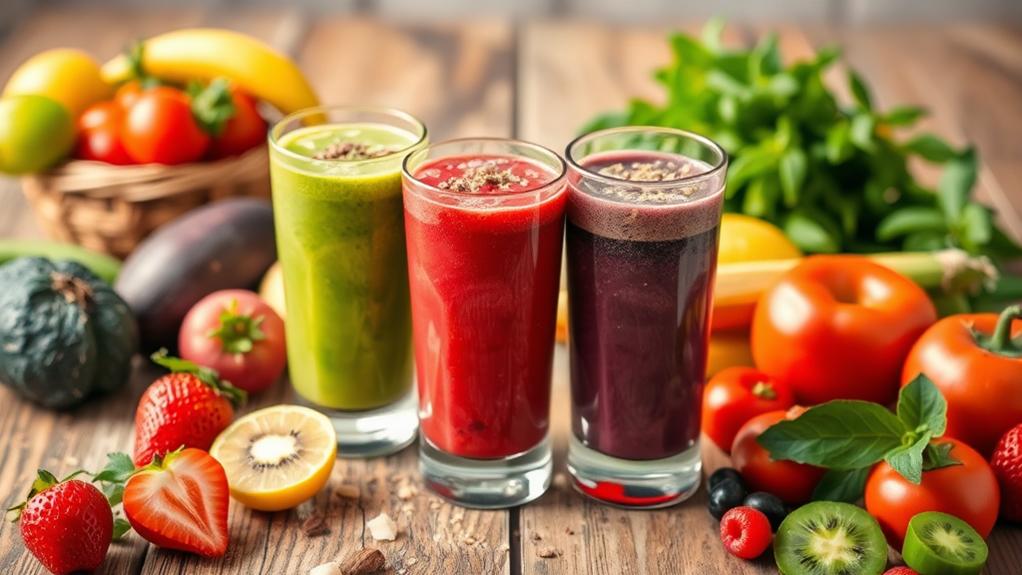
Smoothies are a fantastic way to help your kids meet their daily fruit and veggie goals. They’re packed with essential nutrients, vitamins, and fiber, making them a nutritious and tasty treat. You can easily blend in vegetables like spinach or kale without altering the flavor, perfect for picky eaters. By involving your children in the smoothie-making process, you’ll foster their interest in healthy eating. Customize recipes to suit their tastes, and experiment with different combinations to keep things exciting. Smoothies are quick to prepare, portable, and can be enjoyed any time of day. There’s so much more to discover about the benefits of smoothies for your little ones.
Table of Contents
hide
Key Takeaways
- Smoothies blend multiple fruits and vegetables into one serving, increasing nutrient intake effortlessly.
- Disguising vegetables with sweeter fruits helps picky eaters consume more produce without resistance.
- Customizable recipes allow for creative combinations, making it easier to incorporate a variety of fruits and vegetables.
- Portable nature of smoothies enables convenient consumption of fruits and vegetables throughout the day.
- Involving kids in smoothie preparation encourages enthusiasm for trying new fruits and vegetables.
Nutritional Benefits of Smoothies
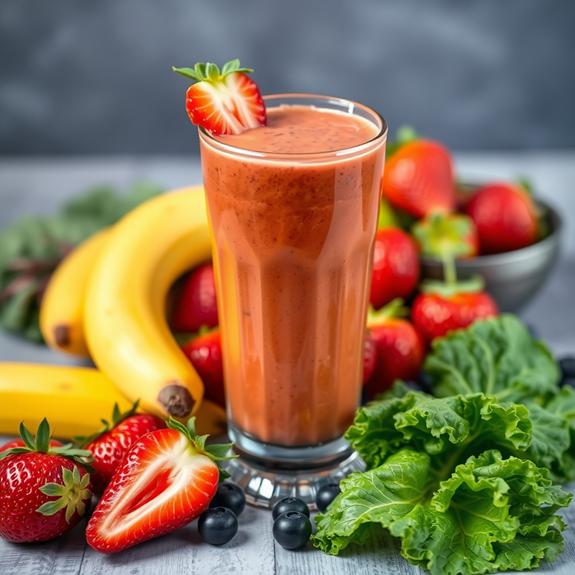
Smoothies consistently offer a powerhouse of nutrients in a single glass. They’re an excellent way to pack fruits, vegetables, and other wholesome ingredients into your child’s diet. When you blend these nutritious foods together, you’re creating a drink that’s rich in vitamins, minerals, and fiber. This combination supports your child’s growth, boosts their immune system, and helps maintain their overall health.
You’ll find that smoothies are a great source of antioxidants, which protect your child’s body from harmful free radicals. They’re also packed with essential nutrients like vitamin C, potassium, and folate. These nutrients play vital roles in your child’s development, from supporting their bone health to aiding in proper brain function.
What’s more, smoothies can be an excellent source of hydration. By including water-rich fruits and vegetables, you’re helping your child stay hydrated throughout the day. This is especially important for active kids who need to replenish fluids regularly.
Picky Eaters and Smoothies
For parents struggling with picky eaters, smoothies can be a game-changer. These delicious, nutrient-packed drinks offer a clever way to sneak fruits and vegetables into your child’s diet without the fuss.
You’ll find that smoothies are versatile, allowing you to blend familiar flavors with new ingredients, gradually expanding your little one’s palate.
When introducing smoothies to picky eaters, remember these emotionally supportive tips:
- Start with familiar favorites to build trust and excitement
- Involve your child in the smoothie-making process to spark curiosity
- Celebrate small victories, like trying a new ingredient
- Be patient and persistent, as taste preferences can take time to develop
You’ll discover that smoothies offer a fun, colorful way to make nutrition enjoyable for your child.
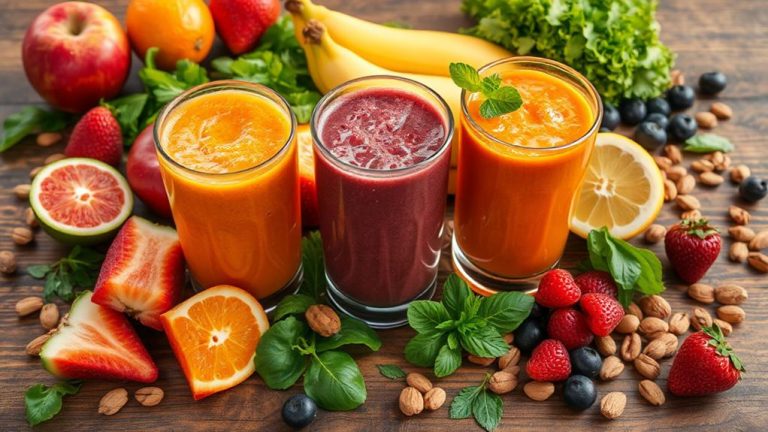
By experimenting with different combinations, you can create enticing flavors that mask the taste of less-favored vegetables. Don’t be afraid to get creative! You might add a handful of spinach to a strawberry banana smoothie or blend carrots into a tropical fruit mix.
With time and patience, you’ll find that smoothies become a welcome addition to your family’s meal routine, helping your picky eater adopt a wider range of healthy foods.
Essential Smoothie Ingredients
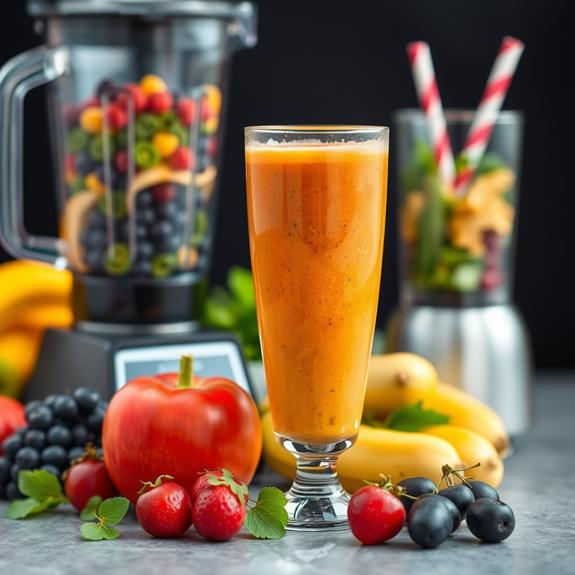
A well-crafted smoothie starts with a careful selection of ingredients.
You’ll want to include a mix of fruits and vegetables to provide a balanced blend of nutrients. Start with a base of liquid, such as water, milk, or plant-based alternatives. This helps create a smooth consistency and makes blending easier.
Next, add your child’s favorite fruits. Berries, bananas, and mangoes are popular choices that offer natural sweetness and vibrant flavors.
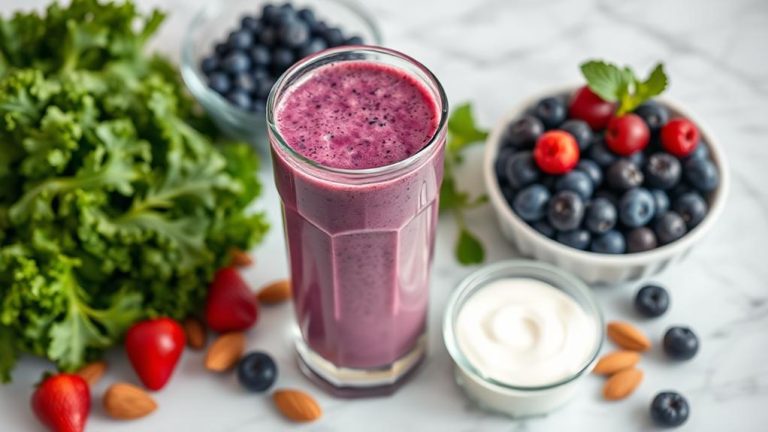
Don’t forget to sneak in some vegetables too! Spinach, kale, or carrots can be easily masked by the fruit flavors while boosting the nutritional content.
For added protein and creaminess, consider including Greek yogurt or a spoonful of nut butter. These ingredients will help keep your little one feeling full and satisfied.
To improve the smoothie’s nutritional profile, you might also add a small amount of seeds like chia or flax.
Balancing Fruits and Vegetables
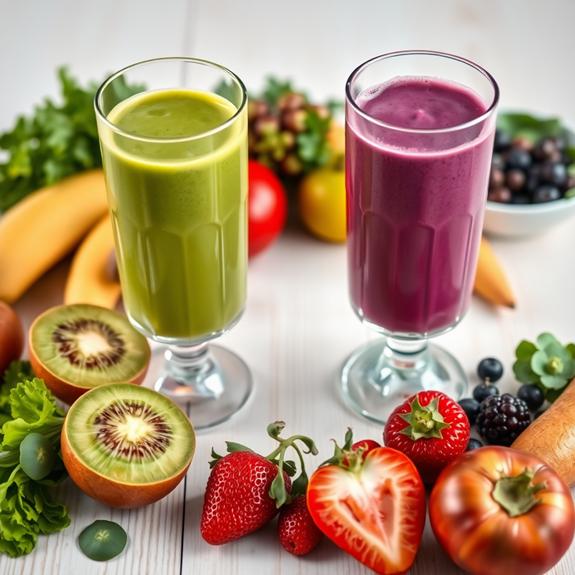
While it’s tempting to load up a smoothie with fruits for sweetness, achieving the right balance of fruits and vegetables is crucial. You’ll want to aim for a 50/50 mix to guarantee your kids are getting a variety of nutrients.
Start with a base of leafy greens like spinach or kale, then add colorful fruits for flavor and natural sweetness. This balance helps maintain steady energy levels and provides a wide range of vitamins and minerals.
When you’re creating smoothies for your little ones, remember these emotionally compelling benefits:
- You’re nurturing their growing bodies with nature’s best ingredients.
- You’re setting them up for a lifetime of healthy eating habits.
- You’re showing them that nutritious food can be delicious and fun.
- You’re bonding with them through the joy of creating something together.
Don’t worry if your child is picky about vegetables. Smoothies are a great way to sneak in those less-favored veggies.
The sweetness of fruits can mask the taste of vegetables, making it easier for kids to enjoy them. Experiment with different combinations to find what works best for your family.
Smoothie Preparation Tips
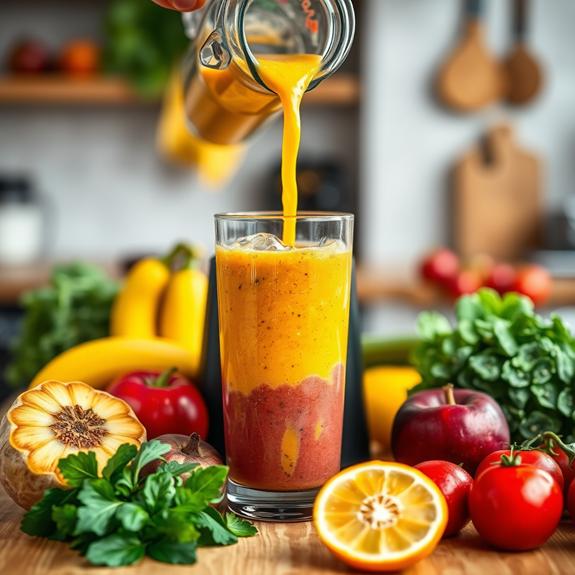
Now that you’ve got the perfect balance of fruits and veggies, let’s focus on making the smoothie-making process a breeze. Your kids will love helping out, and it’s a great way to get them excited about healthy eating!
First, prep your ingredients in advance. Wash and chop fruits and veggies, then store them in freezer bags. This way, you’ll always have smoothie-ready produce on hand.
Don’t forget to peel bananas before freezing – they’re much easier to blend when frozen without the skin.
When it’s time to blend, start with your liquid base. This could be milk, yogurt, or even coconut water. Add your softer ingredients next, followed by the frozen items. This order helps your blender work more efficiently.
If you’re using leafy greens, blend them with the liquid first for a smoother texture.
Kid-Friendly Smoothie Recipes
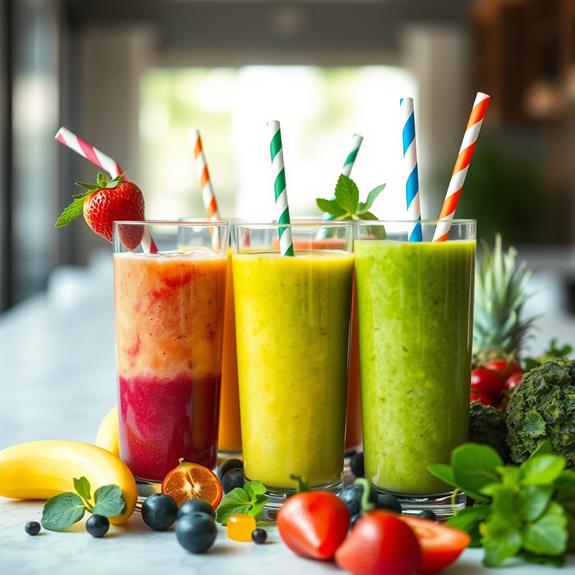
Let’s plunge into some kid-friendly smoothie recipes that’ll have your little ones begging for more.
These nutrient-packed concoctions aren’t only delicious but also a great way to sneak in those extra fruits and veggies. You’ll love watching your children’s eyes light up as they sip on these colorful, tasty treats.
Here are four smoothie recipes that’ll make your kids fall in love with healthy eating:
- Berry Blast: A vibrant mix of strawberries, blueberries, and raspberries with Greek yogurt
- Green Machine: Spinach, banana, and mango blended with coconut water for a tropical twist
- Chocolate Banana Dream: Cocoa powder, banana, and almond milk for a guilt-free dessert smoothie
- Peachy Keen: Peaches, carrots, and orange juice for a sunny, vitamin-packed drink
Involving Kids in Smoothie Making
The kitchen transforms into a fun learning lab when you involve kids in smoothie making. It’s a great way to spark their interest in nutrition and encourage them to try new fruits and veggies. Start by letting your little ones pick out ingredients at the grocery store or farmers’ market. This gives them a sense of ownership and excitement about the process.
When it’s time to blend, assign age-appropriate tasks. Younger children can help wash fruits and veggies, while older kids might measure ingredients or operate the blender under supervision. As you work together, explain the nutritional benefits of each ingredient. You’ll be amazed at how much they’ll absorb!
Don’t forget to make the experience fun and creative. Let your kids name their smoothie creations or have a friendly competition to see who can come up with the tastiest blend. Encourage experimentation with different flavor combinations, but be prepared for some unusual results!
Smoothies for Different Mealtimes
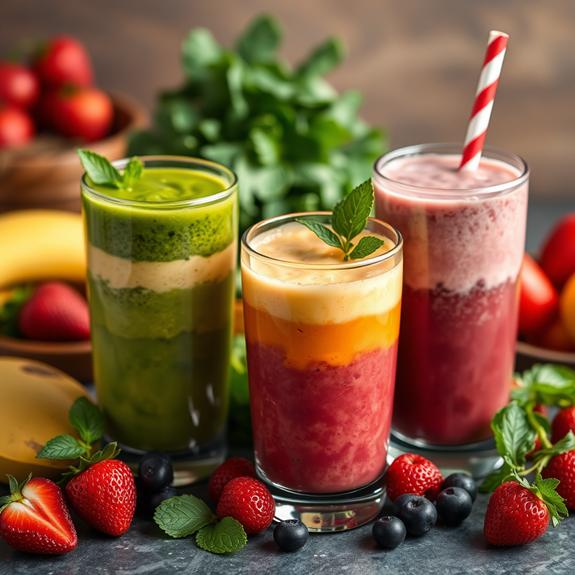
Versatility is one of the greatest strengths of smoothies. You can enjoy them at various times throughout the day, making it easier to meet your kids’ nutritional needs.
For breakfast, a smoothie can be a quick and nourishing start, packed with fruits, yogurt, and even oats for sustained energy. Lunchtime smoothies can complement a light meal or serve as a refreshing drink alongside a sandwich. After-school snacks are perfect for smoothies, giving kids a boost of vitamins and minerals to tide them over until dinner.
Even dinnertime can benefit from smoothies. They’re great as a side dish or a dessert alternative, sneaking in extra veggies without any fuss.
Here’s why smoothies are fantastic for different mealtimes:
- They’re quick to prepare, perfect for busy mornings or after-school rush
- They’re easily customizable to suit your child’s changing tastes and moods
- They can be made ahead and stored, saving time during hectic schedules
- They’re portable, ideal for on-the-go meals or packed lunches
Boosting Fiber Intake
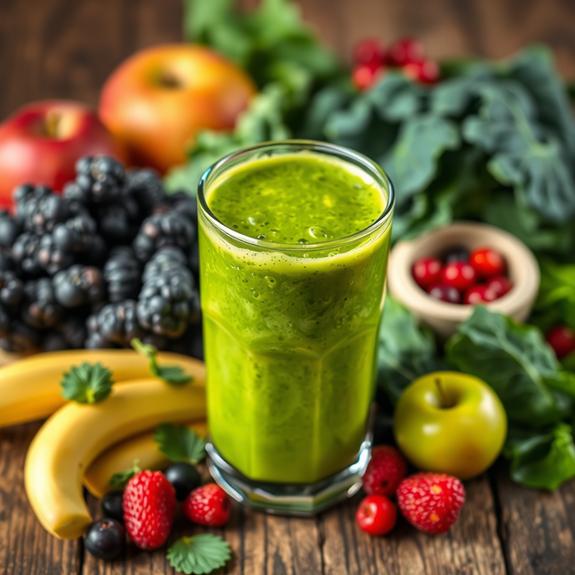
While smoothies offer flexibility across mealtimes, they also provide an excellent opportunity to boost your child’s fiber intake. Fiber is essential for digestive health and can help keep your little one feeling full and satisfied.
You’ll be happy to know that many fruits and vegetables are naturally high in fiber, making them perfect additions to your child’s smoothies.
To increase fiber content, try adding berries like raspberries and blackberries, which are fiber powerhouses. Pears and apples, with their skins left on, are also great options.
Don’t forget about vegetables! Leafy greens like spinach and kale blend well into smoothies and pack a fiber punch. You can even sneak in some chia seeds or ground flaxseed for an extra fiber boost.
Hiding Vegetables in Smoothies
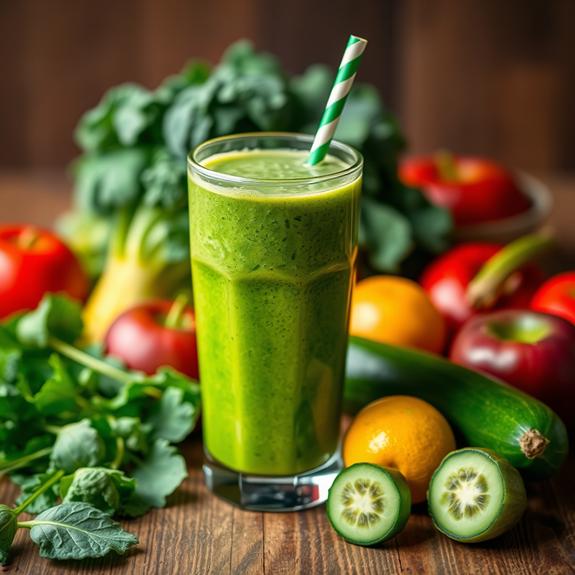
For parents of picky eaters, smoothies offer a sneaky way to incorporate vegetables into their child’s diet.
You’ll be amazed at how easy it’s to blend veggies into delicious, colorful drinks that your kids will love. Start with mild-flavored vegetables like spinach, cucumber, or carrots, which can be easily masked by sweet fruits. As your child gets used to the idea, you can gradually introduce more varieties and increase the veggie content.
Here’s why hiding vegetables in smoothies is a great strategy:
- It’s a stress-free way to boost your child’s nutrient intake
- You’ll feel proud watching your kids enjoy “veggie-packed” treats
- It’s an opportunity to bond with your child through fun experimentation
- You’ll gain peace of mind knowing you’re supporting their health
Portion Control for Kids
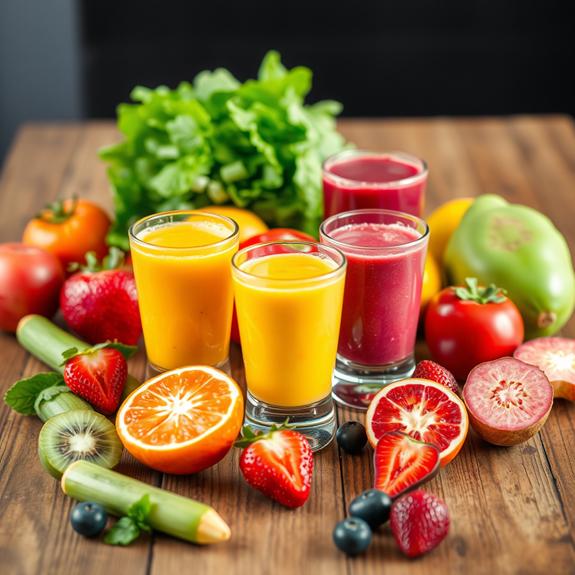
Regarding smoothies for kids, portion control is essential to maintain a balanced diet. While these fruity concoctions are packed with nutrients, they can also be high in calories and natural sugars. You’ll want to guarantee your child’s smoothie intake doesn’t replace other important food groups or lead to overconsumption.
For younger children, aim for smaller portions of about 4-6 ounces. As they grow, you can gradually increase this to 8-12 ounces for older kids and teens. It’s important to keep in mind that smoothies shouldn’t be the only source of fruits and vegetables in your child’s diet. They’re a great supplement, but whole fruits and veggies should still make regular appearances on the plate.
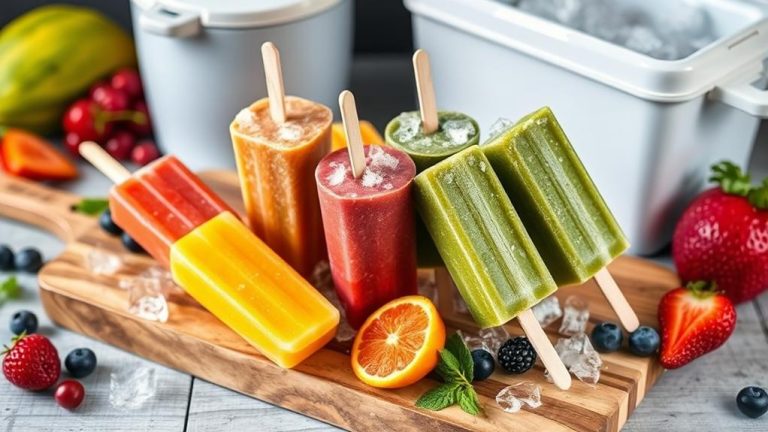
When preparing smoothies, use measuring cups to keep portions consistent. You can also pour smoothies into popsicle molds for a fun, portion-controlled treat.
Recall, it’s not just about quantity but quality too. Balance fruits with vegetables, add protein sources like Greek yogurt or nut butter, and include healthy fats for a well-rounded drink.
Smoothie Storage and Convenience
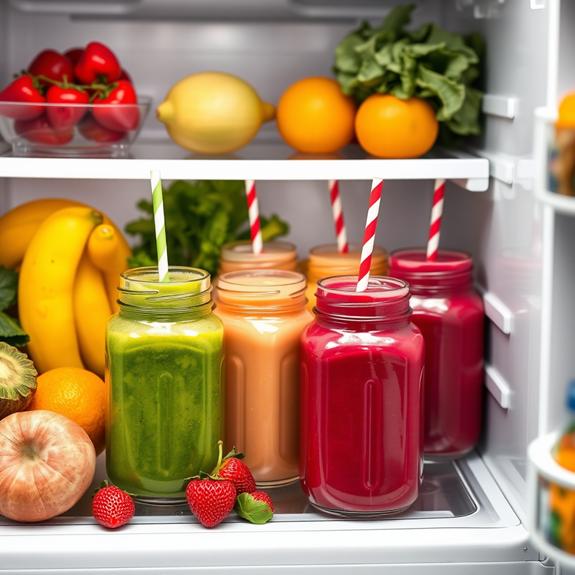
In view of busy family schedules, smoothie storage and convenience are essential factors to contemplate. You’ll want to make sure your kids’ smoothies are easily accessible and stay fresh.
One great option is to prepare smoothie packs in advance. Simply portion out the fruits and veggies for each smoothie into separate freezer bags, then store them in the freezer. When it’s time for a smoothie, just grab a pack, blend with your liquid of choice, and you’re good to go!
For storing prepared smoothies, invest in some leak-proof, insulated bottles. These will keep the smoothies cold and fresh for several hours, perfect for school lunches or after-school activities.
Remember, smoothies are best consumed within 24 hours for ideal nutrition and taste.
To make smoothies a convenient part of your family’s routine:
- Set up a designated smoothie station in your kitchen
- Keep a variety of frozen fruits and veggies on hand
- Teach older kids how to safely make their own smoothies
- Create a fun smoothie recipe book together as a family
With these tips, you’ll find it’s easier than ever to incorporate healthy, delicious smoothies into your kids’ diets!
Frequently Asked Questions
Can Smoothies Replace Whole Fruits and Vegetables in a Child’s Diet?
While smoothies can be a great addition to your child’s diet, they shouldn’t completely replace whole fruits and vegetables.
You’ll want to balance their intake. Smoothies offer a convenient way to pack in nutrients, but whole produce provides important fiber and teaches kids about different textures and tastes.
It’s best to use smoothies as a supplement, not a substitute. Encourage your little one to enjoy a variety of whole fruits and veggies alongside their delicious, nutrient-packed smoothies for ideal health benefits.
Are There Any Potential Drawbacks to Giving Kids Smoothies Regularly?
While smoothies can be a great way to boost your child’s nutrient intake, there are some potential drawbacks to take into account.
You’ll want to watch out for added sugars, which can sneak into store-bought smoothies. Also, drinking calories instead of eating whole foods mightn’t be as satisfying, potentially leading to overeating.
It’s important to keep in mind that smoothies shouldn’t completely replace whole fruits and veggies, as they lack the fiber content and chewing experience that contribute to healthy eating habits.
How Can Smoothies Affect Children’s Dental Health?
You’d think smoothies are dental superheroes, swooping in to save the day with fruity goodness.
But wait! While they’re packed with nutrients, smoothies can affect your child’s dental health. They’re often high in natural sugars and acids, which can erode tooth enamel.
Don’t worry, though! You can still enjoy them by using a straw, rinsing with water after drinking, and waiting an hour before brushing.
Balance is key, so mix in some low-sugar veggies and don’t overdo it on frequency.
At What Age Is It Safe to Introduce Smoothies to a Child?
You can introduce smoothies to your child around 6 to 8 months old, but it’s important to start slowly.
Begin with simple, single-ingredient purees, and gradually mix in new fruits and veggies. As your baby grows, you’ll be able to offer thicker, more complex smoothies.
Always consult your pediatrician first, and watch for any signs of allergies.
Can Smoothies Help With Weight Management in Overweight Children?
Ever wondered how to help your child maintain a healthy weight? Smoothies can be a great tool!
They’re packed with nutrients and can replace high-calorie snacks. You’ll find that smoothies are filling, which helps control hunger.
They’re also a fun way to introduce more fruits and veggies into your child’s diet. Remember, it’s important to balance smoothies with other healthy foods and activities.
With your love and support, you’re helping your child develop lifelong healthy habits!