Some links below are affiliate links. We earn a commission on purchases at no extra cost to you. Although our opinions are based on curated research, we haven't used these products. Article generated with AI.

The Role of Smoothies in a Balanced Diet for Children
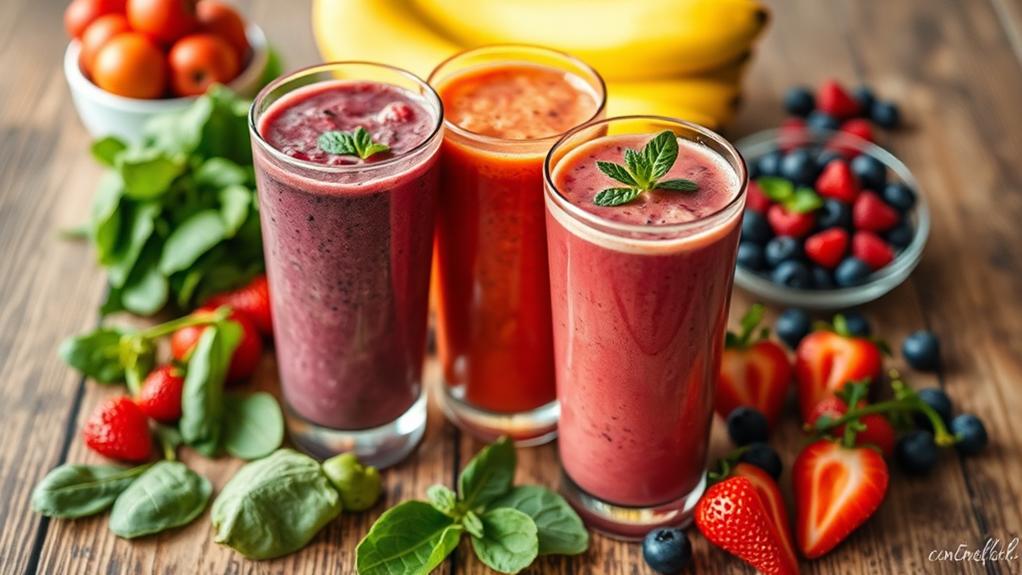
Smoothies can be a great addition to your child’s balanced diet. They’re an easy way to pack in essential nutrients, vitamins, and fiber from fruits and vegetables. You can use smoothies to introduce new flavors and help picky eaters get more variety in their diet. However, it’s important to watch out for sugar content and portion sizes. Homemade smoothies are best, as you can control the ingredients and avoid hidden sugars. While smoothies shouldn’t replace whole meals regularly, they can be a nutritious snack or occasional meal substitute. By involving your kids in making smoothies, you’ll foster healthy eating habits and nutrition awareness. There’s so much more to investigate about smoothies and children’s nutrition!
Table of Contents
hide
Key Takeaways
- Smoothies provide essential vitamins, minerals, and fiber, supporting children’s overall nutrition and immune health.
- They can introduce a variety of fruits and vegetables to picky eaters, expanding their palate.
- Portion control is crucial; smoothies should complement, not replace, whole meals in a child’s diet.
- Homemade smoothies allow control over ingredients, reducing added sugars and artificial additives.
- Involving children in smoothie preparation can encourage healthy eating habits and nutritional education.
Nutritional Benefits of Smoothies
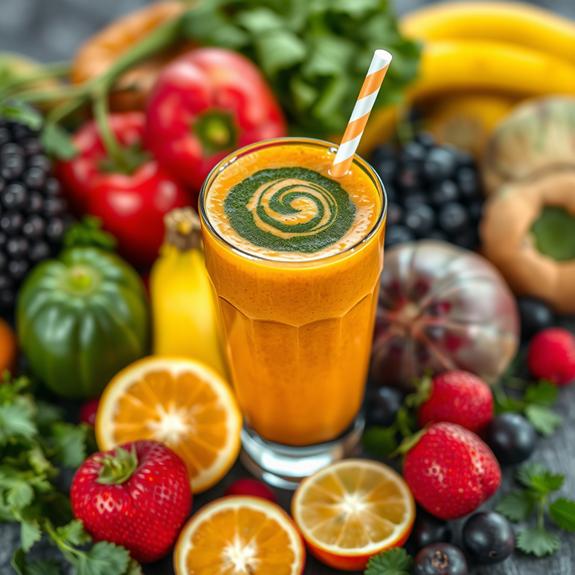
Smoothie powerhouses pack a nutritional punch for children’s diets. You’ll love how these delicious drinks can boost your child’s intake of essential vitamins, minerals, and fiber. By blending fruits, vegetables, and other wholesome ingredients, you’re creating a nutrient-dense treat that’s easy for kids to enjoy.
Smoothies are an excellent way to introduce a variety of fruits and vegetables into your child’s diet. They’re particularly helpful for picky eaters who might shy away from whole produce. You’ll find that smoothies can be a great source of vitamin C, potassium, and antioxidants, which support your child’s immune system and overall health.
Don’t forget about the fiber content in smoothies! When you use whole fruits and vegetables, you’re providing your child with important dietary fiber that aids digestion and promotes feelings of fullness.
Plus, smoothies can be a fantastic way to sneak in protein-rich ingredients like Greek yogurt or nut butters, supporting your child’s growth and development. With smoothies, you’re giving your kids a tasty and nutritious boost that’ll keep them energized throughout the day.
Sugar Content Concerns
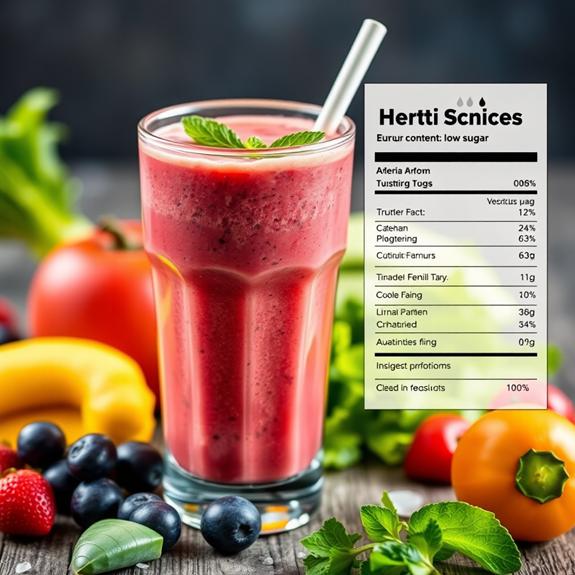
While smoothies offer numerous health benefits, it’s important to be mindful of their sugar content. You’ll want to pay attention to the ingredients you’re using, as some can quickly turn a healthy snack into a sugar bomb.
Fruits, while nutritious, contain natural sugars that can add up fast. It’s best to balance sweet fruits with lower-sugar options like berries or green apples.
Be cautious of adding extra sweeteners, such as honey or agave syrup. These might make the smoothie tastier, but they’ll also increase the sugar content significantly. Instead, try using a small amount of dates or a splash of vanilla extract for natural sweetness.
You can also add vegetables like spinach or kale to boost nutrition without adding sugar.
If you’re buying pre-made smoothies, always check the nutrition label. Many store-bought options are loaded with added sugars.
When making smoothies at home, you’re in control of what goes in. Remember, moderation is key. Smoothies can be a wonderful part of your child’s diet, but they shouldn’t replace whole fruits and vegetables entirely.
Fiber and Whole Foods
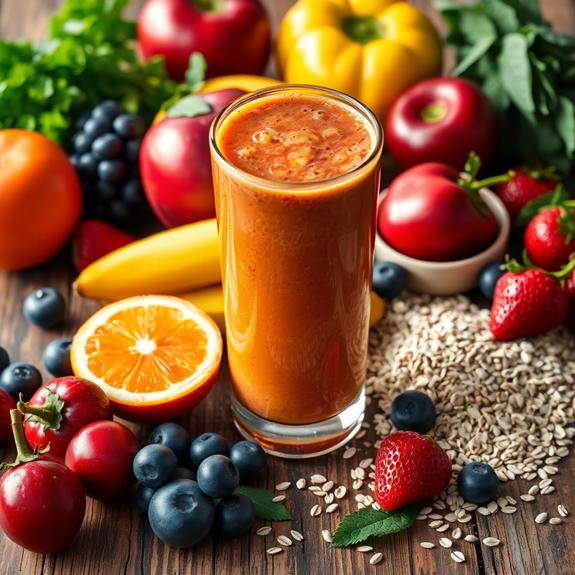
How can you guarantee your child’s smoothie provides adequate fiber? The key is to focus on whole foods and keep the skin on fruits when possible.
You’ll want to include a mix of fruits and vegetables, as they’re excellent sources of both soluble and insoluble fiber. Remember, fiber isn’t just good for digestion; it also helps your child feel full and satisfied.
Here are some fiber-rich ingredients you can add to your child’s smoothies:
- Berries (raspberries, strawberries, blueberries)
- Leafy greens (spinach, kale)
- Chia seeds or flaxseeds
- Whole oats
By incorporating these ingredients, you’re not only boosting fiber content but also adding a variety of nutrients.
It’s important to introduce new flavors gradually, allowing your child’s palate to adjust. Start with small amounts of greens or seeds, then increase over time. You’ll be amazed at how quickly your little one adapts to these nutritious additions!
Don’t forget to pair smoothies with other whole foods throughout the day. This guarantees your child gets a well-rounded diet that includes plenty of fiber from various sources.
With a little creativity, you’ll be blending up delicious, fiber-packed smoothies your child will love!
Portion Control for Kids
Three key factors come into play when considering portion control for kids’ smoothies: age, activity level, and overall diet.
You’ll want to adjust serving sizes based on these elements to guarantee your child’s nutritional needs are met without overdoing it.
For younger children, start with smaller portions, about 4-6 ounces. As they grow, you can gradually increase the amount to 8-12 ounces for older kids and teens.
Remember, smoothies shouldn’t replace meals but complement a balanced diet.
If your child is very active, they may need larger portions to fuel their energy needs. However, for less active kids, it’s important to keep servings modest to avoid excess calorie intake.
Consider the smoothie’s role in your child’s overall diet. If it’s packed with fruits, veggies, and protein, it can be a substantial snack or part of a meal.
But if it’s fruit-heavy and sugary, treat it more as an occasional treat.
You’re doing great by thinking about portion control! It’s a critical part of teaching your kids healthy eating habits that’ll serve them well throughout their lives.
Smoothies vs. Whole Fruits
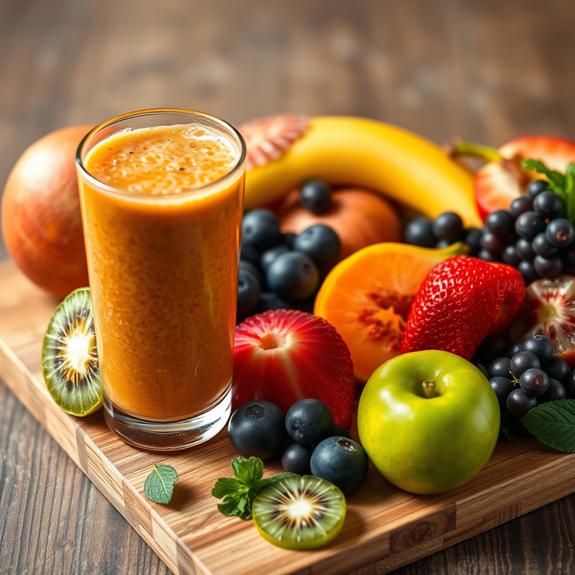
Parents often wonder whether smoothies or whole fruits are better for their children. Both options have their merits, but it’s important to understand the differences. Whole fruits offer the benefit of intact fiber, which aids digestion and provides a feeling of fullness. They also require chewing, which can help with oral motor development and satiety cues.
Smoothies, on the other hand, can be a great way to:
- Increase fruit and vegetable intake
- Hide less-favored nutritious ingredients
- Provide a quick, portable snack
- Offer variety in texture and flavor combinations
When you make smoothies at home, you’re in control of the ingredients. This means you can avoid added sugars and guarantee a balanced mix of fruits, vegetables, and protein sources.
However, it’s easy to overdo portion sizes with smoothies, as they’re consumed quickly and don’t require chewing.
Hidden Ingredients to Avoid
While smoothies can be a nutritious addition to a child’s diet, it’s essential to be aware of potentially harmful hidden ingredients. You’ll want to keep an eye out for added sugars, which can sneak into store-bought smoothies or smoothie mixes. These extra sweeteners can contribute to tooth decay and weight gain, so it’s best to stick with the natural sweetness of fruits.
Another ingredient to watch for is artificial colors and flavors. These additives don’t provide any nutritional value and may even cause allergic reactions in some children. Instead, opt for smoothies made with whole, natural ingredients that you can see and recognize.
Be cautious of smoothies with excessive amounts of fruit juice, as they can be high in calories and low in fiber. It’s better to use whole fruits and vegetables as the base of your child’s smoothie.
Balancing Macronutrients in Smoothies
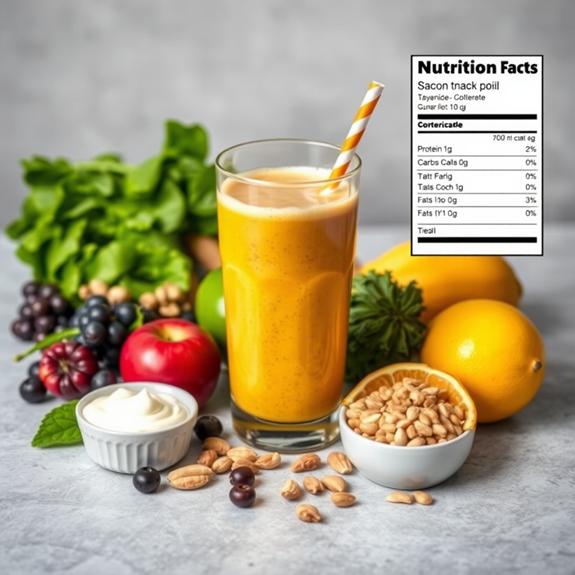
Now that we’ve identified ingredients to avoid, let’s focus on creating nutritionally balanced smoothies for your child. A well-balanced smoothie should contain a mix of macronutrients: carbohydrates, proteins, and healthy fats. This combination will keep your little one feeling full and energized throughout the day.
To achieve this balance, consider incorporating these elements into your child’s smoothies:
- Complex carbohydrates from fruits, vegetables, or whole grains
- Lean proteins like Greek yogurt, milk, or plant-based protein powders
- Healthy fats from sources such as avocado, chia seeds, or nut butters
- Fiber-rich ingredients to aid digestion and promote fullness
When you’re crafting a smoothie, aim for a ratio of about 50% carbohydrates, 25% protein, and 25% healthy fats. This balance will help stabilize blood sugar levels and provide sustained energy.
Teeth Health Considerations
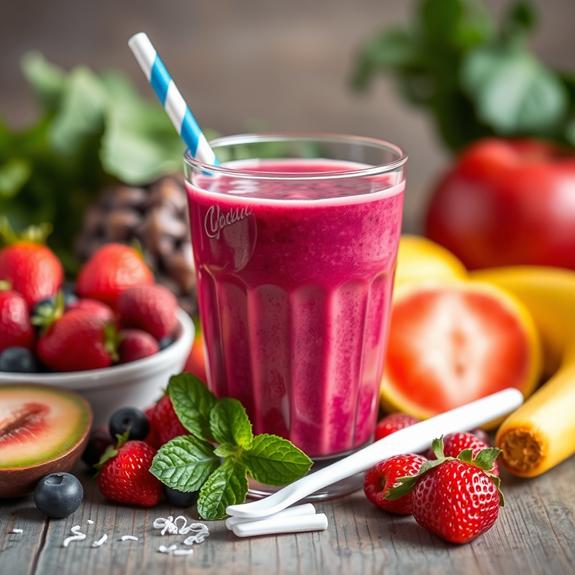
Sipping smoothies can impact your child’s dental health, so it’s crucial to take into account a few key points. While smoothies are packed with nutrients, they often contain natural sugars that can contribute to tooth decay. To protect your little one’s pearly whites, encourage them to drink their smoothie through a straw, which helps minimize contact with teeth.
It’s also important to be mindful of the smoothie’s consistency. Thick, pulpy smoothies can leave residue on teeth, potentially leading to cavity-causing bacteria. You can combat this by having your child rinse their mouth with water after enjoying their smoothie.
Another great tip is to serve smoothies alongside meals rather than as standalone snacks, as this helps stimulate saliva production, which naturally cleanses the mouth.
Don’t forget about the power of timing! It’s best to avoid giving your child a smoothie right before bedtime, as the sugars can sit on their teeth overnight. By following these simple guidelines, you’ll help guarantee that smoothies remain a healthy, tooth-friendly part of your child’s balanced diet.
Smoothies and Meal Replacement
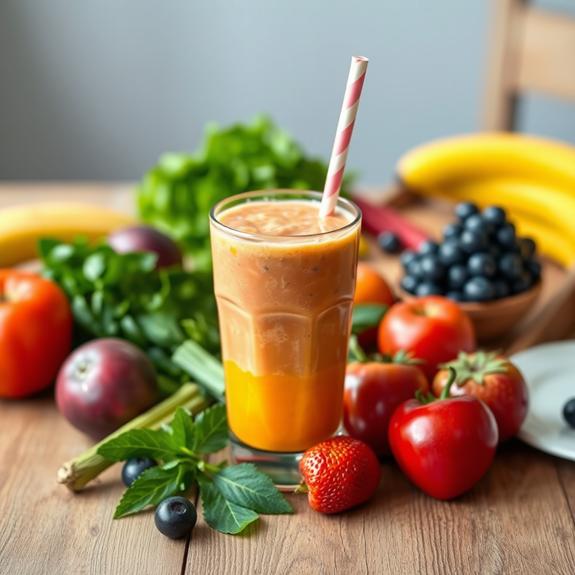
Parents often wonder if smoothies can replace full meals for their children. While smoothies can be a nutritious addition to your child’s diet, they shouldn’t regularly replace whole meals.
Smoothies are quick and convenient, but they lack the variety and texture of solid foods that are important for a child’s development.
Here’s why whole meals are essential:
- They provide a wider range of nutrients
- They help develop chewing skills
- They promote healthy eating habits
- They encourage social interaction during mealtimes
You can use smoothies as occasional meal replacements when you’re in a rush or when your child isn’t feeling well.
However, it’s best to think of them as supplements to a balanced diet rather than substitutes for complete meals.
When you do offer smoothies, make sure they’re packed with a variety of fruits, vegetables, and protein sources like Greek yogurt or nut butter.
Age-Appropriate Smoothie Recipes
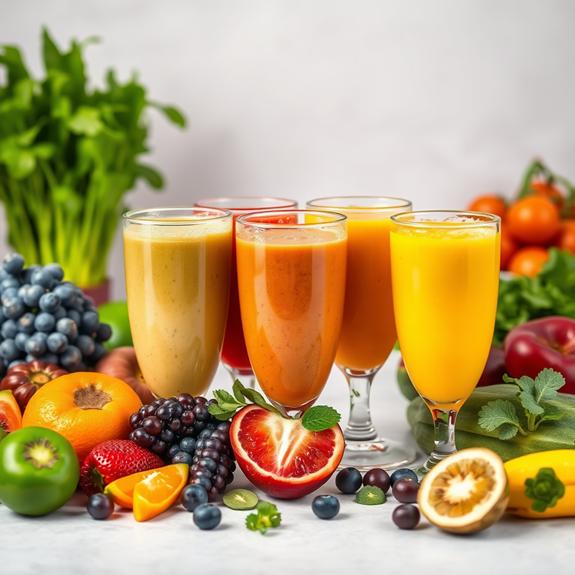
When introducing smoothies to children, it’s important to contemplate their age and developmental stage. For toddlers, start with simple, mild flavors like banana and strawberry. You can blend these fruits with milk or yogurt for a creamy texture that’s easy to drink.
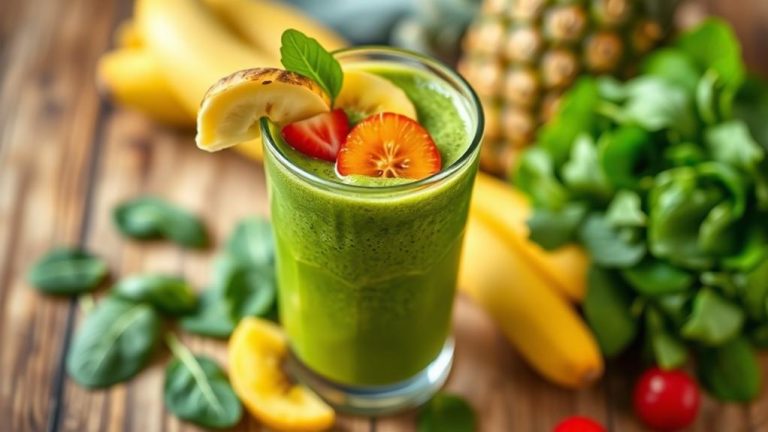
As children grow, you’ll be able to introduce more diverse ingredients and flavors. For preschoolers and early elementary kids, try adding a handful of spinach or kale to fruit smoothies. They’ll hardly notice the greens, but they’ll benefit from the added nutrients.
You can also experiment with nut butters, chia seeds, or a dash of cinnamon for extra flavor and nutrition. Older children might enjoy more complex combinations, like a tropical smoothie with mango, pineapple, and coconut milk.
You can even let them create their own recipes, encouraging creativity and healthy eating habits. Remember to adjust portion sizes based on your child’s age and activity level. By offering a variety of smoothie options, you’re helping your children develop a taste for nutritious foods while making mealtime fun and engaging.
Allergies and Dietary Restrictions
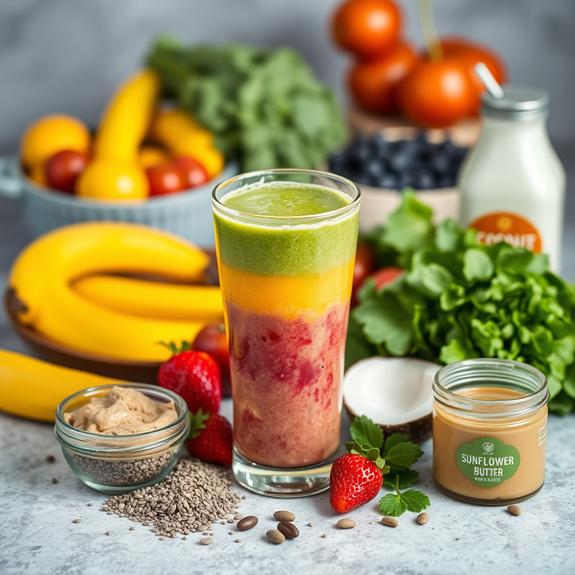
Children’s allergies and dietary restrictions require special attention when preparing smoothies. You’ll want to guarantee that every ingredient is safe for your child to consume. It’s vital to be aware of common allergens like nuts, dairy, and certain fruits that might trigger reactions.
Don’t worry, though! There are plenty of delicious alternatives that can make smoothies just as tasty and nutritious.
Here are some key points to evaluate:
- Always check labels carefully for hidden allergens
- Keep a list of safe ingredients handy
- Experiment with plant-based milk alternatives
- Introduce new ingredients one at a time to monitor reactions
When dealing with allergies or dietary restrictions, communication is essential. Talk to your child’s pediatrician or a registered dietitian for personalized advice. They can help you create a smoothie plan that’s both safe and nutritionally balanced.
Encouraging Healthy Eating Habits
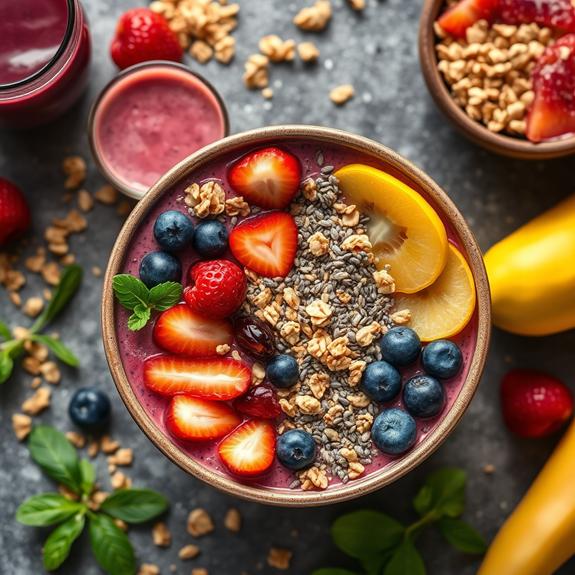
Smoothies can be a powerful tool in encouraging healthy eating habits among kids. They’re a fun and tasty way to introduce a variety of fruits and vegetables into your child’s diet.
By involving your little ones in the smoothie-making process, you’re not only creating a delicious treat but also teaching them about nutrition and food preparation.
Start by letting your kids choose their favorite fruits, and gradually introduce new ingredients. This hands-on approach will make them more likely to try new foods and enjoy the process.
You can also use smoothies as a creative way to sneak in nutrients that your children might otherwise avoid. For example, adding a handful of spinach to a berry smoothie can boost its nutritional value without changing the taste significantly.
Frequently Asked Questions
Can Smoothies Help Picky Eaters Consume More Fruits and Vegetables?
Smoothies can be a secret weapon in your picky eater’s nutrition arsenal! They’re like a tasty Trojan horse, sneaking fruits and veggies into your child’s diet.
You can blend their favorite flavors with new, nutritious ingredients they might otherwise avoid. This colorful, drinkable treat can make trying new foods fun and exciting.
Plus, it’s a great way to involve kids in the kitchen, letting them choose ingredients and create their own healthy concoctions.
You’ll be amazed at how smoothies can transform mealtime battles into delicious adventures!
How Long Can Homemade Smoothies Be Stored in the Refrigerator?
You’ll be glad to know that homemade smoothies can be stored in your refrigerator for up to 2 days.
However, it’s best to enjoy them within 24 hours for the freshest taste and most nutrients.
Remember to keep your smoothie in an airtight container to prevent oxidation.
If you notice any separation, don’t worry! Just give it a good shake before drinking.
For the best experience, try to consume your delicious creation as soon as possible after blending.
Are There Any Potential Choking Hazards When Giving Smoothies to Toddlers?
As smooth as butter, smoothies can be a great treat for toddlers, but you’ll want to be mindful of potential choking hazards.
You should avoid adding large chunks of fruit, nuts, or seeds that could get stuck in your little one’s throat. It’s best to blend everything thoroughly, creating a smooth consistency.
If you’re using straws, make sure they’re not too wide. You can also serve smoothies in a cup, letting your toddler sip slowly and safely.
Can Smoothies Be Used as a Post-Exercise Recovery Drink for Active Kids?
Yes, smoothies can be a great post-exercise recovery drink for your active kids!
They’re packed with nutrients that help replenish energy and support muscle recovery. You can make them extra effective by including protein-rich ingredients like Greek yogurt or nut butter.
Don’t forget to add some fruits for natural sugars and carbs. Smoothies are also hydrating, which is essential after exercise.
Just remember to keep portions appropriate for your child’s age and activity level.
What Are the Best Eco-Friendly Alternatives to Plastic Straws for Smoothies?
You’ve got great options for eco-friendly straws!
Stainless steel straws are durable and easy to clean, perfect for your smoothies.
Bamboo straws add a natural touch and are biodegradable.
Glass straws are elegant and won’t affect the taste of your drink.
Paper straws work well for single-use, but they’re not as sturdy.
Silicone straws are flexible and kid-friendly.
Don’t forget, you can always enjoy your smoothie without a straw, too!
Your choices help protect our planet.