Some links below are affiliate links. We earn a commission on purchases at no extra cost to you. Although our opinions are based on curated research, we haven't used these products. Article generated with AI.

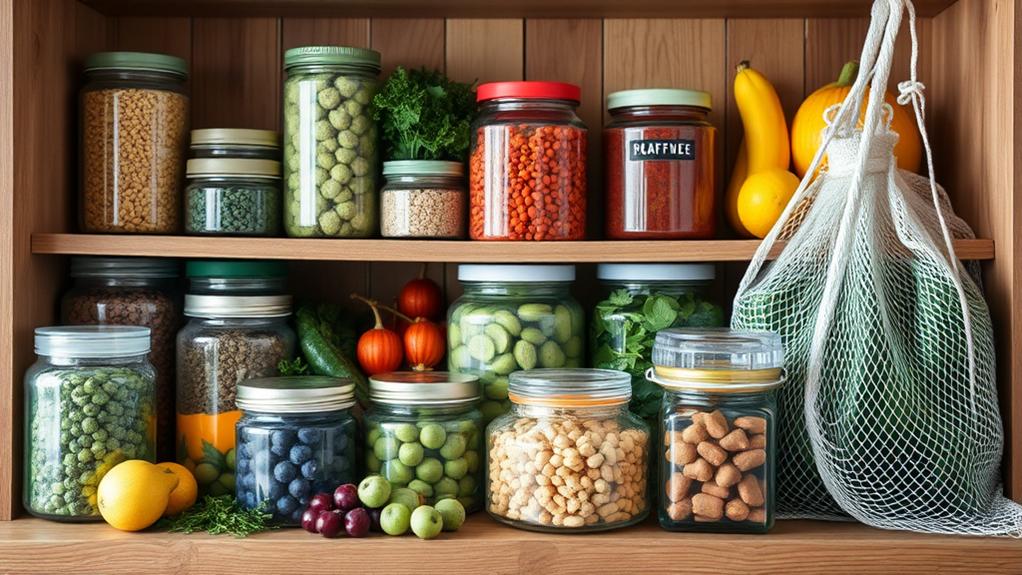
How to Store Superfoods to Maintain Freshness and Potency
To keep your superfoods fresh and potent, store them wisely. Berries and delicate fruits should be kept unwashed in breathable containers, while leafy greens need airtight containers with paper towels. Seeds and nuts stay fresh in cool, dark places, and powders require dry, airtight storage. Keep roots and tubers in breathable containers, and dried superfoods in cool, dark spots. Oils should be stored away from light and heat, while herbs and spices need airtight jars. Always monitor temperature and humidity in your storage areas. With these tips, you'll preserve the amazing benefits of your superfoods. There's so much more to learn about maximizing their potential!
Table of Contents
hide
Key Takeaways
- Store berries and delicate fruits unwashed in breathable containers to prevent moisture buildup and spoilage.
- Keep seeds and nuts in airtight containers away from sunlight and heat, or refrigerate for longer shelf life.
- Store oils in cool, dark places using opaque containers to prevent oxidation and maintain freshness.
- Keep dried superfoods and powders in airtight containers in cool, dark places to preserve potency and prevent degradation.
- Control temperature (50-70°F) and humidity (below 60%) in storage areas to maintain optimal conditions for superfood preservation.
Berries and Delicate Fruits
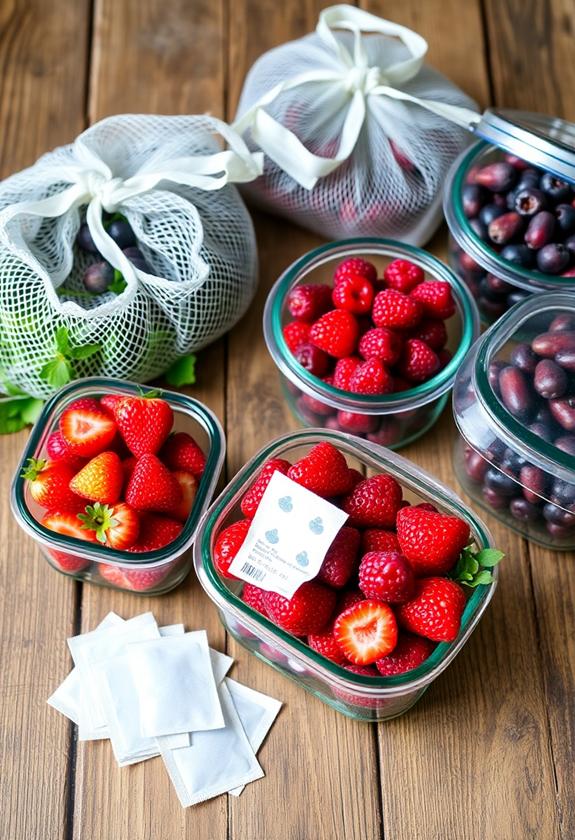
In terms of storing berries and delicate fruits, proper handling is key to maintaining their freshness and nutritional value. When you bring these superfoods home, resist the urge to wash them right away. Instead, store them unwashed in breathable storage containers in your refrigerator. This helps prevent moisture buildup, which can lead to mold growth. Selecting the perfect berries is essential for creating delicious and nutritious superfood smoothies. Look for berries that are firm, plump, and have a vibrant color. When you're ready to enjoy them, use gentle washing techniques to preserve their delicate texture. Give them a quick rinse under cool water, and pat dry with a clean towel. For strawberries, you can even use a vinegar solution to extend their shelf life. Remember, these vibrant fruits are packed with antioxidants and vitamins, so it's worth taking the time to store them properly. With a little care, you'll be able to savor their goodness for longer!
Leafy Greens and Cruciferous Vegetables
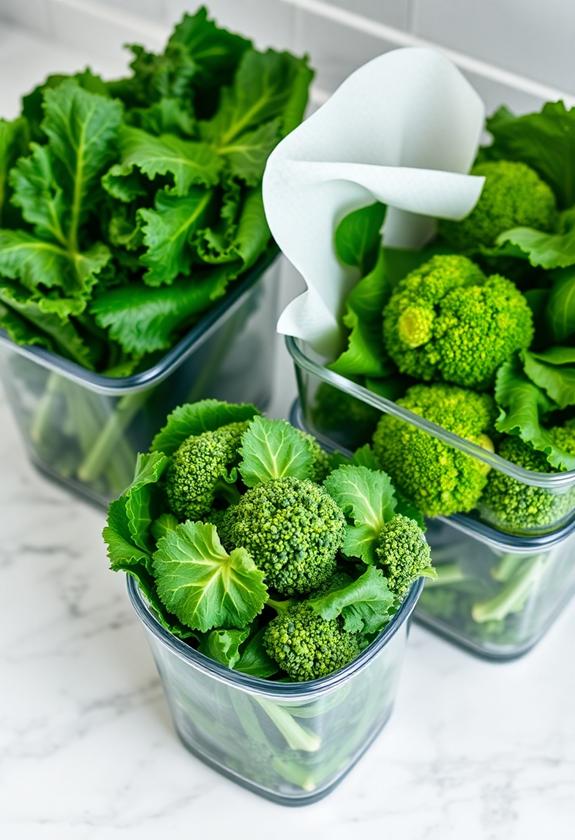
Moving from the world of vibrant fruits to verdant vegetables, let's investigate how to store leafy greens and cruciferous vegetables. These nutrient-packed powerhouses deserve special attention to maintain their freshness and crispness. First, don't wash your greens until you're ready to use them, as excess moisture can lead to spoilage. When it's time to clean them, use gentle washing techniques to avoid bruising. After patting them dry, store your leafy greens in airtight storage containers lined with paper towels to absorb excess moisture. For cruciferous veggies like broccoli and cauliflower, keep them unwashed in perforated bags in the crisper drawer. Optimal storage tips can significantly extend the shelf life of these superfoods, guaranteeing you have access to their nutritional benefits for longer periods. Remember, proper storage isn't just about longevity; it's about preserving those essential nutrients that make these veggies true superfoods. With a little care, you'll guarantee your greens stay fresh and ready to nourish you.
Seeds and Nuts
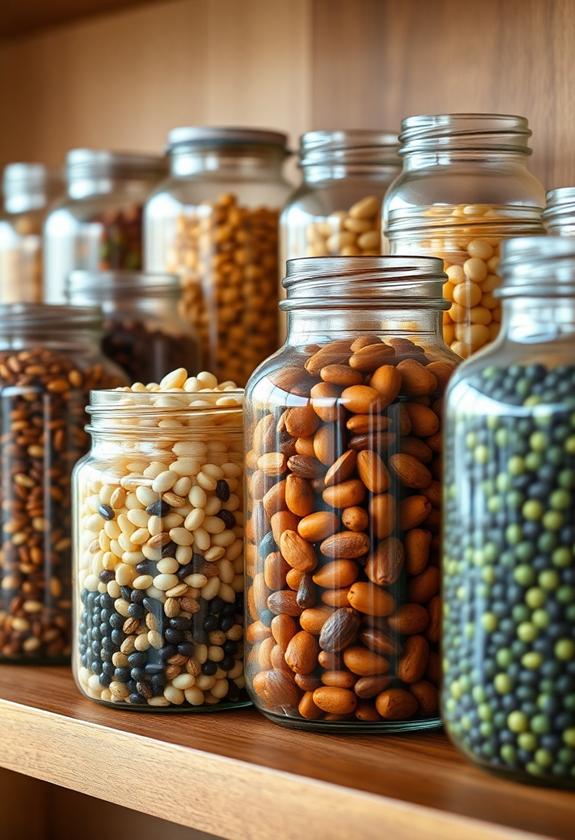
Packed with essential nutrients and healthy fats, seeds and nuts require proper storage to maintain their flavor and nutritional value. You'll want to keep them in airtight containers, away from direct sunlight and heat. For longer shelf life, store them in the refrigerator or freezer, where they'll stay fresh for several months. When selecting quality superfoods, pay attention to factors like freshness, color, and aroma to guarantee you're getting the best nutritional value.
When it comes to nut butter storage, always use clean utensils to prevent contamination. Once opened, refrigerate your nut butters to keep them fresh and prevent rancidity. Don't forget about seed sprouting! If you're planning to sprout seeds, store them in a cool, dry place until you're ready to begin the process. Remember, proper storage not only extends the life of your seeds and nuts but also preserves their amazing health benefits. With these simple tips, you'll always have nutritious snacks on hand!
Powders and Supplements
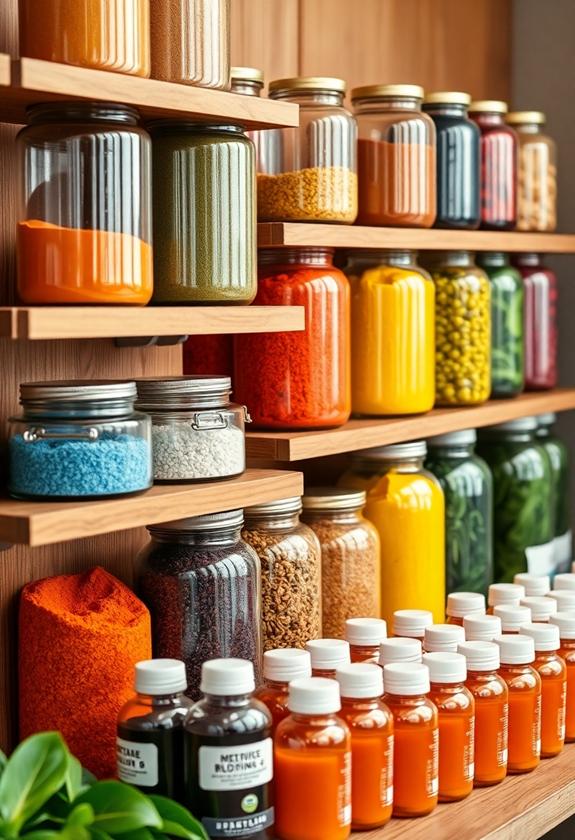
Superfood powders and supplements offer concentrated nutrition in convenient forms, but they require proper storage to maintain their potency. To prevent nutrient degradation, keep these products in cool, dry places away from direct sunlight. Airtight storage containers are your best friends here, protecting your superfoods from moisture and air exposure. When you're handling powders, always use a clean, dry spoon to avoid introducing moisture or contaminants. It's also a good idea to check expiration dates regularly and use your powders and supplements before they lose their effectiveness. Elevate your smoothies by incorporating these nutrient-dense ingredients, ensuring you're getting the most out of their health benefits.
Here are some key tips to remember:
- Store in airtight containers to preserve freshness
- Keep away from heat, light, and moisture
- Use clean, dry utensils when scooping
- Follow recommended storage instructions on the packaging
Roots and Tubers
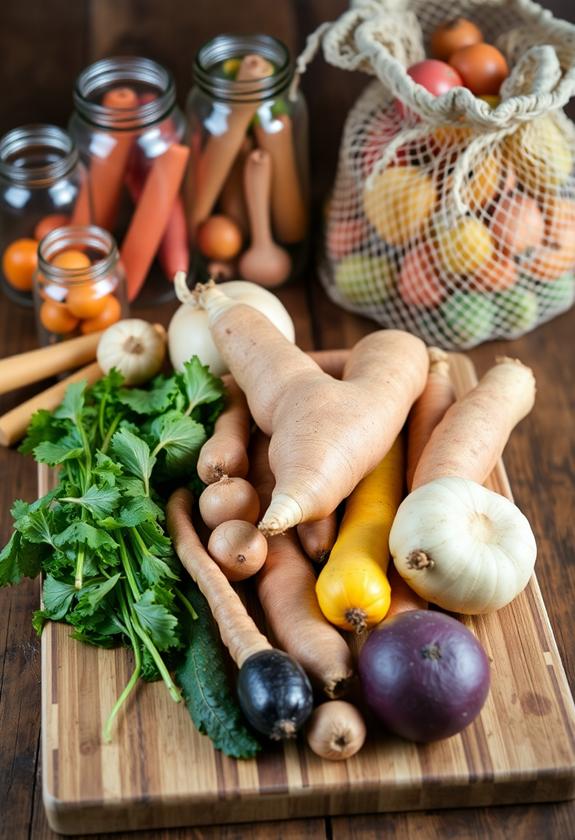
Roots and tubers pack a nutritional punch, but they can spoil quickly if not stored properly. To keep these superfoods fresh, you'll need to create the right environment. Start by choosing breathable storage containers, like mesh bags or wooden crates, which allow air circulation and prevent moisture buildup. For root preservation, maintain a cool, dark, and slightly humid space, like a root cellar or basement. These nutrient-dense foods are essential for radiant, healthy skin and overall well-being, so proper storage is vital to maintain their potency.
Don't wash your roots and tubers before storing; instead, gently brush off excess dirt. Keep them separate from other produce, as some fruits emit ethylene gas that can speed up spoilage. You can wrap individual items in newspaper or paper towels to absorb excess moisture. Remember, different roots have varying storage needs. Potatoes prefer darkness, while sweet potatoes like warmth. With proper care, you'll enjoy these nutritious gems for months!
Seaweeds and Algae
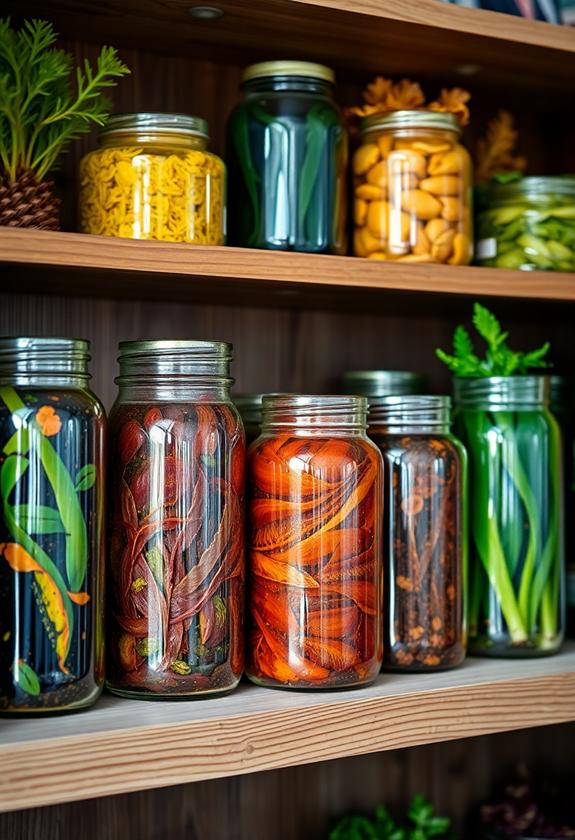
Many seaweeds and algae are delicate superfoods that require special attention for storage. To maintain their incredible nutrient preservation, you'll want to keep them in airtight storage containers away from moisture and light. When you bring these ocean treasures home, gently pat them dry and store them in the refrigerator. They'll stay fresh for about a week, but you can extend their life by freezing them for up to six months. These immune-boosting superfoods can be a great addition to your smoothies, providing a wealth of vitamins and minerals.
Here are some tips to help you get the most out of your seaweeds and algae:
- Store different types separately to prevent flavor mixing
- Use glass jars or BPA-free containers for best results
- Label containers with purchase dates to track freshness
- Rehydrate dried seaweed in cool water before use
Fermented Foods
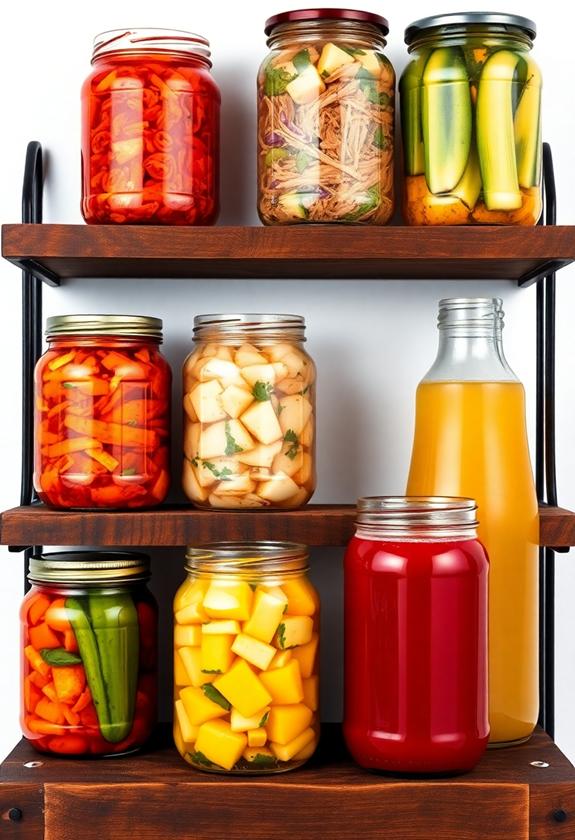
Fermented foods offer a unique twist on superfood storage. These probiotic-rich delights actually improve with time, thanks to the ongoing fermentation techniques. You'll find that many fermented foods, like kimchi and sauerkraut, can be stored in your fridge for months. Just make sure to keep them in airtight containers to preserve their tangy goodness and probiotic benefits. While fermented foods are excellent for immunity, turmeric and ginger are also powerful immune-boosting superfoods that can be easily incorporated into your diet.
For kombucha and kefir, you'll want to keep them chilled to slow down fermentation. If you're fermenting at home, don't forget to "burp" your jars regularly to release built-up gases. It's a simple process that'll help maintain the quality of your homemade ferments. Remember, a little fizz is normal, but if something smells off or looks moldy, it's best to toss it out. Trust your senses and enjoy the delicious, health-boosting world of fermented superfoods!
Dried Superfoods
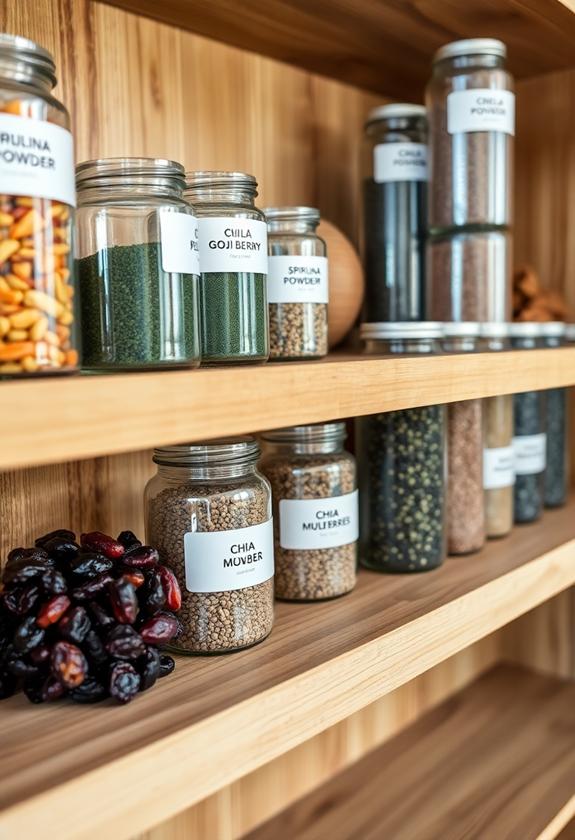
Dried superfoods pack a powerful nutritional punch in a compact, shelf-stable form. You'll love how easy it's to store these nutrient-dense wonders! To maintain their nutritional benefits, keep your dried superfoods in airtight storage containers away from heat, light, and moisture. This will help preserve their vibrant flavors and potent nutrients for months. Detox smoothies made with dried superfoods can be an excellent way to revitalize your health and boost your nutrient intake.
Here are some tips to get the most out of your dried superfoods:
- Store in a cool, dark pantry or cupboard
- Use glass jars or BPA-free plastic containers with tight-fitting lids
- Label containers with purchase dates to track freshness
- Add silica gel packets to absorb excess moisture
Don't forget to check on your dried superfoods regularly. If you notice any signs of mold or unusual odors, it's best to discard them. With proper storage, you'll always have these nutritional powerhouses ready to boost your meals and snacks!
Oils and Fats
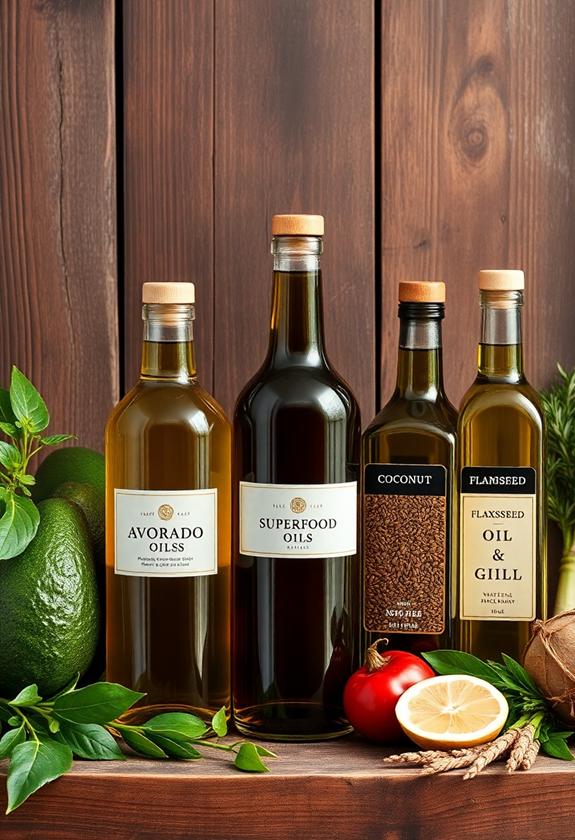
While often overlooked, oils and fats derived from superfoods can be powerful nutritional allies in your kitchen. To keep these precious ingredients fresh, you'll want to store them properly. Top 10 superfoods often include nutrient-dense oils that can enhance your smoothies and other dishes. Always keep your oils and fats in a cool, dark place to prevent fat oxidation, which can lead to rancidity. For delicate oils like flaxseed or walnut, refrigeration is your best bet. You can even try oil infusion to create flavorful, nutrient-packed blends. When storing, use dark glass bottles or opaque containers to protect them from light. Remember, heat and light are the enemies of healthy fats! Don't forget to label your containers with the date of purchase or opening. This way, you'll know when it's time to use them up. With proper storage, you'll maximize the benefits of these superfood oils and fats in your daily meals.
Herbs and Spices
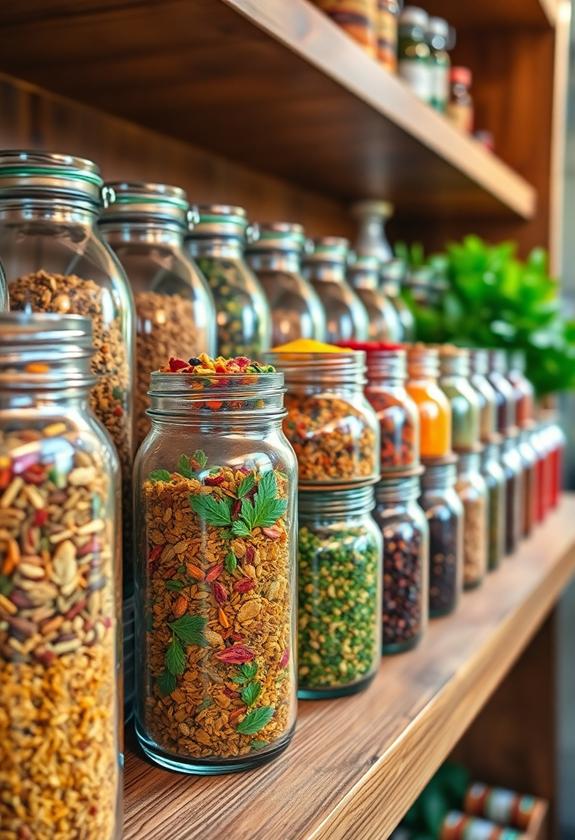
Moving from liquid to solid, let's investigate the world of superfood herbs and spices. Proper storage is key to maintaining their potency and flavor. In terms of herb drying, hang bundles upside down in a cool, dark place for best results. For dried herbs and ground spices, store them in airtight containers away from heat and light. Whole spices last longer, so consider spice blending at home for maximum freshness. Many of these herbs and spices are rich in antioxidants for skin, which can help boost your overall skin health when consumed regularly.
Here are some tips to keep your herbs and spices in top condition:
- Use glass jars or ceramic containers to prevent odor absorption
- Label containers with purchase dates to track freshness
- Store in a cool, dry place like a pantry or cupboard
- Avoid storing near heat sources like stoves or dishwashers
Temperature and Humidity Control
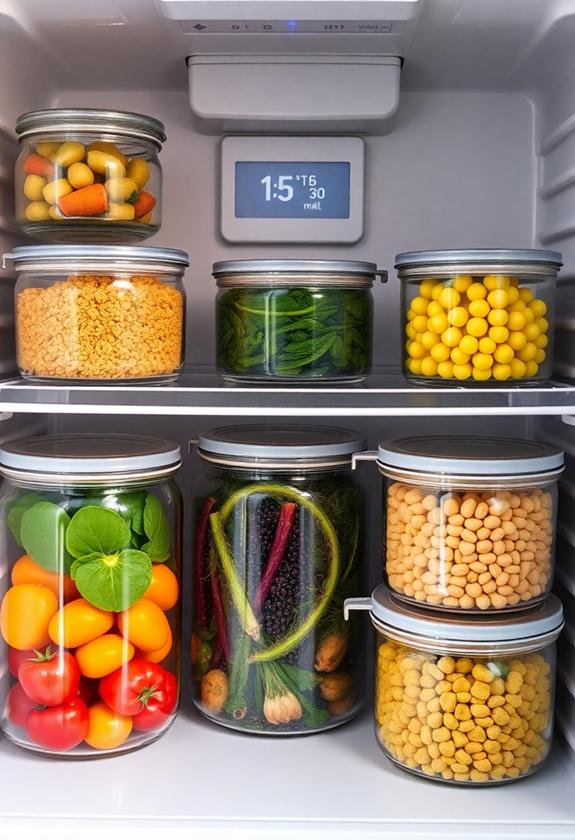
Temperature and humidity control play an essential role in preserving the quality of superfoods. You'll want to store most superfoods in a cool, dry place to maintain their freshness and nutritional value. For temperature monitoring, invest in a simple thermometer to keep an eye on your storage area's conditions. Aim for temperatures between 50-70°F (10-21°C) for ideal preservation. Proper storage is vital for maintaining the hydrating properties of superfoods that contribute to skin health and a glowing complexion.
Humidity regulation is just as significant, as excess moisture can lead to mold growth and spoilage. Use a hygrometer to measure humidity levels, keeping them below 60% for most superfoods. If you live in a humid climate, consider using moisture-absorbing packets or a small dehumidifier in your storage area. By controlling these factors, you'll guarantee your superfoods stay fresh and potent, ready to nourish your body whenever you need them.
Frequently Asked Questions
How Long Can Superfoods Be Stored Before Losing Their Nutritional Value?
You'll be glad to know that many superfoods can stay nutritious for quite a while! Storage duration varies, but generally, dried superfoods like goji berries or chia seeds can last 6-12 months. Fresh berries and leafy greens, however, should be eaten within a week. Don't worry too much about nutritional degradation, as most superfoods retain their goodness for some time. Just remember to store them properly in airtight containers, away from heat and light. You're doing great by choosing these healthy options!
Can Different Superfoods Be Stored Together in the Same Container?
You'll be happy to know that many superfoods can be stored together, but it's important to evaluate their compatibility and storage temperature. Dry superfoods like nuts, seeds, and powders can often share a container. However, you'll want to keep moist superfoods separate to prevent spoilage. Remember, some superfoods prefer cool, dark places, while others need refrigeration. It's best to group similar items together, ensuring they're all kept at their ideal temperature. This way, you'll preserve their amazing nutritional benefits for longer!
Are There Specific Containers or Materials Best for Storing Superfoods?
You'll love using glass containers for storing your superfoods! They're airtight, keeping your goodies fresh and delicious. If you're feeling extra protective, try vacuum sealing – it's like giving your superfoods a cozy, air-free hug! These methods help preserve all those amazing nutrients you're excited about. Don't worry if you're new to this; it's easy to get started. With a little care, you'll be a pro at keeping your superfoods in tip-top shape. Happy storing!
How Can I Tell if a Superfood Has Gone Bad?
You can easily tell if a superfood has gone bad by using your senses. Start with a visual inspection: look for any discoloration, mold, or unusual texture changes. If it looks off, it's probably not safe to eat. Next, try the smell test: if there's an unpleasant odor or it doesn't smell like it should, it's best to toss it. Trust your instincts – if something seems wrong, it's better to be safe than sorry. Your health is important, so don't take chances!
Should Superfoods Be Washed Before Storage or Just Before Consumption?
You'll want to hold off on washing most superfoods until you're ready to eat them. Washing before storage can introduce moisture, which may lead to mold or spoilage. Instead, focus on proper storage techniques. Keep berries dry in the fridge, store nuts and seeds in airtight containers, and keep powders in cool, dark places. When it's time to enjoy your superfoods, give them a gentle rinse or wipe. This way, you'll maintain their freshness and maximize their amazing benefits for you!