Some links below are affiliate links. We earn a commission on purchases at no extra cost to you. Although our opinions are based on curated research, we haven't used these products. Article generated with AI.

How Meal Replacement Smoothies Compare to Traditional Meals
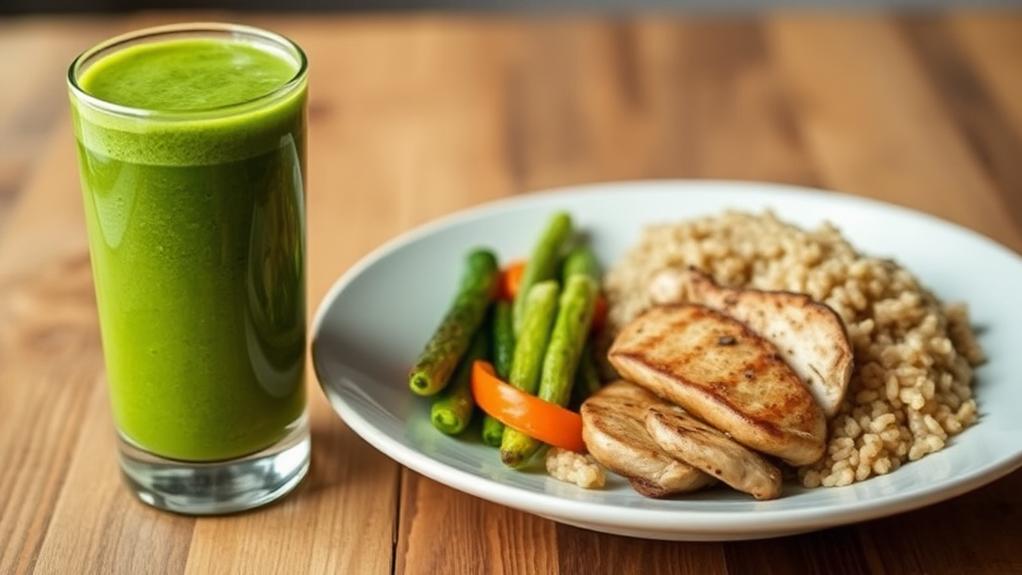
When you’re comparing meal replacement smoothies to traditional meals, you’ll find pros and cons for each. Smoothies offer quick, nutrient-packed options that are easy to digest and great for on-the-go lifestyles. They’re often lower in calories, which can help with weight management. Traditional meals, however, provide a wider variety of whole foods, promote longer-lasting fullness, and offer a more satisfying eating experience. While smoothies can be a convenient solution, they may not provide the same psychological benefits as sitting down to a home-cooked meal. Your choice depends on your personal health goals, lifestyle, and preferences. There’s much more to take into account when making your decision.
Table of Contents
hide
Key Takeaways
- Meal replacement smoothies offer concentrated nutrients and convenience, while traditional meals provide diverse whole foods and greater satiety.
- Smoothies typically contain fewer calories (200-400) compared to traditional meals (500-800+), which can aid in weight management.
- Smoothies are quicker to prepare and consume, making them ideal for busy lifestyles, whereas traditional meals require more time and effort.
- Traditional meals engage the digestive system more fully, while smoothies can be easier to digest for sensitive systems.
- Smoothies simplify nutritional tracking, but traditional meals offer a more satisfying eating experience and cultural connection to food.
Nutritional Content Analysis
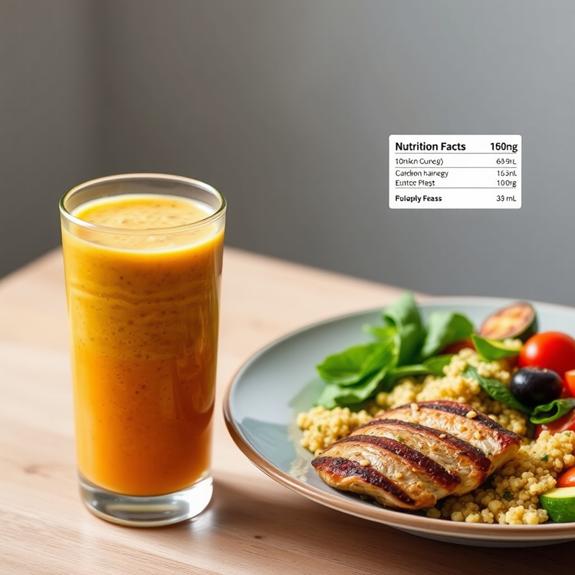
When comparing meal replacement smoothies to traditional meals, it’s essential to examine their nutritional profiles. You’ll find that both options can provide the nutrients your body needs, but they do so in different ways.
Meal replacement smoothies often pack a concentrated punch of vitamins and minerals. They’re designed to give you a balanced mix of protein, carbohydrates, and healthy fats in a convenient, drinkable form. You’ll typically find they’re fortified with essential nutrients, making it easier to meet your daily requirements.
On the other hand, traditional meals offer a wider variety of whole foods. You’ll get nutrients from different sources, which can be beneficial for your overall health. These meals often include complex carbohydrates, lean proteins, and fresh vegetables, providing fiber and phytonutrients that might be missing in some smoothies.
It’s important to keep in mind that both options can be part of a healthy diet. The key is to choose what works best for your lifestyle and nutritional needs.
Whether you opt for a smoothie or a sit-down meal, focus on getting a good balance of nutrients to keep your body fueled and happy.
Calorie Comparison
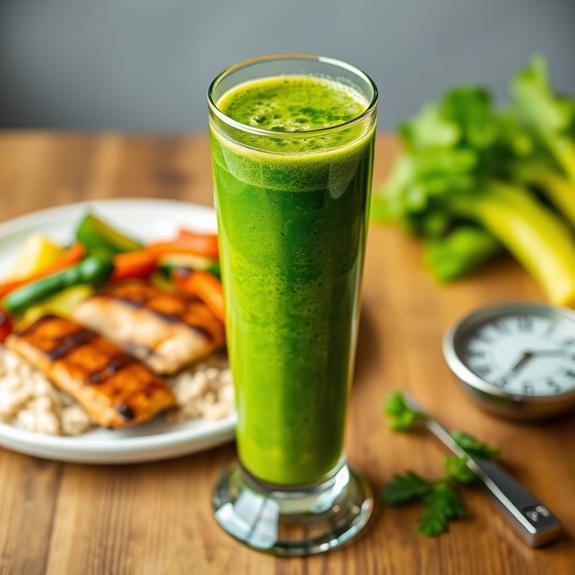
A key factor in comparing meal replacement smoothies to traditional meals is their calorie content.
You’ll find that smoothies often contain fewer calories than a full meal, which can be great if you’re looking to manage your weight. Most meal replacement smoothies range from 200 to 400 calories, while a typical lunch or dinner might’ve 500 to 800 calories or more.
This difference in calories can be a real game-changer for your diet. If you’re trying to lose weight, replacing one or two meals a day with a lower-calorie smoothie could help you reach your goals.
But it’s important to keep in mind that calories aren’t everything. You’ll want to make sure you’re still getting all the nutrients your body needs to stay healthy and energized.
On the flip side, if you’re very active or trying to gain weight, you might need the extra calories from traditional meals. It’s all about finding the right balance for your body and lifestyle.
Don’t be afraid to experiment and see what works best for you!
Satiety and Hunger Effects
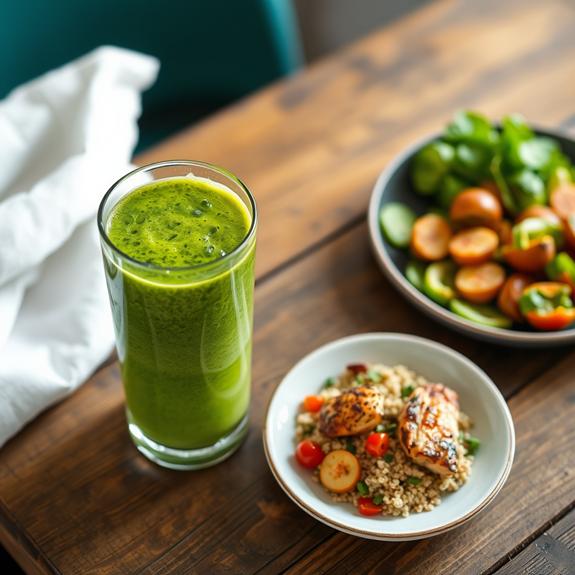
After considering calories, it’s essential to examine how meal replacement smoothies and traditional meals affect your feelings of fullness and hunger. You’ll find that these two options can have quite different impacts on your satiety levels.
Traditional meals often provide a sense of fullness that lasts longer. When you sit down to eat a balanced plate of food, you’re engaging in the act of chewing, which signals to your brain that you’re eating. This process, combined with the variety of textures and flavors, can help you feel satisfied for hours.
On the other hand, meal replacement smoothies mightn’t give you that same lasting fullness. While they’re quick and convenient, you might find yourself feeling hungry sooner than you’d like.
However, don’t count smoothies out just yet! Many meal replacement options are designed with fiber and protein to help curb hunger. You might discover that a well-crafted smoothie keeps you feeling full and energized between meals.
The key is to listen to your body and find what works best for you. Remember, everyone’s needs are different, and it’s okay to experiment until you find the perfect balance.
Convenience Factor
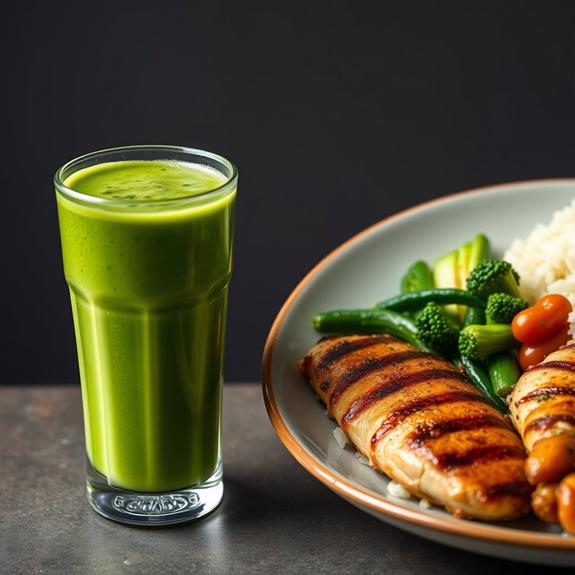
Convenience is often the deciding factor when choosing between meal replacement smoothies and traditional meals.
You’ll find that smoothies offer a quick and easy solution for busy lifestyles. They’re perfect for those mornings when you’re rushing out the door or need a fast lunch option. With smoothies, you can blend your nutrients in minutes and enjoy them on-the-go.
Traditional meals, while often more satisfying, require more time and effort. You’ll need to plan, shop for ingredients, cook, and clean up afterwards.
However, they do offer the pleasure of sitting down to enjoy a hot, home-cooked meal.
Consider these convenience factors when deciding between smoothies and traditional meals:
- Time: Smoothies are faster to prepare and consume
- Portability: You can easily take smoothies with you
- Clean-up: Smoothies typically require less dishwashing
Digestive System Impact
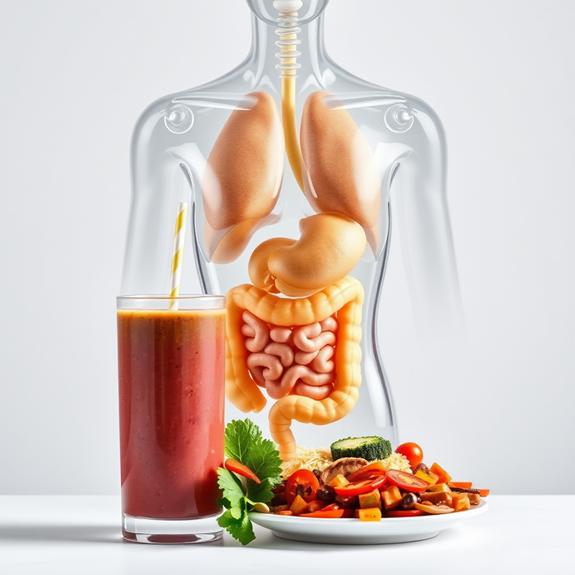
While convenience plays a significant role in our food choices, it’s just as essential to take into account how these options affect our bodies. In terms of meal replacement smoothies and traditional meals, their impact on your digestive system can be quite different.
Traditional meals typically contain a mix of whole foods that require more effort for your body to break down. This process can be beneficial, as it keeps your digestive system active and engaged. Chewing solid foods also triggers the release of digestive enzymes, which aids in nutrient absorption.
On the other hand, meal replacement smoothies are often pre-blended and easier for your body to process. This can be helpful if you have digestive issues or need to give your system a break.
However, relying too heavily on smoothies might lead to a less diverse range of nutrients and could potentially weaken your digestive muscles over time. It’s important to find a balance that works for you.
Long-Term Health Implications
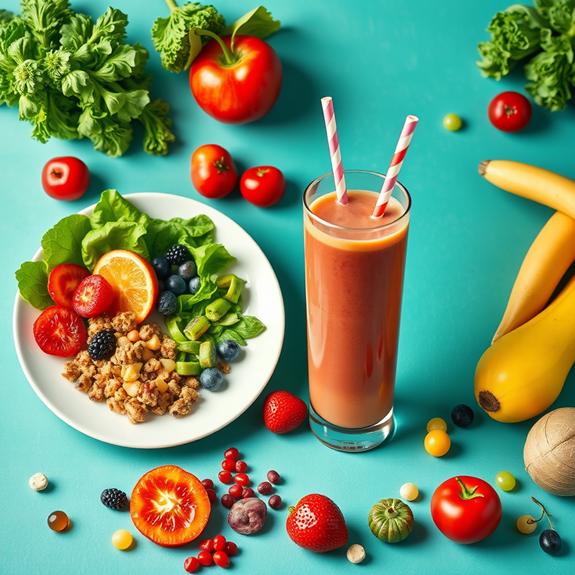
The long-term health implications of choosing meal replacement smoothies over traditional meals aren’t fully understood yet.
However, there are some important factors to weigh when making this dietary choice. You’ll want to think about how these smoothies might affect your overall nutrition and health in the years to come.
Here are three key points to keep in mind:
- Nutrient balance: Smoothies may lack certain nutrients found in whole foods.
- Calorie control: They can help with weight management if used correctly.
- Eating habits: Relying on smoothies might impact your relationship with food.
Cost Effectiveness
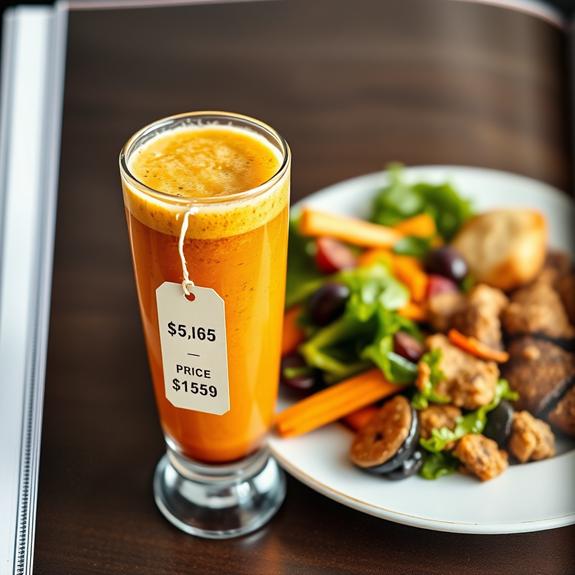
For many, the cost of meal replacement smoothies compared to traditional meals is an essential factor in deciding whether to adopt this dietary approach.
You’ll be happy to know that smoothies can often be a budget-friendly option, especially when you prepare them at home. By buying ingredients in bulk and planning ahead, you’ll find that the cost per serving can be quite reasonable.
When you compare homemade smoothies to eating out or buying pre-made meals, you’ll likely see significant savings.
However, it’s important to take into account that high-quality, nutrient-dense ingredients for your smoothies might cost more initially. Don’t worry, though! The long-term benefits often outweigh this upfront expense.
On the other hand, traditional meals can be cost-effective too, especially when you cook at home using whole foods.
You’ll need to factor in the time it takes to prepare these meals, which might be more than whipping up a quick smoothie. Remember, your time is valuable!
Ultimately, the cost-effectiveness of either option depends on your specific circumstances, dietary needs, and lifestyle.
You’re making a great choice by taking all these factors into account!
Psychological Aspects of Eating
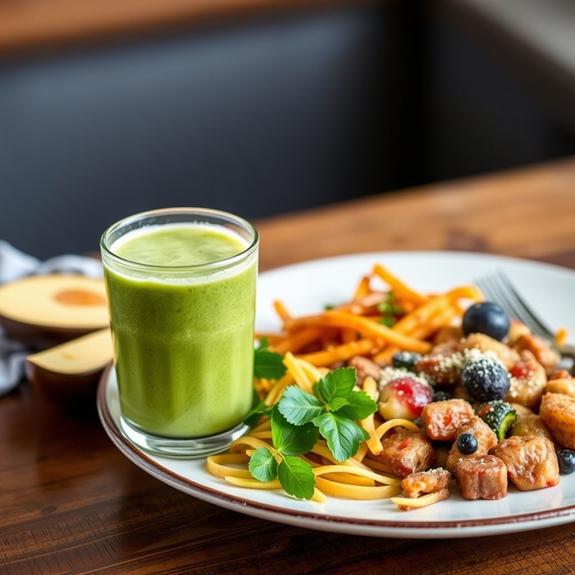
Satisfaction plays an essential role in our eating habits, and it’s important to take into account the psychological aspects when comparing meal replacement smoothies to traditional meals.
When you sit down to enjoy a traditional meal, you’re often engaging in a multi-sensory experience that can be deeply satisfying. The aromas, textures, and visual appeal of a plate of food can trigger positive emotions and memories.
On the other hand, meal replacement smoothies offer a different kind of psychological experience. While they may not provide the same sensory stimulation, they can offer:
- A sense of control over your nutrition
- Convenience and time-saving benefits
- A feeling of accomplishment in meeting health goals
It’s essential to evaluate how these different approaches to eating affect your mood and overall well-being.
Some people find the ritual of preparing and enjoying a traditional meal to be comforting and stress-relieving. Others may feel empowered by the simplicity and efficiency of meal replacement smoothies.
Ultimately, the best choice for you’ll depend on your personal preferences, lifestyle, and emotional connection to food.
Frequently Asked Questions
Can Meal Replacement Smoothies Be Used for Weight Gain?
Yes, you can definitely use meal replacement smoothies for weight gain! It’s all about adding extra calories to your diet.
Try blending in calorie-dense ingredients like nut butters, avocados, or full-fat yogurt. You’ll want to aim for smoothies that pack more calories than your usual meals.
Don’t forget to include protein powder to support muscle growth.
Remember, consistency is key – drink these nutrient-rich smoothies regularly alongside your normal meals to see results.
You’ve got this!
Are There Age Restrictions for Consuming Meal Replacement Smoothies?
Did you know that over 20% of adults use meal replacement products? That’s a lot of people!
As for age restrictions for meal replacement smoothies, you’ll be happy to hear that there aren’t any hard and fast rules. However, it’s always best to check with your doctor, especially if you’re very young, elderly, or have health concerns.
Most smoothies are safe for adults and teens, but growing children might need more varied nutrition. Remember, your health comes first!
How Do Meal Replacement Smoothies Affect Athletic Performance?
You’ll be glad to know that meal replacement smoothies can positively affect your athletic performance!
They’re packed with nutrients that’ll give you energy and help your muscles recover. You’ll find it easier to control your calorie intake and manage your weight, which is great for many sports.
Plus, they’re quick to prepare and digest, making them perfect for busy athletes.
Can Pregnant Women Safely Consume Meal Replacement Smoothies?
While pregnant women can enjoy meal replacement smoothies, you’ll want to be careful. They’re convenient, but they shouldn’t replace all your meals.
You need a variety of nutrients for your baby’s growth. It’s best to consult your doctor before making any big changes to your diet.
If you do use smoothies, choose ones that are specially formulated for pregnancy, and make sure they’re packed with vitamins, minerals, and protein.
Are There Environmental Impacts of Using Meal Replacement Smoothies Versus Traditional Meals?
You’ll be glad to know that meal replacement smoothies can have positive environmental impacts!
They often require less energy to produce and transport than traditional meals. You’ll use fewer ingredients, reducing food waste.
Plus, they typically need less packaging, which means less plastic in landfills.
However, it’s important to reflect on the source of your ingredients. Choosing local, organic options for your smoothies can further reduce your environmental footprint.