Some links below are affiliate links. We earn a commission on purchases at no extra cost to you. Although our opinions are based on curated research, we haven't used these products. Article generated with AI.

How to Get Kids Involved in Making Smoothies
Getting kids involved in making smoothies is both fun and educational! Start by choosing vibrant fruits like strawberries and blueberries, adding leafy greens for nutrition. Set up a safe, clutter-free space and teach them how to measure ingredients accurately. Let them press the blender buttons and discuss flavors together, adjusting as needed. Encourage creativity by exploring different add-ins like honey or yogurt, and celebrate their successful creations. By engaging them in each step, you'll make smoothie-making a joyful and healthy habit. Continue for more tips on making this a great family activity.
Table of Contents
hide
Key Takeaways
- Create a safe, kid-friendly workspace with non-slip mats and clear counters.
- Teach basic measuring skills with simple, kid-friendly ingredients like fruits and yogurt.
- Encourage kids to press blender buttons and participate in taste tests.
- Allow creative freedom to experiment with different fruit combinations and flavors.
- Praise efforts and celebrate successes to build confidence and enthusiasm.
Choose Kid-Friendly Ingredients
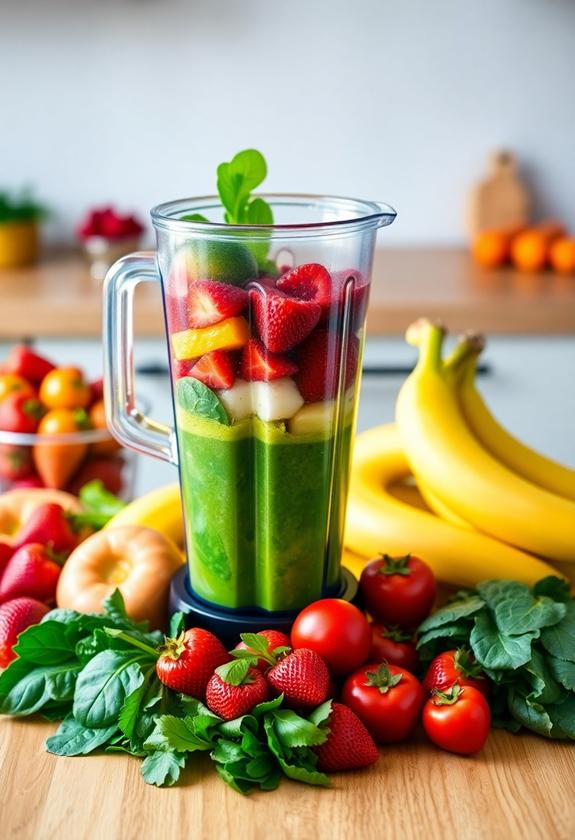
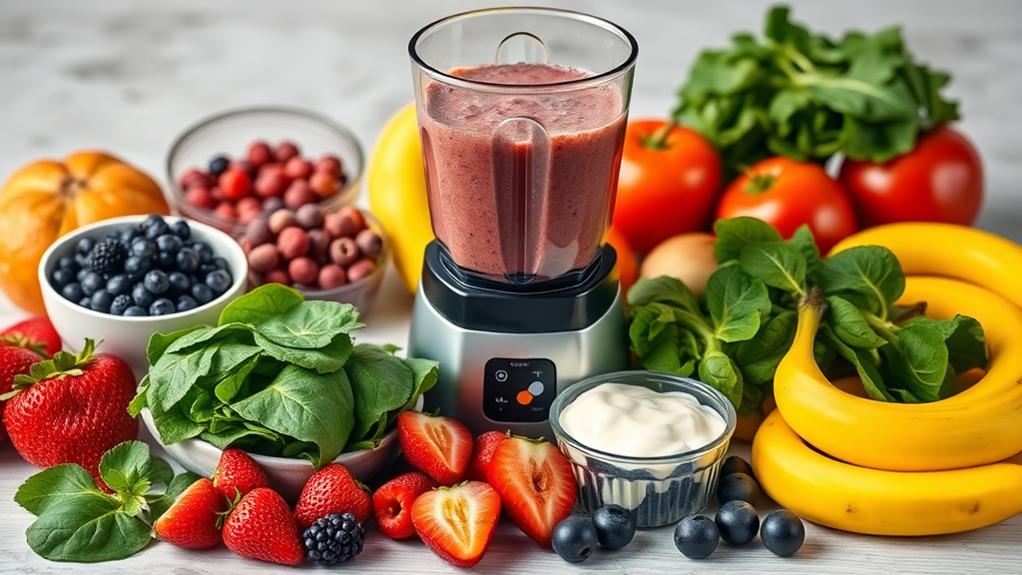
When choosing kid-friendly ingredients for smoothies, aim for colorful and tasty options that will excite their taste buds. Start with a variety of fruit combinations like strawberries, bananas, and blueberries. These not only add vibrant colors but also pack a punch of nutritional benefits. Think about incorporating some leafy greens, like spinach or kale, which blend well and are rich in vitamins. Nutritious greens can be easily hidden in smoothies, making them more appealing to children while boosting their nutritional intake.
Don't forget to add a splash of orange juice or a dollop of yogurt for extra flavor and creaminess. These ingredients provide calcium and probiotics, which are great for growing bodies. By picking a balance of fruits and other healthy additions, you'll create smoothies that are both delicious and nutritious, making your kids enthusiastic to help and enjoy their creations!
Set Up a Safe Workspace
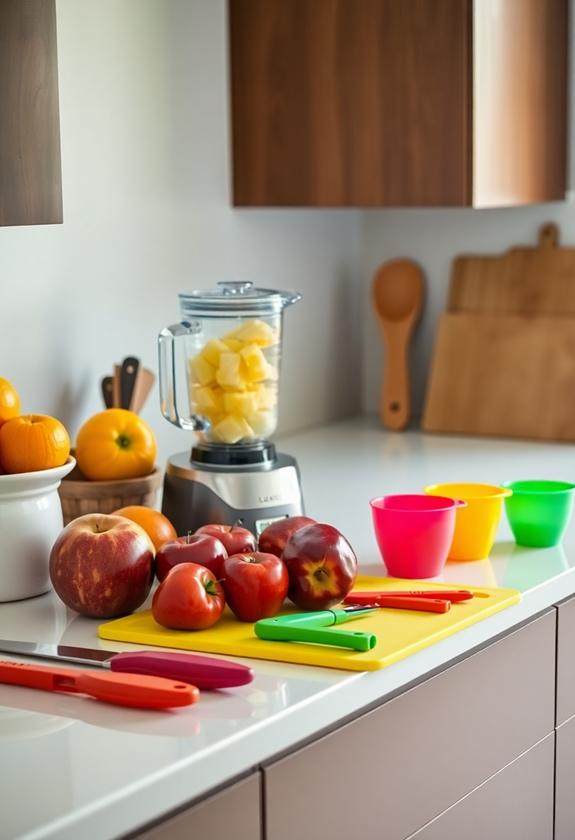
Creating a safe workspace is essential to guarantee your kids can enjoy making smoothies without any risk. Start by confirming the kitchen safety basics are covered: keep sharp objects out of reach, and make sure appliances are unplugged when not in use. Organizing the workspace can make a big difference, so have all ingredients and tools within easy reach. Encouraging creativity in the kitchen can be a fun and educational experience for kids. Setting up a dedicated smoothie-making station can help spark their imagination and make the process more enjoyable.
Here are some tips to set up a safe and organized workspace:
- Clear the counter: Remove any unnecessary items to provide ample space.
- Use non-slip mats: Place them under bowls and blenders to prevent spills.
- Set up a kid-friendly zone: Designate an area where your child can safely participate.
- Supervise closely: Always keep an eye on your child to confirm they follow safety rules.
Teach Basic Measuring Skills
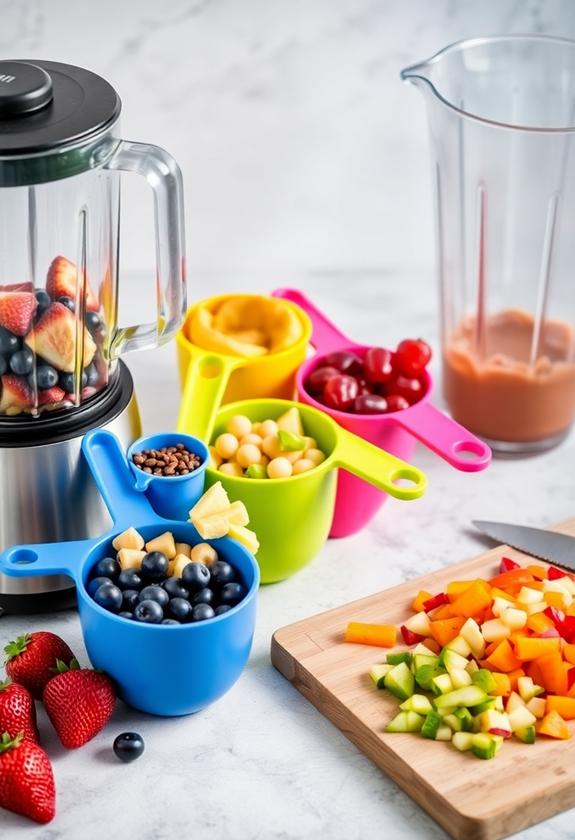
Having established a safe and organized workspace, it's time to introduce your kids to the basics of measuring ingredients. Start by showing them the different measuring cups you'll use. Explain how each cup represents a specific amount, helping them understand ingredient ratios. Let them practice by measuring simple items like water or fruit. Age-appropriate tasks can make the process more engaging and educational for children of all ages, ensuring everyone has a role in the smoothie-making adventure.
Encourage them to be precise, leveling off the cups with a flat edge. This helps them grasp the importance of accurate measurements in recipes. Discuss how the right ingredient ratios make the smoothie taste just right. Praise their efforts and correct gently if needed. This hands-on practice boosts their confidence and turns measuring into a fun learning experience. Soon, they'll be little kitchen pros!
Blend and Taste Together
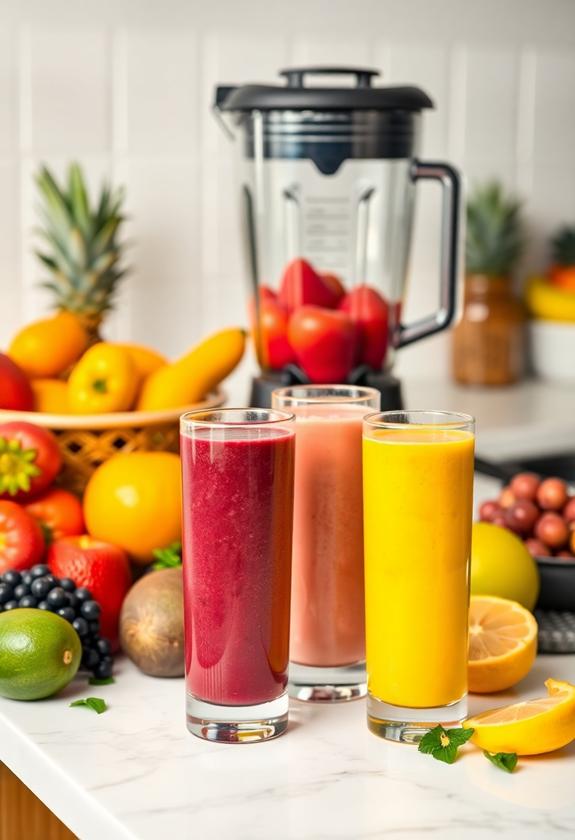
Now that all the ingredients are measured and ready, it's time to blend and taste together. Let your kids take turns pressing the blender's buttons, making them feel like real chefs. As the ingredients mix, talk about different flavor combinations and ask your kids which ones they think will taste best. Empowering kids through this process can boost their confidence and creativity in the kitchen. Once blended, let them taste the smoothie and share their thoughts on the texture preferences.
- Taste Test: Encourage them to describe the flavors.
- Texture Check: Ask if it's too thick or too thin.
- Adjust Together: Add more fruit or liquid if needed.
- Celebrate Success: Enjoy the smoothie and praise their efforts.
Encourage Creative Recipes
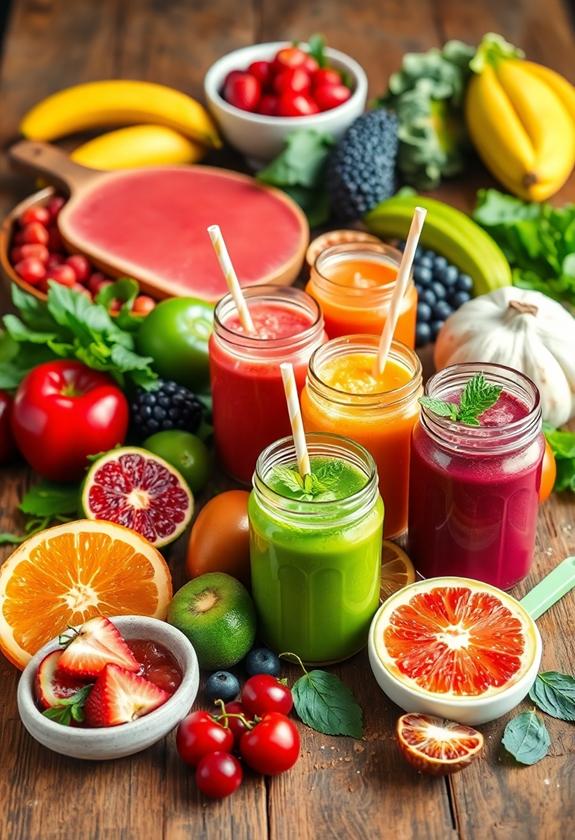
After enjoying the fruits of their labor, it's time to encourage your kids to come up with their own smoothie recipes. Let them investigate various fruit combinations and try out new flavors. Give them the freedom to experiment, mixing different fruits and even adding a touch of honey or yogurt for sweetness and texture. Create a fun smoothie bar at home to make the experience more engaging and exciting for your little ones.
Guide them through the process, but allow their creativity to shine. Ask them what they think will taste good together and let them give it a whirl. This flavor experimentation is not only fun but also educational, teaching them about different tastes and textures. Celebrate their successes and gently discuss what might not have worked, fostering a positive, adventurous attitude towards food.
Frequently Asked Questions
How Can I Make Smoothies Appealing to Picky Eaters?
You won't believe how easy it is to make smoothies appealing to picky eaters! Start with exciting smoothie flavor combinations, like strawberry-banana or mango-pineapple. Use colorful ingredients, such as vibrant berries, leafy greens, and bright oranges, to catch their eye. Let them choose their favorite fruits and veggies, and blend until smooth. The fun colors and delicious flavors will have them asking for seconds in no time!
What Are Some Fun Ways to Serve Smoothies to Kids?
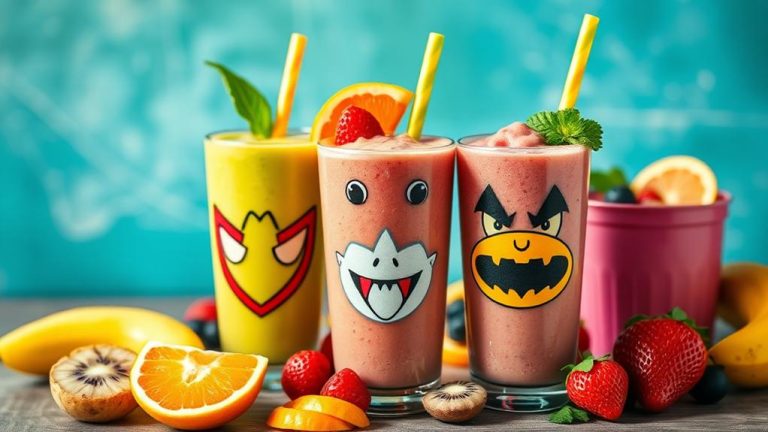
To make smoothies fun for kids, try smoothie art! Let them create faces or patterns with fruit slices on top. Use colorful straws to add excitement, making each sip more enjoyable. Serve smoothies in clear cups, so they can see the vibrant layers. You could even turn it into a mini-party, with each child decorating their smoothie. These small touches make the experience interactive and delightful for everyone involved.
How Can I Get My Kids Excited About Trying New Smoothie Flavors?
You can get your kids enthusiastic about trying new smoothie flavors by turning it into a fun flavor exploration adventure. Let them be part of the ingredient selection process, picking colorful fruits and veggies they find interesting. Encourage them to mix and match different ingredients, experimenting with unique combinations. Celebrate their creative choices, and praise their efforts, making the experience enjoyable and rewarding. This way, they'll keenly look forward to tasting their own creations.
What Are Some Educational Benefits of Making Smoothies With Kids?
Making smoothies with kids is like opening a treasure chest of learning opportunities! You can teach them about nutritional education by discussing the benefits of each ingredient, turning mealtime into a fun lesson. They'll also get hands-on experience with fruit identification, recognizing different shapes, colors, and textures. This activity encourages curiosity and healthy eating habits, making it an engaging and educational experience that nurtures their growth and development.
How Can I Involve Kids in Cleaning up After Making Smoothies?
To involve kids in cleaning up after making smoothies, assign simple cleaning tasks like wiping counters, washing utensils, and putting ingredients away. This teamwork helps them develop valuable skills and fosters a sense of responsibility. Encourage them by making it a fun activity, maybe even a game, to see who can complete their task first. Show appreciation for their efforts, making them feel proud and enthusiastic to help again.