Some links below are affiliate links. We earn a commission on purchases at no extra cost to you. Although our opinions are based on curated research, we haven't used these products. Article generated with AI.

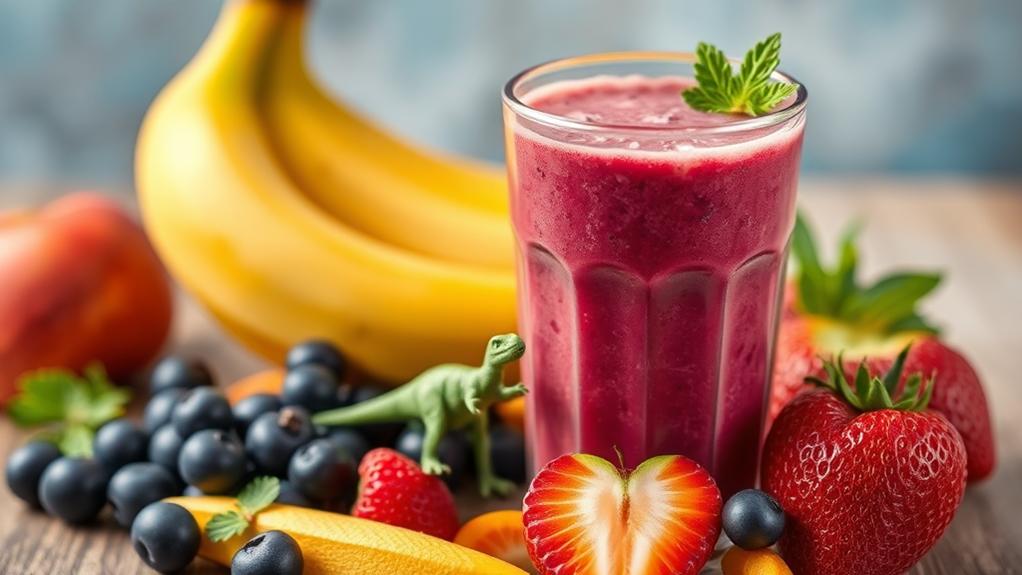
How to Make Smoothie-Making a Fun Learning Experience for Kids
Turn smoothie-making into a fun learning adventure for your kids! Assign age-appropriate tasks, like measuring ingredients or pressing buttons. Investigate colors and flavors together, predicting how different fruits will blend. Use this opportunity to practice counting and measuring skills, making math delicious. As you mix, discuss the nutritional benefits of each ingredient, empowering your little ones with health knowledge. Encourage creativity by letting them invent unique combinations and name their creations. Don't forget to teach kitchen safety basics, fostering confidence and responsibility. With these engaging activities, you'll create more than just tasty treats – you'll whip up lasting memories and valuable life skills.
Table of Contents
hide
Key Takeaways
- Assign age-appropriate tasks to children, gradually increasing complexity as they develop skills and confidence.
- Engage kids in color and flavor experiments, encouraging predictions and creative descriptions of their smoothie creations.
- Incorporate measuring and counting exercises using various tools to enhance math skills during preparation.
- Discuss nutritional benefits of ingredients while blending, empowering children to make informed food choices.
- Set up a "smoothie bar" with diverse ingredients, allowing kids to explore combinations and name their unique creations.
Choose Age-Appropriate Tasks
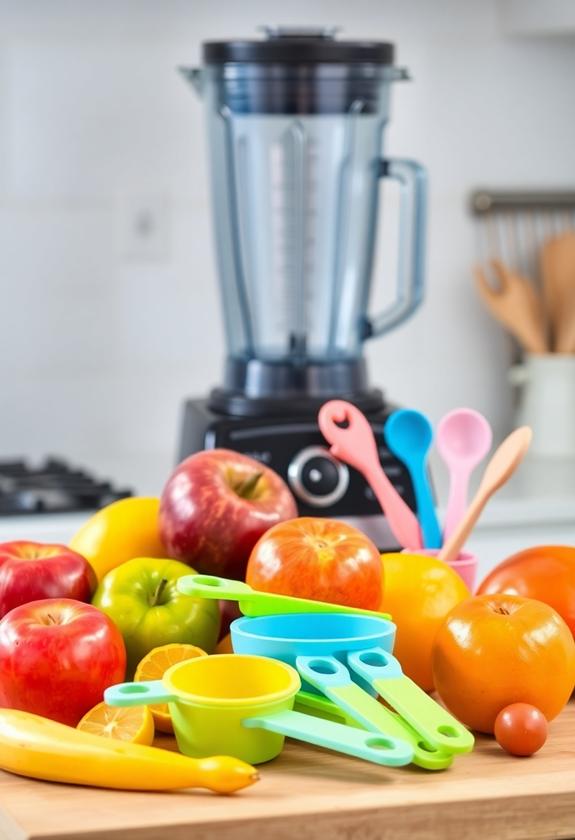
Three key factors determine which smoothie-making tasks are suitable for kids: age, motor skills, and experience. For younger children, start with simple, safe activities like taste testing different fruits or helping with ingredient sourcing at the grocery store. As they grow, you can gradually introduce more complex tasks, always keeping safety in mind. Empowering kids through smoothie-making can boost their confidence and promote healthy eating habits.
For 5-7 year-olds, let them pour pre-measured ingredients into the blender or press the buttons under supervision. Kids aged 8-10 can start measuring ingredients and peeling softer fruits. Older children, 11 and up, might be ready to use a knife with close guidance. Remember, every child develops at their own pace, so adjust tasks based on their individual abilities and comfort level. The goal is to make smoothie-making a fun, confidence-building experience that grows with your child.
Explore Colors and Flavors
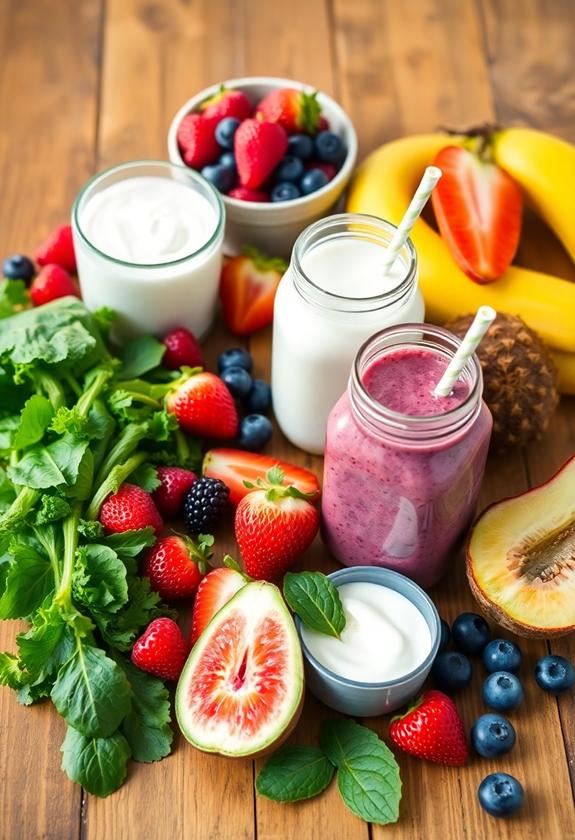
Countless opportunities for creativity and learning arise when exploring colors and flavors in smoothie-making with kids. Fun smoothie adventures can be an excellent way to engage children in the kitchen while teaching them about nutrition and food preparation. Encourage your little ones to experiment with different fruit combinations, discovering how various ingredients affect the final taste and appearance. You'll be amazed at their excitement as they watch colors blend and transform!
Start with simple color mixing exercises, like combining yellow banana with red strawberries to create a vibrant orange smoothie. As they gain confidence, introduce more complex combinations. Let them predict what color their smoothie will be before blending, then compare their guess to the result. This process not only teaches color theory but also develops critical thinking skills. Don't forget to discuss the flavors, too! Ask your kids to describe the taste using fun, imaginative words. They'll love being little smoothie scientists!
Practice Measuring and Counting
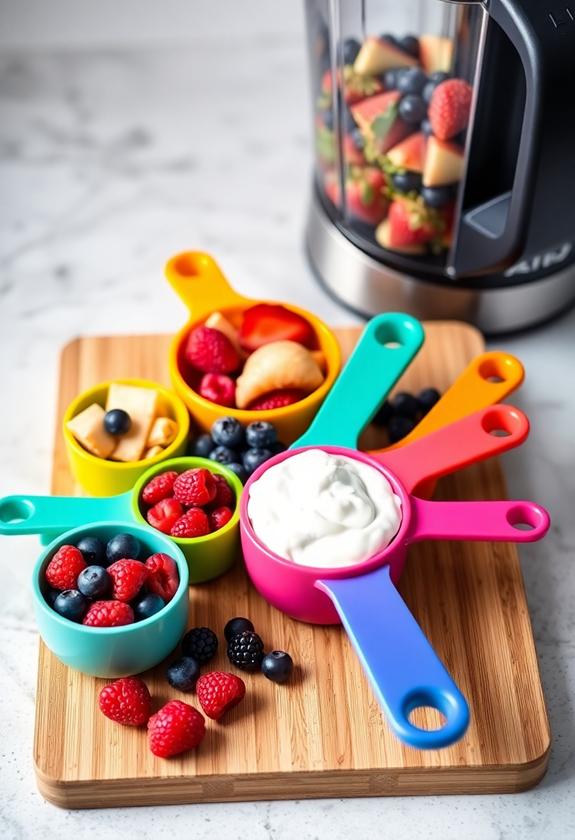
Smoothie-making offers an excellent opportunity for kids to practice measuring and counting skills. You can turn this into a fun learning experience by incorporating measurement games and counting challenges. Encourage your little ones to count out loud as they add fruits or measure liquids. Setting up a kid-friendly smoothie bar at home can make this activity even more exciting and engaging. Here are some ways to make it educational and exciting:
- Use different sized measuring cups and spoons
- Count ingredients as you add them
- Compare amounts (e.g., "Which is more, 1/2 cup or 1/4 cup?")
- Estimate quantities before measuring
- Create a recipe chart with numbers and fractions
As you guide your children through the process, praise their efforts and help them understand the importance of accurate measurements. This hands-on approach not only teaches math skills but also boosts confidence in the kitchen. Remember, it's okay if things get a little messy – that's part of the learning experience!
Discuss Nutritional Benefits
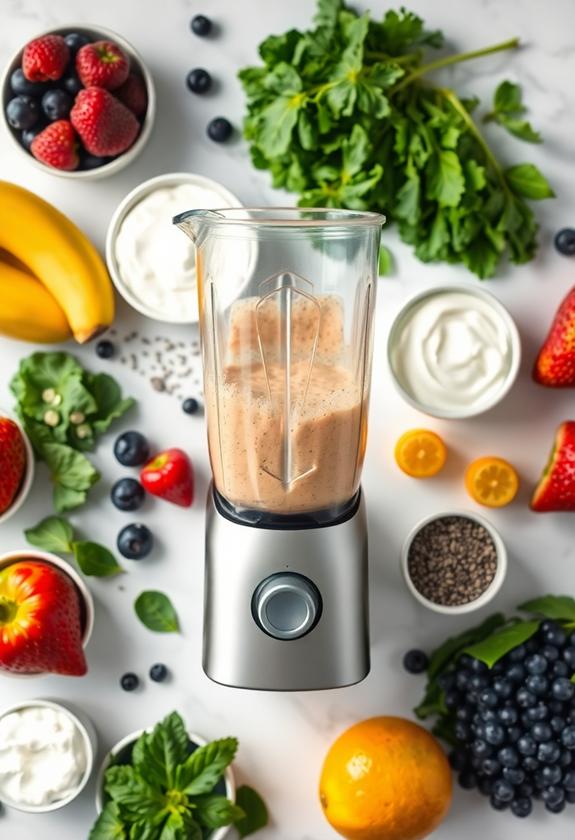
One of the greatest advantages of making smoothies with kids is the opportunity to discuss nutritional benefits. As you blend different fruits and vegetables, you can explain how each ingredient contributes to their health. Talk about the vitamins in berries, the fiber in spinach, or the protein in yogurt. This hands-on approach makes smoothie nutrition more relatable and exciting for children. During cold season, immunity-boosting smoothies can be particularly beneficial for children, helping to strengthen their natural defenses against common illnesses.
You can also investigate how these nutrients help their bodies grow strong and stay healthy. For example, explain how vitamin C boosts their immune system, or how calcium strengthens their bones. By understanding the health benefits of their creations, kids are more likely to enjoy and appreciate what they're drinking. This knowledge empowers them to make better food choices in the future, setting the foundation for a lifetime of healthy eating habits.
Encourage Creativity With Ingredients
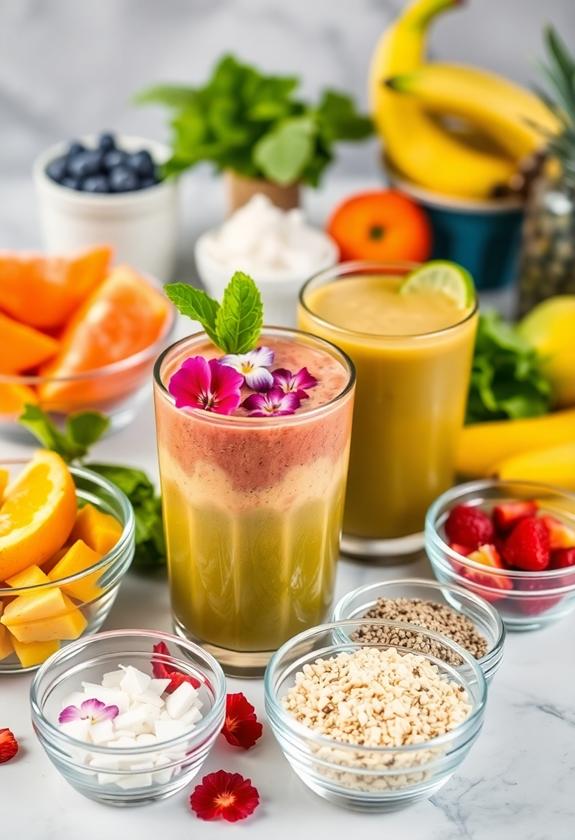
With smoothie-making, you can set free your child's inner culinary artist. Encourage your little ones to investigate unique ingredient combinations and textures, turning each smoothie into a delightful experiment. Let them mix and match fruits, veggies, and add-ins to create their own signature blends. You'll be amazed at their creativity! Top tips for encouraging kids to help make their own smoothies can turn this activity into a fun learning experience.
Here are some ways to spark your child's imagination:
- Create a "smoothie bar" with various ingredients
- Let them name their creations
- Experiment with different colors and layers
- Try unusual add-ins like herbs or spices
- Challenge them to make a smoothie based on a theme
Teach Kitchen Safety Basics
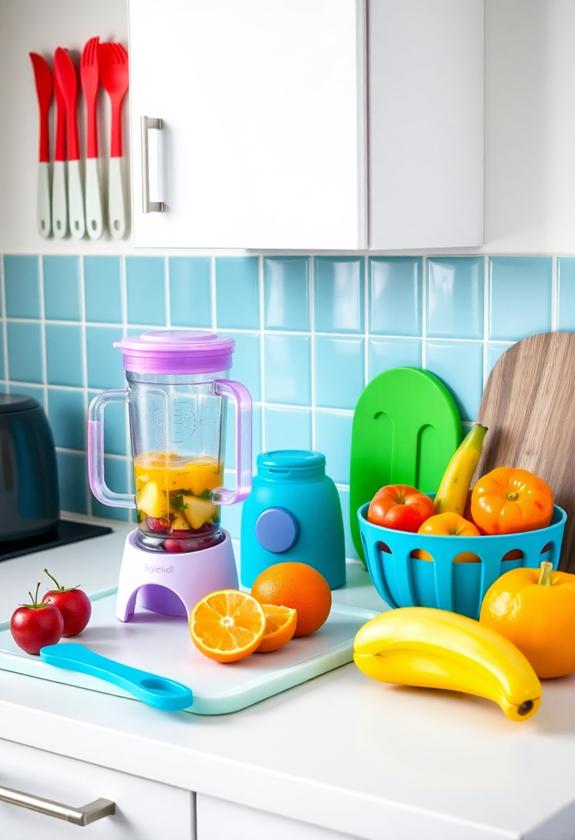
Safety should always be a top priority when kids are in the kitchen. Start by teaching proper kitchen hygiene, like washing hands thoroughly and keeping surfaces clean. Show your little chefs how to safely handle safe tools, such as plastic knives for cutting soft fruits. Encourage them to use oven mitts when handling anything hot, even if it's just a warm blender jar. Age-appropriate tasks can help children learn and enjoy the smoothie-making process while staying safe.
Remind kids to keep their fingers away from blender blades and to always ask for help when using electrical appliances. It's important to supervise closely, but also let them take on age-appropriate tasks to build confidence. As they learn, praise their efforts and reinforce good habits. By focusing on safety, you're not only protecting your children but also instilling valuable life skills that'll serve them well beyond smoothie-making adventures.
Frequently Asked Questions
How Long Can Smoothies Be Stored in the Refrigerator?
You've crafted a delicious smoothie, but how long will it last? While you'd love to savor it forever, smoothie shelf life is limited. Properly stored in an airtight container, your smoothie can stay fresh in the refrigerator for up to 24 hours. However, for the best taste and nutrition, it's ideal to enjoy it right away. If you can't drink it immediately, don't worry! Just give it a good shake before sipping to remix any separated ingredients.
What's the Best Blender for Making Smoothies With Kids?
When choosing a blender for making smoothies with kids, safety is your top priority. Look for a model with a secure lid and sturdy base to prevent accidents. You'll want a blender that's easy to clean and has simple controls. Consider one with preset buttons for different smoothie flavors, making it fun and easy for children to experiment. A powerful motor guarantees smooth results, while a large capacity lets you make enough for the whole family to enjoy together.
Can Smoothies Replace Meals for Children?
Let's get the ball rolling on this smoothie question! While smoothies can be nutritious, they shouldn't completely replace meals for your children. It's important to maintain a nutritional balance and meal variety in your child's diet. Smoothies can be a great supplement or occasional meal replacement, but they often lack the fiber and chewing experience that solid foods provide. You're doing a fantastic job caring for your kids' health, so keep offering a mix of whole foods alongside those yummy smoothies!
Are There Any Fruits or Vegetables to Avoid in Kids' Smoothies?
When making smoothies for kids, you'll want to focus on fruit safety and smart vegetable choices. While most fruits are great, avoid raw or unpasteurized options to prevent foodborne illnesses. It's best to steer clear of high-oxalate veggies like spinach or beets, as they can interfere with nutrient absorption. Instead, opt for milder choices like carrots or cucumber. Remember, moderation is key! You're doing a wonderful job by introducing your little ones to nutritious, tasty smoothies they'll love.
How Can I Make Smoothies More Filling for Growing Children?
As they say, "A healthy outside starts from the inside." To make smoothies more filling for your growing children, you'll want to add a nutrient boost. Try mixing in protein-rich ingredients like Greek yogurt, nut butter, or chia seeds. Don't forget to include healthy fats from avocados or coconut oil. For texture variety, toss in some oats or granola. These additions will not only make the smoothies more satisfying but also provide essential nutrients for your little ones' growth and development.