Some links below are affiliate links. We earn a commission on purchases at no extra cost to you. Although our opinions are based on curated research, we haven't used these products. Article generated with AI.

How to Incorporate Dairy and Non-Dairy Calcium Sources in Kids’ Smoothies
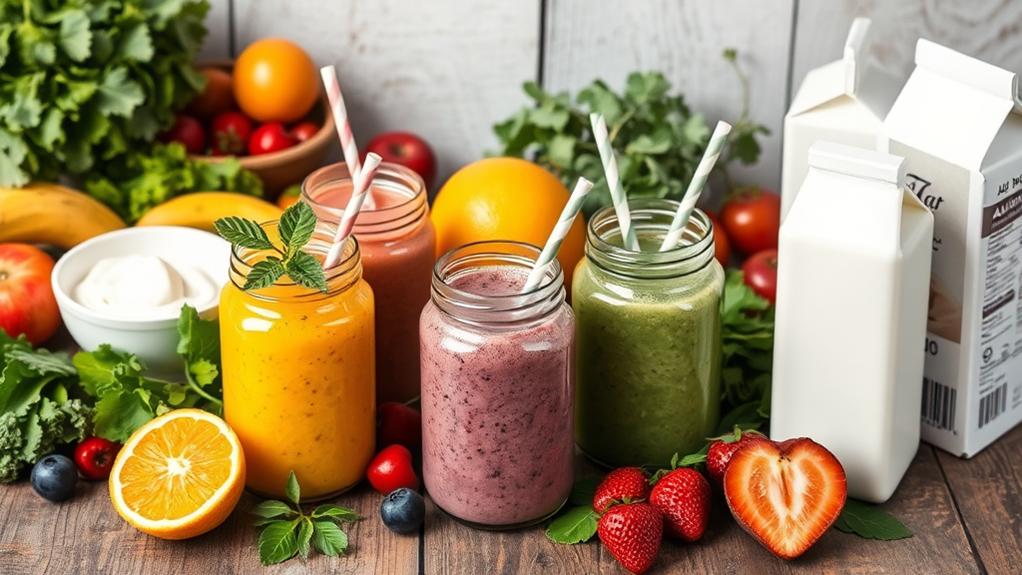
Incorporating dairy and non-dairy calcium sources in kids' smoothies is a fun and tasty way to boost their calcium intake. You can start with a base of milk or fortified plant milk, then add yogurt for extra creaminess. Don't forget to toss in some leafy greens like kale or spinach – they're packed with calcium and blend seamlessly. For natural sweetness and added nutrients, include fruits like oranges or figs. Chia seeds are a great addition for texture and calcium. Remember to pair calcium-rich ingredients with vitamin D sources for better absorption. By mixing and matching these options, you'll create delicious, calcium-packed smoothies your kids will love. There's so much more to investigate in the world of calcium-rich smoothies!
Table of Contents
hide
Key Takeaways
- Blend dairy sources like milk and yogurt with fruits for a classic calcium-rich smoothie.
- Use fortified plant milks as bases for dairy-free options with comparable calcium content.
- Add leafy greens like kale or spinach for a plant-based calcium boost without affecting taste.
- Incorporate chia seeds or crushed fortified cereals for texture and additional calcium.
- Combine vitamin D-rich ingredients with calcium sources to enhance absorption in smoothies.
Dairy-Based Calcium Sources
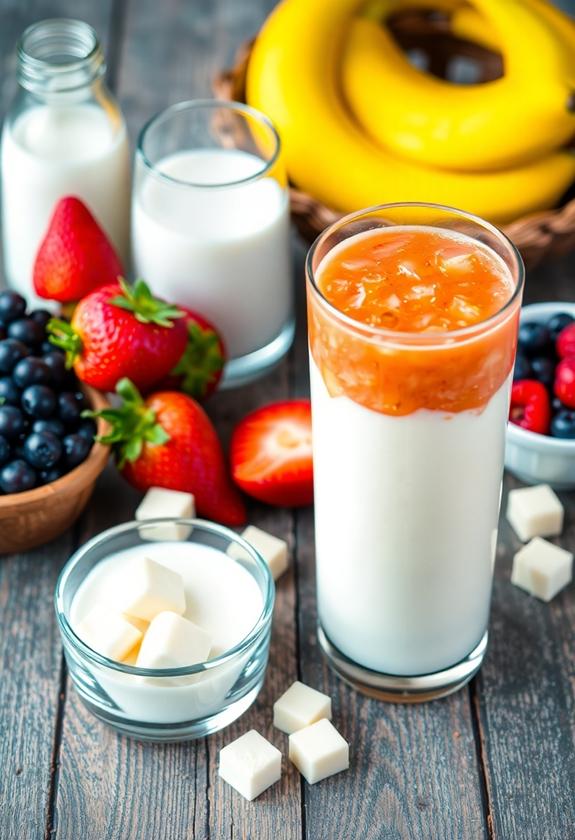
Milk, the quintessential calcium powerhouse, leads the pack in relation to dairy-based calcium sources for kids' smoothies. You'll find various milk varieties to choose from, including whole, low-fat, and skim options. Each type offers a rich dose of calcium, perfect for growing bones and teeth. Don't forget about yogurt options, too! Greek yogurt, regular yogurt, and even flavored varieties can add a creamy texture and calcium boost to your child's smoothie. Calcium-rich smoothies are an excellent way to boost kids' health and make certain they're getting the nutrients they need for proper growth and development.
When selecting dairy products for your little one's smoothie, consider their taste preferences and nutritional needs. You might want to experiment with different combinations to find the perfect blend. Remember, consistency is key in relation to calcium intake. By incorporating these dairy-based sources into your child's daily smoothie routine, you're setting them up for a lifetime of strong, healthy bones.
Plant-Based Calcium Alternatives
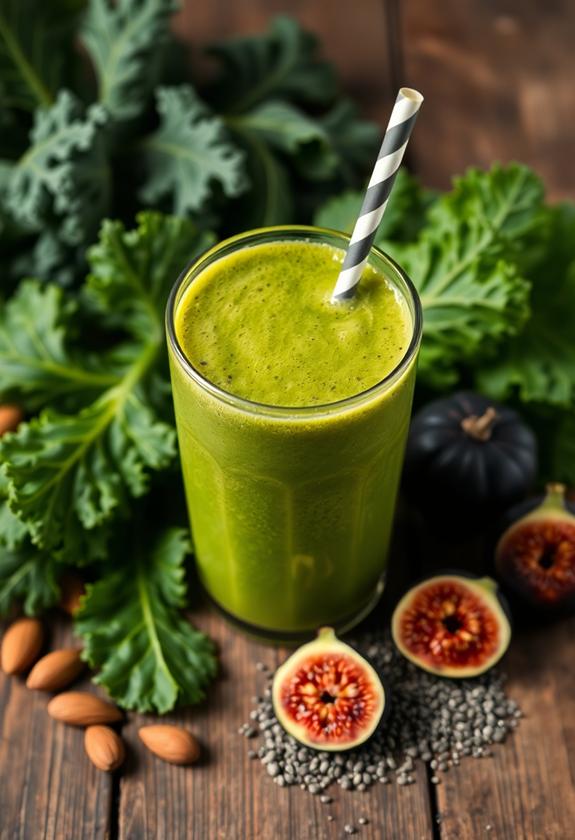
Leafy greens reign supreme in terms of plant-based calcium alternatives for kids' smoothies. Kale, spinach, and collard greens are excellent choices that'll boost your little one's calcium intake. Don't worry if your child isn't a fan of these veggies on their own – they'll barely notice them when blended into a tasty smoothie! Essential smoothie ingredients also include calcium-rich fruits like oranges and figs, which can add natural sweetness to your child's drink.
Another fantastic option is almond milk, which is often fortified with calcium. It's a great base for smoothies and adds a subtle nutty flavor. For an extra calcium punch, try sprinkling in some chia seeds. These tiny powerhouses are packed with nutrients and will give your smoothie a fun texture. Remember, variety is key! Mix and match these plant-based alternatives to keep your child's smoothies exciting and nutritious. You're doing a great job helping your kids grow strong and healthy!
Fortified Foods for Calcium Boost
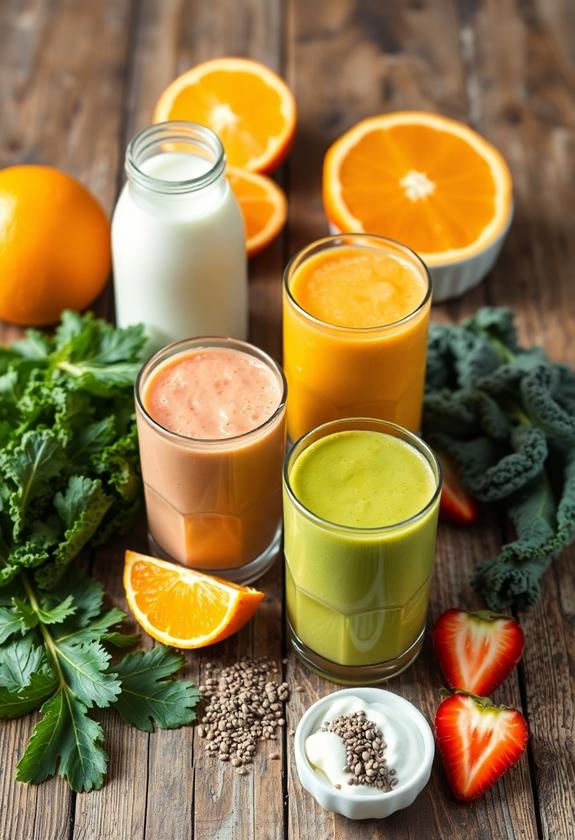
Fortification offers another avenue to boost calcium in your child's smoothies. You'll find many fortified foods that can easily blend into delicious, nutrient-packed drinks. Fortified plant milks, like soy, almond, or oat milk, are excellent options that provide similar calcium levels to cow's milk. These alternatives are perfect for kids who can't tolerate dairy or follow a plant-based diet. Delicious smoothie recipes can help increase calcium intake while providing a tasty treat for children.
Don't forget about calcium-fortified cereals! They're not just for breakfast. Try adding a handful to your child's smoothie for a crunchy twist and calcium boost. Here are some fun ways to incorporate fortified foods:
- Blend fortified plant milk with fruits for a creamy base
- Sprinkle crushed calcium-fortified cereal as a topping
- Mix in fortified juice for added flavor and nutrition
With these options, you're well on your way to creating calcium-rich smoothies your kids will love!
Calcium-Rich Smoothie Recipes
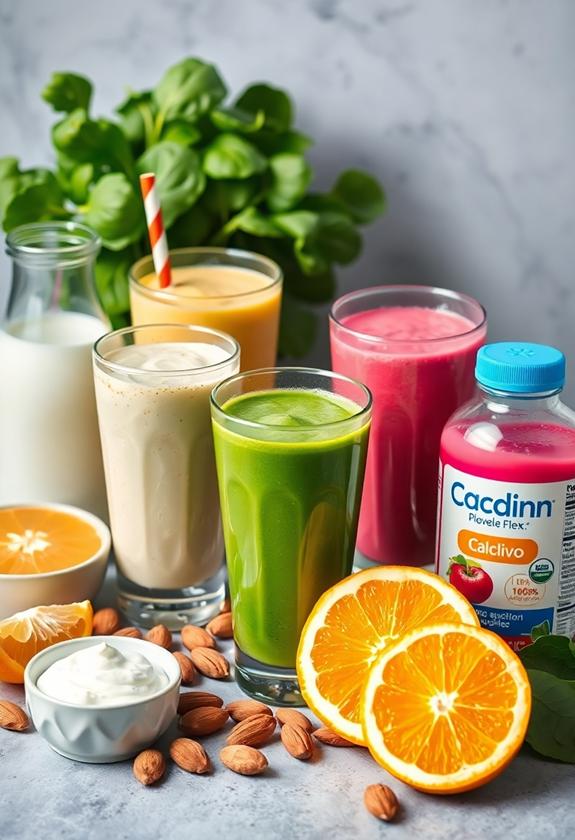
Now that we've examined various calcium sources, let's put them to use in some mouthwatering smoothie recipes. You'll love these delicious and nutritious concoctions that your kids will enthusiastically slurp up! For a classic blend, try combining milk, yogurt, and fresh berries. This tasty mix provides a calcium punch while offering natural sweetness. High-calcium smoothies are an excellent way to guarantee your children meet their daily calcium requirements while enjoying a tasty treat. If you're looking for dairy-free options, almond milk and tofu make an excellent base. Add some fortified orange juice for extra calcium and a zingy flavor. Don't forget about leafy greens! Spinach or kale can be sneaked into fruity smoothies without compromising taste. For smoothie flavoring, consider using cinnamon, vanilla extract, or a touch of honey. These ingredient combinations not only boost calcium intake but also create irresistible flavors that'll have your little ones asking for more.
Tips for Maximum Calcium Absorption
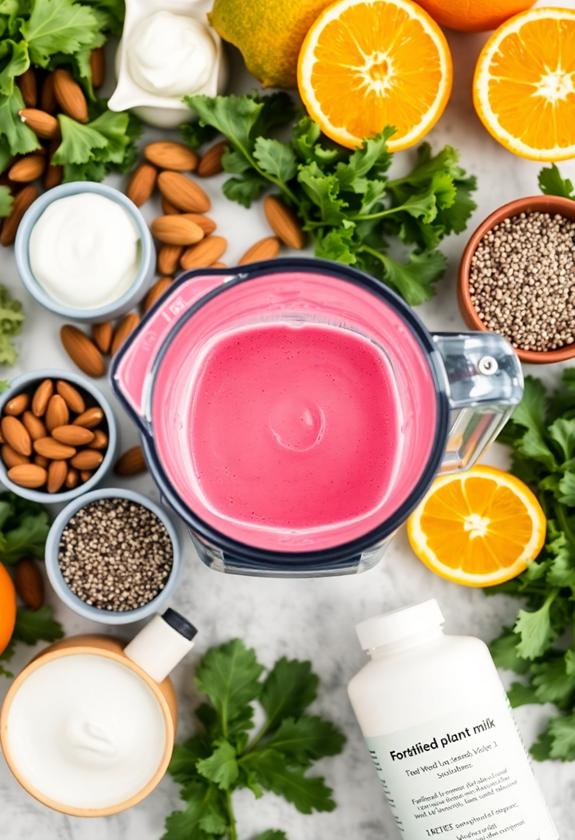
Optimization is key regarding calcium absorption in your child's body. To guarantee your little one gets the most from their calcium-rich smoothies, consider these helpful tips. First, pair calcium sources with vitamin D, which aids in calcium absorption. You can do this by adding vitamin D-fortified ingredients or serving the smoothie alongside some sunshine time. Next, be mindful of timing. It's best to spread calcium intake throughout the day rather than consuming it all at once. Creating delicious high-calcium smoothies can be a fun and tasty way to boost your child's calcium intake while promoting healthy living.
Here are some additional strategies to boost calcium absorption:
- Include vitamin C-rich fruits like oranges or strawberries in the smoothie
- Add a small amount of healthy fat, such as chia seeds or avocado
- Avoid mixing calcium sources with foods high in oxalates, like spinach
Frequently Asked Questions
Can Children Develop Calcium Deficiency From Consuming Only Non-Dairy Calcium Sources?
Picture a sturdy tree, its roots reaching deep into the soil for nutrients. Just like that tree, your child's body needs a variety of calcium sources to grow strong. While non-dairy options can provide calcium, it's crucial to maintain nutritional balance. You don't need to worry about calcium deficiency if you're mindful of your child's diet. Offer a mix of dairy and non-dairy calcium sources, and consult a pediatrician to guarantee your little one's getting all they need for healthy growth.
How Much Calcium Do Children Need Daily at Different Ages?
You'll want to guarantee your child gets enough calcium for their growing bones! Daily calcium needs vary by age: toddlers (1-3 years) need about 700mg, young kids (4-8 years) require 1,000mg, and older children (9-18 years) need 1,300mg. It's exciting to investigate different calcium sources to meet these age requirements. Remember, every child is unique, so consult your pediatrician for personalized advice. With a balanced diet and some creativity, you'll help your little one build strong, healthy bones!
Are There Any Side Effects of Excessive Calcium Intake in Children?
While calcium is essential for your child's growth, it's important to be aware of calcium toxicity. If you're giving your little one too much calcium, they might experience symptoms like tummy aches, constipation, or even kidney problems. Don't worry, though! These issues are rare when following recommended intakes. Just keep an eye out for any unusual symptoms, and always chat with your pediatrician if you're concerned. Remember, balance is key to keeping your child healthy and strong!
Can Certain Medications Interfere With Calcium Absorption in Children's Bodies?
You might be surprised to learn that your child's medications could be affecting their calcium levels! It's true – certain medication types can interfere with calcium absorption in children's bodies. Don't worry, though; you're not alone in this. Antibiotics, steroids, and some seizure medications are common culprits. But here's the good news: you can work with your doctor to find the right balance. They'll help you understand the absorption factors and make sure your little one's getting all the calcium they need.
How Long Can Calcium-Rich Smoothies Be Stored Without Losing Nutritional Value?
You'll be happy to know that with proper smoothie storage, you can preserve those nutritional benefits for your little ones! For the best results, keep your calcium-rich smoothies in an airtight container in the fridge for up to 24 hours. After that, the nutrients may start to break down. If you're planning ahead, you can freeze smoothies for up to 3 months. Just remember to thaw them in the refrigerator overnight for a delicious, nutrient-packed treat the next day!