Some links below are affiliate links. We earn a commission on purchases at no extra cost to you. Although our opinions are based on curated research, we haven't used these products. Article generated with AI.

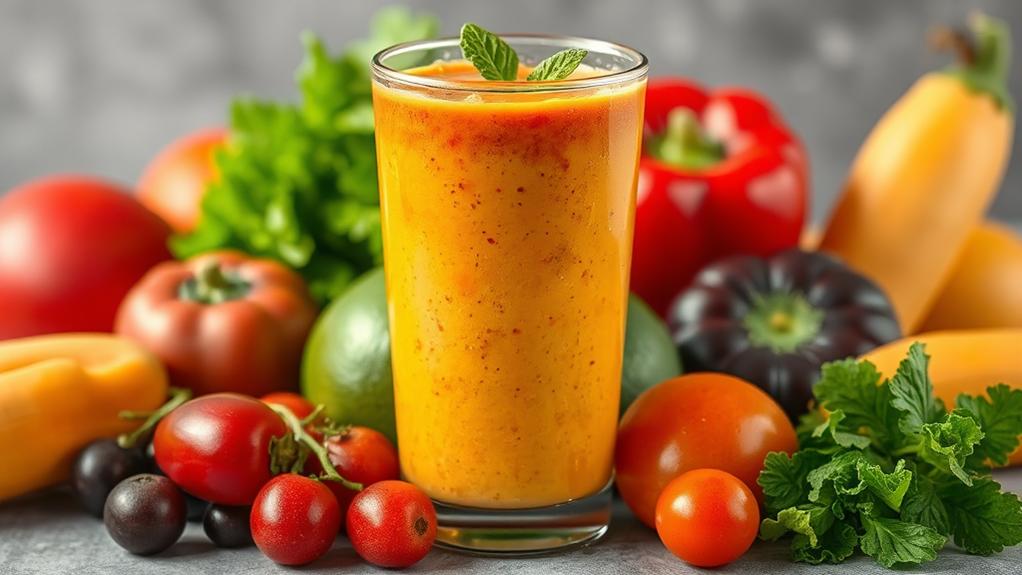
How to Sneak Veggies Into Your Kids’ Smoothies
Sneaking veggies into your kids' smoothies is easier than you think! Start by choosing mild-flavored vegetables like spinach or cucumber, and pair them with sweet fruits to mask their taste. Experiment with different combinations, like blending carrots with mango or hiding beets in a berry mix. Use a high-powered blender to guarantee a smooth texture, and get creative with fun names and colorful presentations. Gradually increase the veggie content as your kids get used to the flavors. Remember, patience is key – it might take a few tries, but you'll soon have your little ones sipping on nutrient-packed smoothies without a fuss. There's so much more to discover in the world of veggie-packed smoothies!
Table of Contents
hide
Key Takeaways
- Blend mild-tasting vegetables like spinach or cucumber with sweet fruits to mask flavors.
- Use colorful vegetables like beets or carrots to create visually appealing smoothies.
- Incorporate creamy ingredients like yogurt or avocado to improve texture and hide veggie chunks.
- Gradually increase vegetable content over time as kids become accustomed to the taste.
- Involve children in the smoothie-making process and use fun names to make veggie smoothies more enticing.
The Power of Veggie Smoothies
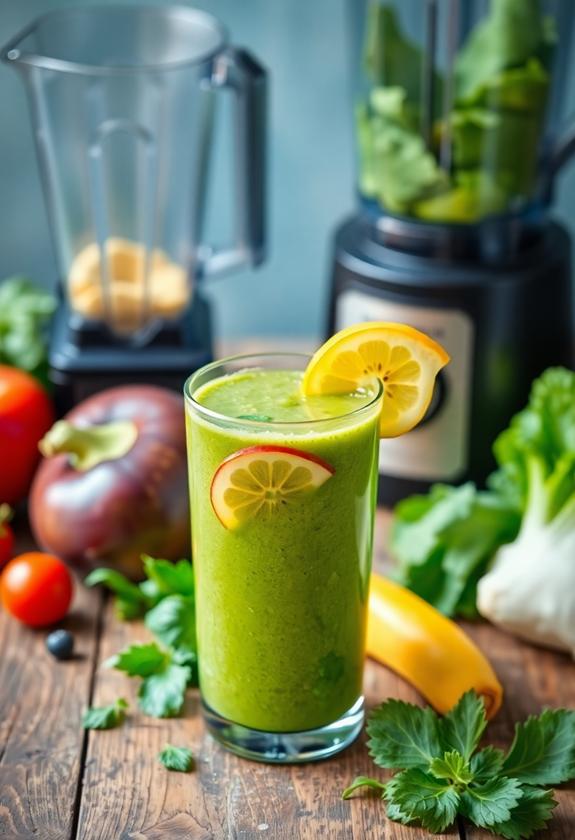
Veggie smoothies' potential to transform your diet is often underestimated. They're not just tasty treats; they're powerhouses of nutrition that can improve your health in amazing ways. When you blend veggies into your smoothies, you're making it easier for your body to absorb all those wonderful nutrients. It's like giving your digestive system a head start! Green smoothies for kids can be a great way to introduce vegetables into their diet without any fuss. These kid-friendly recipes are designed to be both nutritious and delicious, ensuring that even picky eaters will enjoy them.
Don't worry about smoothie aesthetics – with the right combinations, your veggie smoothies can look just as appealing as fruit-only ones. You'll be amazed at how adding a handful of spinach or some cucumber can improve the flavor and nutrition without changing the color too much. By incorporating veggies into your smoothies, you're taking a simple yet effective step towards a healthier lifestyle. It's an easy way to increase your daily veggie intake and feel great about it!
Choosing the Right Vegetables
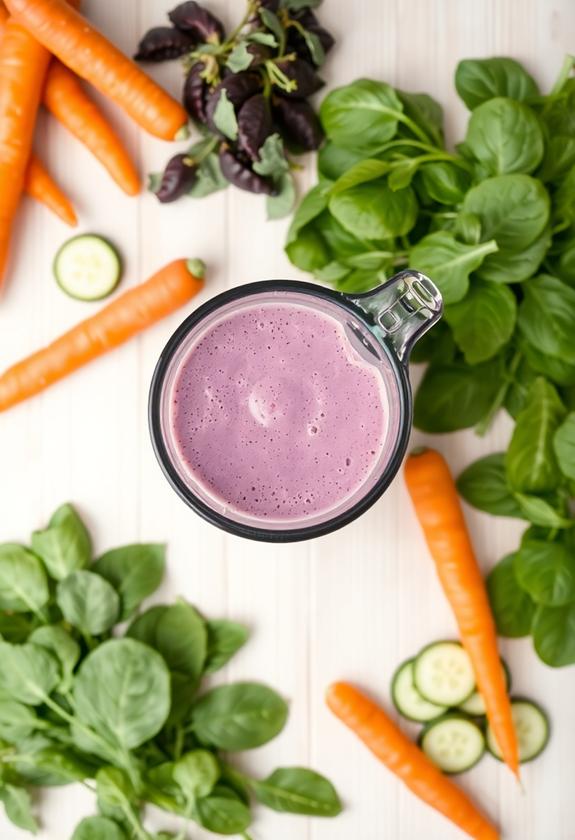
In terms of creating delicious and nutritious smoothies, selecting the right vegetables is essential. You'll want to focus on colorful vegetables that are packed with vitamins and minerals. Think vibrant greens like spinach and kale, or sweet orange carrots. Don't be afraid to experiment with seasonal selections, as they're often fresher and more affordable. When selecting the best greens for your smoothies, look for fresh, crisp leaves without any signs of wilting or discoloration.
When choosing veggies, consider their flavor profiles. Mild-tasting options like cucumbers or zucchini are great for beginners, as they blend seamlessly into fruity smoothies. If you're feeling adventurous, try adding a small piece of beet for a beautiful color boost. Remember, frozen vegetables work just as well as fresh ones and can add a delightful chill to your smoothie. By carefully selecting your vegetables, you'll create nutritious, tasty smoothies that your kids will love.
Balancing Flavors and Textures
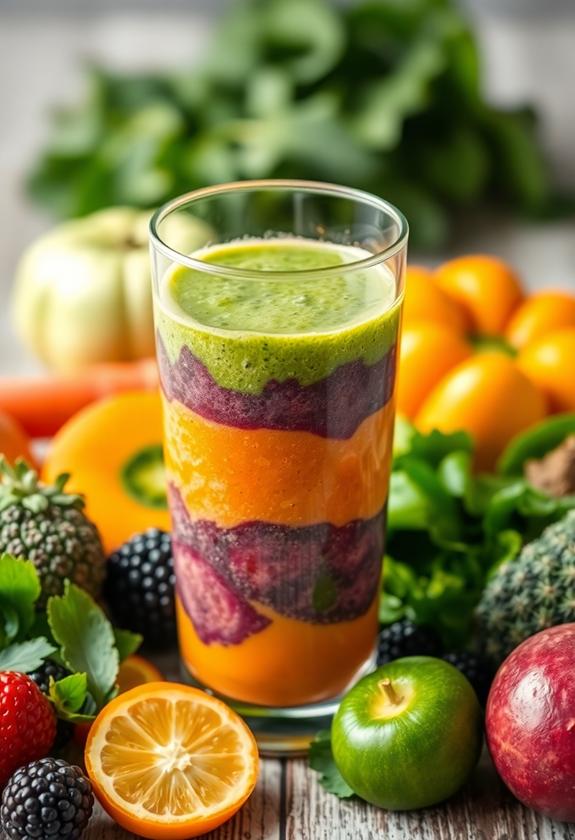
Creating a well-balanced smoothie involves more than just tossing ingredients into a blender. You'll want to take into account both flavor contrasts and texture variations to make a delicious drink your kids will love. Start by pairing strong-flavored veggies with sweet fruits to mask any bitter tastes. For example, combine spinach with mango or kale with pineapple. Even the pickiest eaters can be won over with the right combination of flavors and textures in their green smoothies. Don't forget about texture! Add creamy ingredients like yogurt or avocado to smooth out any grittiness from leafy greens. For a fun twist, try freezing fruits before blending to create a frosty, milkshake-like consistency. Remember, it's okay to experiment and adjust as you go. If your smoothie's too thick, add a splash of milk or water. Too thin? Toss in some ice or frozen fruit. With practice, you'll find the perfect balance that keeps your little ones coming back for more.
Masking Vegetable Tastes
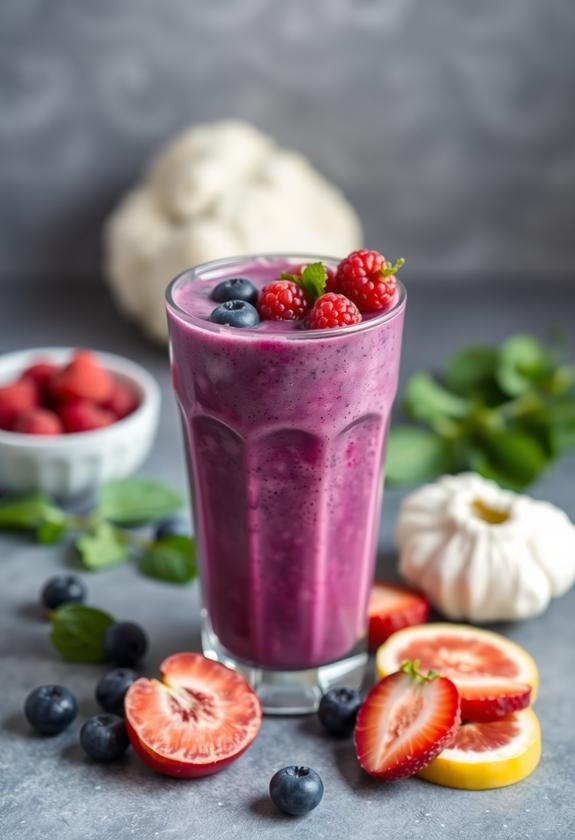
While balancing flavors and textures is important, you'll often need to go a step further to truly mask vegetable tastes in smoothies. Don't worry, though! There are plenty of taste disguises and flavor boosters that can help you create delicious, veggie-packed smoothies your kids will love. Adding nutritious green smoothie boosters can improve both the flavor and health benefits of your smoothies without compromising taste.
Try adding a splash of vanilla extract or a dash of cinnamon to your smoothies. These natural flavor enhancers can work wonders in masking the earthy taste of vegetables. Fruits like bananas, berries, and mangoes are excellent at covering up vegetable flavors while adding natural sweetness. You can also experiment with nut butters or cocoa powder to create rich, creamy smoothies that hide the taste of greens. Remember, it's all about finding the right combination that works for your family. With a little creativity and patience, you'll soon be sneaking veggies into smoothies like a pro!
Essential Equipment for Smoothie Making
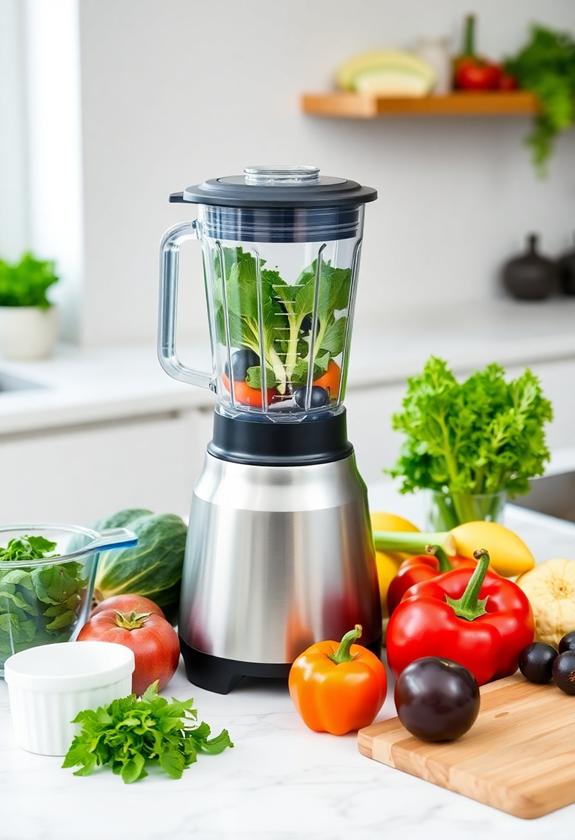
For successful smoothie-making, you'll need a few key pieces of equipment. First and foremost, a reliable blender is essential. There are various blender types to choose from, ranging from high-powered countertop models to compact personal blenders. Choose one that fits your needs and budget. Don't forget about smoothie containers, too! Invest in reusable, portable bottles that'll make it easy for your kids to enjoy their veggie-packed smoothies on the go. To make greens more appealing, contemplate adding fun smoothie toppings that can transform the appearance and taste of your kids' smoothies.
A set of measuring cups and spoons will help you achieve the perfect balance of ingredients. You might also want to think about a small kitchen scale for precise measurements. Finally, don't underestimate the importance of a good cutting board and sharp knife for prepping your fruits and veggies. With these tools at your disposal, you'll be well-equipped to create delicious, nutritious smoothies your kids will love.
Prepping Vegetables for Smoothies
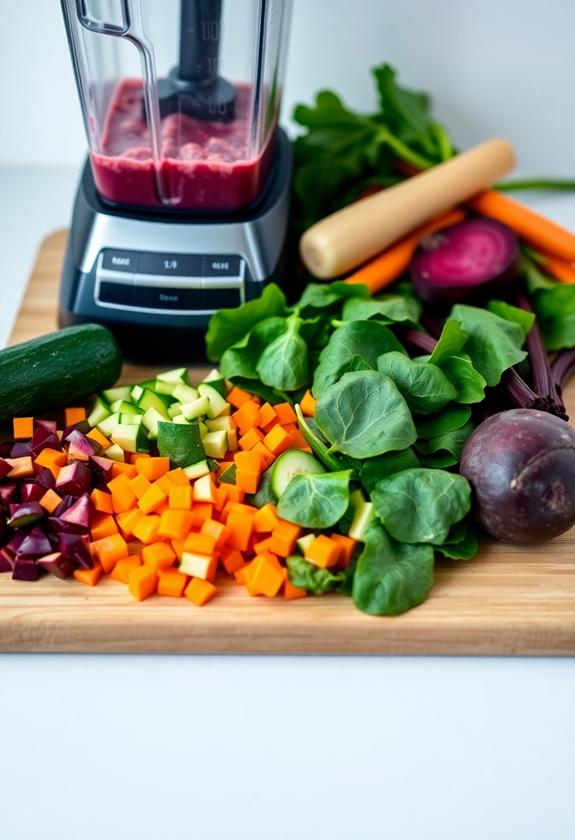
Now that you've got your equipment ready, let's focus on prepping those veggies for your smoothies. Veggie selection is key to creating delicious, nutrient-packed drinks your kids will love. Start with mild-flavored options like spinach, cucumber, or carrots. These blend easily and won't overpower the fruity taste. Leafy greens are particularly beneficial, offering a wealth of vitamins and minerals to nourish your smoothies.
When it comes to prep techniques, always wash your veggies thoroughly. For leafy greens, remove tough stems and tear them into smaller pieces. Peel and chop harder vegetables like carrots or beets into small chunks. This helps them blend smoothly and prevents any unwanted texture issues. Don't forget to remove seeds from bell peppers and cucumbers. If you're using frozen veggies, there's no need to thaw them first. They'll add a nice chill to your smoothie and blend just fine. With these tips, you'll be sneaking in those veggies in no time!
Frozen vs. Fresh Vegetables
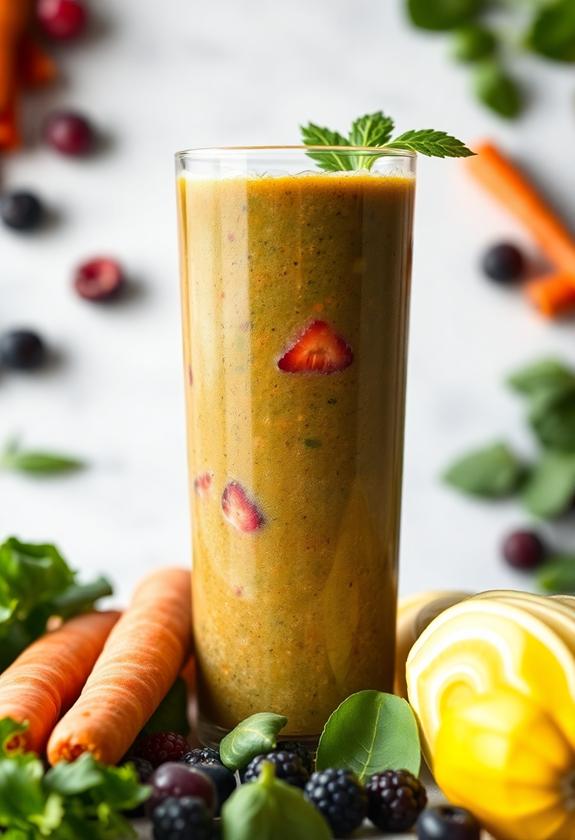
The fresh-versus-frozen debate often arises while discussing smoothie ingredients. Both options have their merits in terms of sneaking veggies into your kids' smoothies. Frozen vegetables offer some fantastic benefits: they're convenient, last longer, and are often picked at peak ripeness. Plus, they're great for creating that perfect frosty texture kids love. Frozen greens can be particularly powerful in smoothies, offering a nutrient boost without compromising on taste or texture. On the other hand, fresh veggies have their advantages too. They're vibrant, full of flavor, and packed with nutrients. You'll also have more variety to choose from at your local market.
Don't be afraid to mix and match! You can use frozen spinach for convenience and toss in some fresh cucumber for a crisp taste. Remember, the goal is to make delicious, nutritious smoothies your kids will enjoy. Whether you choose fresh or frozen, you're doing a great job by adding those important veggies to their diet.
Boosting Nutrient Content
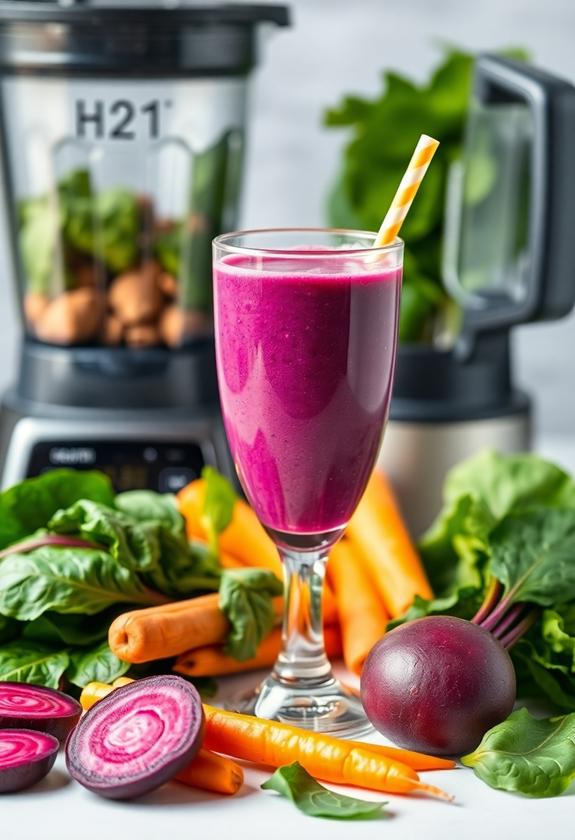
Boosting nutrient content in your kids' smoothies is a game-changer. By focusing on nutrient density, you'll maximize the health benefits of each sip. Start by adding leafy greens like spinach or kale, which are packed with vitamins and minerals. Delicious greens can enhance your smoothie game and provide a variety of health benefits. Experiment with different combinations to find what your kids enjoy most. Don't forget about colorful veggies like carrots or beets, which add natural sweetness and vibrant hues. For an extra nutritional punch, sprinkle in some chia seeds or ground flaxseed.
Kid-Friendly Flavor Combinations
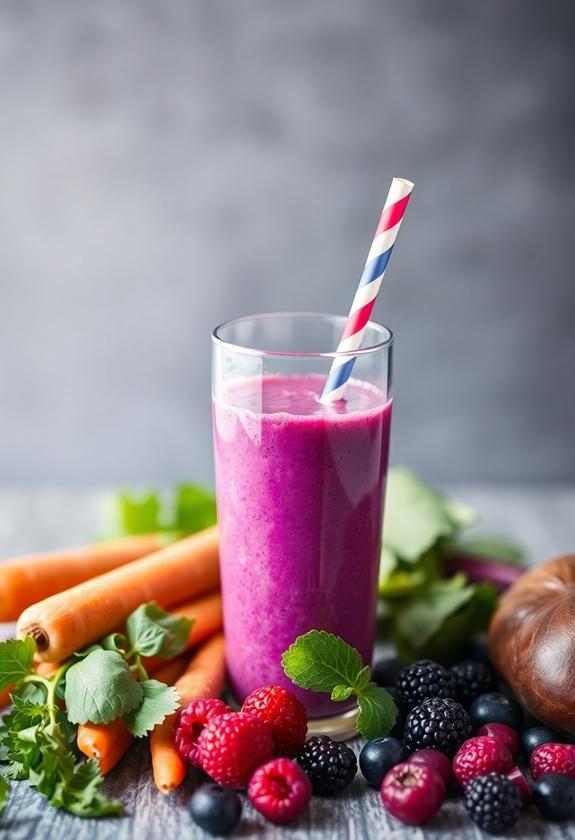
With kid-friendly flavor combinations, you'll transform veggie-packed smoothies into irresistible treats. Creative combinations and tasty pairings will have your little ones asking for more. Green smoothie recipes can be a fun way to introduce vegetables to picky eaters while maintaining a delicious taste. Try these delicious ideas:
- Chocolate-covered strawberry: Blend spinach, strawberries, cocoa powder, and a banana
- Tropical paradise: Mix mango, pineapple, coconut milk, and hidden cauliflower
- Berry blast: Combine mixed berries, beets, yogurt, and a splash of orange juice
- Green monster: Whip up kale, green apple, pear, and a hint of mint
Incorporating Leafy Greens
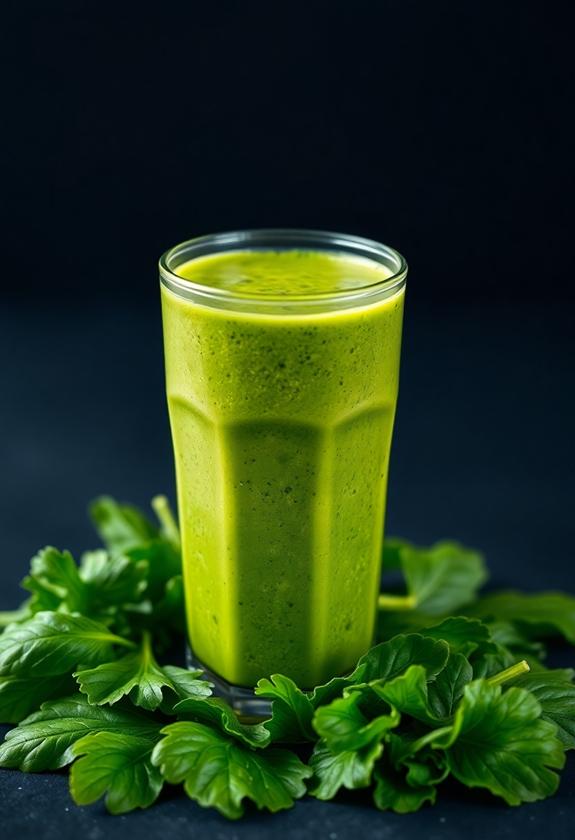
Leafy greens are nutrition powerhouses that you can easily sneak into smoothies. They're packed with vitamins, minerals, and fiber, making them essential for your child's growth and development. In terms of smoothie leaf varieties, you've got plenty of options. Start with mild-tasting greens like spinach or romaine lettuce, which blend seamlessly into fruity concoctions. As your little ones get used to the idea, you can gradually introduce stronger-flavored options like kale or Swiss chard. Green smoothies are generally safe for kids to enjoy, providing a tasty way to boost their vegetable intake.
To maximize leafy greens benefits, pair them with fruits high in vitamin C, like oranges or strawberries. This combination improves iron absorption from the greens. Don't worry if you see specks of green in the smoothie – tell your kids it's part of the magic! Remember, consistency is key. Keep experimenting with different combinations until you find the perfect blend for your family.
Sneaking in Root Vegetables
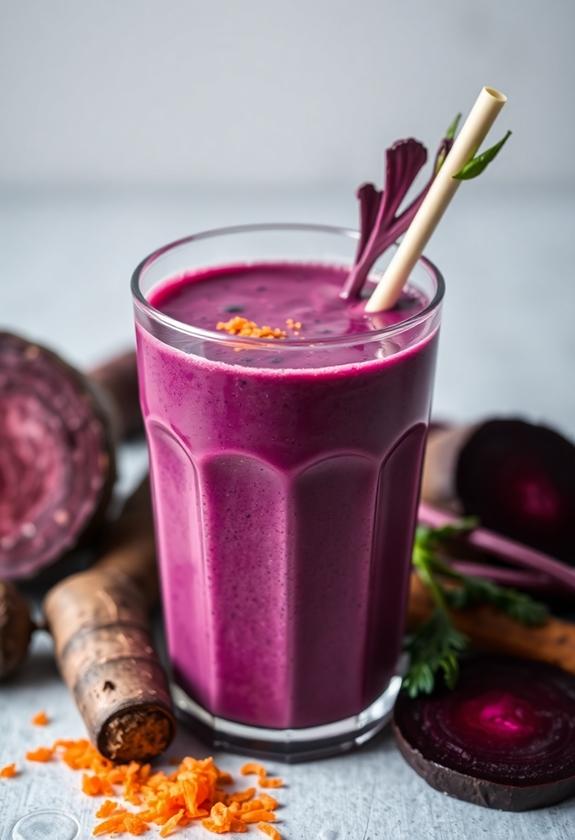
Incorporating root vegetables into smoothies can be a game-changer for picky eaters. These nutrient-packed veggies blend seamlessly, adding depth and subtle sweetness to your child's favorite drinks. Green smoothies offer amazing health benefits and are an excellent way to boost your family's vegetable intake. Let's investigate some fantastic options:
- Beets: Rich in antioxidants and vibrant color
- Carrots: Natural sweetness and beta-carotene boost
- Sweet potatoes: Creamy texture and vitamin A powerhouse
- Parsnips: Mild flavor and fiber-rich addition
The beet benefits are numerous, offering a beautiful hue and essential nutrients. Don't worry about the earthy taste; it's easily masked by fruits. Carrot sweetness is a perfect complement to berries or tropical fruits, creating a delicious blend your kids will love. Remember to steam or roast root vegetables before adding them to your smoothies for easier blending and improved digestibility. With these clever additions, you're nurturing your child's health while keeping their taste buds happy.
Smoothie Storage and Serving Tips
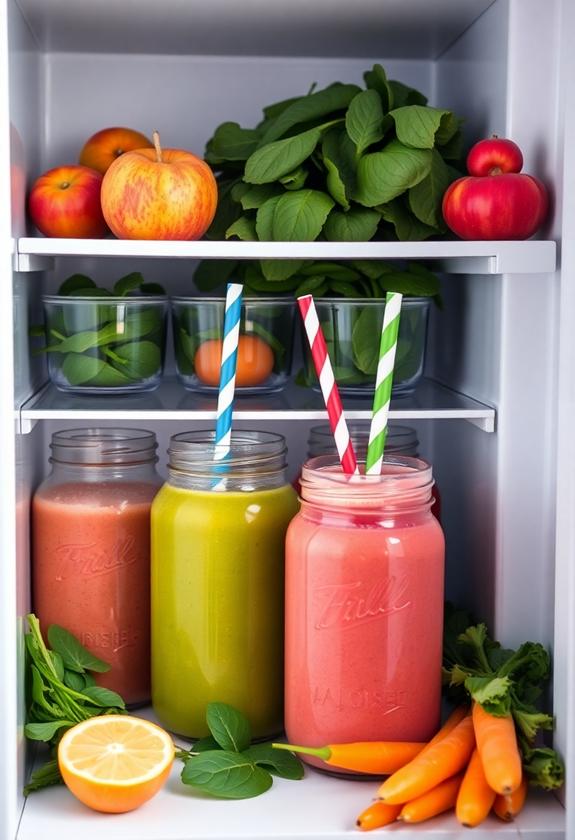
Savvy smoothie makers know that proper storage and serving techniques can make all the difference in preserving nutrients and flavor. Regarding smoothie storage, always pour your creation into an airtight container, filling it to the brim to minimize air exposure. Pop it in the fridge, where it'll stay fresh for up to 24 hours. If you're planning to enjoy it later, give it a good shake before serving to remix any separated ingredients. For green smoothie prep, consider making individual servings in mason jars for grab-and-go convenience. This method also helps prevent oxidation and keeps your smoothies fresher for longer.
For the best serving tips, consider temperature and presentation. Serve your smoothie chilled for maximum refreshment. If it's too thick after storage, add a splash of liquid and blend briefly. Pour it into a fun, colorful glass to make it more appealing to kids. Don't forget to add a reusable straw – it's eco-friendly and makes drinking easier for little ones.
Addressing Picky Eaters' Concerns
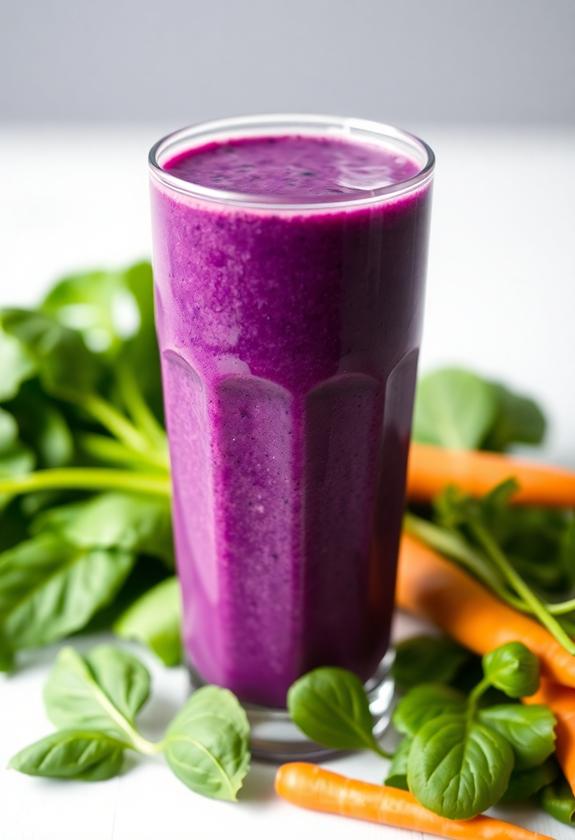
For picky eaters, the thought of vegetables in their smoothies might trigger immediate resistance. Understanding picky eater psychology is key to overcoming this challenge. Start by involving your child in the smoothie-making process, letting them choose some ingredients. This positive reinforcement can make them more open to trying new things. Green smoothies can be a great way to introduce vegetables into your child's diet while providing essential nutrients. They offer a natural way to cleanse and revitalize the body, making them beneficial for both adults and children.
When introducing veggies, start small and gradually increase amounts. Here's a helpful approach:
- Begin with mild-flavored veggies like spinach or cucumber
- Mask veggie flavors with sweet fruits like berries or bananas
- Use fun names for smoothies, like "Green Monster" or "Purple Power"
- Offer smoothies in colorful cups with fun straws
Gradually Increasing Vegetable Content
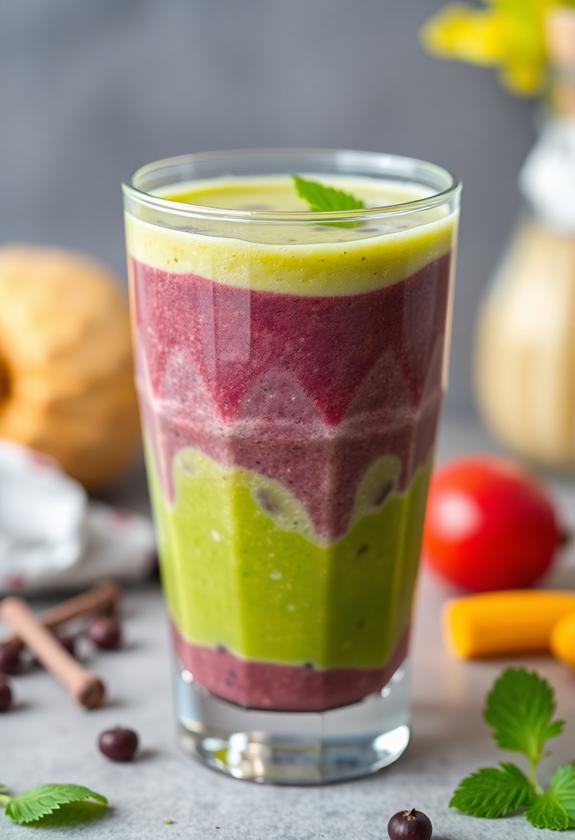
Once you've successfully introduced vegetables into your child's smoothies, it's time to gradually increase the veggie content. Start by adding a little more of the vegetables they've already accepted, then slowly introduce new ones. This gradual introduction helps your child adjust to different flavors and textures without feeling overwhelmed. Consider incorporating unique greens that are packed with nutrients but may be less familiar to your kids. These lesser-known greens can add variety and excitement to your smoothie creations.
Experiment with vegetable variety to keep things interesting. Try adding a handful of spinach one day, then swap it for some kale or cucumber the next. As your child becomes more comfortable, you can increase the ratio of veggies to fruit. Remember, patience is key! It might take time for your little one to fully adopt the veggie-packed smoothies, but your persistence will pay off. You're not just sneaking in nutrients; you're helping your child develop a lifelong love for healthy eating.
Frequently Asked Questions
Can I Use Vegetable Powders Instead of Fresh or Frozen Vegetables?
Yes, you can definitely use vegetable powders in your smoothies! They're a great alternative to fresh or frozen veggies. Vegetable powder benefits include convenience, longer shelf life, and concentrated nutrients. You'll find they're easy to blend and won't affect the smoothie's texture. For smoothie flavor improvement, start with small amounts and adjust to taste. Experiment with different powders like spinach, kale, or beet to find your favorites. Don't worry if the color changes – it's just a sign of all those extra nutrients you're getting!
How Do I Clean My Blender After Making Veggie Smoothies?
Cleaning your blender after whipping up veggie smoothies is a breeze! Don't let those stubborn smoothie ingredients give you a headache. Here's what you'll do: Rinse the blender immediately after use, then fill it halfway with warm water and a drop of dish soap. Blend for 30 seconds, rinse thoroughly, and air dry. For tough stains, try a mixture of baking soda and water. Regular blender maintenance will keep your smoothie-making machine in tip-top shape for years to come!
Are There Any Vegetables That Should Be Avoided in Smoothies?
In terms of veggie smoothies, you'll want to be mindful of taste balance. While most veggies are great, there are a few you might want to avoid. Strong-flavored greens like kale or mustard greens can overpower your smoothie. Raw beets might make it too earthy, and Brussels sprouts can be a bit bitter. Instead, try milder options like spinach, carrots, or cucumbers. Experiment with different veggie combinations to find what you enjoy most. Remember, it's all about making nutritious smoothies that taste great!
Can I Make Smoothies in Advance for the Entire Week?
Yes, you can make smoothies in advance for the entire week! It's a great way to save time and guarantee you've always got a healthy drink on hand. Just be mindful of smoothie storage to keep your creations fresh. Pour them into airtight containers, leaving a bit of space at the top, and refrigerate. You'll want to give them a good shake before drinking, as some separation might occur. Don't forget to experiment with different flavor combinations to keep things exciting all week long!
What's the Best Way to Introduce Smoothies to Toddlers?
To introduce smoothies to your toddler, start with familiar flavors they already enjoy. Blend fruits like bananas or strawberries with yogurt for a creamy texture they'll love. Let them watch you make it, and involve them by letting them choose ingredients. Start with small portions in colorful cups with fun straws. Be patient and persistent, as toddler taste buds can be picky. Gradually introduce new flavors and textures, celebrating each small victory. Remember, it's a journey of discovery for both of you!