Some links below are affiliate links. We earn a commission on purchases at no extra cost to you. Although our opinions are based on curated research, we haven't used these products. Article generated with AI.

How to Incorporate Anti-Inflammatory Smoothies Into Your Training Routine
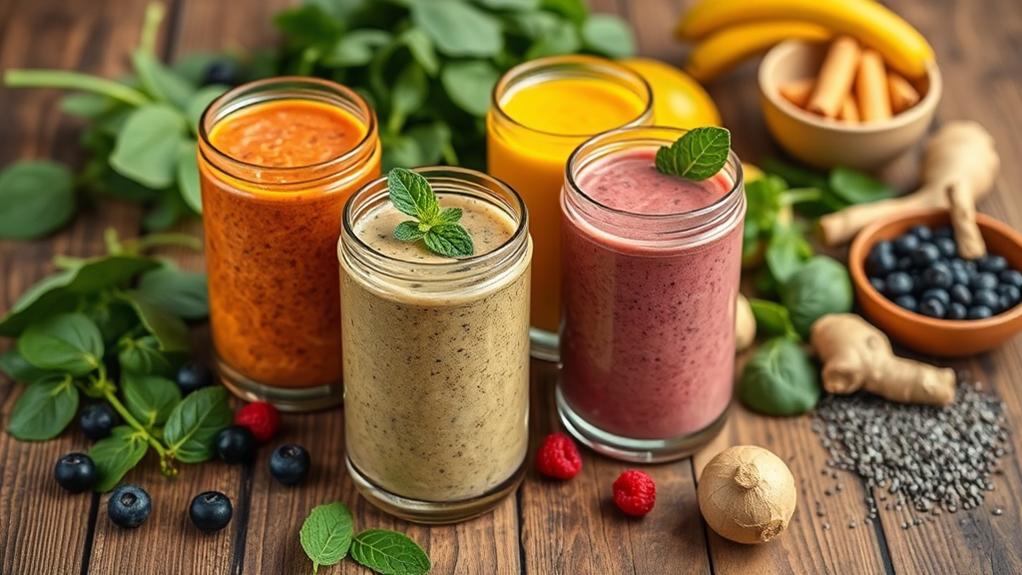
Incorporating anti-inflammatory smoothies into your training routine is easy and beneficial, helping to reduce soreness, boost recovery, and improve performance. Start by using ingredients like turmeric, ginger, berries, and leafy greens, which are all great at fighting inflammation. Have a smoothie 30 minutes before your workout for an energy boost, or right after to help muscles recover. Choose a mix of fruits, vegetables, and protein sources like Greek yogurt or protein powder. Keep your smoothies fresh by blending with coconut water or almond milk, and store them in airtight containers. For more tips on maximizing these benefits, there's plenty more to discover!
Table of Contents
hide
Key Takeaways
- Include anti-inflammatory ingredients like turmeric, ginger, and berries in your smoothies for optimal recovery and reduced muscle soreness.
- Consume pre-workout smoothies 30 minutes before exercise to boost energy and performance.
- Drink post-workout smoothies within 30 minutes to aid muscle repair and replenish energy stores.
- Balance macros and micros by incorporating protein sources, healthy fats, and antioxidant-rich fruits and vegetables.
- Customize smoothies with various base liquids, fruits, vegetables, and boosters to keep your routine interesting and nutritious.
Understanding Inflammation
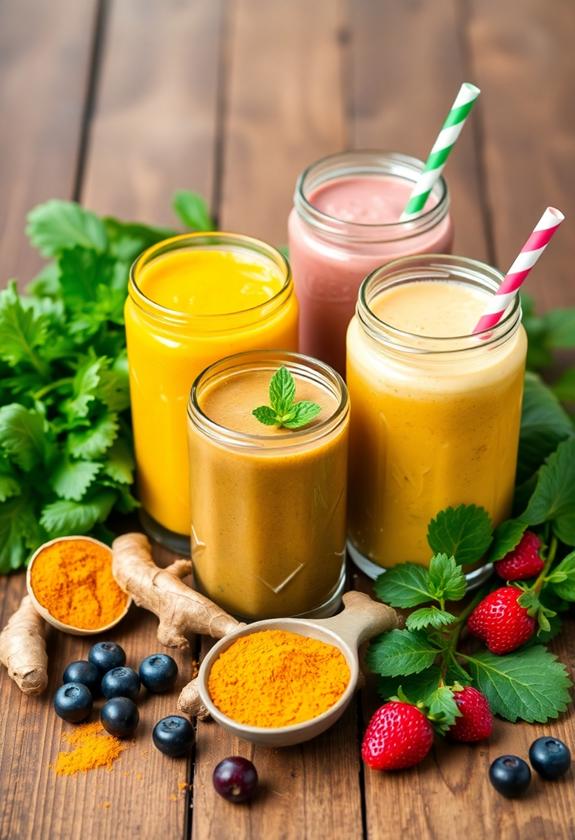
Understanding inflammation is essential for anyone looking to optimize their fitness and overall health. Inflammation can be either acute or chronic. Acute inflammation happens when your body reacts quickly to injury or infection, helping you heal. Think of it like your body's emergency response team. However, chronic inflammation is a different story. It's like a slow-burning fire that doesn't go out, often due to poor diet, stress, or lack of exercise. Transforming your diet can be a powerful way to combat chronic inflammation naturally, helping to improve overall health and fitness outcomes. This type can lead to serious health issues, including heart disease and diabetes. By understanding the difference between acute inflammation and chronic inflammation, you can make smarter choices for your body. You'll be better equipped to incorporate anti-inflammatory foods, like smoothies, into your routine, promoting long-term wellness.
Benefits of Smoothies
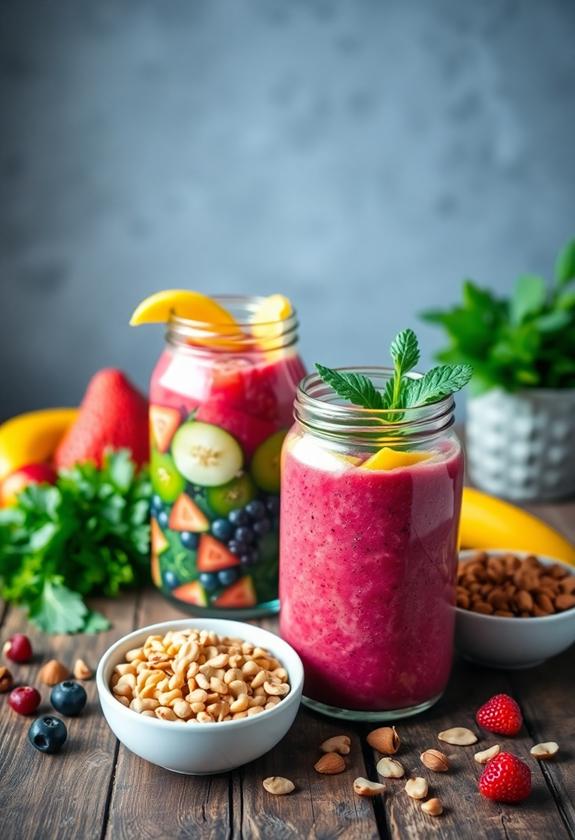
Smoothies offer a delicious and convenient way to pack a variety of nutrients into your diet. By blending fruits, vegetables, and other healthy ingredients, you guarantee ideal nutrient absorption, which helps fuel your body for training. Anti-inflammatory smoothies can be particularly beneficial for athletes, helping to reduce post-workout inflammation and support recovery. One of the biggest perks is the endless flavor combinations you can create. You can mix sweet fruits like berries with leafy greens, or add creamy elements like yogurt or avocado for a richer texture. This variety keeps your taste buds excited and makes sticking to a nutritious routine easier. Plus, smoothies are quick to prepare, making them perfect for busy mornings or post-workout snacks. They're not just tasty; they're a powerful tool for maintaining a balanced diet and supporting your fitness goals.
Key Anti-Inflammatory Ingredients
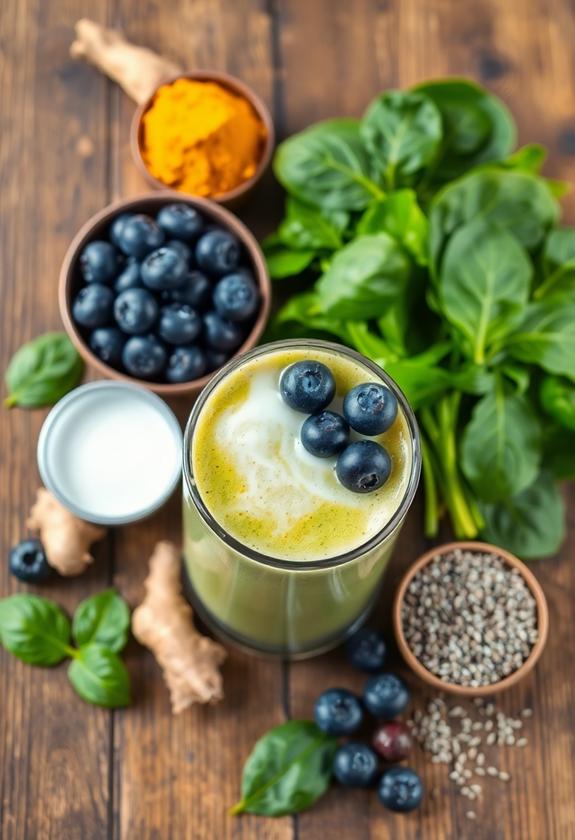
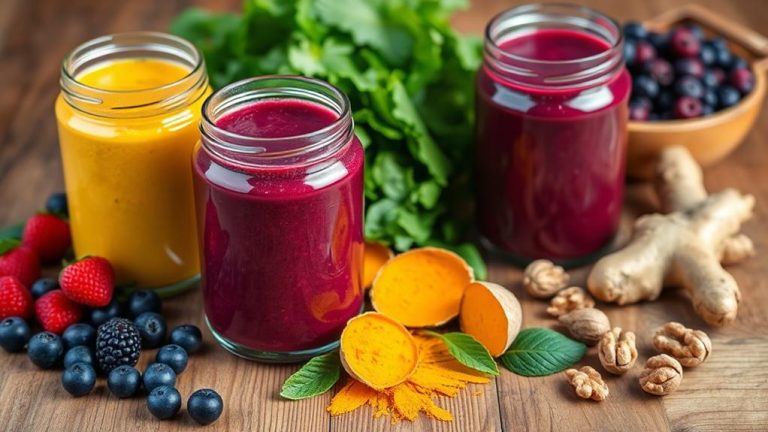
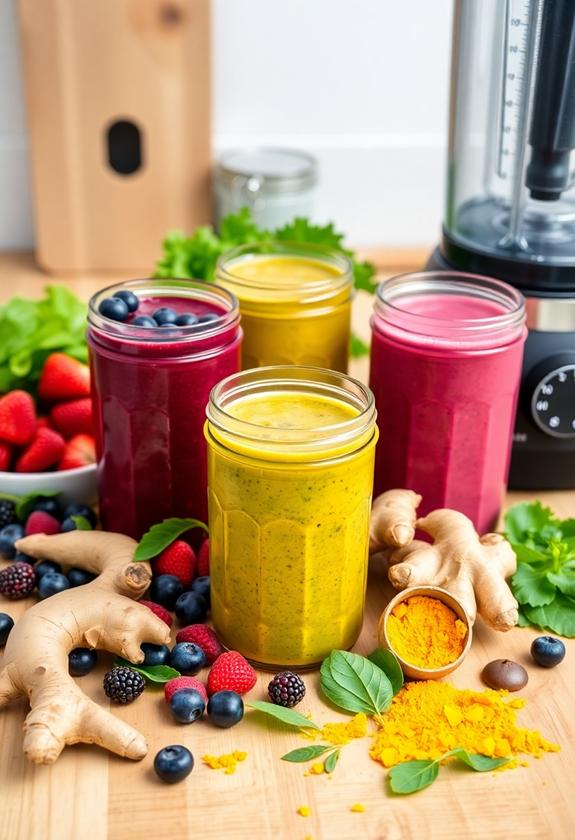
Several key ingredients can turn an ordinary smoothie into a powerful anti-inflammatory elixir. Top anti-inflammatory ingredients can significantly improve your overall health when incorporated into your diet regularly. Turmeric benefits your body with its strong anti-inflammatory and antioxidant properties. Ginger properties include reducing muscle soreness and pain. Don't forget berry varieties like blueberries, strawberries, and raspberries, which are packed with antioxidants. Leafy greens like spinach and kale add vitamins and minerals. Chia seeds provide omega-3 fatty acids, which help reduce inflammation. Using coconut water instead of regular water gives you extra electrolytes. Almond milk is a great, creamy base that's also dairy-free. For creaminess and healthy fats, add avocado; avocado nutrition supports heart health and reduces inflammation. Blend these ingredients, and you'll have a delicious, anti-inflammatory boost for your training routine.
Pre-Workout Smoothie Ideas
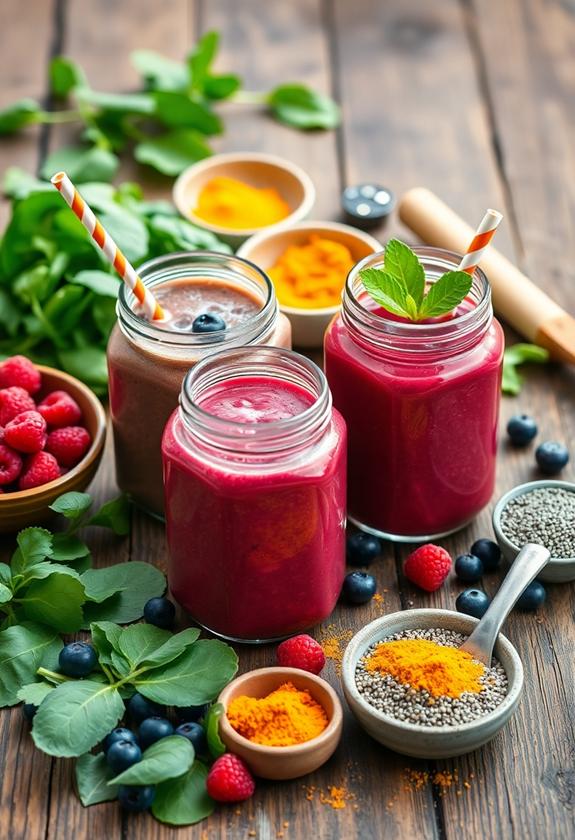
Energize your training sessions with these pre-workout smoothie ideas that are both delicious and functional. Start your day right with nutrient timing, ensuring your body gets the fuel it needs to perform at its best. Inflammation-fighting smoothies can help support your body's recovery and overall health while boosting your performance. Smoothie flavor combinations can make a big difference in taste and nutritional balance. Try these tasty options:
- Berry Blast: Mix blueberries, strawberries, and a scoop of protein powder.
- Green Power: Blend spinach, banana, and a touch of honey.
- Tropical Twist: Combine pineapple, mango, and coconut water.
- Nutty Banana: Mix banana, almond butter, and a dash of cinnamon.
- Citrus Kick: Blend orange, carrot, and ginger for a zesty treat.
These smoothies will help you stay energized and ready to tackle your workout!
Post-Workout Smoothie Recipes
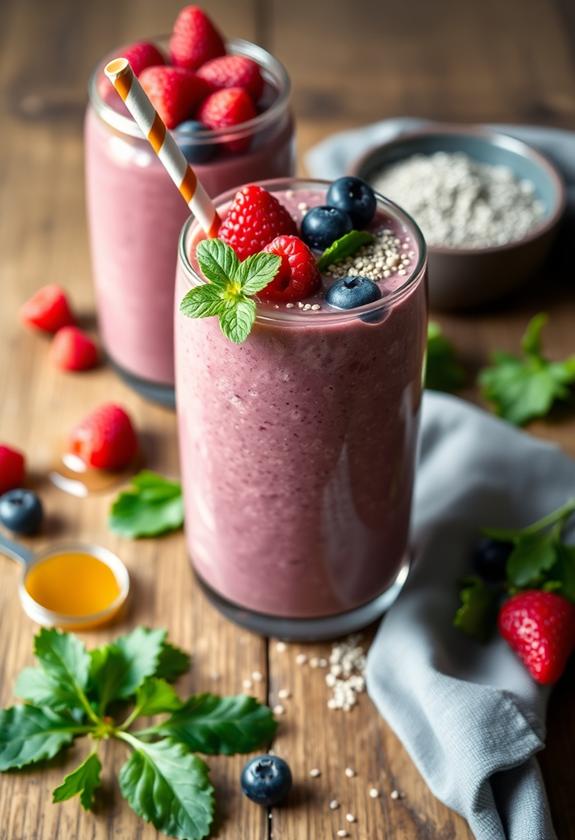
After an intense workout, your body craves nutrients to replenish energy stores and repair muscles. A post-workout smoothie can do just that, packing in essential protein sources and delicious flavor combinations. Anti-inflammatory ingredients can help speed up recovery and reduce muscle soreness, making them an excellent addition to your post-workout routine. Try blending Greek yogurt, a banana, and a handful of spinach for a creamy, nutrient-dense treat. Add a scoop of protein powder for an extra boost.
Another tasty option is mixing almond milk, frozen berries, and a spoonful of chia seeds. This not only delivers a protein punch but also adds fiber and antioxidants. You can also experiment with flavor by adding a pinch of cinnamon or a splash of vanilla extract. These smoothies are a perfect way to nourish your body and satisfy your taste buds.
Timing Your Smoothie Intake
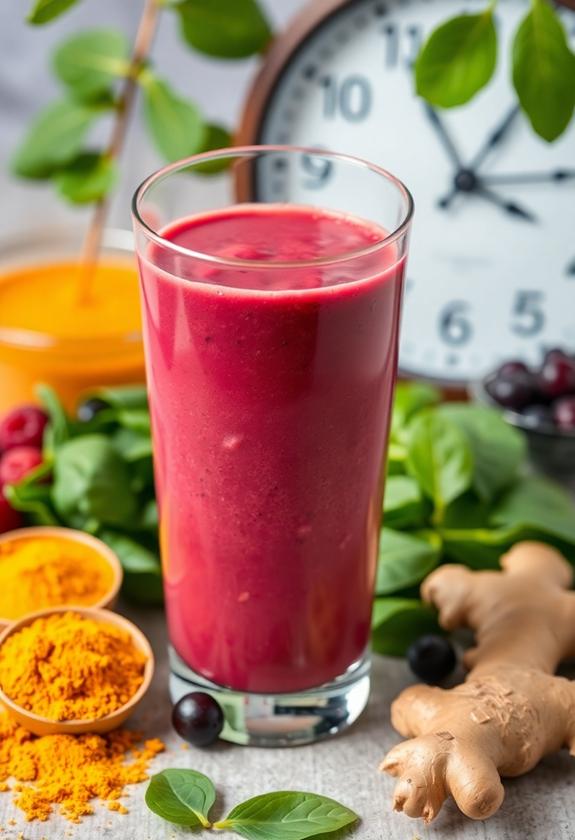
When planning your smoothie intake, timing is key to maximizing its benefits. Incorporating anti-inflammatory smoothies into your day will support your training routine, boost energy, and promote recovery. Regular consumption of these nutrient-dense beverages can help reduce inflammation and support overall health. For best results, consider the following:
- Morning routine: Start your day with a nutrient-packed smoothie to kickstart your metabolism.
- Pre-workout boost: Drink a smoothie about 30 minutes before exercising to fuel your body.
- Post-workout recovery: Consume a smoothie within 30 minutes after your workout to help muscle repair.
- Snack alternative: Replace unhealthy snacks with a smoothie to curb hunger and provide essential nutrients.
- Evening relaxer: Wind down with a soothing smoothie before bed to aid in overnight recovery.
Balancing Macros and Micros
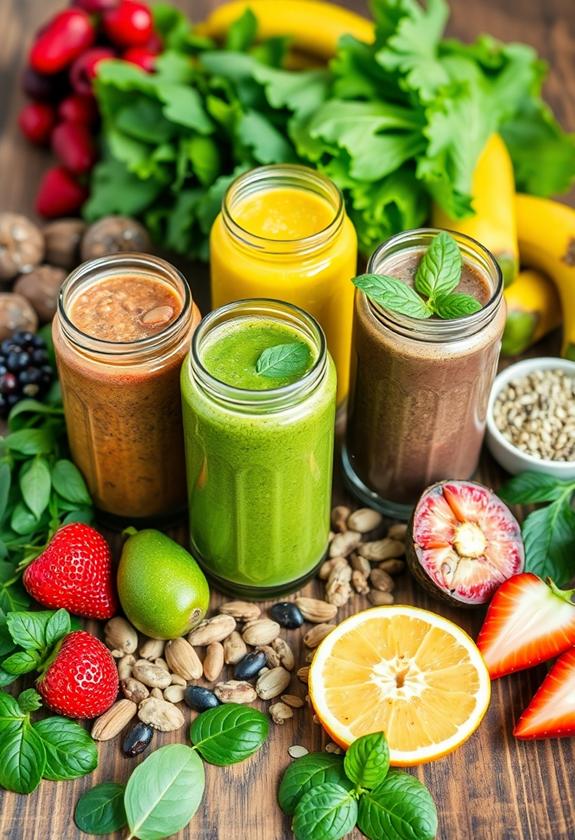
Balancing macros and micros in your anti-inflammatory smoothies is essential for optimizing their benefits. Aim for good macronutrient ratios by including proteins, healthy fats, and carbs. Think of sources like Greek yogurt, avocados, and berries. Micronutrient sources like spinach, chia seeds, and turmeric boost your dietary balance. Anti-inflammatory ingredients such as ginger, blueberries, and leafy greens can further improve your smoothie's nutritional profile. These foods not only taste great but also help reduce inflammation in the body. Timing your nutrients is key; having a smoothie post-workout can enhance energy levels and support your fitness goals. Carefully plan your meals and balance your food combinations to guarantee you're getting all the necessary vitamins and minerals. Remember, smooth and steady nutrient timing can make all the difference. With thoughtful meal planning, you'll find it easier to stay on track, feeling stronger and more energized every day.
Enhancing Recovery
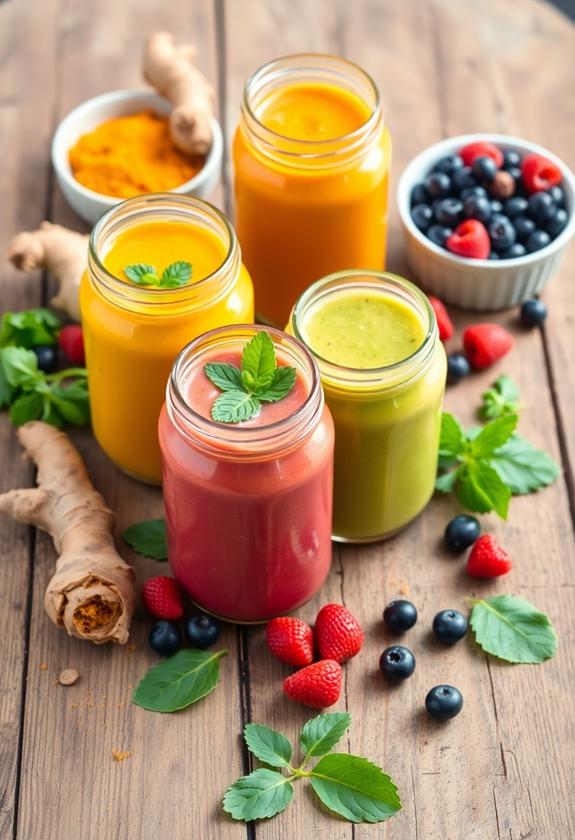
Optimizing your nutrient intake through balanced macros and micros sets a strong foundation for enhancing recovery. Anti-inflammatory smoothies can play an essential role in muscle repair and hydration strategies. These smoothies help reduce inflammation, speed up recovery, and guarantee your body gets the nutrients it needs. Athlete success stories have shown that incorporating anti-inflammatory smoothies into training routines can significantly improve recovery times and overall performance. To make the most out of your smoothies:
- Include leafy greens: Spinach and kale are packed with vitamins and minerals.
- Add fruits rich in antioxidants: Berries, cherries, and pineapples are great choices.
- Incorporate healthy fats: Avocado and flaxseeds can support muscle repair.
- Use hydrating ingredients: Coconut water and cucumbers boost hydration.
- Blend in protein sources: Greek yogurt or protein powder aids muscle recovery.
Boosting Performance
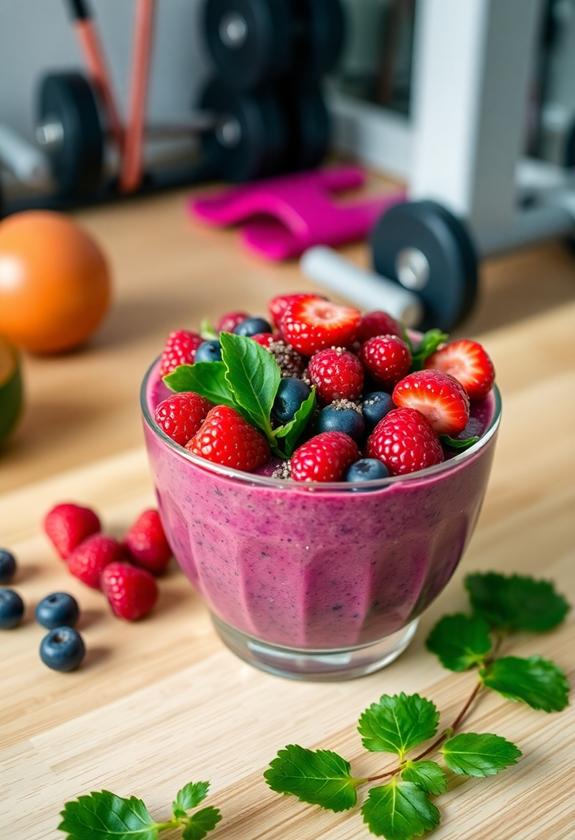
Often, enhancing performance isn't just about the hours you put in at the gym but also what you consume. Anti-inflammatory smoothies can play a vital role in boosting your performance metrics. Top anti-inflammatory superfoods like turmeric, ginger, and leafy greens can be easily incorporated into your smoothies for maximum benefits. By carefully choosing your ingredients and focusing on nutrient timing, you fill your body with the right fuel at the right time. This means including foods rich in antioxidants, like berries, which help reduce inflammation and support muscle function. Timing your smoothie intake before and after workouts guarantees you maximize energy levels and recovery. With these steps, you'll notice improvements in your stamina, strength, and overall performance. Remember, your diet is a powerful tool in achieving your fitness goals, so use it wisely!
Customizing Your Smoothie
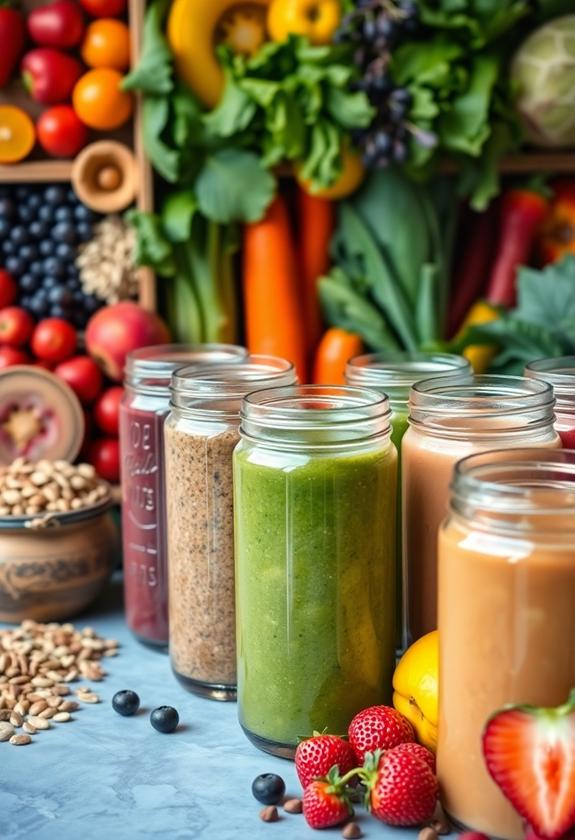
Creating the perfect anti-inflammatory smoothie means you'll need to tailor it to your specific needs and tastes. Customizing your smoothie is all about finding the right flavor combinations and making smart ingredient substitutions. Start by thinking about your favorite fruits and veggies, then build from there. Berry combinations can be particularly effective for fighting inflammation and adding delicious flavors to your smoothie.
Here are some ideas to get you started:
- Base liquids: Water, almond milk, coconut water, or green tea.
- Fruits: Blueberries, cherries, pineapple, or mango.
- Veggies: Spinach, kale, cucumber, or avocado.
- Boosters: Ginger, turmeric, chia seeds, or flaxseeds.
- Sweeteners: Honey, maple syrup, agave, or dates.
Experiment with these options to create a smoothie that not only fights inflammation but also tastes delicious and supports your training goals.
Smoothie Preparation Tips
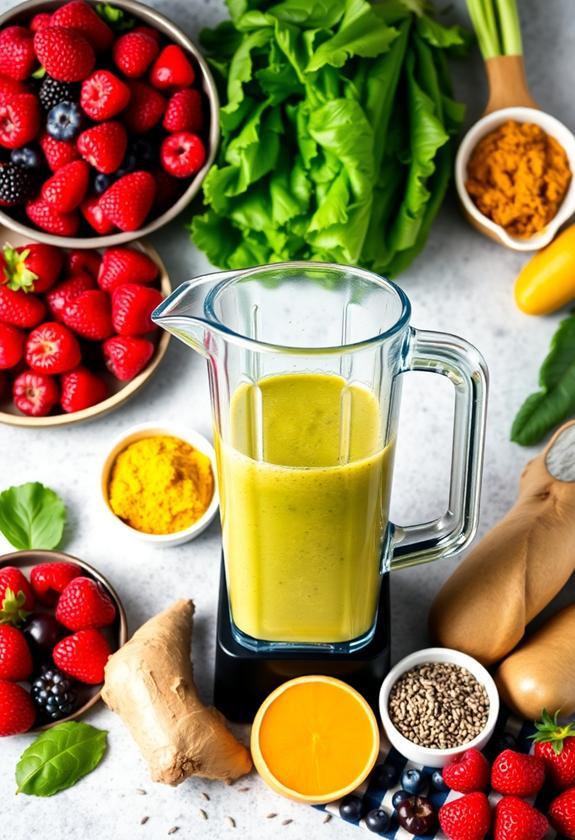
Making a smoothie that's both nutritious and delicious requires some essential preparation tips. First, focus on smoothie blending; start with a liquid base like almond milk or coconut water. This helps your ingredients mix smoothly. Next, pay attention to ingredient ratios. Use about one cup of leafy greens, one cup of fruit, and half a cup of yogurt or a scoop of protein powder. Adding anti-inflammatory ingredients like turmeric or ginger can boost benefits without overpowering the flavor. When using turmeric, consider adding black pepper to improve its absorption and effectiveness in your smoothie.
Vary your textures by combining frozen and fresh produce. Frozen fruits make your smoothie creamy, while fresh ones add a burst of flavor. Blend on high for about a minute to guarantee everything is well-mixed. Enjoy the process, and happy blending!
Storing and Preserving
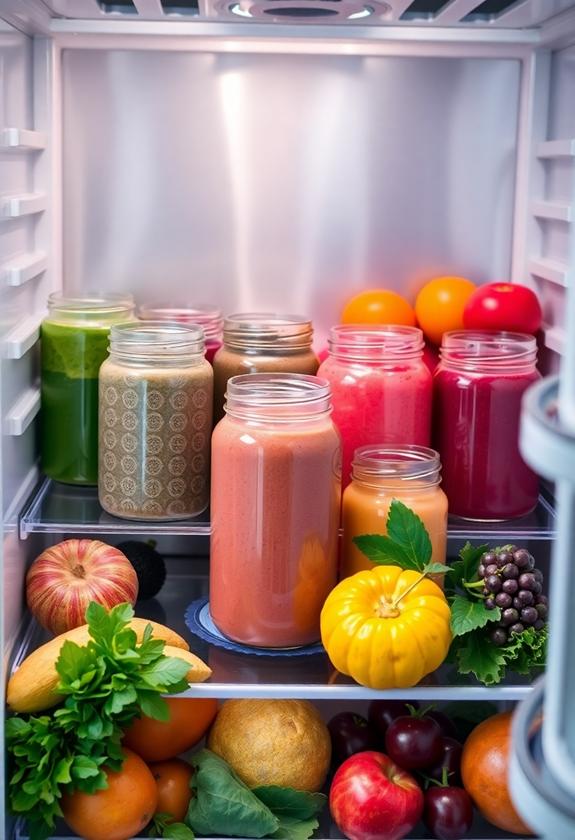
Properly storing and preserving your smoothies guarantees they stay fresh and retain their nutritional value. To do this effectively, you need the right freezing methods and storage containers. Start by dividing your smoothies into single-serving portions. This not only makes them easier to store but also convenient when you're in a rush. Chronic pain sufferers can benefit from having ready-to-drink anti-inflammatory smoothies on hand for quick relief throughout the day.
- Use airtight storage containers: These keep your smoothies fresh and prevent spills.
- Label your containers: Write the date and ingredients on each one for easy identification.
- Freeze immediately: This locks in the nutrients and flavors.
- Leave some space: Liquids expand when frozen, so don't fill containers to the brim.
- Thaw in the fridge: Move your smoothie from freezer to fridge the night before you need it.
These tips guarantee your anti-inflammatory smoothies are always ready when you are!
Troubleshooting Common Issues
When blending anti-inflammatory smoothies, you might occasionally run into some common issues that can affect taste, texture, or nutritional value. One frequent mistake is overloading with ingredients, which can compromise the balance of flavors and nutrients. It's important to maintain proper proportions for ideal results. If your smoothie turns out too thick, try adjusting your blending techniques by adding more liquid gradually until you reach the desired consistency. For those with ingredients that don't blend well, like fibrous greens, consider ingredient substitutions such as baby spinach instead of kale. To improve flavor, experiment with different fruits or add a touch of honey. If your smoothie separates quickly, blend it longer to guarantee all ingredients are fully integrated. Sometimes, a pinch of chia seeds can help stabilize the mixture. Remember, small tweaks can make a big difference, so don't hesitate to adjust as needed.
Frequently Asked Questions
Are Anti-Inflammatory Smoothies Safe for Children and Elderly Individuals?
Think of anti-inflammatory smoothies as gentle hugs for your insides, full of nutritional benefits. They're generally safe for children and elderly individuals, but age considerations are key. Kids and seniors have different nutritional needs, so tailor the ingredients accordingly. For instance, avoid strong spices for kids and guarantee easy-to-digest fruits for the elderly. Always consult with a healthcare provider to guarantee these smoothies fit their specific dietary needs.
Can I Use Frozen Fruits and Vegetables in My Anti-Inflammatory Smoothies?
Yes, you can definitely use frozen fruits and vegetables in your anti-inflammatory smoothies. One of the frozen benefits is nutrient preservation, as freezing locks in essential vitamins and minerals. Plus, frozen produce often has a delightful texture, making your smoothies creamy and refreshing. So go ahead, toss those frozen berries and spinach into your blender, and enjoy a delicious, nutrient-packed treat that supports your health journey!
How Do Anti-Inflammatory Smoothies Affect Individuals With Food Allergies?
When dealing with food allergies, you'll want to contemplate ingredient substitutions in your anti-inflammatory smoothies. Swap out allergens for safe alternatives, like using almond milk instead of cow's milk or mango instead of strawberries, if needed. Always check labels for hidden allergens, and consult a nutritionist for personalized advice. This way, you can enjoy the benefits without worry, keeping your smoothies both delicious and safe for you.
Are There Vegan or Dairy-Free Options for Anti-Inflammatory Smoothies?
Did you know that nearly 9.7 million Americans follow a vegan diet? You can easily make anti-inflammatory smoothies with vegan ingredients, ensuring you get the nutrient density you need. Try using almond milk, spinach, blueberries, and chia seeds. These ingredients not only taste great but also help reduce inflammation. Plus, they're packed with vitamins and minerals, making your smoothies both delicious and nutritious. Enjoy your healthy, dairy-free options!
Can Anti-Inflammatory Smoothies Be Used as Meal Replacements?
Yes, anti-inflammatory smoothies can be used as meal replacements! It's crucial to focus on meal timing and nutrient density. Make sure your smoothie includes a good blend of proteins, healthy fats, and carbs to keep you full and energized. Adding ingredients like spinach, berries, and nuts can boost the nutrient content. Keep experimenting with flavors and find what works best for you, making your training routine both delicious and nourishing.