Some links below are affiliate links. We earn a commission on purchases at no extra cost to you. Although our opinions are based on curated research, we haven't used these products. Article generated with AI.

What Are Common Mistakes People Make With Anti-Inflammatory Smoothies?
When making anti-inflammatory smoothies, you might be making some common mistakes without realizing it. You could be overloading with fruit, which can spike your blood sugar, or neglecting healthy fats and protein sources that are essential for nutrient absorption and satiety. Don't forget to watch your portion sizes and avoid processed ingredients that can negate health benefits. It's easy to overlook the power of spices and herbs, which can boost anti-inflammatory properties. Blending techniques and timing matter too, as does varying your ingredients regularly. By addressing these issues, you'll be on your way to creating more effective, health-boosting smoothies. Let's investigate how to perfect your anti-inflammatory blend!
Table of Contents
hide
Key Takeaways
- Overloading smoothies with fruits, leading to high sugar content and potential blood sugar spikes.
- Neglecting healthy fats, which are crucial for vitamin absorption and reducing inflammation.
- Forgetting to include protein sources, which help balance the smoothie and promote satiety.
- Using processed ingredients instead of whole, fresh foods, potentially negating health benefits.
- Overlooking the addition of anti-inflammatory spices and herbs like turmeric, ginger, and cinnamon.
Overloading With Fruit
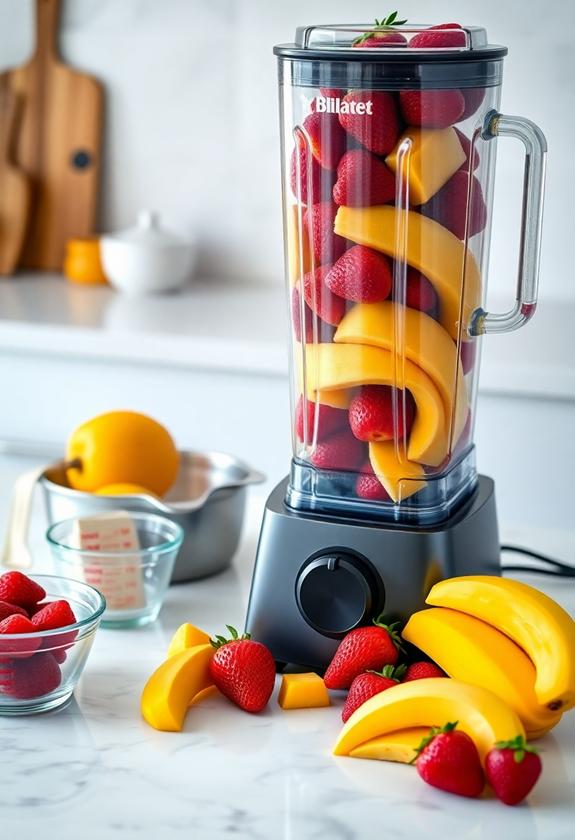
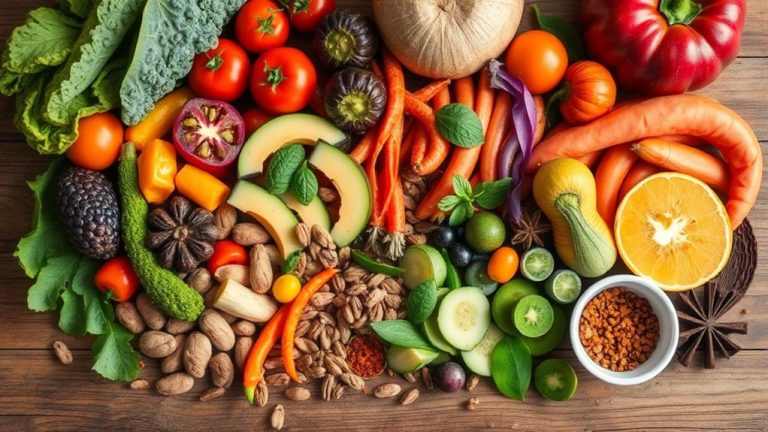
Fruit lovers, beware! While adding fruit to your anti-inflammatory smoothies can be delicious, it's easy to go overboard. You might think that packing your blender with a rainbow of fruits is the best way to boost nutrition, but too much fruit can actually work against your health goals. Soothing inflammation naturally through smoothies requires a balanced approach, focusing on ingredients that specifically target inflammatory processes in the body.
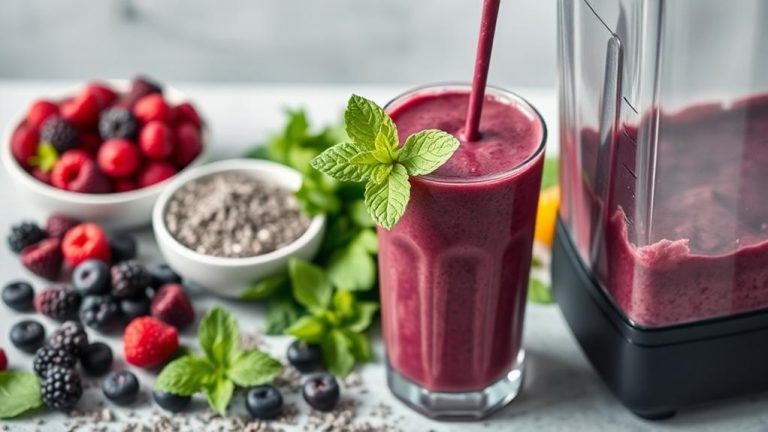
When you overload your smoothie with fruit, you're also adding a hefty dose of natural sugars. Even though these sugars are better than processed ones, they can still spike your blood sugar levels. Instead, aim for a balanced fruit variety in your smoothies. Try using just one or two fruit servings and focus on low-sugar options like berries. To sweeten your drink without excess sugar, consider sugar alternatives like stevia or a touch of honey. Remember, moderation is key to creating truly beneficial anti-inflammatory smoothies that'll keep you feeling great!
Neglecting Healthy Fats
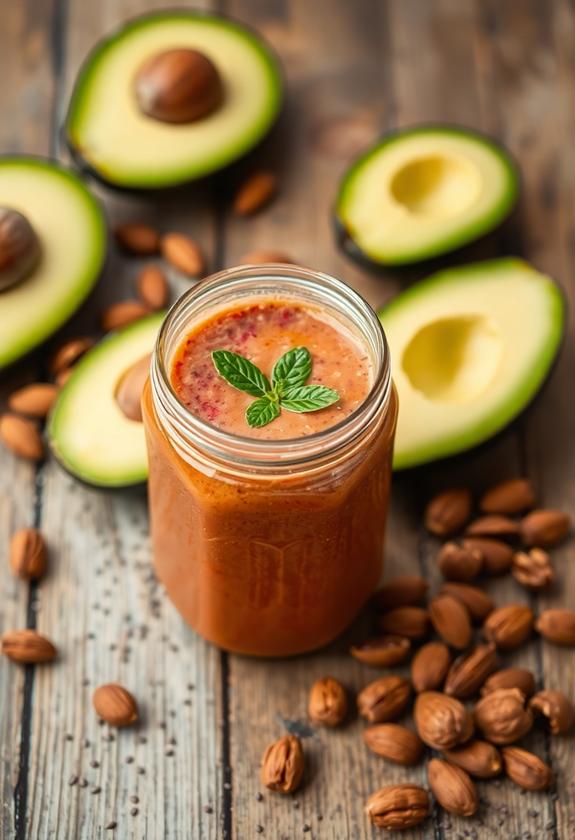
In regard to anti-inflammatory smoothies, many people make the mistake of neglecting healthy fats. You might think that cutting out fats altogether is the way to go, but that's not the case! Your body needs healthy fat sources to function properly. Fats help with nutrient absorption, especially fat-soluble vitamins like A, D, E, and K. They're also vital for hormone balance and brain health. Omega-3 fatty acids are particularly beneficial for joint health and can be easily incorporated into smoothies. These essential fats have been shown to reduce inflammation and support overall joint function.
Don't be afraid to add a small amount of avocado, chia seeds, or nut butter to your smoothie. These ingredients not only provide essential fats but also contribute to a creamy texture that'll make your drink more satisfying. Remember, it's all about balance. A little healthy fat goes a long way in supporting your body's anti-inflammatory efforts and overall well-being. Welcome these nourishing additions, and you'll feel the difference!
Skipping Protein Sources
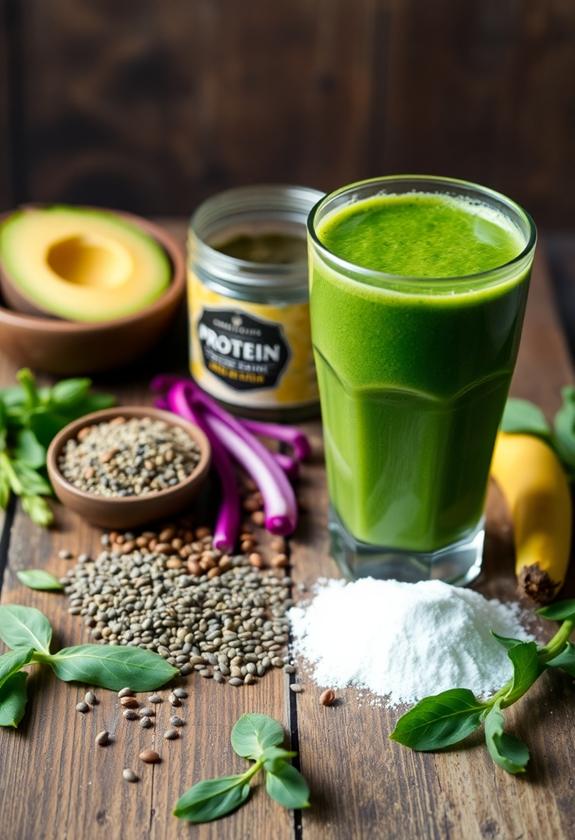
Another common oversight in anti-inflammatory smoothies is skipping protein sources. You might be focusing on fruits and veggies, which is great, but don't forget about protein! It's vital for maintaining smoothie balance and keeping you satisfied longer. Try adding Greek yogurt, chia seeds, or a scoop of plant-based protein powder to your blend. Essential smoothie ingredients can also include nuts and seeds, which provide both protein and healthy fats to boost the anti-inflammatory effects of your smoothie.
Protein isn't just for muscle building; it's important for reducing inflammation too. It helps repair tissues and supports your immune system. Plus, when you include protein in your smoothie, you're less likely to feel hungry soon after drinking it. This can help you avoid snacking on processed foods that might trigger inflammation. Remember, a well-rounded anti-inflammatory smoothie should have a good mix of fruits, veggies, healthy fats, and protein sources. Your body will thank you for the extra care!
Ignoring Portion Control
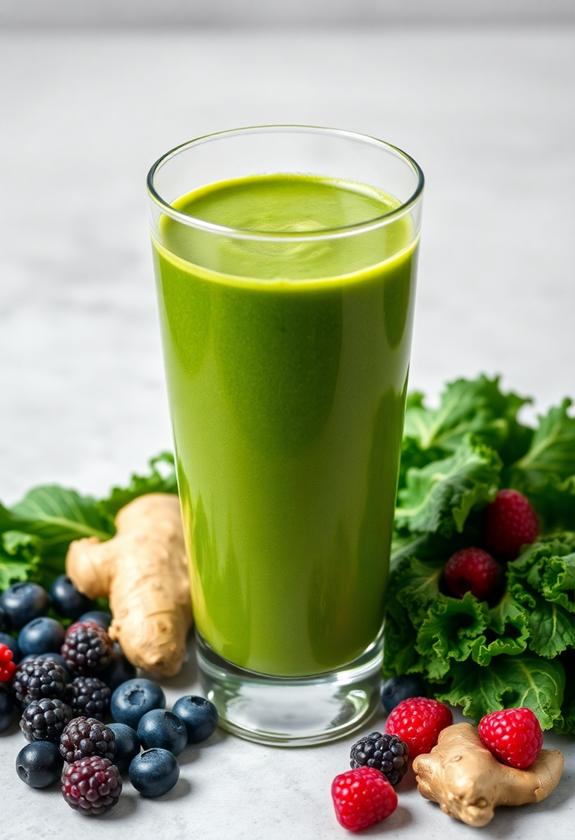
Portion control is a critical aspect of anti-inflammatory smoothies that's often overlooked. When you're whipping up a delicious blend, it's easy to get carried away and create an oversized serving. Remember, even healthy ingredients can contribute excess calories if you're not mindful of portion sizes. To keep your smoothies balanced, try using smaller glasses or measuring your ingredients. This way, you'll enjoy all the benefits without overindulging. Regular consumption of anti-inflammatory smoothies can provide numerous health benefits, but it's important to maintain a balanced approach to reap these rewards.
Practicing mindful eating with your smoothies can help you savor every sip and feel more satisfied. Take your time to enjoy the flavors and textures, and listen to your body's hunger cues. By paying attention to portion sizes and practicing mindful eating, you'll make the most of your anti-inflammatory smoothies. Don't worry if it takes some practice – you're on the right track to nourishing your body!
Using Processed Ingredients
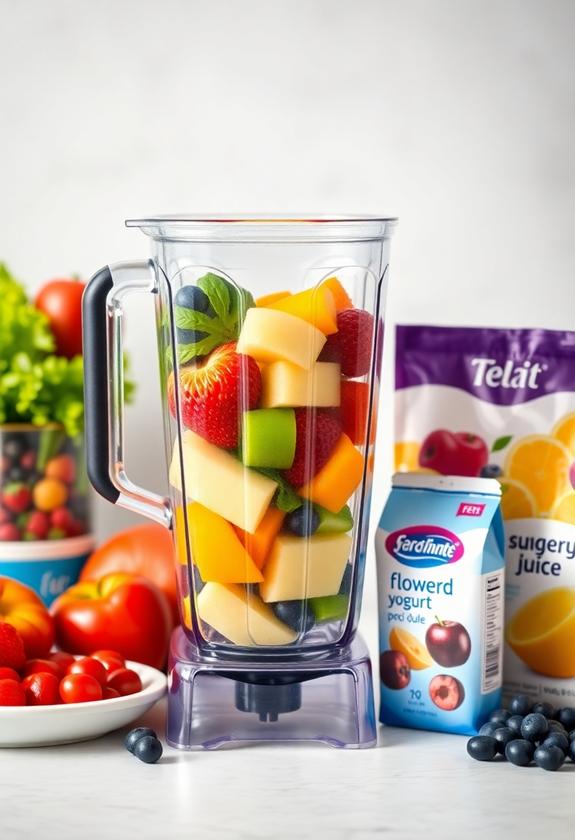
While portion control is key, the ingredients you choose are just as vital. When making anti-inflammatory smoothies, it's tempting to reach for convenient, processed ingredients. But these can actually work against your health goals. Incorporating top anti-inflammatory ingredients into your smoothies can significantly boost their health benefits. However, using processed versions of these ingredients can negate their positive effects. Processed ingredients often contain added sugars, artificial additives, and preservatives that may increase inflammation in your body. They're also typically stripped of essential nutrients, which can hinder nutrient absorption.
Instead, opt for whole, fresh ingredients whenever possible. Choose ripe fruits, leafy greens, and anti-inflammatory powerhouses like ginger and turmeric. Don't forget about healthy fats from sources like avocados or chia seeds. These natural ingredients are packed with vitamins, minerals, and antioxidants that your body can easily recognize and use. By focusing on whole foods, you'll create smoothies that truly nourish your body and support your anti-inflammatory efforts. You've got this!
Forgetting Leafy Greens
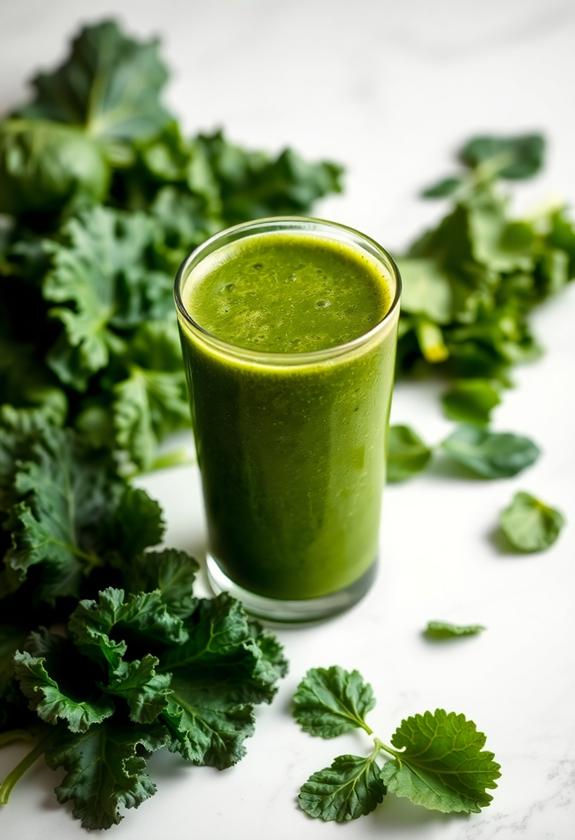
Leafy greens are often overlooked when crafting anti-inflammatory smoothies, but they're an essential component. These powerhouses of nutrition can dramatically boost your smoothie's nutrient density, providing a wealth of vitamins, minerals, and antioxidants. Don't worry about greens overpowering your drink; with the right balance, they'll complement other flavors beautifully. Anti-inflammatory herbs and spices can be combined with leafy greens to further improve the health benefits of your smoothie. This powerful combination can help combat inflammation while providing a delicious and nutritious drink.
Try adding a handful of spinach, kale, or Swiss chard to your next smoothie. You'll be amazed at how easily they blend in, improving the health benefits without compromising taste. Remember, achieving flavor balance is key. Start with a small amount and gradually increase as you become accustomed to the taste. By incorporating leafy greens, you're not only fighting inflammation but also nourishing your body with every sip. It's a simple change that can make a world of difference in your health journey.
Adding Too Much Sugar
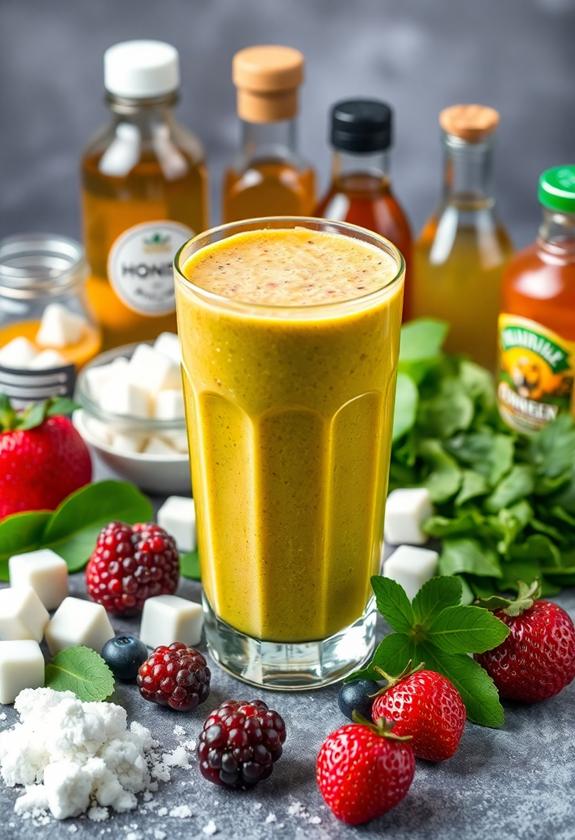
Sugar can be a sneaky saboteur in your anti-inflammatory smoothies. While you might think you're making a healthy choice, adding too much sugar can actually increase inflammation in your body. It's important to be mindful of the sweeteners you're using and how much you're adding. Instead of relying on refined sugars, try embracing the natural sweetness of fruits and vegetables. When crafting your anti-inflammatory smoothies, focus on incorporating ingredients known for their inflammation-fighting properties.
Here are some tips to help you reduce sugar in your smoothies:
- Use ripe fruits for natural sweetness
- Experiment with sugar alternatives like stevia or monk fruit
- Add cinnamon or vanilla extract for flavor without sugar
- Gradually reduce sugar to adjust your taste buds
Overlooking Spices and Herbs
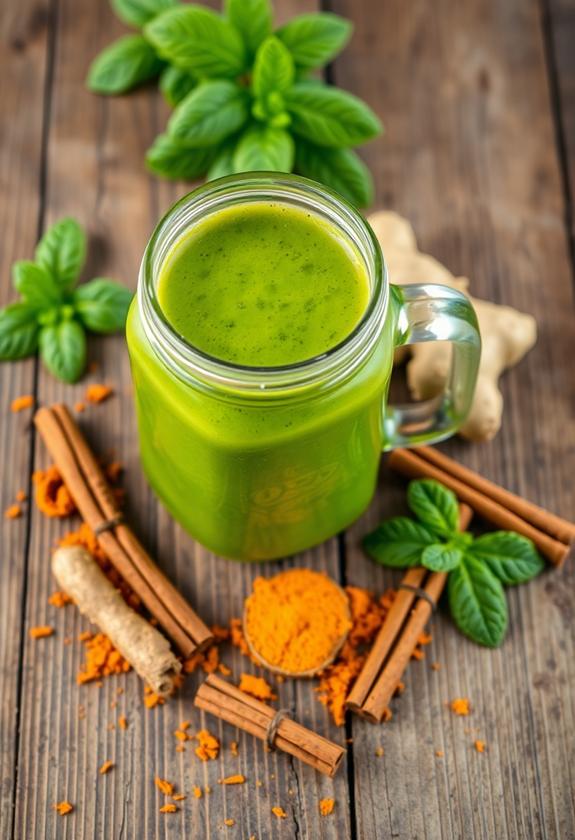
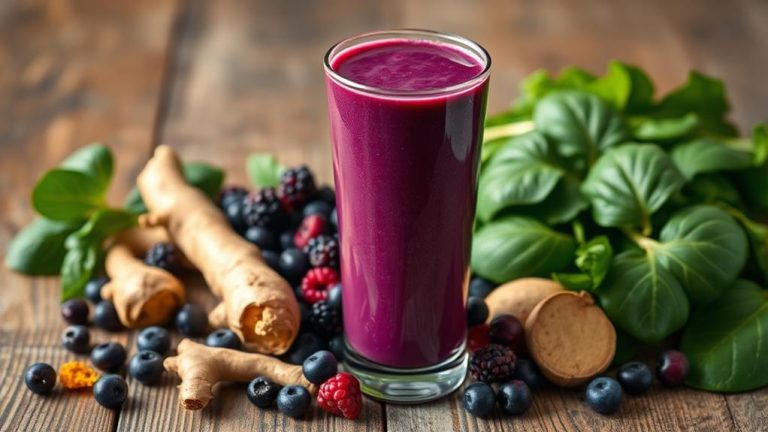
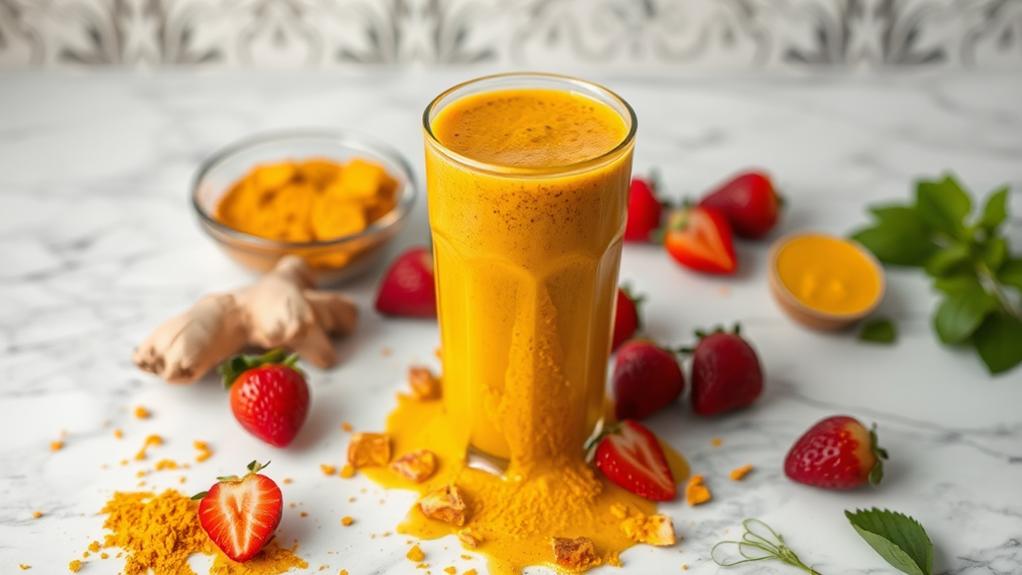
Many people overlook the power of spices and herbs when making anti-inflammatory smoothies. You're missing out on a world of flavor and health benefits! Spices like turmeric, ginger, and cinnamon aren't just tasty; they're packed with anti-inflammatory properties. Don't forget about herb varieties either. Basil, mint, and parsley can add a refreshing twist while boosting your smoothie's nutritional value. Ginger, in particular, has been shown to have potent anti-inflammatory effects that can significantly contribute to overall health when consumed regularly.
When you're crafting your next smoothie, try adding a pinch of these powerful ingredients. You'll be amazed at how they can transform your drink! Start small, with just a quarter teaspoon, and adjust to your taste. Remember, spice benefits go beyond flavor – they're working hard to reduce inflammation in your body. By incorporating these often-overlooked additions, you're taking a simple step towards better health. Your taste buds and your body will thank you!
Improper Blending Techniques
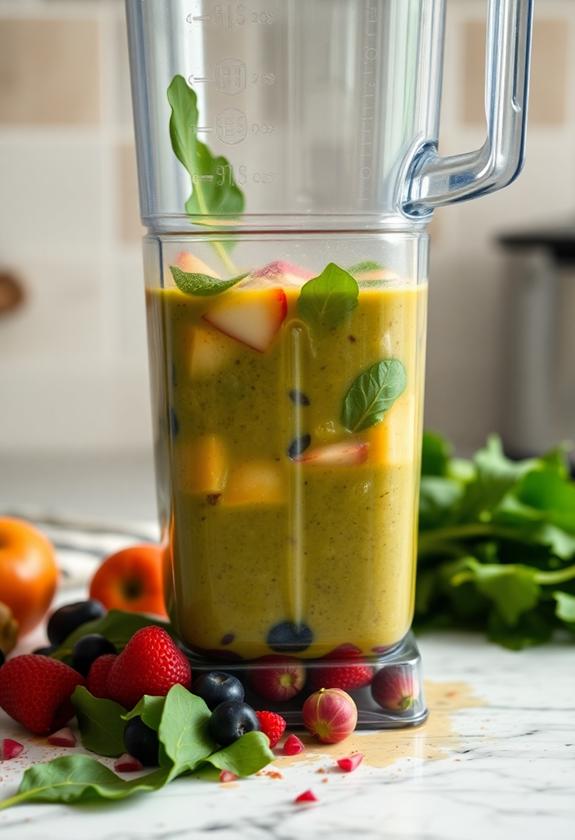
Now that you've got your ingredients sorted, let's talk about how you're blending them. Improper blending techniques can really affect the texture consistency and nutritional value of your anti-inflammatory smoothie. Don't worry, though! With a few simple tips, you'll be blending like a pro in no time. Anti-inflammatory smoothies can be a great way to revitalize your day and manage chronic pain. The key is to use the right ingredients and blend them properly.
Here are four key things to remember:
- Start with liquids at the bottom
- Add softer ingredients next
- Put leafy greens on top
- Finish with frozen items and ice
Drinking at Wrong Times
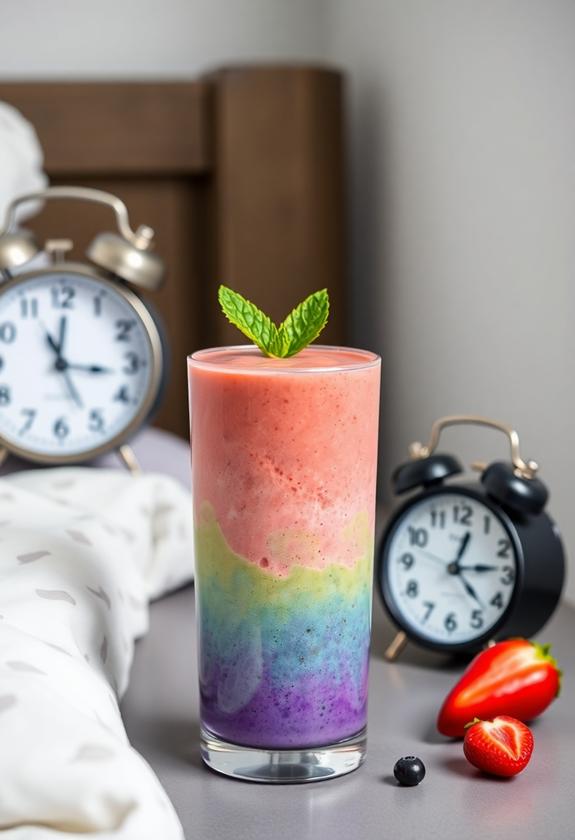
Timing is everything in relation to drinking your anti-inflammatory smoothies. You might be surprised to learn that when you consume your smoothie can greatly affect its benefits. For ideal timing benefits, try having your smoothie in the morning on an empty stomach. This allows your body to absorb all those wonderful nutrients more efficiently. Understanding the best moments for consuming anti-inflammatory smoothies can significantly improve their effectiveness. However, if you're not a morning person, don't worry! You can still enjoy your smoothie as a mid-morning or afternoon snack.
Just be mindful of how it impacts your digestion. It's best to avoid drinking your smoothie right before or after a heavy meal, as this can interfere with proper nutrient absorption. Remember, your body needs time to process all those amazing ingredients. By paying attention to when you drink your anti-inflammatory smoothie, you'll maximize its health-boosting potential and feel even better!
Not Varying Ingredients Regularly
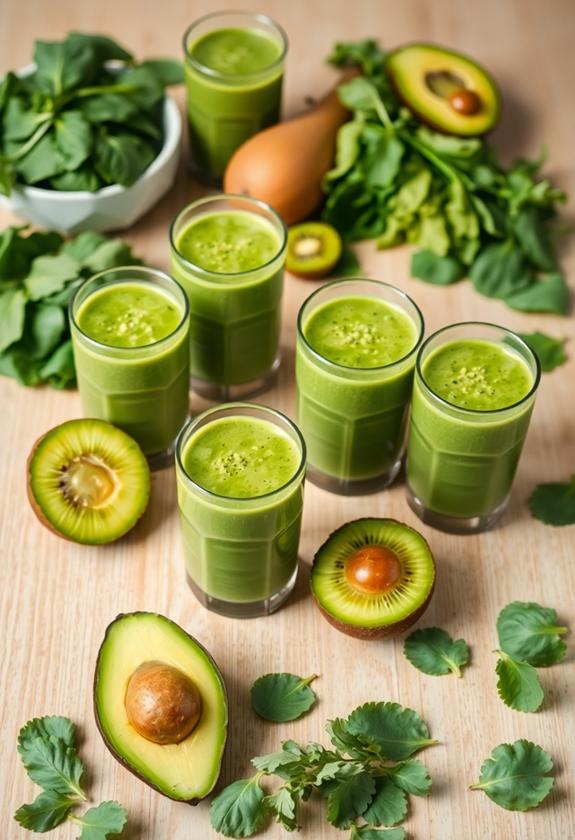
While it's easy to fall into a routine with your favorite smoothie recipe, sticking to the same ingredients day after day can limit the anti-inflammatory benefits you receive. Ingredient rotation is key to maximizing the nutrients in your smoothies. By varying your ingredients, you'll expose your body to a wider range of anti-inflammatory compounds and vitamins. Berry combinations can be particularly effective in boosting the anti-inflammatory properties of your smoothies. Experimenting with different berry blends can introduce new flavors and health benefits to your daily routine.
To help you mix things up, here are four tips for incorporating variety:
- Use seasonal produce for freshness and diversity
- Alternate between different berries each week
- Switch up your leafy greens regularly
- Experiment with various seeds and nuts
Frequently Asked Questions
Can Anti-Inflammatory Smoothies Replace Medication for Chronic Inflammation?
While anti-inflammatory smoothies can be a fantastic addition to your diet, they can't replace medication for chronic inflammation. Natural remedies and dietary changes are great supportive measures, but they're not a substitute for prescribed treatments. You should always consult your doctor before making significant changes to your health routine. That said, incorporating these smoothies into your diet can complement your medication and potentially help manage symptoms. Remember, a holistic approach to health often yields the best results!
How Long Does It Take to See Benefits From Anti-Inflammatory Smoothies?
You'll be happy to know that the timing of benefits from anti-inflammatory smoothies can be quite quick! Some people notice improvements in just a few days, while others might take a few weeks. It really depends on your body and the smoothie ingredients you're using. Keep at it, and you'll likely start feeling better soon. Remember, consistency is key! Enjoy your delicious, healing smoothies daily, and you'll be on your way to a healthier you.
Are There Any Side Effects to Drinking Anti-Inflammatory Smoothies Daily?
Ironically, while you're sipping on health in a glass, you might be overlooking some potential side effects. Don't worry, though! You're doing great by choosing anti-inflammatory smoothies. Just keep an eye on nutrient balance and ingredient selection. You might experience digestive changes or blood sugar fluctuations if you're not careful. But here's the good news: with a little attention to detail, you'll be reaping the benefits in no time. Remember, it's all about finding what works best for your body!
Can Children Drink Anti-Inflammatory Smoothies?
Yes, children can enjoy anti-inflammatory smoothies! They're a great way to introduce nutritious ingredients to your little ones. You'll want to focus on nutrient balance and kid-friendly flavor combinations. Try blending berries, spinach, and a touch of honey for a tasty treat. Remember to adjust portion sizes for your child's age and needs. It's always a good idea to consult with your pediatrician, especially if your child has any health concerns or allergies. Encourage your kids to be part of the smoothie-making process – they'll love it!
Do Anti-Inflammatory Smoothies Interfere With Certain Medications?
Imagine your smoothie as a friendly messenger in your body, delivering good news. But sometimes, it might bump into other important messengers – your medications. You're right to be concerned about interaction concerns. Some smoothie ingredients can affect how your body processes certain meds. It's like they're playing a game of tag! To stay safe, chat with your doctor about medication timing. They'll help you plan when to enjoy your smoothie without interfering with your meds. You've got this!