Some links below are affiliate links. We earn a commission on purchases at no extra cost to you. Although our opinions are based on curated research, we haven't used these products. Article generated with AI.

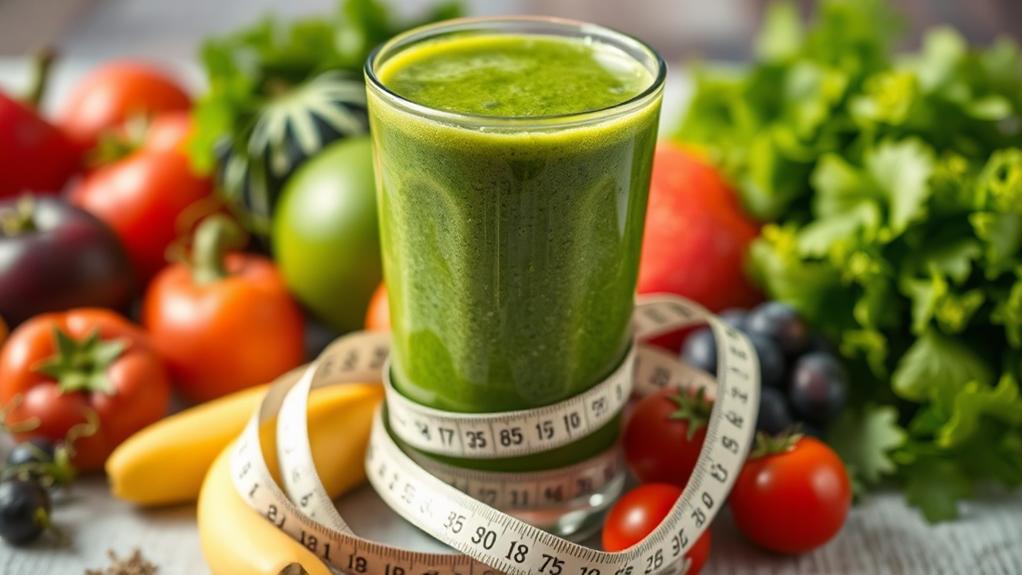
Surprising Facts About Smoothies and Weight Loss You Didn’t Know
You might be surprised to learn that smoothies aren't always the weight loss miracle they're cracked up to be. While they can be nutritious, they often hide unexpected calorie bombs and sugar shockers. Blending can actually reduce fiber content, and the liquid form might leave you feeling less full than solid foods. Portion size is vital, as it's easy to overdo it with ingredients. Your body may not absorb nutrients from smoothies as well as whole foods, and they might not satisfy your hunger for long. But don't worry! With the right ingredients and smart choices, smoothies can still be a healthy part of your weight loss journey. There's more to uncover about making the most of your blended beverages.
Table of Contents
hide
Key Takeaways
- Smoothies can contain hidden calorie bombs from ingredients like nut butters and full-fat yogurt, hindering weight loss efforts.
- High sugar content in fruit-heavy smoothies may impede weight loss and affect overall health.
- Blending can break down beneficial fiber, reducing the satiety effect of whole fruits and vegetables.
- Liquid calories from smoothies may not register as effectively in the brain, leading to quicker hunger.
- Adding thermogenic ingredients like ginger or cayenne pepper can boost metabolism and enhance weight loss potential.
Hidden Calorie Bombs

Many smoothies marketed as healthy can secretly sabotage your weight loss efforts. You might be surprised to learn that some popular smoothie ingredients are actually hidden calorie bombs. Fruits, while nutritious, can pack a hefty caloric punch when blended in large quantities. Sweeteners, nut butters, and full-fat yogurt can also significantly increase the calorie count without you even realizing it. To maintain the taste while cutting sugar, consider using natural alternatives like stevia or monk fruit sweetener in your smoothies.
Don't worry, though! You don't have to give up your favorite smoothies. The key is to be mindful of your smoothie ingredients and practice calorie counting. Try using more vegetables, which are lower in calories but still nutrient-dense. Opt for unsweetened almond milk instead of regular milk, and use protein powder for satiety without excess calories. Remember, a balanced smoothie can still be a healthy part of your weight loss journey. You've got this!
Sugar Content Shocker
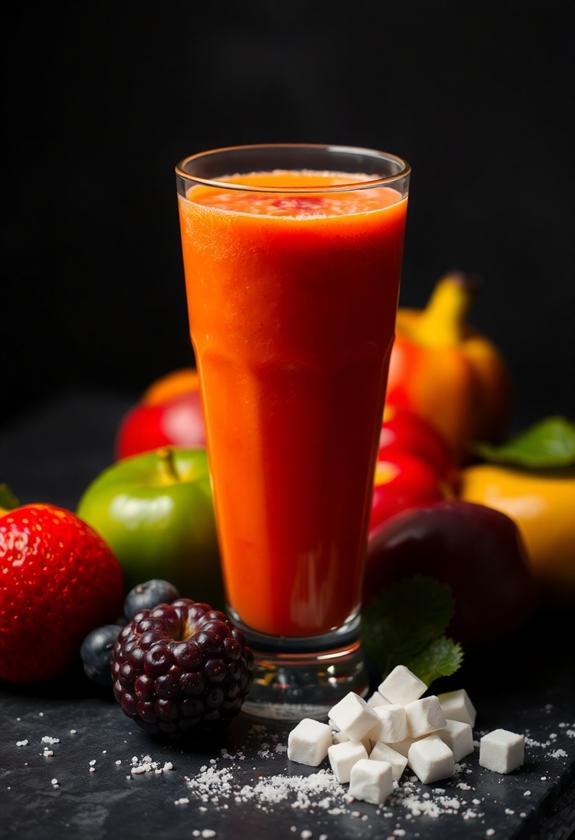
Speaking of hidden calorie bombs, let's address another surprising aspect of smoothies: their sugar content. You might think you're making a healthy choice by blending fruits and veggies, but the sugar can add up quickly. Even natural sweeteners like honey or agave contribute to the overall sugar load. Many smoothie ingredients, such as fruits and fruit juices, are high in natural sugars. While these aren't necessarily bad for you, they can impact your weight loss goals if consumed in excess. Cutting sugar in your smoothies is essential for effective weight management and overall health. Reducing sugar content can help stabilize blood sugar levels and curb cravings throughout the day.
Don't worry, though! You can still enjoy delicious smoothies while managing your sugar intake. Try using more vegetables and fewer fruits, or opt for low-sugar fruits like berries. You can also add protein sources like Greek yogurt or nut butter to help balance out the sweetness. Remember, being aware of your smoothie's sugar content is key to making informed choices for your health journey.
Fiber Loss in Blending
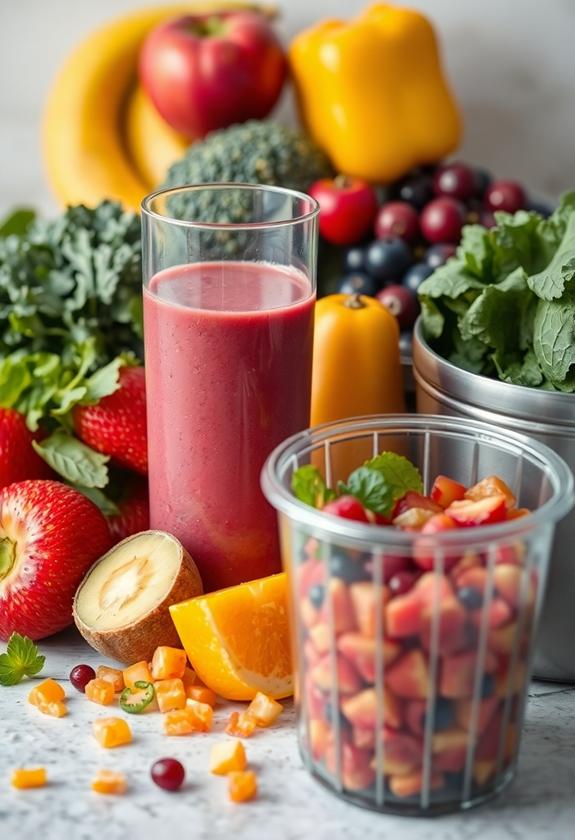
Smoothies' reputation as a health food takes another hit when we consider fiber loss during blending. While whole fruits and vegetables are packed with beneficial fiber, the blending process can break down some of these fiber types. You might think you're getting all the fiber from your ingredients, but that's not always the case. However, high-fiber smoothies can still be an effective tool for appetite control and weight management when prepared correctly.
Different blending techniques can affect how much fiber is lost. High-speed blenders, while efficient, may break down more of the insoluble fiber that's great for digestion. On the bright side, you're still getting some fiber, just not as much as you'd get from eating whole produce. Don't worry, though! You can boost your smoothie's fiber content by adding ingredients like chia seeds or oats. Remember, smoothies can still be a part of a healthy diet when made thoughtfully.
Portion Size Matters
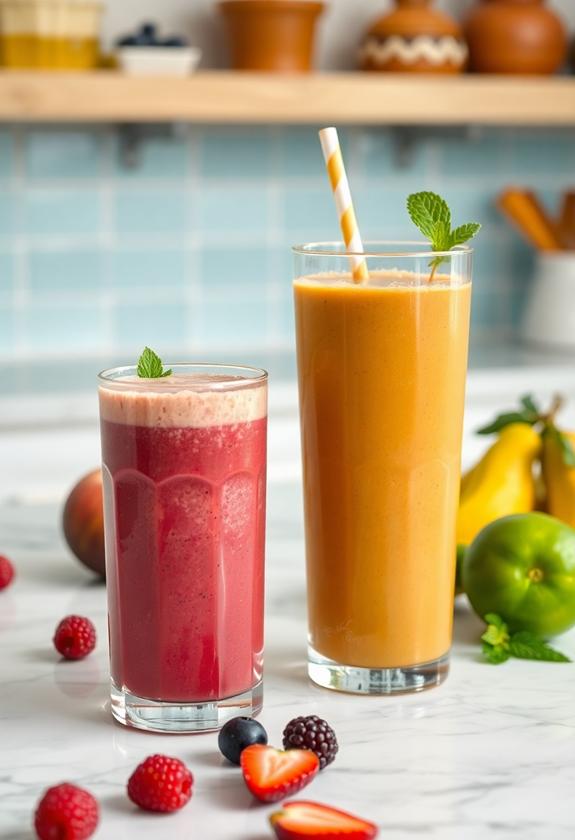
While adding fiber-rich ingredients can boost your smoothie's nutritional value, it's important to keep in mind that size counts. Portion control is key regarding smoothies and weight loss. Mastering smoothies requires understanding that even healthy ingredients can lead to weight gain if consumed in excess. Even healthy smoothie ingredients can contribute to excess calories if you're not careful. To maintain a balanced approach, consider these tips:
- Measure your ingredients to avoid overloading your blender
- Use smaller cups or glasses to serve your smoothies
- Limit high-calorie add-ins like nut butters and sweeteners
Nutrient Absorption Issues
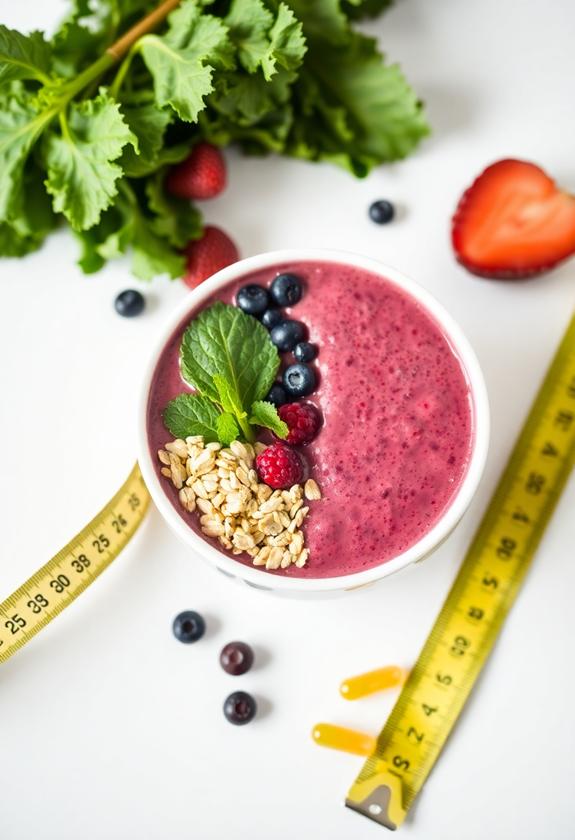
Regarding nutrient absorption, smoothies present a unique challenge. When you blend fruits and vegetables, you're breaking down their cellular structures, which can affect nutrient bioavailability. This means your body might not absorb all the nutrients as efficiently as it would from whole foods. Don't worry, though! You're still getting plenty of goodness from your smoothie. Experts' opinions on smoothies and weight loss are mixed, with some emphasizing their potential benefits and others cautioning against overconsumption.
The way smoothies interact with your digestive enzymes is also important. When you drink a smoothie, it moves through your digestive system quickly, which can sometimes overwhelm your body's natural digestive processes. To help with this, try sipping your smoothie slowly and "chewing" it a bit in your mouth. This simple trick can kickstart the digestive enzyme interaction, helping your body make the most of those delicious nutrients. Remember, smoothies can still be a healthy part of your diet when enjoyed mindfully!
Satiety and Hunger Cues
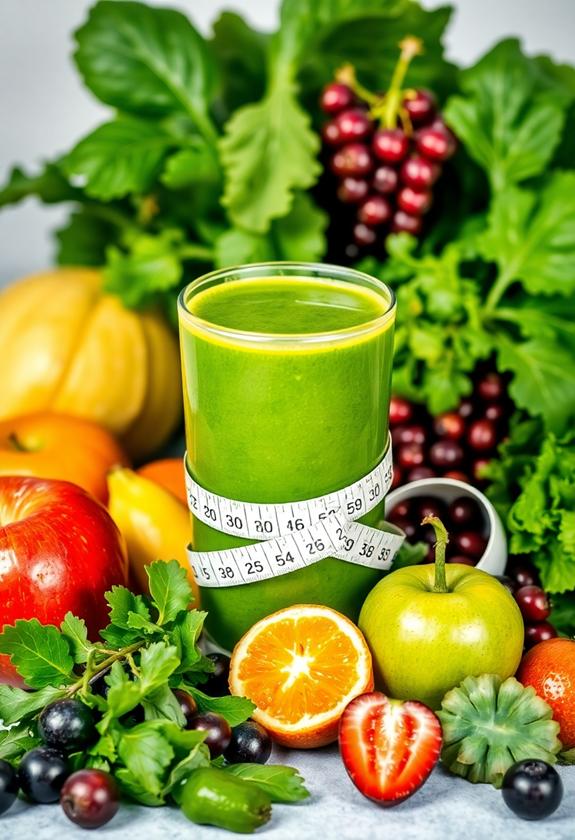
One often overlooked aspect of smoothie consumption is its impact on satiety and hunger cues. When you drink a smoothie, you might find that it affects your appetite control differently than solid foods. This is because liquids can bypass some of your body's natural hunger regulation mechanisms. Adding fiber-rich ingredients to your smoothies can significantly improve their satiating effects and support your weight loss efforts. Here's what you need to know:
- Smoothies can be less filling than whole fruits and vegetables
- Your brain may not register liquid calories as effectively
- You might feel hungry again sooner after drinking a smoothie
Don't worry, though! You can still enjoy smoothies as part of a healthy diet. Try adding ingredients that boost satiety, like protein powder or chia seeds. It's also a good idea to sip your smoothie slowly and pair it with a small solid snack. This way, you'll give your body time to recognize the nutrients and feel more satisfied.
Metabolism and Thermogenic Effects
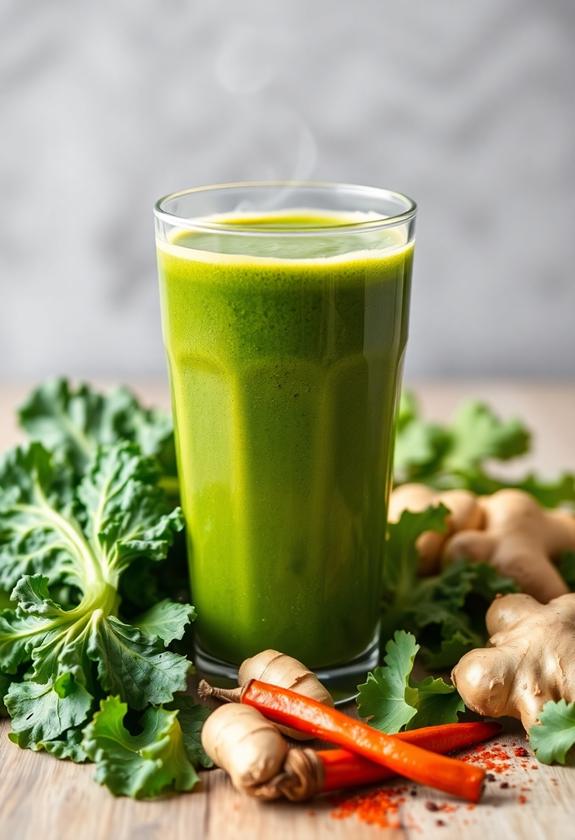
The metabolism puzzle plays an essential role in weight loss, and smoothies can be a key piece. You'll be excited to learn that certain ingredients in your smoothie can give your metabolism a boost. These thermogenic foods, like ginger, green tea, and cayenne pepper, can increase your body's calorie-burning potential. When you add these to your smoothie, you're not just getting a delicious drink, you're also giving your body a little extra help. Meal replacements like smoothies can be an effective tool for weight loss, providing essential nutrients while helping to control calorie intake.
But it's not just about the ingredients. The act of drinking a cold smoothie can also have a small thermogenic effect. Your body has to work a bit harder to warm up the cold liquid, burning a few extra calories in the process. While it's not a miracle solution, every little bit helps when you're working towards your weight loss goals.
Frequently Asked Questions
Can Smoothies Replace Meals for Effective Weight Loss?
Yes, smoothies can replace meals for effective weight loss when done right. They're a great meal replacement option, helping with calorie control and nutrient balance. To make them filling, focus on smoothie ingredients that boost the satiety factor, like protein and fiber. You'll want to be mindful of portion sizes and include a variety of fruits, vegetables, and healthy fats. Remember, smoothies are just one tool in your weight loss strategies toolkit, so use them wisely as part of a balanced diet.
Are Store-Bought Smoothies as Healthy as Homemade Ones?
While store-bought smoothies are convenient, they often can't match the nutrient content and ingredient quality of homemade ones. You've got control over what goes into your blender at home! Homemade smoothies let you choose fresh, whole ingredients and avoid added sugars or preservatives. Plus, you can tailor them to your taste and nutritional needs. Don't worry if you're not a smoothie expert yet – with practice, you'll create delicious, healthy blends that beat anything from the store.
How Do Protein Smoothies Affect Weight Loss Compared to Fruit-Based Ones?
You'll find that protein smoothies can be more effective for weight loss than fruit-based ones. They're often lower in calories and keep you feeling full longer. Protein sources like Greek yogurt, whey powder, or nut butter are great additions. While fruit smoothies are nutritious, they can be higher in sugar and calories. Don't worry, though! You can always mix protein and fruit for a balanced option. Remember, the key is finding what works best for your body and goals.
Can Adding Supplements to Smoothies Enhance Their Weight Loss Potential?
You can definitely boost your smoothie's weight loss potential by adding supplements! Different supplement types, like protein powders, fiber, or green tea extract, can help in various ways. They might increase your metabolism, control hunger, or support muscle growth. Remember, absorption rates matter too. Some supplements work best when paired with certain ingredients. It's exciting to experiment, but always consult your doctor before adding new supplements. With the right additions, you're giving your body extra support on your weight loss journey!
Do Smoothie Cleanses or Detoxes Actually Work for Long-Term Weight Loss?
Smoothie cleanses and detoxes might seem like quick fixes, but they're not sustainable for long-term weight loss. While you might see initial results, these are often due to water loss and can be temporary. Your body's natural detox systems are already quite effective! Instead, focus on incorporating nutrient-rich smoothies into a balanced diet and healthy lifestyle. Remember, there's no magic solution, but small, consistent changes can lead to lasting results. You've got this!