Some links below are affiliate links. We earn a commission on purchases at no extra cost to you. Although our opinions are based on curated research, we haven't used these products. Article generated with AI.

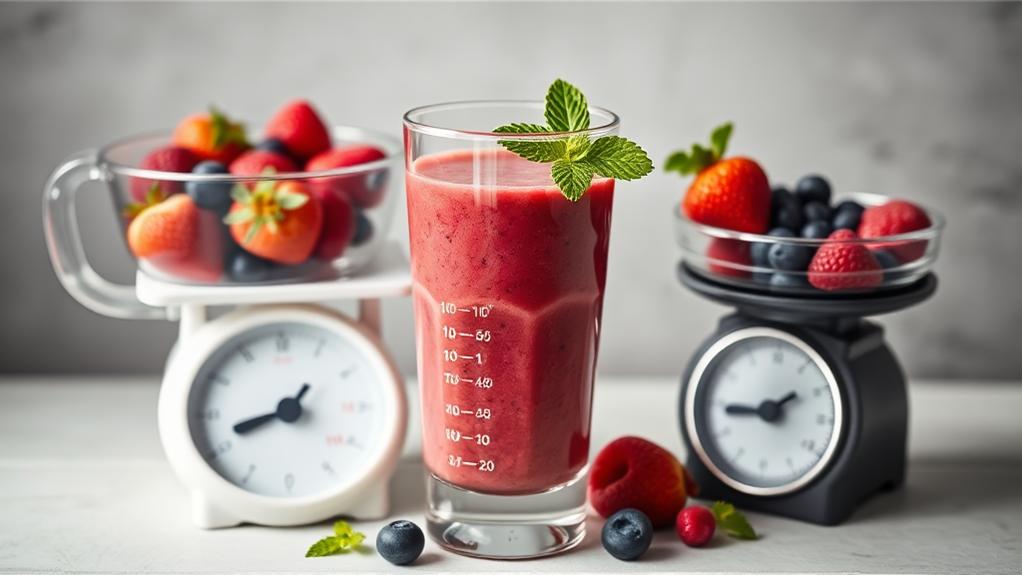
Portion Control: the Key to Effective Weight Loss With Smoothies
Portion control is your secret weapon for successful weight loss with smoothies. You’ll want to aim for 16-20 ounces per serving, using accurate measurements to keep calories in check. Balance your macronutrients by including protein, complex carbs, and healthy fats. Be careful with high-calorie add-ins, and opt for low-calorie base liquids like water or unsweetened almond milk. Don’t forget to pack in fiber-rich ingredients to keep you feeling full. By timing your smoothies strategically and tracking your calories, you’ll maximize their weight loss potential. With these tips, you’re well on your way to mastering portion control and achieving your health goals. There’s so much more to investigate in the world of smoothie-based weight loss!
Table of Contents
hide
Key Takeaways
- Aim for 16-20 ounces per smoothie serving, equivalent to a standard water bottle.
- Use accurate measuring tools to control ingredient portions and maintain balanced smoothies.
- Balance macronutrients with protein for satiety, complex carbs for energy, and moderate healthy fats.
- Choose low-calorie, nutrient-dense ingredients and avoid hidden calorie bombs like sugary additives.
- Track calories and customize portions based on individual weight loss goals and energy needs.
Understanding Smoothie Serving Sizes
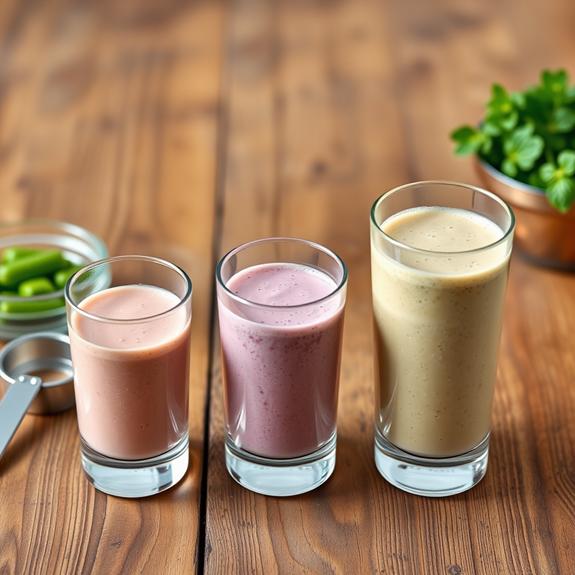
In terms of smoothie serving sizes, many people struggle with knowing how much is enough. It’s easy to overdo it, especially when you’re blending up delicious fruits and veggies. But don’t worry, we’re here to help you figure it out!
A good rule of thumb is to aim for about 16 to 20 ounces per serving. This is roughly the size of a standard water bottle. Remember, your smoothie should be a meal replacement or a substantial snack, not just a drink on the side. If you’re using it as a meal, make sure it’s packed with nutrients and has enough protein to keep you satisfied.
When you’re making your smoothie, try using a measuring cup or a marked blender jar. This way, you’ll get a visual sense of what a proper portion looks like.
It’s also helpful to use smaller glasses when you’re serving yourself. Our eyes can sometimes trick us, making us think we need more than we actually do. By using a smaller glass, you’ll feel like you’re getting a full serving without overdoing it.
Measuring Ingredients Accurately
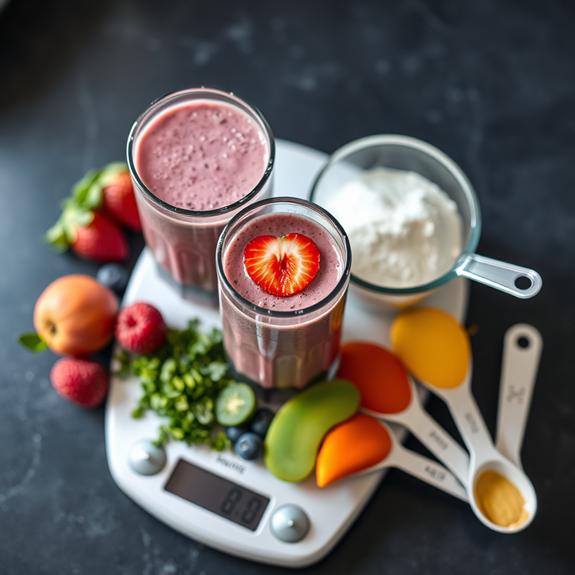
Measuring ingredients accurately is essential for creating balanced, portion-controlled smoothies. When you’re trying to lose weight, it’s important to know exactly what’s going into your blender.
You’ll want to invest in a good set of measuring tools, including cups, spoons, and a kitchen scale. These tools will help you stay on track with your portions and guarantee you’re not accidentally adding extra calories to your smoothies.
Here are some tips to help you measure ingredients accurately:
- Use liquid measuring cups for liquids and dry measuring cups for solids
- Level off dry ingredients with a straight edge for precise measurements
- Measure sticky ingredients like honey or peanut butter in a lightly oiled spoon
Balancing Macronutrients
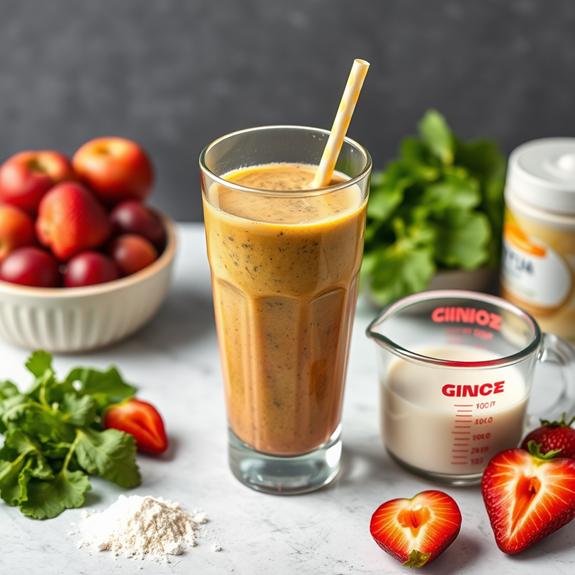
Three key macronutrients need your attention when crafting weight-loss smoothies: protein, carbohydrates, and fats. Getting the right balance is vital for your success and overall health.
Protein helps you feel full and supports muscle growth, so don’t skimp on it! Try adding Greek yogurt, protein powder, or silken tofu to your smoothies.
Carbohydrates give you energy, but be mindful of the type and amount. Opt for complex carbs like whole fruits, oats, or sweet potatoes instead of sugary additives.
Fats are essential too, but a little goes a long way. Include healthy fats from sources like avocado, chia seeds, or a small handful of nuts.
Avoiding Hidden Calorie Bombs
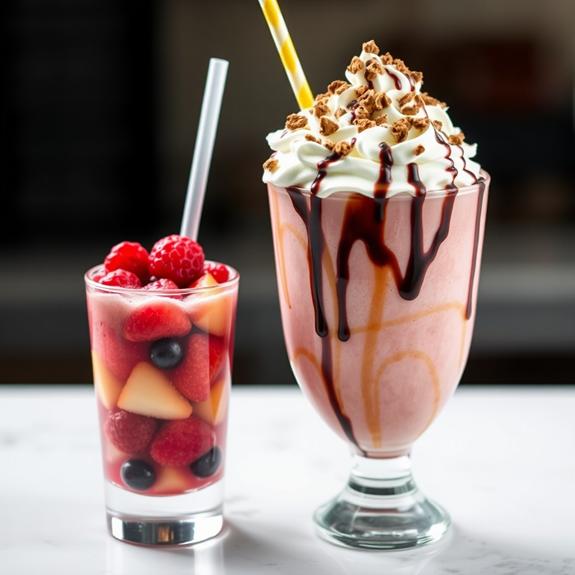
While smoothies can be a great tool for weight loss, they can also become calorie bombs if you’re not careful. It’s easy to unknowingly add ingredients that pack on extra calories, derailing your weight loss efforts.
To keep your smoothies diet-friendly, you’ll want to be mindful of what you’re tossing into the blender.
Watch out for these common hidden calorie sources:
- High-fat additions like nut butters, coconut oil, or avocado
- Sweeteners such as honey, agave nectar, or dates
- Fruit juices, which can be high in sugar and calories
Instead, focus on filling your smoothie with low-calorie, nutrient-dense ingredients. Leafy greens, berries, and water or unsweetened almond milk make excellent bases.
If you’re craving something sweet, try adding a small amount of stevia or a dash of cinnamon for flavor.
Remember, portion control applies to smoothies too! Stick to reasonable serving sizes, typically around 16-20 ounces.
Timing Your Smoothie Consumption
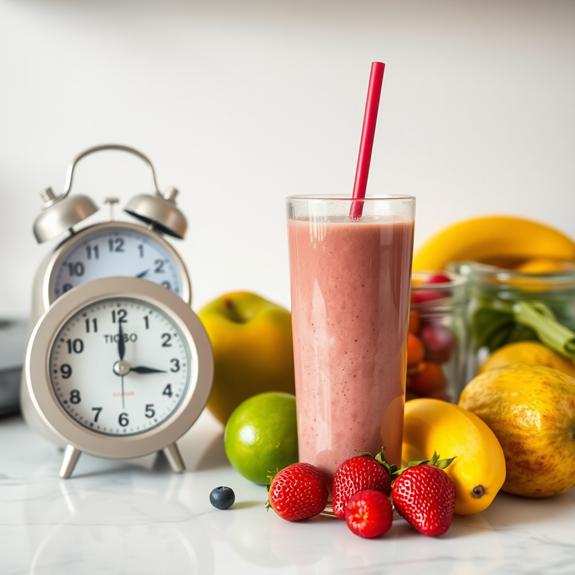
In regards to timing your smoothie consumption, strategic planning can make a big difference in your weight loss journey.
You’ll want to take into account when you’re most likely to feel hungry or need an energy boost throughout the day. Many people find that having a smoothie for breakfast is a great way to start their day off right, providing essential nutrients and keeping them full until lunch.
If you’re using smoothies as meal replacements, it’s important to space them out evenly. You might’ve one for breakfast, another for lunch, and a light dinner. This approach can help you maintain steady energy levels and avoid overeating.
For those using smoothies as snacks, try having them between meals when you typically feel a slump in energy.
Customizing Portions for Goals
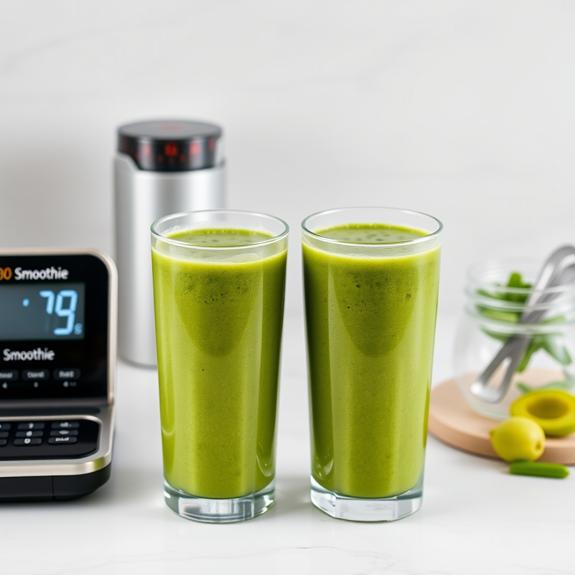
Customizing your smoothie portions is essential for achieving your specific weight loss goals. You’ll want to tailor your smoothie size based on factors like your current weight, activity level, and desired rate of weight loss.
Remember, it’s not just about reducing calories; it’s about nourishing your body while creating a sustainable deficit.
To help you customize your portions effectively, consider these key points:
- Use a food scale to measure ingredients accurately
- Experiment with different serving sizes to find what satisfies you
- Track your progress and adjust portions as needed
As you commence your weight loss journey, don’t be afraid to start small and gradually increase or decrease portion sizes.
Your body’s needs may change over time, and that’s perfectly okay! It’s all about finding the right balance for you.
Choosing Low-Calorie Base Liquids
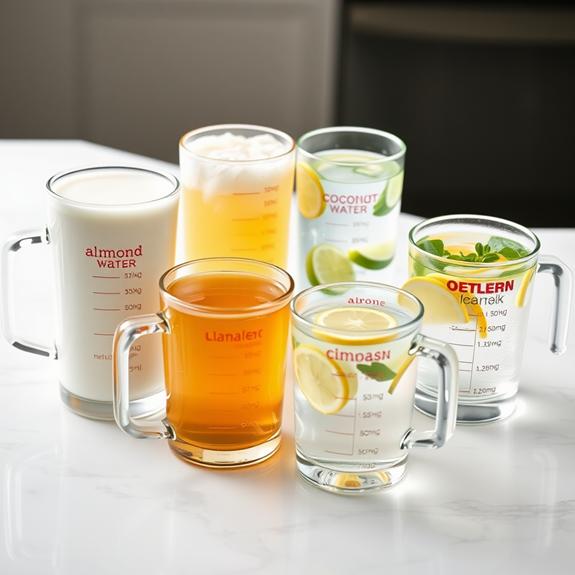
Selecting the right base liquid can make or break your smoothie’s calorie count. When you’re aiming for weight loss, it’s essential to choose low-calorie options that won’t sabotage your efforts.
Water is always a fantastic choice, as it’s calorie-free and helps keep you hydrated. If you’re looking for a bit more flavor, try unsweetened almond milk or coconut water. These alternatives are light, refreshing, and won’t add unnecessary calories to your drink.
For a protein boost without the extra calories, consider using unsweetened soy milk or low-fat dairy milk. They’ll give your smoothie a creamy texture while keeping the calorie count in check.
If you’re feeling adventurous, green tea can be an excellent base liquid. It’s packed with antioxidants and may even help boost your metabolism.
Remember, every ingredient counts when you’re watching your portions. By choosing low-calorie base liquids, you’re setting yourself up for success. You’ll be able to enjoy delicious, satisfying smoothies without worrying about derailing your weight loss goals.
Trust in yourself and your choices – you’re on the right path!
Incorporating Protein Wisely
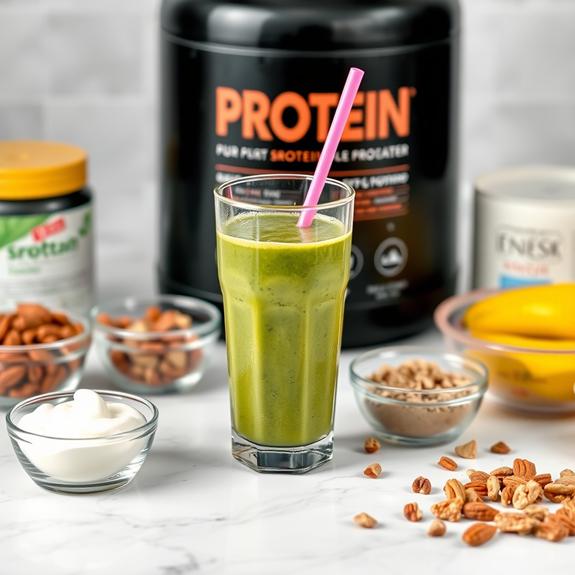
Now that you’ve mastered the art of choosing low-calorie base liquids, let’s focus on incorporating protein wisely into your smoothies. Protein is essential for weight loss, helping you feel full and maintain muscle mass. But it’s important to choose the right sources and amounts.
When adding protein to your smoothies, consider these options:
- Greek yogurt: A creamy, protein-rich addition that’s low in calories
- Protein powder: A versatile option available in various flavors
- Nut butters: A delicious source of protein and healthy fats
Remember, portion control is key. Aim for about 15-20 grams of protein per smoothie. This amount will keep you satisfied without overloading on calories. If you’re using protein powder, stick to one scoop, which is typically enough.
Don’t forget to balance your protein with fruits and vegetables. These provide essential nutrients and fiber, making your smoothie a well-rounded meal replacement.
Maximizing Fiber Content
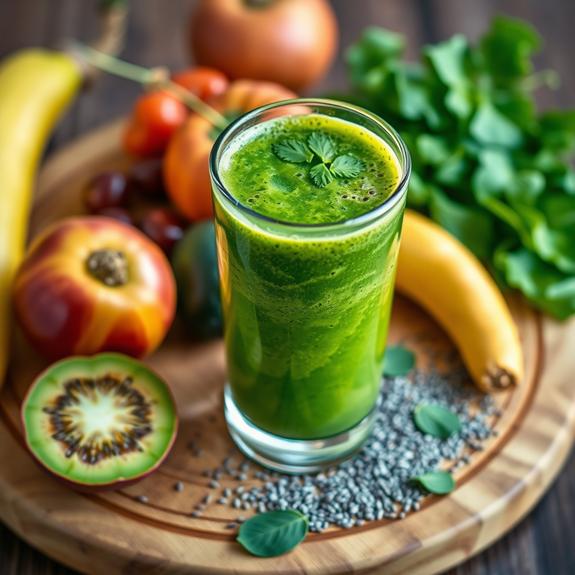
Boost your smoothie’s fiber content to improve its weight loss potential. Fiber is your secret weapon for feeling full and satisfied, which helps you stick to your portion control goals.
You’ll find that high-fiber smoothies keep hunger at bay for longer, making it easier to resist snacking between meals.
To maximize fiber, add plenty of fruits and vegetables to your smoothies. Berries, apples, and pears are excellent choices, as they’re packed with fiber and antioxidants.
Don’t forget about leafy greens like spinach and kale, which add a nutritional punch without overpowering the flavor. For an extra fiber boost, try adding chia seeds, flaxseeds, or oats to your blend.
Tracking Smoothie Calories Effectively
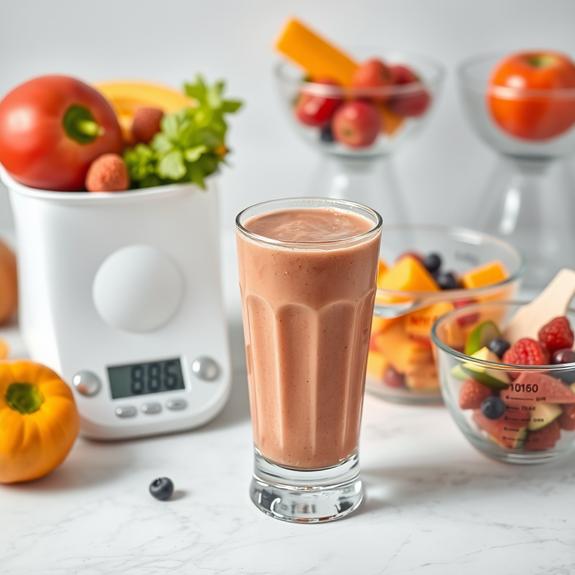
Tracking calories in your smoothies is essential for effective portion control and weight loss. By keeping a close eye on the calorie content of your ingredients, you’ll be better equipped to manage your overall calorie intake.
It’s important to keep in mind that even healthy ingredients can contribute to excess calories if you’re not careful.
To track your smoothie calories effectively, consider these helpful tips:
- Use a food scale to measure ingredients accurately
- Utilize a calorie-tracking app or website for precise calculations
- Keep a smoothie journal to record recipes and their calorie counts
Keep in mind, you’re taking an important step towards achieving your weight loss goals. As you become more familiar with the calorie content of your favorite ingredients, you’ll find it easier to create delicious, low-calorie smoothies that fit your dietary needs.
Frequently Asked Questions
Can Smoothies Replace Meals for Weight Loss?
Like a colorful garden of nourishment, smoothies can indeed replace meals for weight loss. You’ll find they’re a convenient way to pack in nutrients while controlling calories.
However, it’s important to craft your smoothies wisely. Include protein, healthy fats, and fiber to keep you feeling full.
Don’t forget to vary your ingredients for balanced nutrition. Remember, smoothies aren’t a magic solution, but they can be a helpful tool in your weight loss journey when used thoughtfully.
How Long Can I Store Homemade Smoothies in the Refrigerator?
You’ll be happy to know that you can store your homemade smoothies in the refrigerator for up to 2 days.
It’s best to keep them in an airtight container to maintain freshness. Remember, some separation might occur, but don’t worry! Just give your smoothie a good shake before drinking.
For the best taste and nutrition, try to enjoy your smoothie within 24 hours. If you’re making smoothies in advance, consider freezing them for longer storage.
Are Pre-Made Smoothie Mixes Effective for Portion Control?
Yes, pre-made smoothie mixes can be great for portion control!
You’ll find them convenient and easy to use. They often come in single-serving packets, which help you avoid overindulging. You’ll know exactly how much you’re consuming, making it easier to track your calorie intake.
Plus, they’re a time-saver for busy days. Just remember to check the ingredients and nutrition facts, as some mixes might contain added sugars or preservatives.
You’ve got this – happy smoothie making!
Can I Add Supplements to My Smoothies Without Affecting Portion Sizes?
You’ll be thrilled to know that adding supplements to your smoothies is like giving them superpowers!
Yes, you can absolutely incorporate supplements without affecting portion sizes. Most powdered supplements are concentrated and don’t add significant volume. Simply blend them in with your usual ingredients.
However, be mindful of liquid supplements, as they might increase the overall volume.
How Do Seasonal Fruit Variations Impact Smoothie Portion Control Strategies?
Seasonal fruit variations can really shake up your smoothie routine!
You’ll find that summer fruits are often juicier and more plentiful, which might lead to larger portions. In contrast, winter fruits tend to be denser and less abundant.
Don’t worry, though! You can adapt by adjusting your ingredients. Try using more vegetables or protein powders when fruits are scarce.