Some links below are affiliate links. We earn a commission on purchases at no extra cost to you. Although our opinions are based on curated research, we haven't used these products. Article generated with AI.

How to Build Your First Green Smoothie: A Step-by-Step Guide
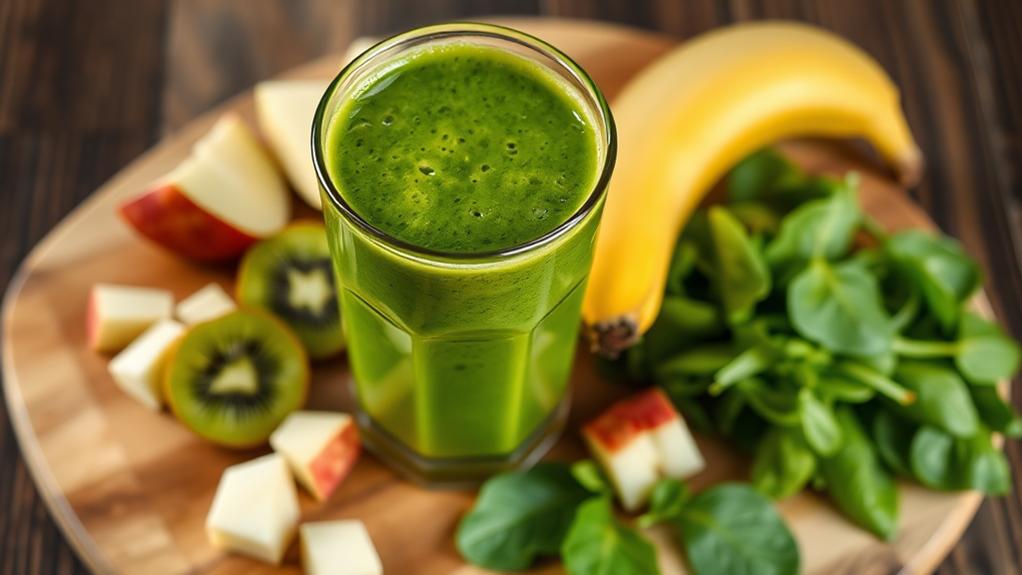
Building your first green smoothie is a fun and easy way to boost your health. Start by choosing mild greens like spinach, then add sweet fruits like bananas or berries. Pour in a liquid base, such as water or almond milk, to help everything blend smoothly. For extra nutrition, toss in some superfoods like chia seeds or protein powder. When blending, start with liquids and soft ingredients, then add harder items last. Don’t be afraid to experiment with flavors by mixing different fruits or adding spices. With these simple steps, you’ll be creating delicious, nutrient-packed smoothies in no time. The world of green smoothies is full of tasty discoveries waiting for you!
Table of Contents
hide
Key Takeaways
- Choose mild greens like spinach for beginners and select fresh, crisp leaves for the best flavor and nutrition.
- Add fruits like bananas or berries for sweetness and nutrient boost, using fresh or frozen options.
- Select a liquid base such as water or plant-based milk, adjusting quantity for desired thickness.
- Incorporate superfoods like chia seeds or protein powder to enhance nutritional value and satiety.
- Blend ingredients in order: liquid first, then soft items, followed by harder or frozen components for optimal texture.
Choose Your Greens
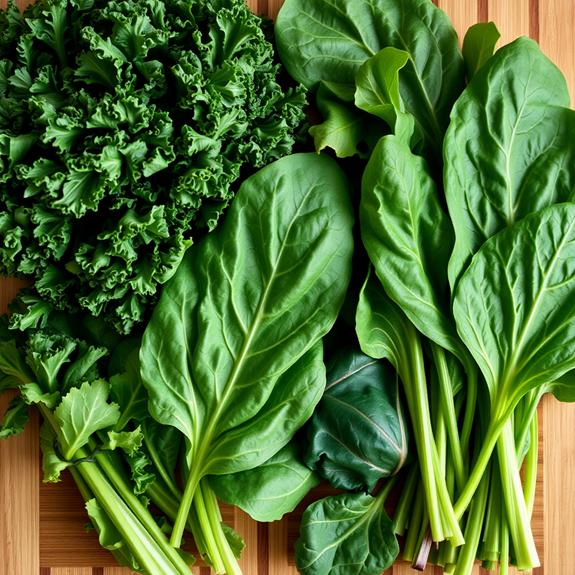
Selecting the right greens is the foundation of any great green smoothie. You’ll want to start with mild-tasting options that won’t overpower your taste buds. Spinach is a fantastic choice for beginners, as it’s packed with nutrients and has a subtle flavor.
Kale is another popular option, offering a slightly stronger taste but incredible health benefits. Don’t be afraid to mix and match different greens to find your perfect combination!
As you become more comfortable with green smoothies, you can experiment with other leafy greens like Swiss chard, collard greens, or even romaine lettuce. Each green brings its own unique nutritional profile and flavor to your smoothie.
Remember, it’s all about finding what works best for you and your taste preferences.
When selecting your greens, always opt for fresh, crisp leaves that are vibrant in color. Avoid any that look wilted or discolored.
If you’re concerned about pesticides, consider choosing organic greens. You can also give your greens a quick rinse before adding them to your blender to ascertain they’re clean and ready to enjoy.
Select Your Fruits
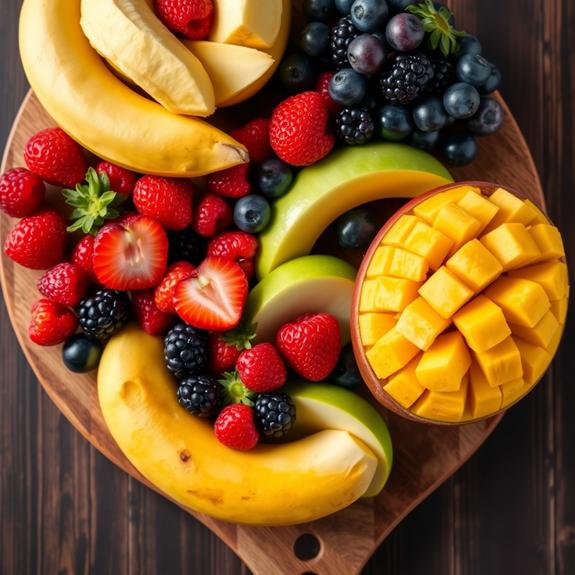
The fruits you choose will add sweetness and flavor to balance out the greens in your smoothie. You’ll want to select fruits that complement the taste of your chosen greens and provide a delicious, refreshing flavor.
Start with tried-and-true favorites like bananas, which offer natural sweetness and a creamy texture. Berries, such as strawberries, blueberries, or raspberries, are excellent choices that bring vibrant colors and antioxidants to your smoothie.
Don’t be afraid to experiment with tropical fruits like mangoes, pineapples, or kiwis for a bright, tangy twist. These fruits can transport your taste buds to a sunny beach with just one sip!
If you’re looking for a milder flavor, apples and pears are fantastic options that won’t overpower the other ingredients. Remember, frozen fruits can make your smoothie thicker and colder, perfect for hot summer days. You can even freeze your own fruits when they’re in season to enjoy year-round.
As you become more comfortable with smoothie-making, you’ll discover your favorite fruit combinations that make your taste buds dance with joy!
Add Liquid Base
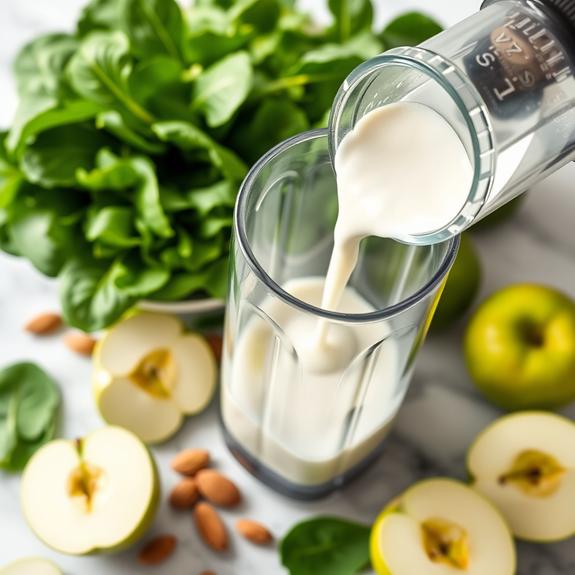
Now that you’ve chosen your fruits, it’s time to add a liquid base to your green smoothie. This step is essential, as it helps blend all your ingredients together and creates the perfect consistency. You’ve got plenty of options to choose from, so don’t worry!
Water is the simplest choice, and it’s great if you want to keep things light. If you’re looking for something creamier, try plant-based milks like almond, oat, or coconut milk. They’ll give your smoothie a richer texture and add a subtle flavor.
For a boost of nutrients, coconut water is an excellent option, packed with electrolytes and natural sweetness.
If you’re feeling adventurous, you can use green tea or herbal tea as your liquid base. They’ll infuse your smoothie with unique flavors and potential health benefits.
Remember, the amount of liquid you use will affect your smoothie’s thickness. Start with about 1 cup of liquid for every 2 cups of solid ingredients, and adjust as needed. You can always add more later if your smoothie is too thick.
Don’t be afraid to experiment and find your perfect blend!
Boost With Superfoods
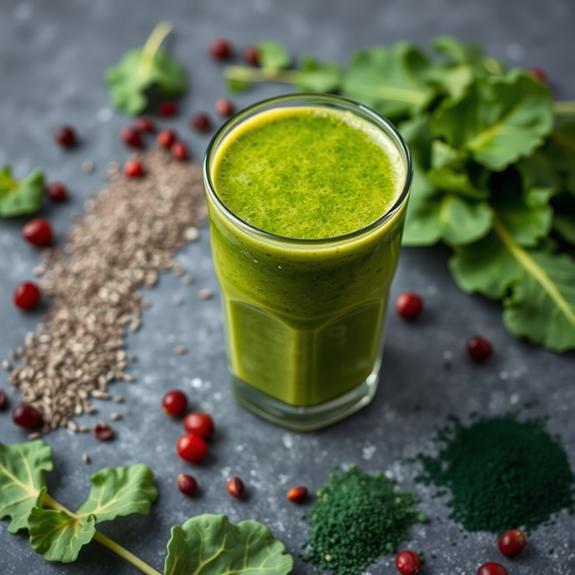
In addition to your fruits and liquid base, superfoods can take your green smoothie to the next level. These nutrient-dense ingredients pack a powerful punch, boosting your smoothie’s health benefits and flavor profile. You’ll love how they transform your drink into a true powerhouse of nutrition!
Start by adding a tablespoon of chia seeds or flaxseeds for omega-3 fatty acids and fiber. They’ll help keep you feeling full and satisfied.
Next, consider tossing in some spirulina or chlorella powder. These algae-based superfoods are rich in protein and antioxidants, giving your smoothie a vibrant green hue.
Don’t forget about other options like maca powder for energy, cacao nibs for a chocolatey twist, or goji berries for a burst of sweetness and vitamin C.
You can even add a scoop of your favorite protein powder to make your smoothie more filling and muscle-friendly.
Perfect Your Blending Technique
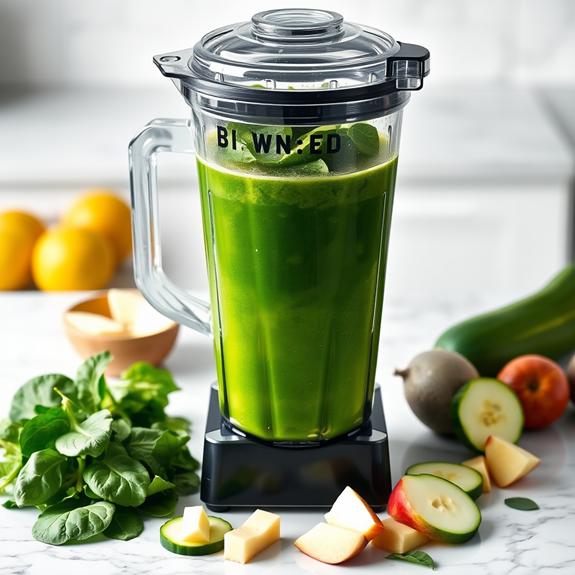
With your ingredients assembled, it’s time to master the art of blending. Start by adding your liquid base to the blender first. This helps create a vortex that’ll pull the other ingredients down, guaranteeing a smoother blend.
Next, add your softer ingredients like leafy greens and ripe fruits. These’ll break down easily and help create a smooth consistency.
Now, it’s time for the harder ingredients. Add your frozen fruits, ice, or any tougher veggies you’re using. These should go in last so they’re closest to the blades.
When you’re ready to blend, start on a low speed and gradually increase it. This technique helps prevent air pockets from forming and guarantees all ingredients are well-combined.
If you notice any ingredients sticking to the sides, stop the blender and use a spatula to scrape them down.
Don’t be afraid to pause and taste your smoothie as you go. You can always add more of any ingredient to perfect the flavor and texture.
Experiment With Flavors
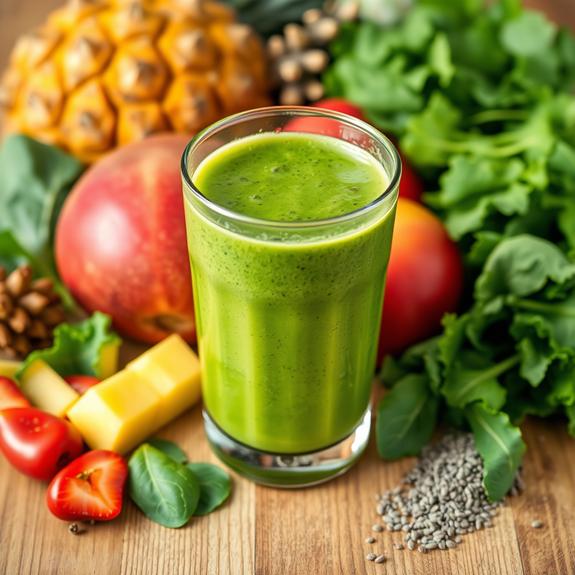
Once you’ve mastered the basics, it’s time to let your creativity shine. Experimenting with flavors is where the real fun begins in your green smoothie journey.
Don’t be afraid to mix and match different fruits and vegetables to create your perfect blend. Try adding a handful of berries for a burst of antioxidants, or toss in some tropical fruits like mango or pineapple for a taste of sunshine.
For a creamier texture, you can include a banana or some avocado. These not only improve the consistency but also add essential nutrients.
If you’re looking to boost the protein content, consider adding a scoop of your favorite protein powder or a tablespoon of nut butter.
To enrich the flavor profile, experiment with spices like cinnamon, ginger, or even a dash of turmeric.
Frequently Asked Questions
How Long Can I Store a Green Smoothie in the Refrigerator?
You’ll want to enjoy your green smoothie as fresh as possible, but don’t worry if you can’t drink it all at once!
You can store it in an airtight container in the refrigerator for up to 24 hours. Remember, the longer it sits, the more nutrients it might lose.
If you notice any separation, just give it a good shake before drinking. For the best taste and nutritional value, try to consume your smoothie within a day of making it.
Can I Use Frozen Vegetables Instead of Fresh Greens in My Smoothie?
You can use frozen veggies in your smoothie, and it’s a great way to keep your drink cool and refreshing.
While fresh greens are wonderful, frozen ones can be just as nutritious and convenient. They’re like little nutrient-packed ice cubes!
You’ll find that frozen spinach, kale, and even broccoli work well.
Just remember, frozen veggies might make your smoothie thicker, so you may need to add a bit more liquid.
Don’t be afraid to experiment and find your perfect blend!
Are There Any Greens I Should Avoid Using in My Smoothies?
While most greens are great for smoothies, there are a few you’ll want to be cautious about. You should avoid using raw kale and spinach in large amounts, as they contain compounds that can interfere with nutrient absorption.
It’s best to rotate your greens and use a variety. Also, steer clear of rhubarb leaves, as they’re toxic.
Don’t worry, though! There are plenty of safe, delicious options like lettuce, chard, and collard greens that you can enjoy in your smoothies.
How Can I Make My Green Smoothie Less Bitter?
You’ve got this! Taming that bitter taste is easier than you think.
Start by adding sweet fruits like bananas or mangoes to balance the flavor. Don’t forget, a splash of lemon juice can work wonders.
Try using milder greens like spinach or romaine lettuce, and remember, a little goes a long way.
If you’re feeling adventurous, toss in some coconut water or a dash of cinnamon.
With these tricks up your sleeve, you’ll be sipping on delicious, less bitter green smoothies in no time!
Is It Necessary to Rotate the Types of Greens I Use?
Yes, it’s a great idea to rotate the types of greens you use in your smoothies!
Variety isn’t just the spice of life, it’s also good for your health. By switching up your greens, you’ll get a wider range of nutrients and flavors.
You might enjoy spinach one day, kale the next, and maybe some Swiss chard after that. This rotation helps prevent any potential build-up of specific compounds and keeps your taste buds excited.
Plus, it’s fun to experiment with different combinations!